Plants Worksheets for Ages 6-8 - Page 2
25 filtered results
-
From - To
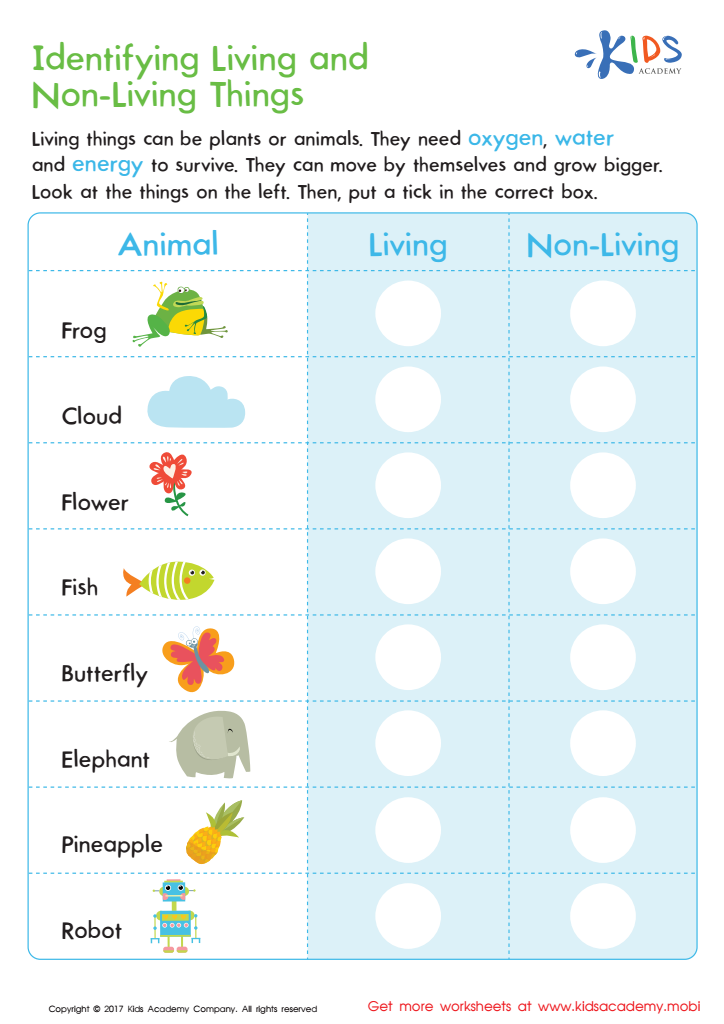
Identifying Living or Non–living Worksheet
 Assign to My Students








Parents and teachers should care about teaching kids ages 6-8 about plants because it is essential for their cognitive, emotional, and social development. Plants provide a natural, hands-on learning experience that helps children understand fundamental science and environmental concepts. By growing and caring for plants, kids can observe life cycles, learn about photosynthesis, and understand the importance of sunlight, water, and soil. These activities bolster their observation and critical thinking skills.
Moreover, interaction with plants fosters a sense of responsibility and patience, as children must consistently water, nurture, and monitor their plants. This sense of responsibility can translate into a broader understanding of caring for the environment, fostering early eco-consciousness.
Additionally, activities involving plants often require group work, which helps to develop social skills such as cooperation, communication, and empathy. It provides an opportunity for kids to share discoveries, troubleshoot problems together, and celebrate growth successes. Growing plants is not only educational but also emotionally enriching, as it stimulates curiosity and instills a lifelong love for nature.
Engaging children with plants can also improve mental well-being by reducing stress and increasing a sense of calm. By incorporating plant education into the curriculum or home activities, parents and teachers can holistically support children's growth, development, and appreciation for the natural world.