Animal Classification Plants and Animals Worksheets for Ages 6-8
7 filtered results
-
From - To
Explore our engaging "Animal Classification Plants and Animals Worksheets for Ages 6-8" at Kids Academy, designed to ignite curiosity in young learners. Our collection features fun, educational worksheets that help children understand the basics of animal classification through vibrant visuals and interactive activities. Perfect for classrooms and at-home learning, these worksheets cover essential topics like distinguishing between plants and animals, grouping animals based on characteristics, and understanding their habitats. Foster a love for science and critical thinking in your child, while supporting STEM learning with our expertly crafted resources. Dive into the world of plants and animals today!
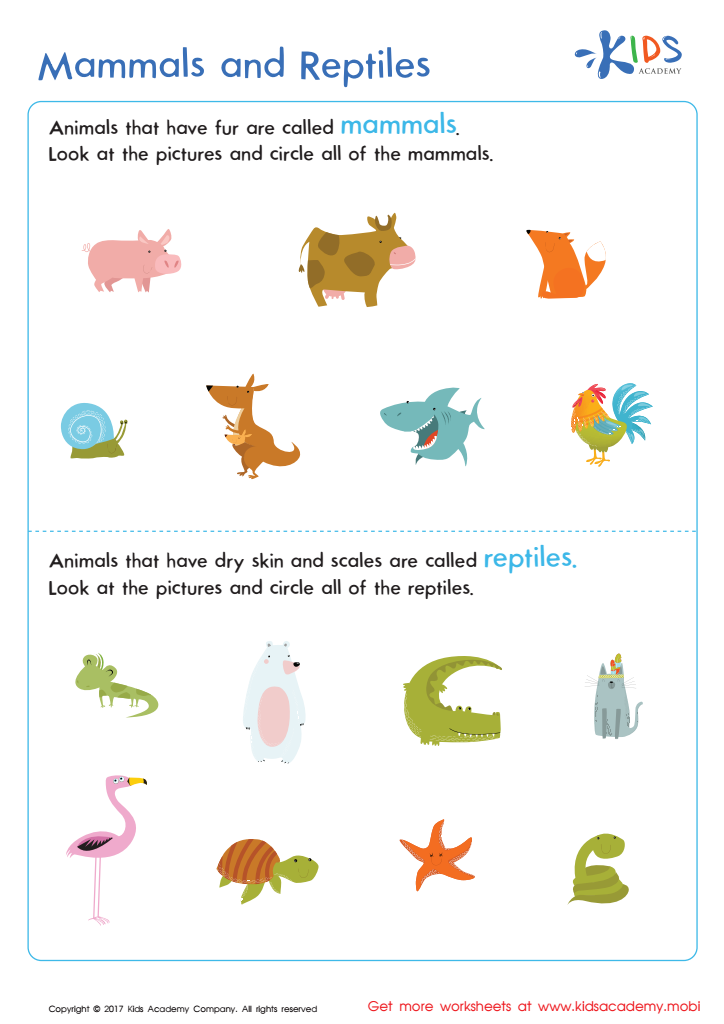
Mammals and Reptiles Worksheet
 Assign to My Students

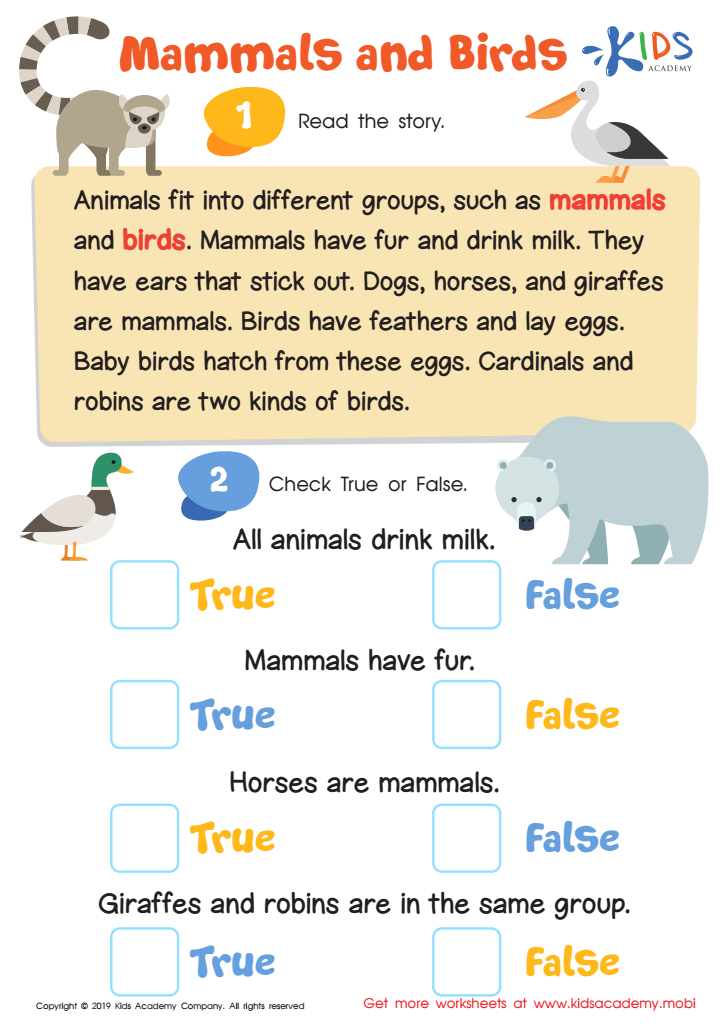
Mammals and Birds Worksheet
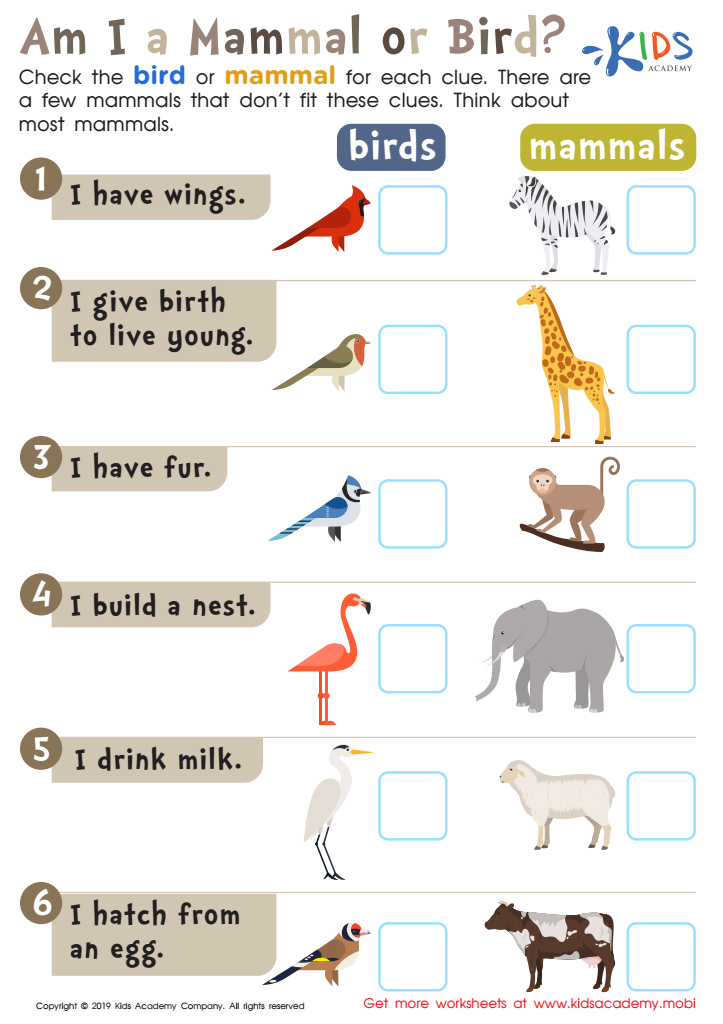
Am I a Mammal or Bird? Worksheet
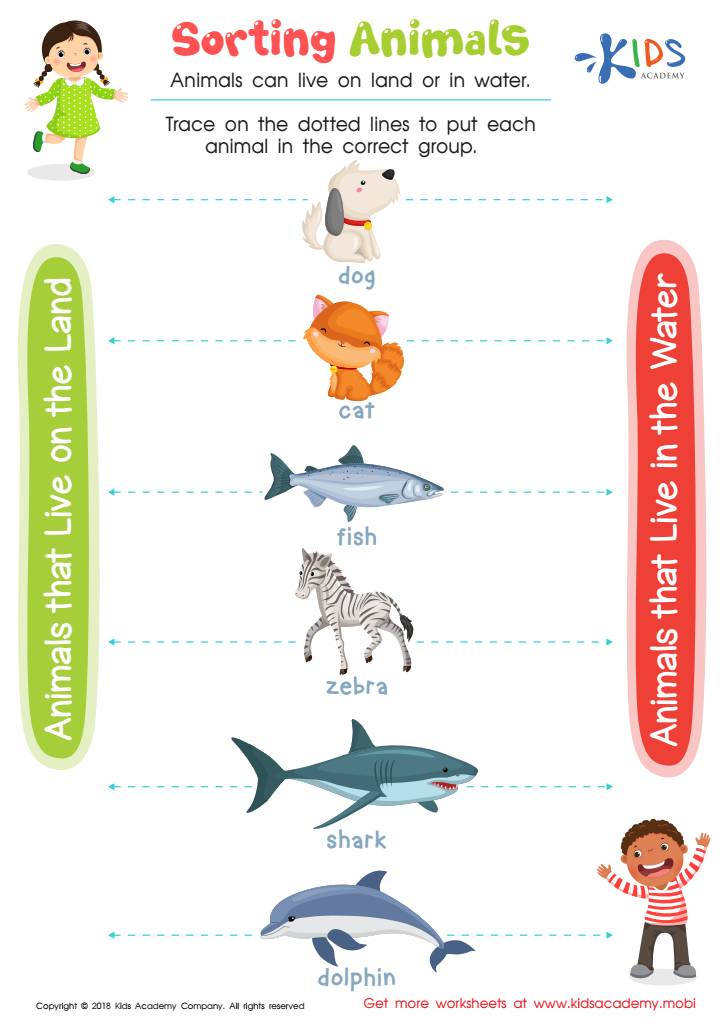
Sorting Animals Worksheet
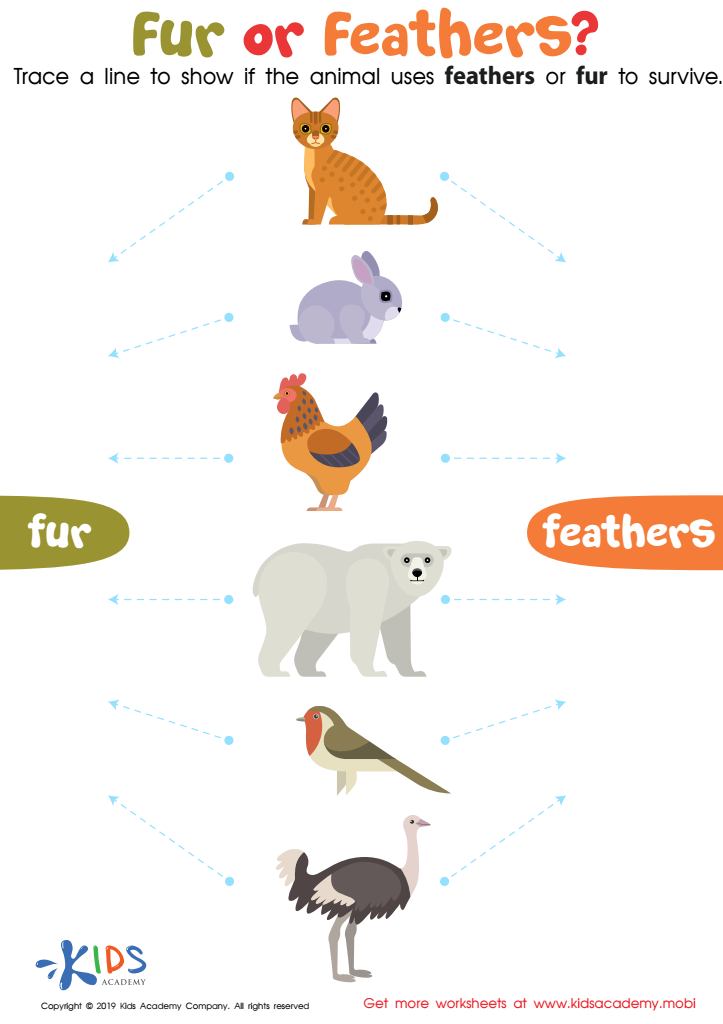
Fur or Feathers? Worksheet
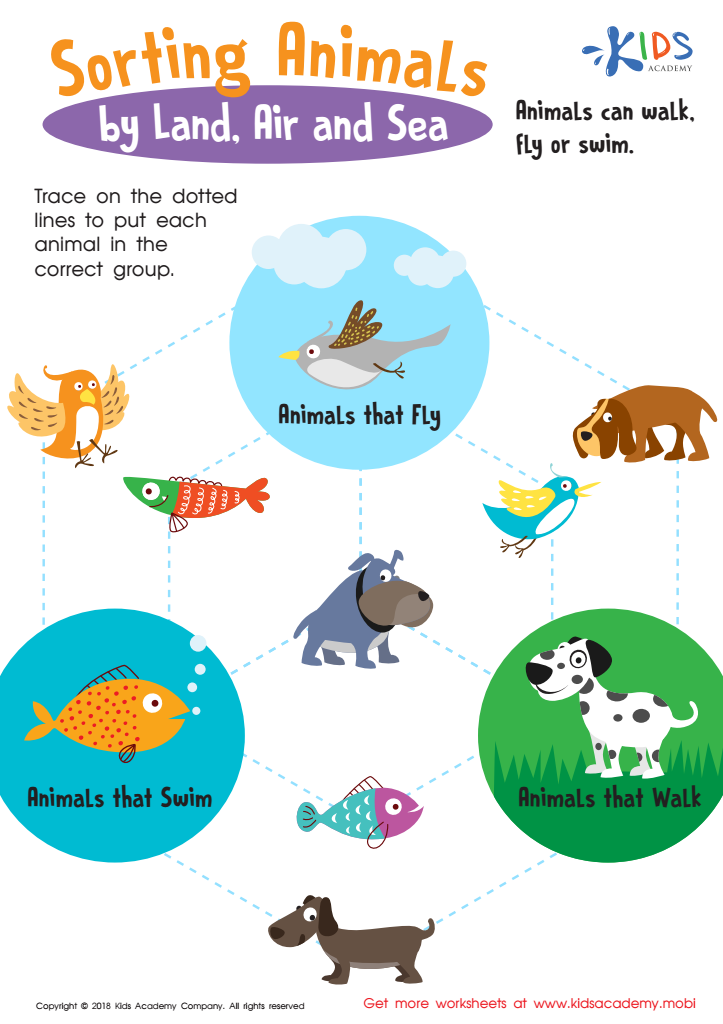
Sorting Animals by Land, Air and Sea Worksheet
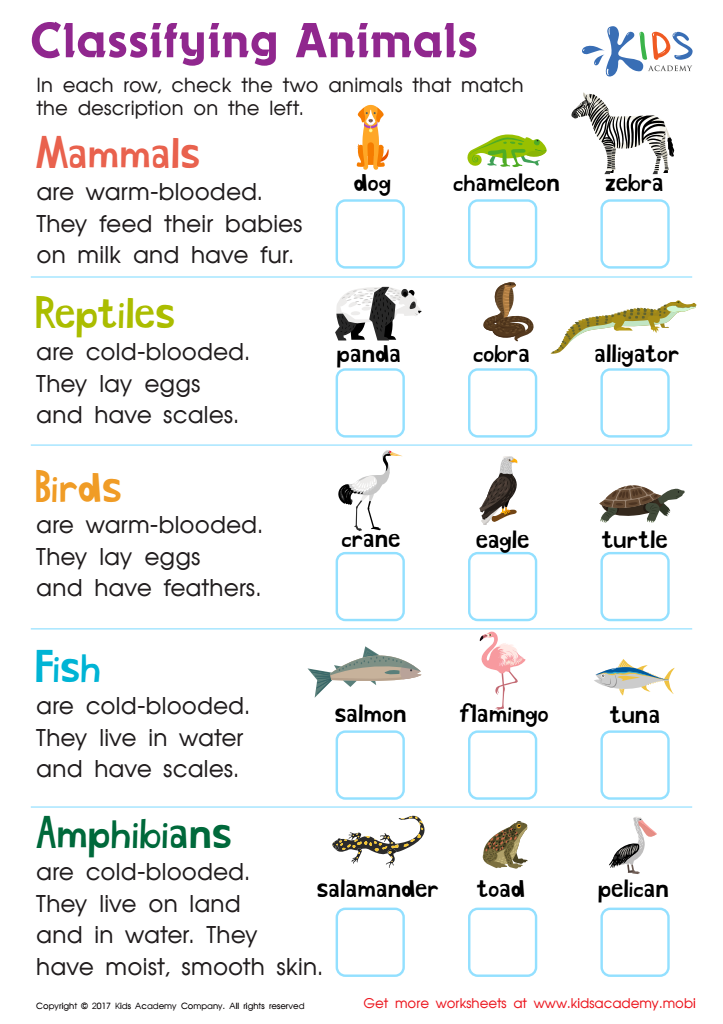
Classifying Animals Worksheet







Parents and teachers should care about teaching animal classification and the distinction between plants and animals to children ages 6-8 because it forms a foundational understanding of biology and the natural world. At this age, children are naturally curious and eager to explore their surroundings, making it an ideal time to introduce them to basic scientific concepts. Grasping differences between plant and animal kingdoms helps enhance their observational and critical thinking skills.
Teaching these concepts also promotes cognitive development by encouraging categorization and pattern recognition, vital skills for academic success. Understanding animal classification aids children in organizing information, identifying relationships between organisms, and recognizing the significance of biodiversity.
Moreover, these lessons provide a contextual platform for fostering respect and empathy for living things. By appreciating the variety of life forms, children develop a sense of environmental stewardship and responsibility. Engaging, hands-on activities encourage curiosity and lay the groundwork for lifelong learning and interest in science.
Lastly, this knowledge boosts vocabulary and literacy as children learn specific terms and descriptions for different species and their classifications. The combination of hands-on exploration, storytelling, and scientific terminology enriches language development and comprehension skills, making learning both effective and enjoyable.








