Visual recognition Community Worksheets for Ages 6-8
3 filtered results
-
From - To
Our "Visual Recognition Community Worksheets for Ages 6-8" are designed to enhance early learners' awareness and understanding of their surroundings. These engaging, age-appropriate worksheets focus on identifying and interpreting various community elements. Each activity encourages children to recognize and relate to common street signs, landmarks, and community helpers. Perfect for in-class or at-home learning, our worksheets blend fun visuals with educational content, fostering critical thinking and observational skills. These resources support social studies curriculums by bringing real-world context into the classroom, helping young learners become active, informed community members.
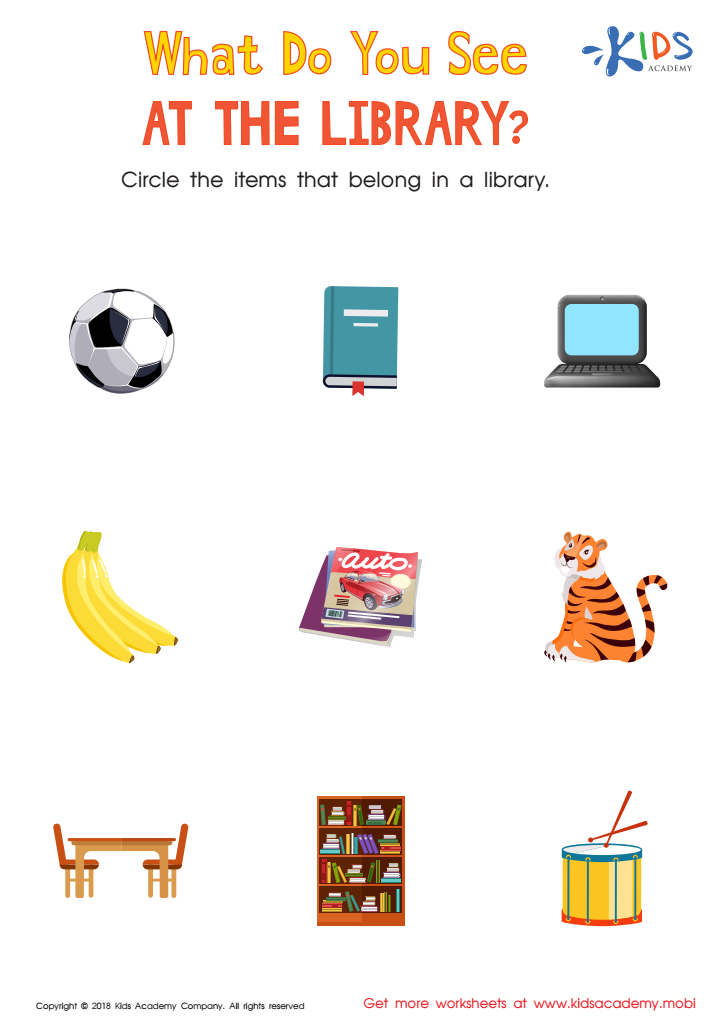
What Do you See at the Library? Worksheet
 Assign to My Students
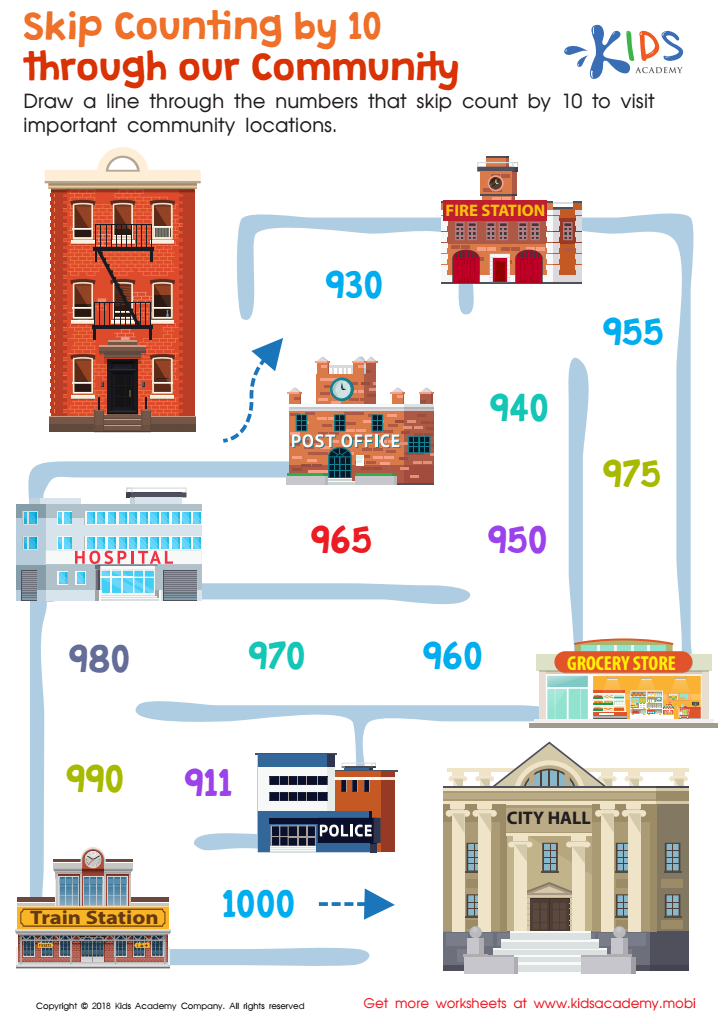
Skip Counting by 10 Through Our Community Worksheet
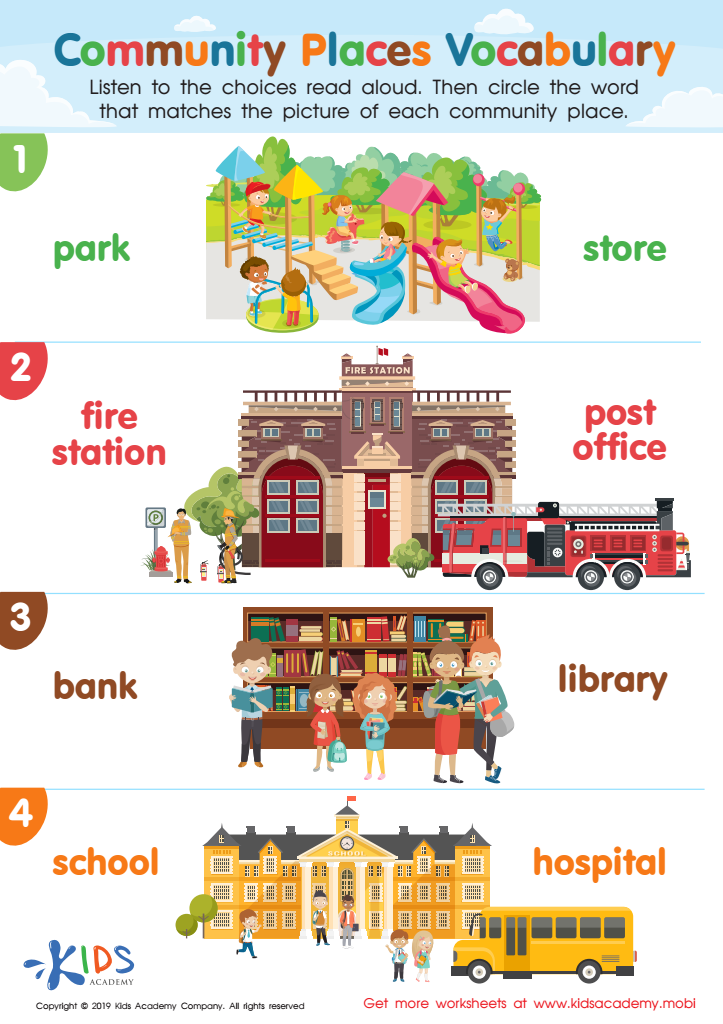
Community Places Vocabulary Worksheet








Parents and teachers should care about visual recognition development for children ages 6-8 because it lays a crucial foundation for their overall cognitive and academic growth. During these formative years, children are not only learning to read and write, but they are also rapidly developing their ability to recognize and interpret visual information from their surroundings.
Visual recognition skills include the ability to identify shapes, colors, letters, and numbers, as well as understanding spatial relationships between objects. These skills are essential for young learners as they influence critical areas such as reading comprehension, mathematical reasoning, and even fine motor skills for writing. Mastery in visual recognition enables children to better decode words, understand maps, follow instructions, and solve problems both in and out of the classroom.
Additionally, strengthening visual recognition helps enhance a child's memory, attention to detail, and observational skills, all of which are vital for academic success and overall intellectual development. It also plays a role in social interactions, as recognizing facial expressions and social cues support emotional intelligence and communication skills.
Incorporating visual recognition activities in learning can make education more engaging and effective, providing children with the tools they need for long-term success. This emphasis not only supports immediate academic achievement but also fosters lifelong skills necessary for everyday life and future learning.