Geography skills Geography Worksheets for Ages 6-8
3 filtered results
-
From - To
Unlock your child's curiosity with our engaging Geography Worksheets for ages 6-8. Specially designed to develop essential geography skills, our worksheets make learning fun and interactive. Students will explore continents, identify landmarks, and understand map basics through exciting activities. Perfect for classroom or at-home learning, these resources build a foundation in geography, enhancing problem-solving and critical thinking abilities. Empower your little explorers to appreciate the world around them with confidence! Get started today, and watch their knowledge of geography grow! Download now from Kids Academy for endless educational adventures.
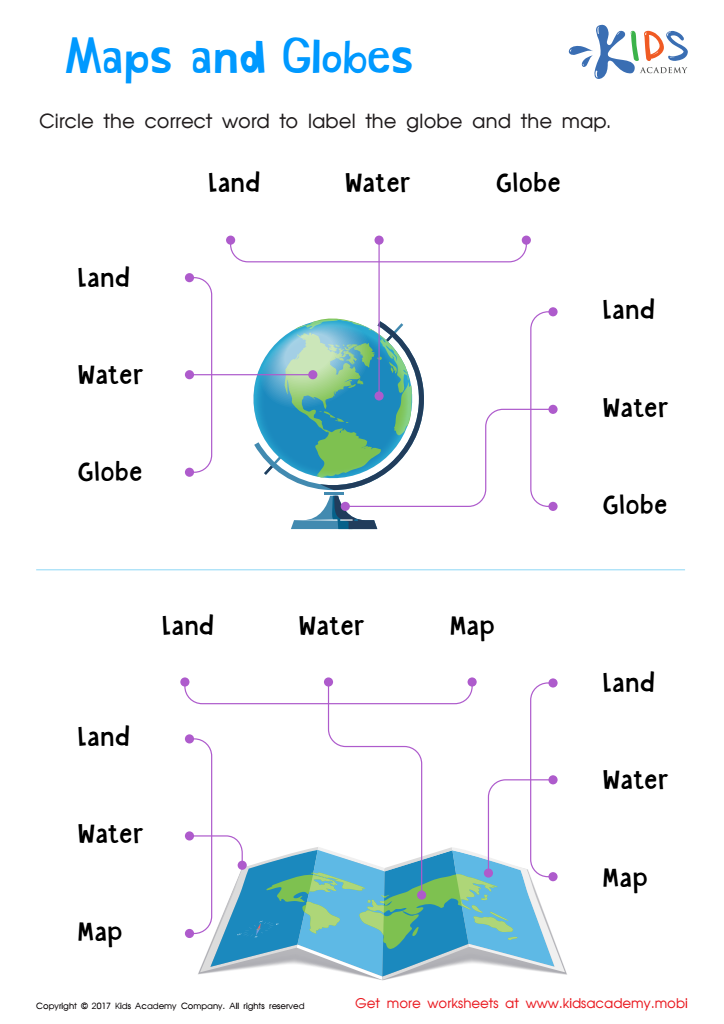
 Assign to My Students
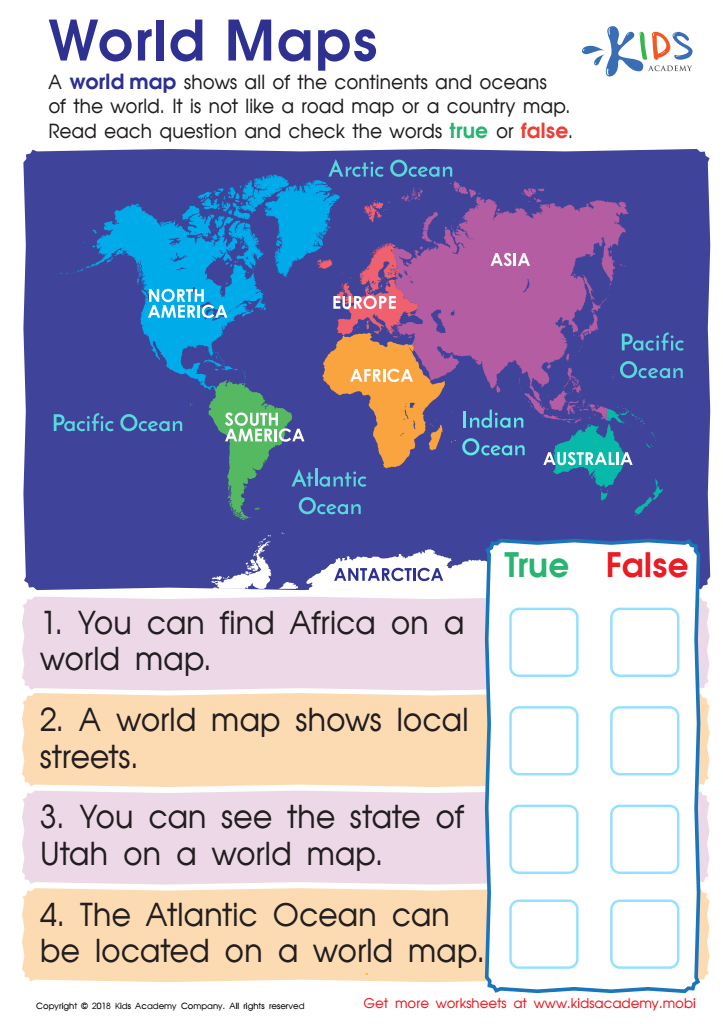
World Maps Worksheet
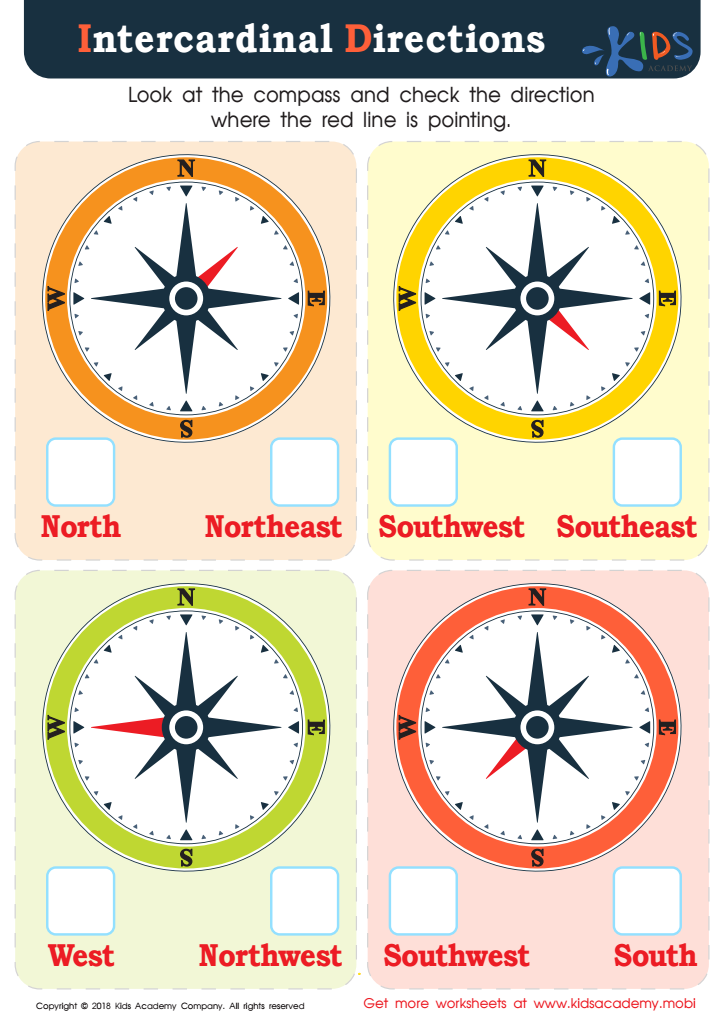
Intercardinal Directions Worksheet




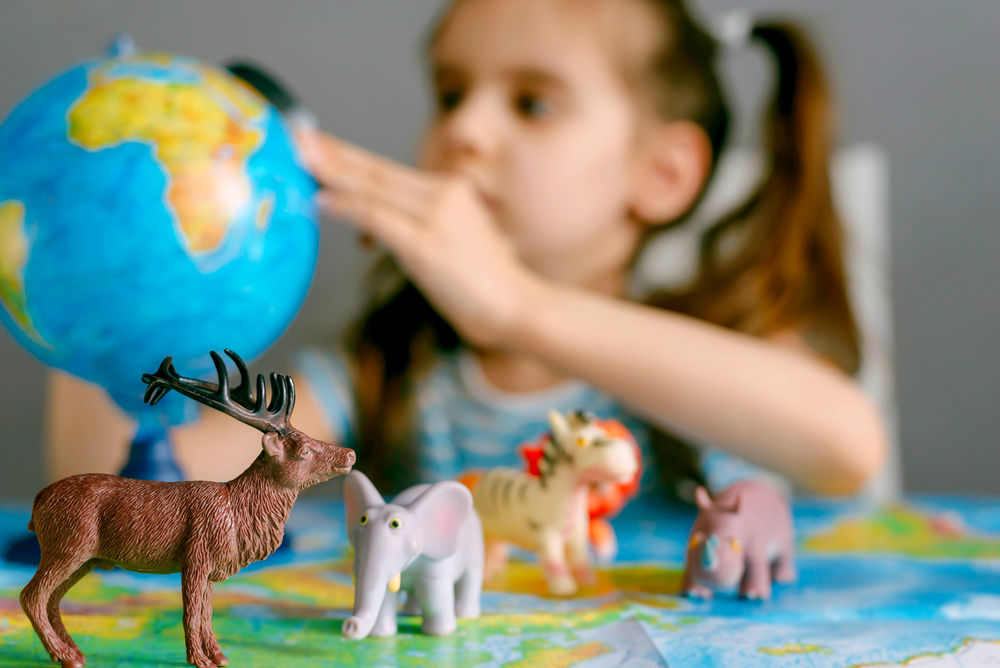


Geography skills are essential for children ages 6-8 because they lay the foundation for a better understanding of the world. At this developmental stage, kids are naturally curious, and introducing them to geography nurtures their sense of wonder and exploration. Learning geography helps children understand spatial relationships, differentiate between various landforms, and recognize continents, oceans, and countries. These skills are foundational, making future social studies and science concepts more accessible.
On a practical level, geography skills also enhance a child's cognitive abilities, such as critical thinking, problem-solving, and memory. When children learn to read maps, understand directions, and grasp the concept of scale, they're developing important cognitive skills. Moreover, geographic knowledge fosters cultural awareness by exposing children to diverse places and people. This can foster empathy and global citizenship early on.
In an increasingly interconnected world, understanding geography helps children relate to global events and environmental issues. It sparks interest in issues such as climate change and conservation, instilling stewardship for the earth from a young age. Therefore, parents and teachers should prioritize geography education, as it equips children with crucial skills that benefit their academic growth and personal development.








