Map reading Geography Worksheets for Ages 6-8
3 filtered results
-
From - To
Discover engaging Map Reading Geography Worksheets designed specifically for children aged 6-8! These interactive and educational resources help young learners develop essential map-reading skills, reinforcing their understanding of directions, landmarks, and basic geography concepts. Tailored to be age-appropriate, these worksheets include fun activities such as identifying map symbols and exploring various types of maps. Each worksheet fosters critical thinking and boosts spatial awareness while keeping kids entertained. Perfect for classrooms or at-home learning, our worksheets empower children to confidently navigate maps and gain a deeper appreciation for the world around them. Start exploring geography today with our delightful worksheets!
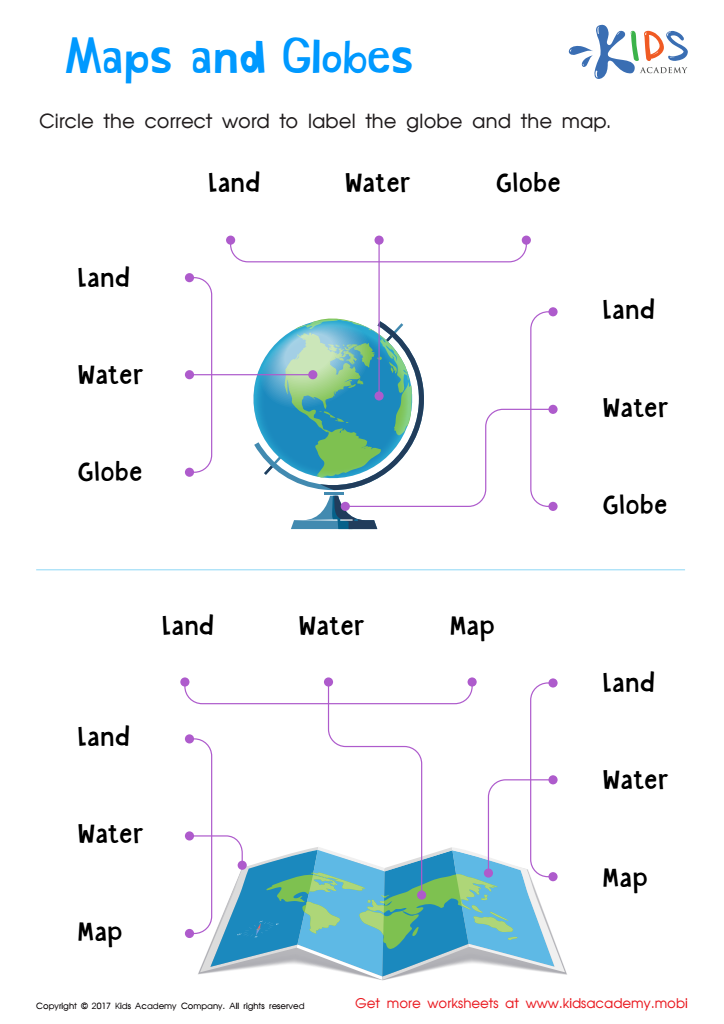
 Assign to My Students
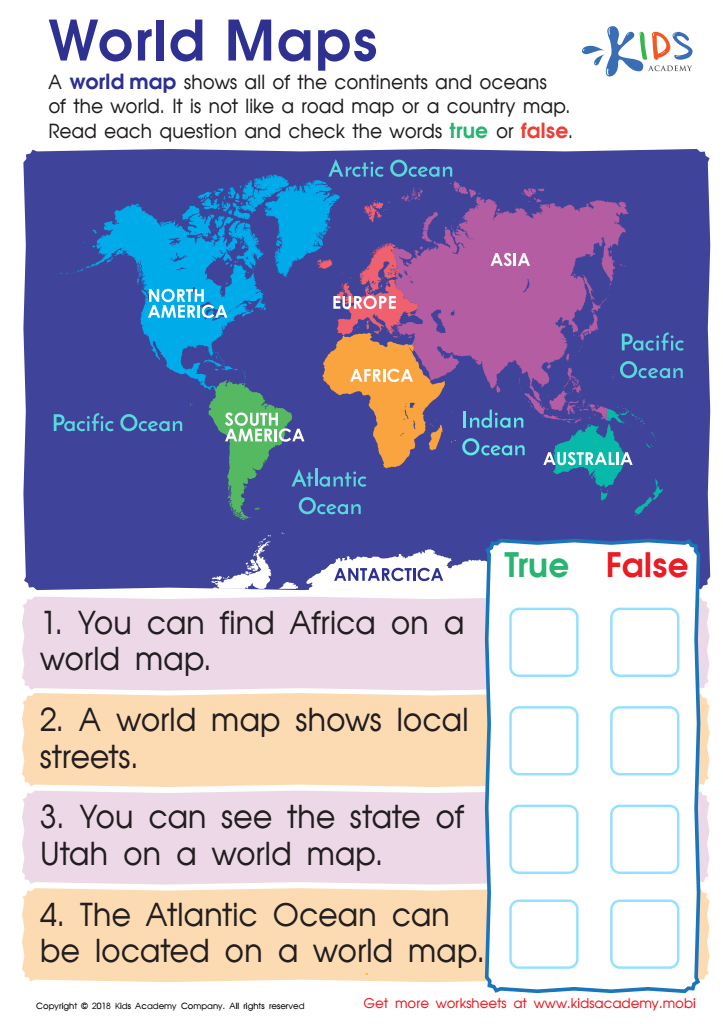
World Maps Worksheet
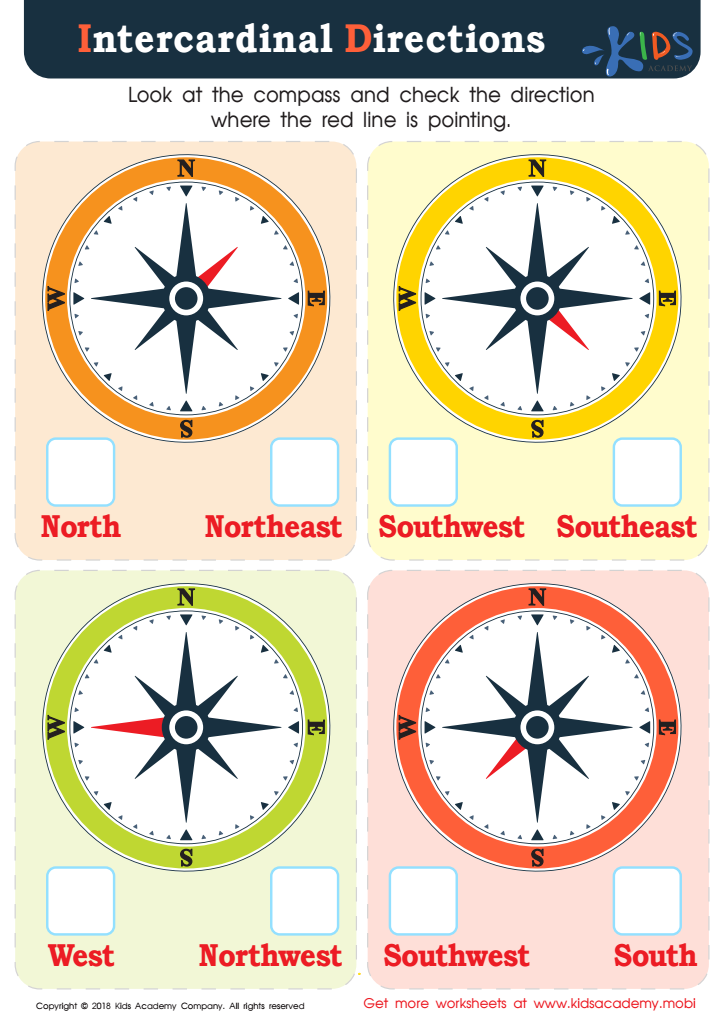
Intercardinal Directions Worksheet




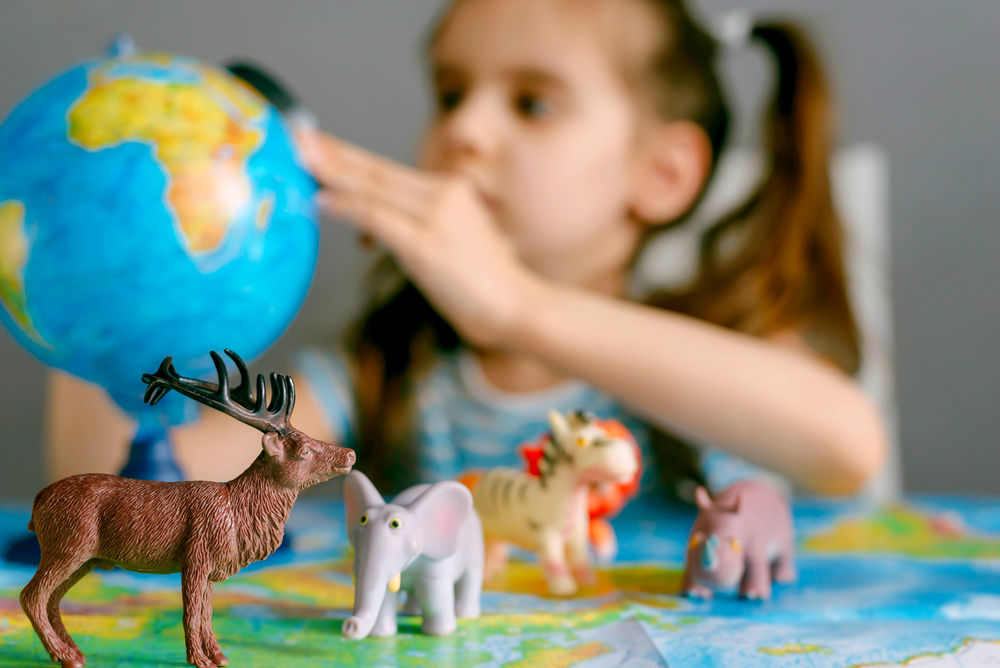


Map reading geography is an essential skill for children aged 6-8, and both parents and teachers should prioritize its importance. At this age, children are naturally curious about the world around them, and map reading provides a tangible way to explore their environment. Learning to interpret maps can enhance spatial awareness, allowing children to visualize distances and navigate different landscapes.
Understanding maps also fosters critical thinking and problem-solving skills. When children engage with maps, they learn to analyze information, distinguish between various symbols, and connect data to real-world locations. This can lead to a deeper appreciation for geography, cultures, and communities. Moreover, map reading encourages independence and confidence. As children learn to find their way with maps, they gain a sense of accomplishment that motivates further exploration.
Additionally, in our increasingly globalized world, early geography education lays the foundation for environmentally conscious citizenship. By understanding where they are in relation to the planet, children develop a sense of responsibility for their surroundings. Ultimately, parents and teachers should value map reading geography for its role in cultivating informed, curious, and capable individuals who are prepared to engage with the world meaningfully.








