Understanding citizenship Good Citizenship Worksheets for Ages 6-8
5 filtered results
-
From - To
Unlock the principles of good citizenship with our engaging "Understanding Citizenship Good Citizenship Worksheets" designed specifically for children aged 6-8. These interactive worksheets will help young learners grasp the core values of being a responsible and caring citizen in their communities. Through fun activities, children will explore concepts such as respect, sharing, and community involvement, fostering a sense of purpose and belonging. Our thoughtfully curated resources aim to inspire empathy, teamwork, and moral understanding, laying the foundation for knowledgeable and active citizens in the future. Perfect for classroom settings or at-home learning, these worksheets make understanding citizenship enjoyable and impactful!
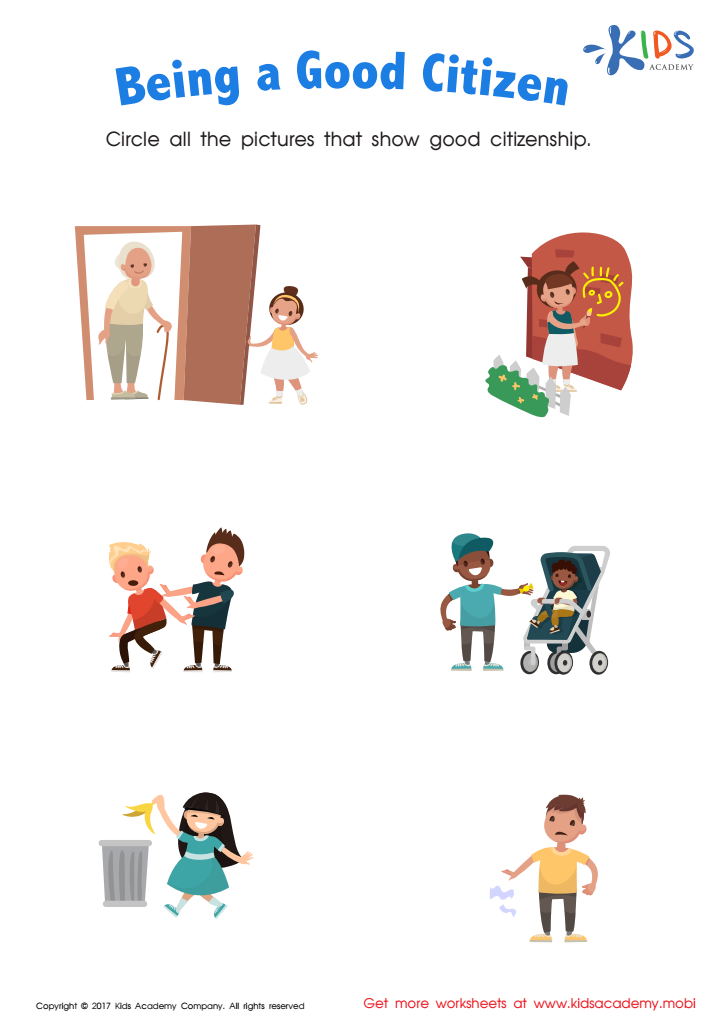
Being a Good Citizen Printable
 Assign to My Students
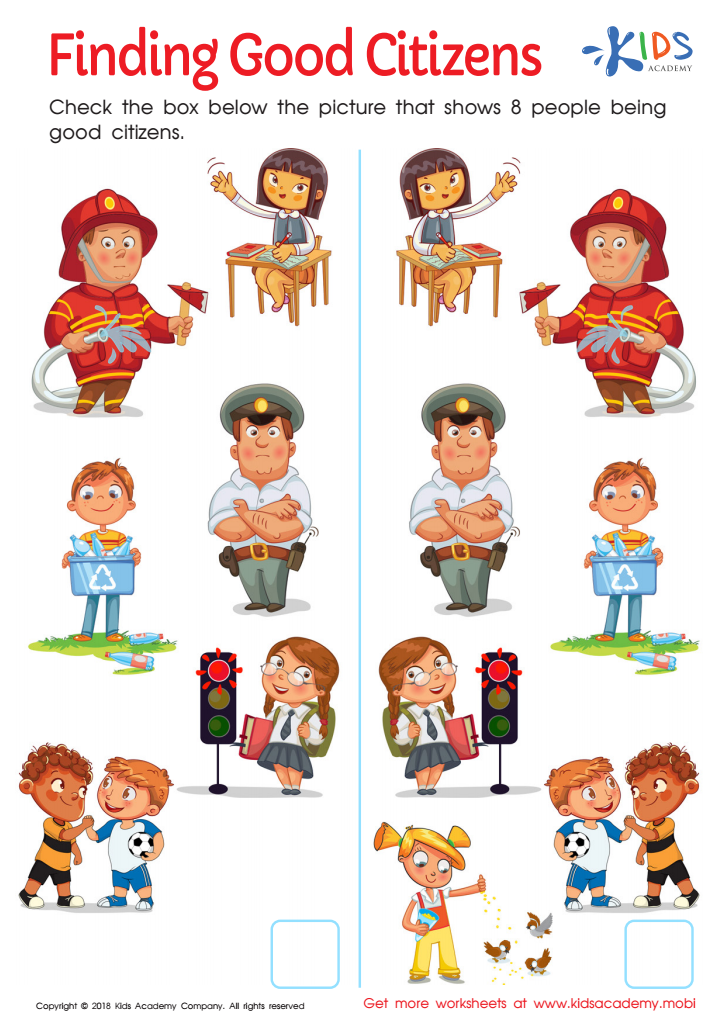
Finding Good Citizens Worksheet
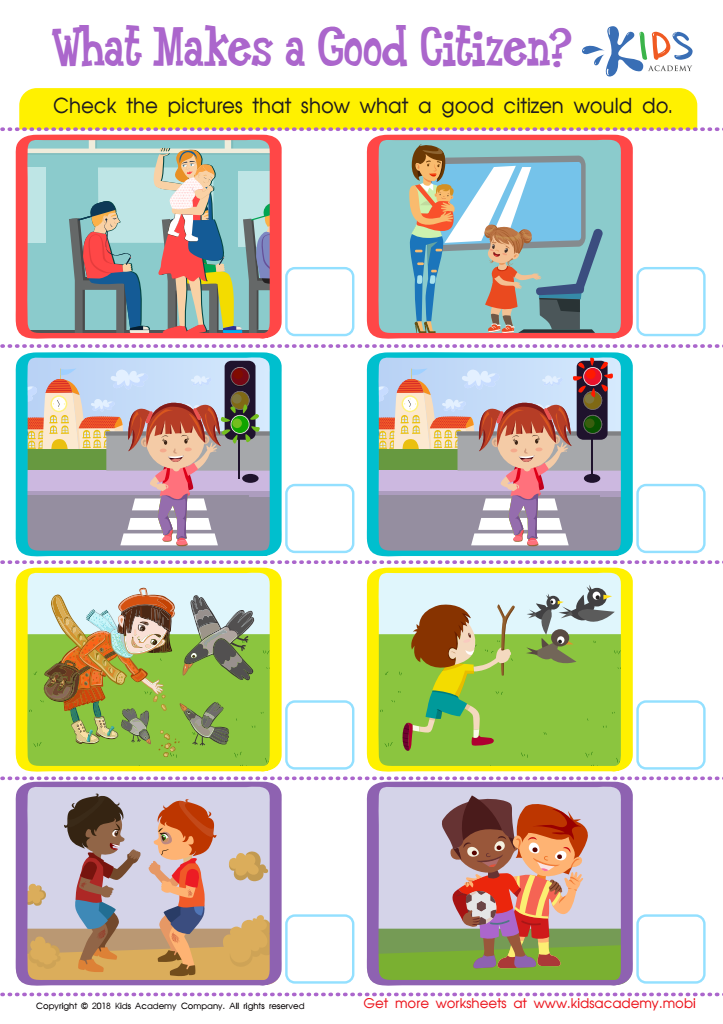
What Makes a Good Citizen? Worksheet
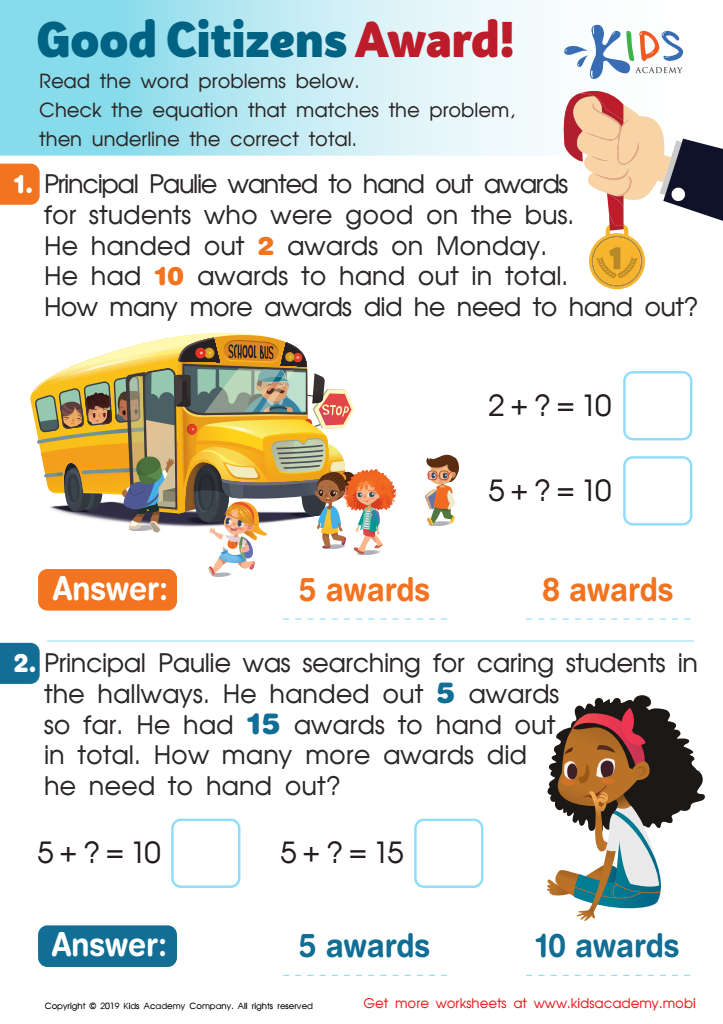
Good Citizens Award! Worksheet
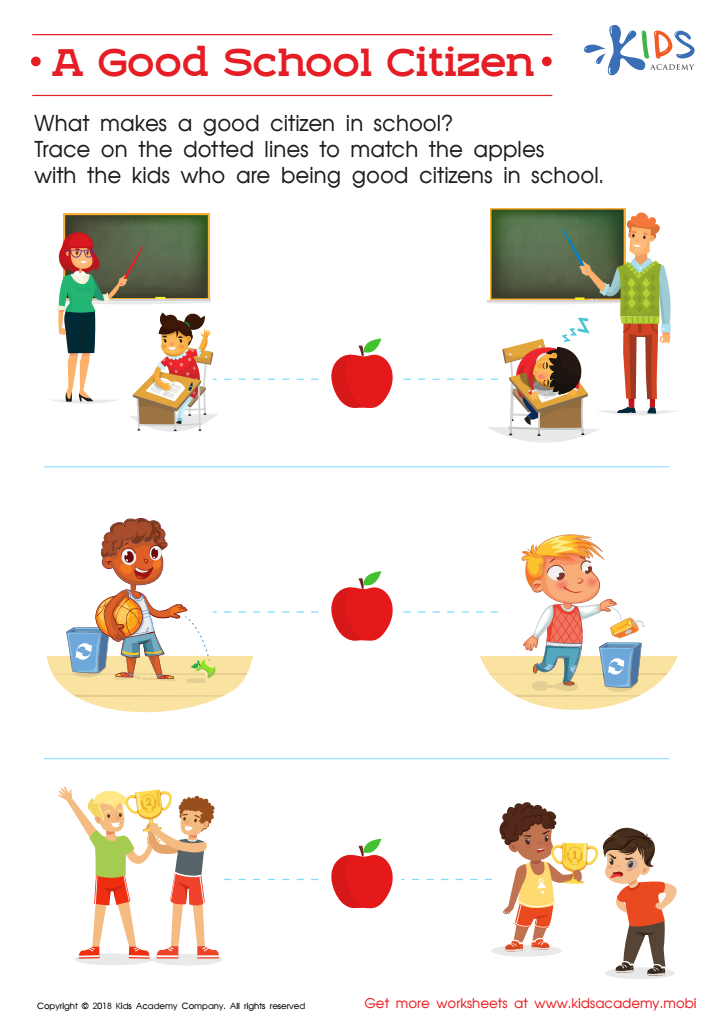
A Good School Citizen Worksheet


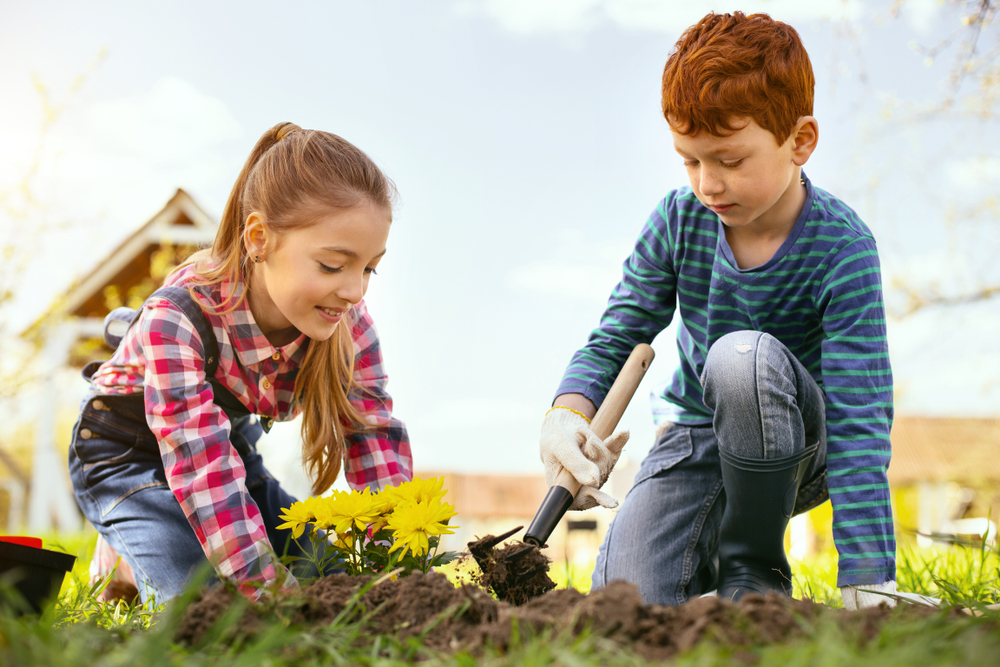

Understanding citizenship and good citizenship is crucial for children ages 6-8, which makes it essential for parents and teachers to prioritize this learning in their educational approaches. At this developmental stage, children are beginning to understand their place in the world and recognize their responsibilities within their families, schools, and communities. Teaching them about citizenship helps instill values such as empathy, respect, and cooperation.
Children learn to appreciate diversity and the importance of inclusion, fostering a sense of belonging and community from a young age. Good citizenship education encourages young learners to take an active role in their communities, promoting engagement in group activities, volunteering, and helping others – behaviors that lay a foundation for responsible adults.
Moreover, understanding the rights and responsibilities that come with citizenship empowers children to express their opinions, understand fairness, and resolve conflicts in a constructive manner. This early foundation can lead to a generation of informed, compassionate, and active citizens. By enhancing their understanding of these concepts, parents and teachers can help cultivate qualities that contribute to a stronger society and a more harmonious world.








