Counting skills Governance and Civics Worksheets for Ages 6-8
3 filtered results
Difficulty Level
Grade
Age
-
From - To
Subject
Activity
Standards
Dive into interactive learning with our "Counting Skills Governance and Civics Worksheets" tailored for ages 6-8. These engaging worksheets seamlessly integrate fundamental counting skills with civics lessons, helping young learners understand governance while enhancing their math proficiency. Children will enjoy activities that foster numeracy, critical thinking, and an early appreciation for civic knowledge. Perfectly structured to capture the attention of your curious minds, our worksheets deliver education through fun, ensuring that vital principles of counting and governance stick with them. Empower your child with skills for lifelong learning and responsible citizenship. Explore our collection now!
Favorites
With answer key
Interactive
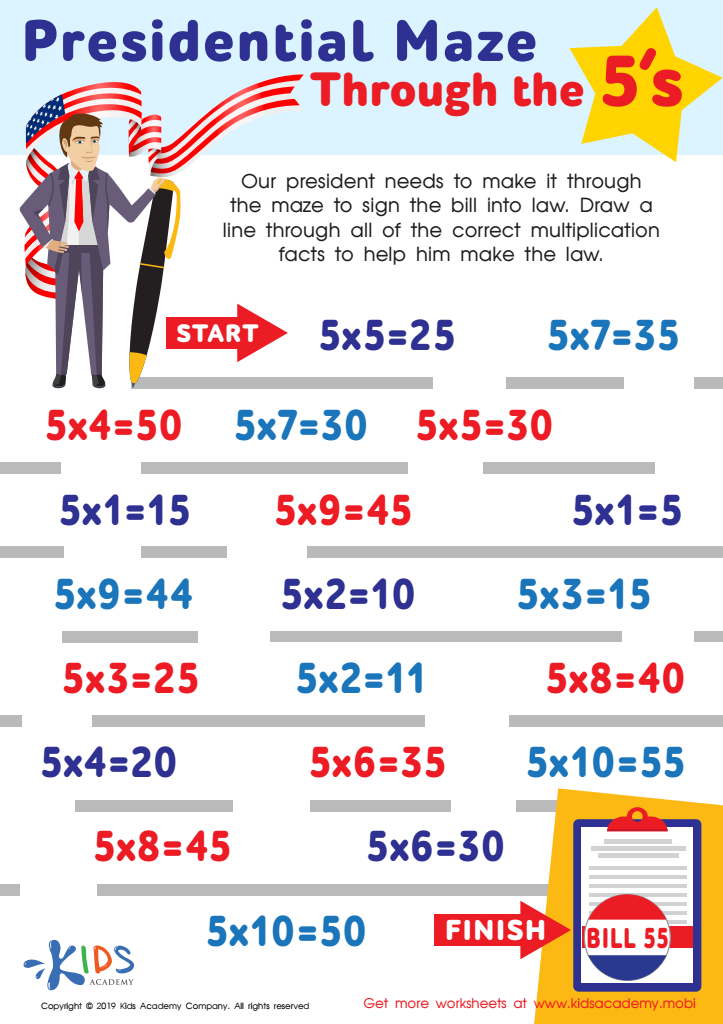
Presidential Maze Through the 5’s Worksheet
Help your kids draw a line through the right multiplication facts to guide the state's President to sign the bill into law. This is a big responsibility - the President has been elected to make decisions on behalf of the people and has the power to make laws and sign them.
 Assign to My Students
Presidential Maze Through the 5’s Worksheet
Worksheet
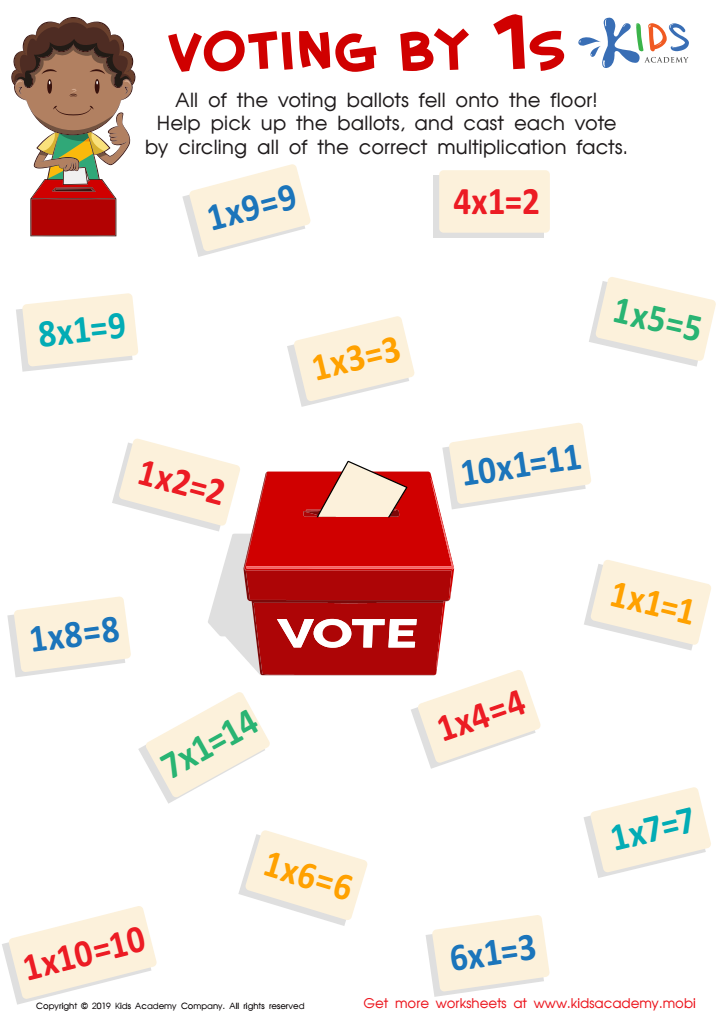
Voting by 1s Worksheet
Ask your child if they can list duties of a good citizen. These include voting, to elect right leaders. With this worksheet, the voting ballots have fallen to the floor! Help your kids pick them up and cast each vote by circling the correct multiplication facts.
Voting by 1s Worksheet
Worksheet
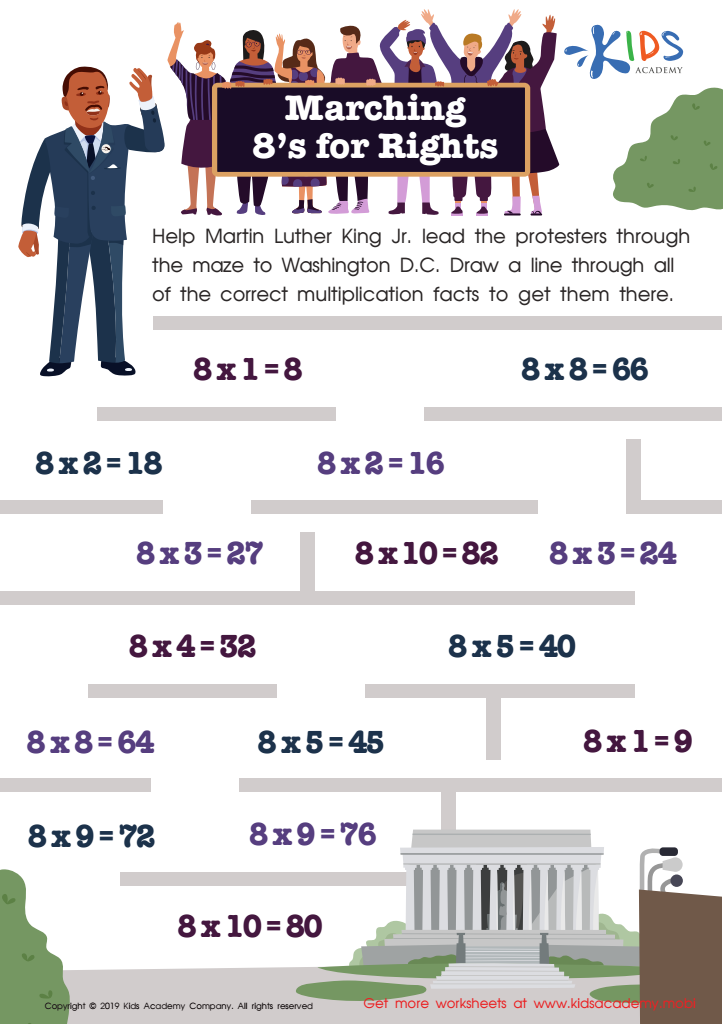
Marching 8’s for Rights Worksheet
Encourage your students to explore MLK's history! This worksheet provides the perfect opportunity. Help them understand his contributions by having them "march" MLK from the starting point to Washington D.C. Have them draw a line through the correct multiplication facts to get there. It's an enjoyable way for kindergartners to learn about a key part of history.
Marching 8’s for Rights Worksheet
Worksheet
Join Kids Academy for Free
Who is primarily going to use this learning content?


Counting skills, governance, and civics are foundational aspects of early childhood education that play a crucial role in the holistic development of children aged 6-8. Parents and teachers should prioritize these areas to empower children with essential life skills.
Counting skills are the cornerstone of numeracy, which not only helps with mathematical understanding but also enhances cognitive development, problem-solving abilities, and logical reasoning. Children who grasp counting concepts early are better equipped to tackle more complex math problems in the future, contributing to their academic success across disciplines.
Governance and civics education introduced at this age fosters an understanding of community, citizenship, and democracy. It cultivates responsibility, empathy, and social awareness, teaching children about their roles within their community and how systems and rules contribute to the safety and well-being of society. This early exposure to governance and civics empowers children to develop a sense of justice, respect for others, and a commitment to being active, informed citizens.
Together, counting skills and civics education build a strong foundation for future learning and personal development. They prepare children not only for academic achievement but also for becoming responsible, engaged members of society. Parents and teachers play a pivotal role in supporting these foundational skills, ensuring children have the tools they need for lifelong success.