Reading Skills History Worksheets for Ages 6-8
3 filtered results
Difficulty Level
Grade
Age
-
From - To
Subject
Activity
Standards
Discover our engaging Reading Skills History Worksheets designed specifically for children aged 6-8! These interactive worksheets help young learners build essential reading comprehension skills while exploring fascinating historical content. Each worksheet encourages critical thinking and supports vocabulary development through fun activities and diverse topics that intrigue young minds. With a blend of colorful visuals and easy-to-understand text, kids will enjoy diving into history as they improve their reading abilities. Perfect for classroom settings or at-home learning, our resources provide a valuable tool for educators and parents alike. Foster a love for reading and history in your child today!
Favorites
With answer key
Interactive
Thomas Jefferson and the 7’s Worksheet
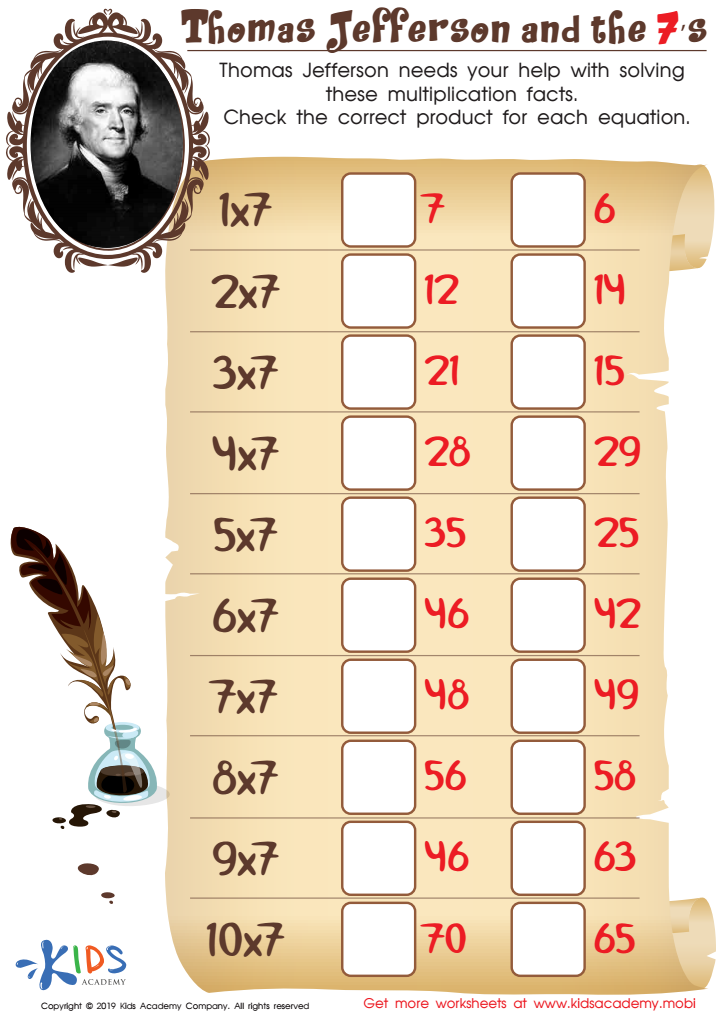
Thomas Jefferson championed education and wants kids to know their times tables. Help your child with this worksheet focusing on 7's. Check the box for the correct answer for each multiplication problem. Make sure your child gets the facts right!
 Assign to My Students
Thomas Jefferson and the 7’s Worksheet
Worksheet
The Road of 4’s to Jamestown Worksheet
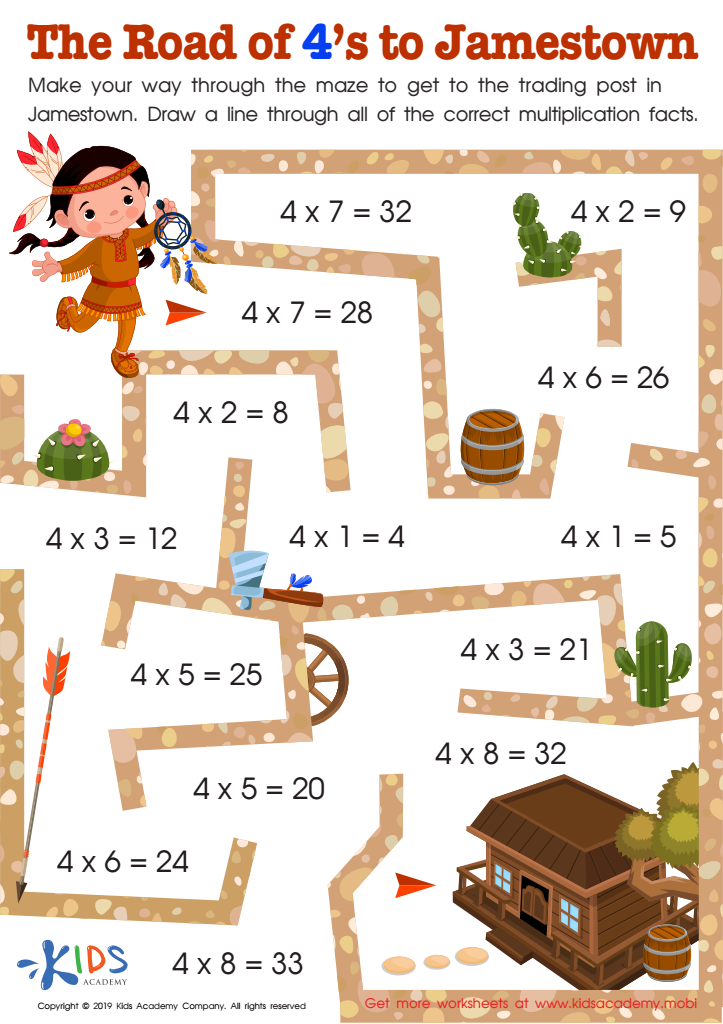
Does your child enjoy trips? Help them remember the best ones with this fun worksheet maze! Get your kid to look at the picture and draw a line through all the right multiplication facts to get to Jamestown's trading post. This worksheet is a great way to stimulate their problem-solving skills.
The Road of 4’s to Jamestown Worksheet
Worksheet
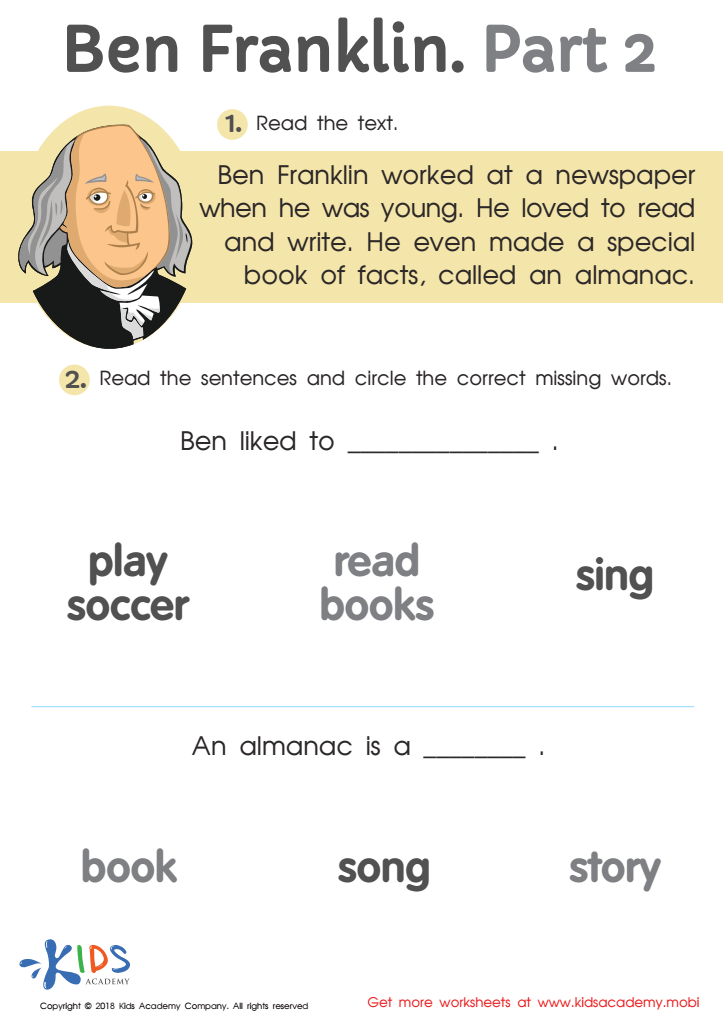
Ben Franklin Part 2 Worksheet
History is filled with great figures, like Benjamin Franklin. Let your kids in on the legacy by introducing them to the founder of the US fire department, diplomat, and inventor. Then, use a worksheet to have them fill in the blanks with the correct word to teach them more. Read the text, then read the sentences and have them circle the missing word.
Ben Franklin Part 2 Worksheet
Worksheet
Join Kids Academy for Free
Who is primarily going to use this learning content?








Understanding the history of reading skills for children ages 6-8 is crucial for both parents and teachers as it provides valuable insights into the cognitive and developmental processes associated with literacy acquisition. During these formative years, children transition from learning to read to reading to learn, making effective reading instruction vital. Historically, various pedagogical approaches have shaped how reading is taught, influencing the tools and methods available to educators today.
By acknowledging past achievements and challenges in reading education, parents and teachers can adopt evidence-based practices that support diverse learning styles. Recognizing the historical shifts—such as the movement from phonics-based instruction to balanced literacy—allows educators to choose approaches backed by research and responsive to the needs of modern learners.
Furthermore, understanding reading skills history can help parents support their children’s literacy development at home, reinforcing learning strategies and building a love for reading through engaging materials and activities. It fosters collaboration between home and school, ensuring that children receive consistent and effective support. Ultimately, an informed perspective on reading skills history empowers adults to more effectively nurture the essential literacy skills that will benefit children throughout their education and beyond.