
Understanding patterns History Worksheets for Ages 6-8
3 filtered results
Difficulty Level
Grade
Age
-
From - To
Subject
Activity
Standards
Discover engaging "Understanding Patterns History Worksheets" designed for children ages 6-8. Foster your young learners' cognitive and analytical skills through fun and educational history activities. These printable worksheets encourage students to identify and understand historical patterns, enhancing their critical thinking abilities. Our resources carefully blend enjoyable tasks with age-appropriate challenges, ensuring that children develop a robust foundation in social studies. Perfect for classrooms or homeschooling, these worksheets provide valuable learning opportunities while creating a love for history. Equip your child with the tools for academic success with Kids Academy's expertly crafted worksheets.
Favorites
With answer key
Interactive
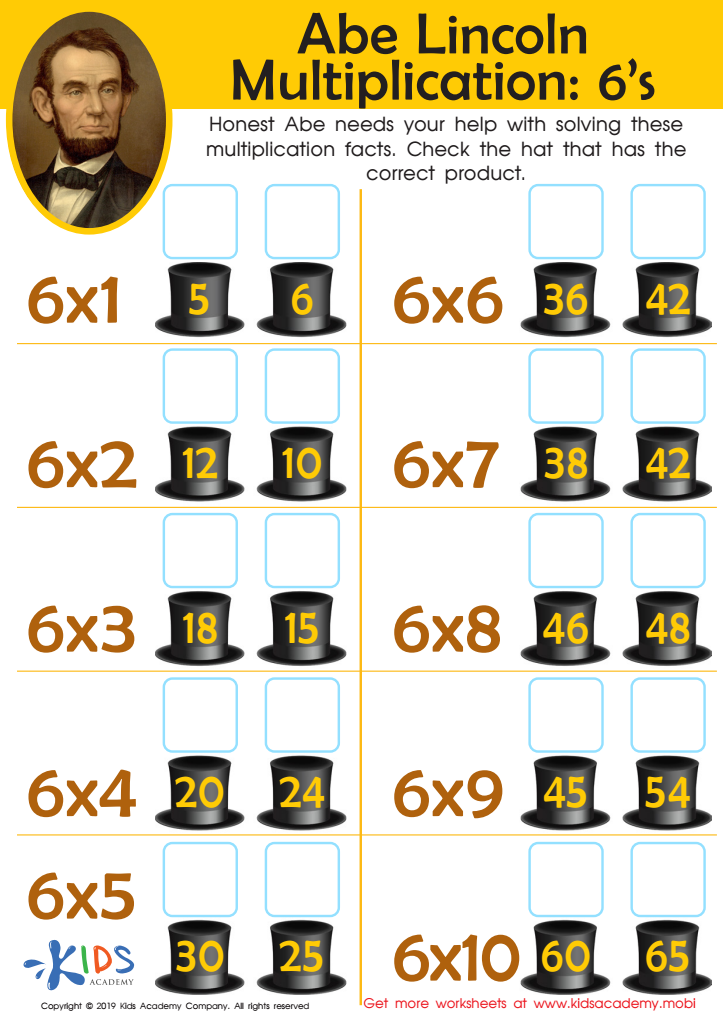
Abe Lincoln Multiplication: 6’s Worksheet
Abraham Lincoln is a key figure in US history. Remind your kids of his contributions and challenge them with this multiplication worksheet! Ask them to solve the facts in the picture and check the hat with the correct product.
 Assign to My Students
Abe Lincoln Multiplication: 6’s Worksheet
Worksheet
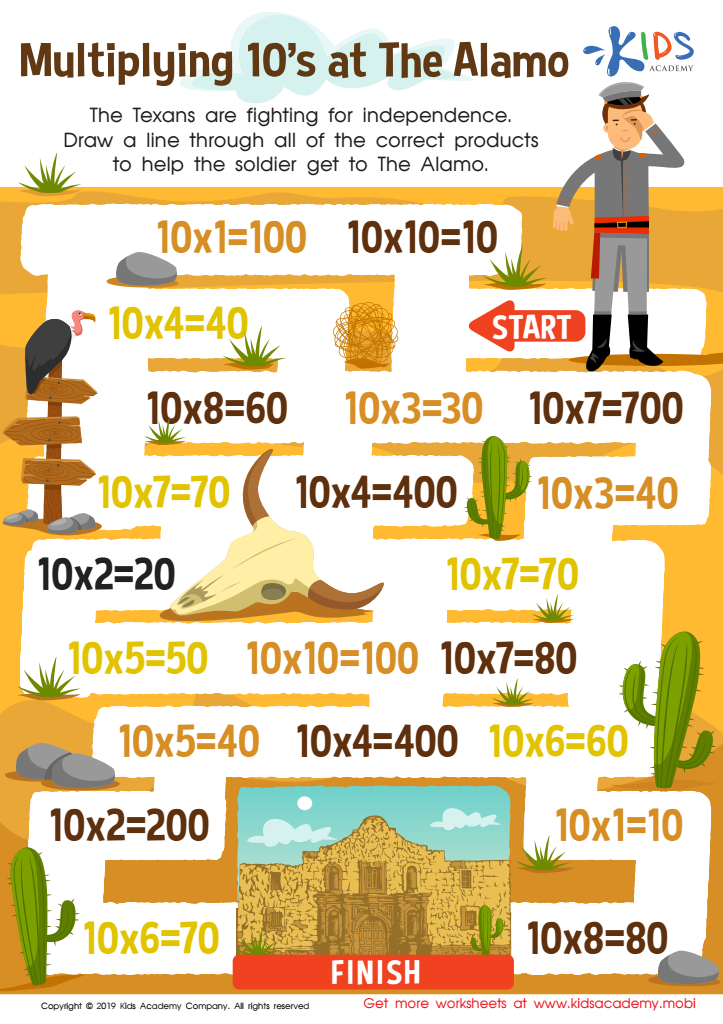
Multiplying 10’s at The Alamo Worksheet
Teach your kids easy tricks to simplify any multiplication problem. For example, when multiplying any number by 10, the result will always end in a zero. To help the Texans in this worksheet, draw a line through all of the correct products to get them to The Alamo.
Multiplying 10’s at The Alamo Worksheet
Worksheet
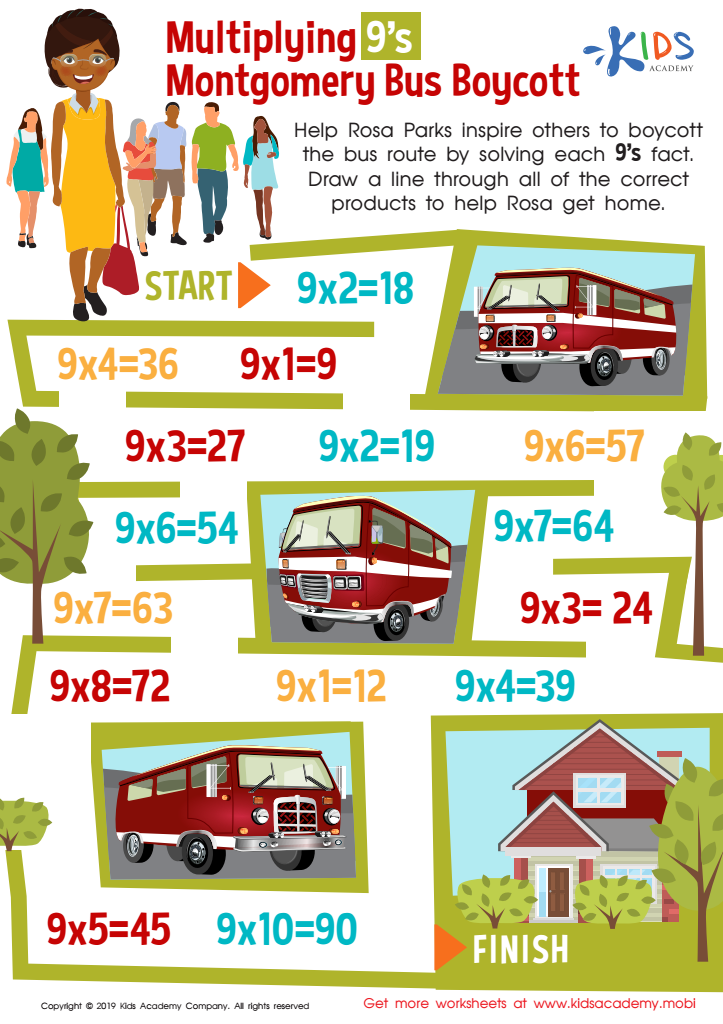
Multiplying 9’s Montgomery Bus Boycott Worksheet
As your students learn math, the numbers get bigger. This worksheet is great for learning the nine times table. Help Rosa Park get home - ask them to solve each multiplication fact, then draw a line through the correct products. Encourage your students to stand up for what's right!
Multiplying 9’s Montgomery Bus Boycott Worksheet
Worksheet
Join Kids Academy for Free
Who is primarily going to use this learning content?






.jpg)

Understanding patterns in history is crucial for young children, as it lays a strong foundation for critical thinking and helps develop essential cognitive skills. For children aged 6-8, recognizing and understanding patterns doesn't simply pertain to numbers or shapes; it extends to historical events and societal changes. Encouraging an interest in these patterns can foster a deeper comprehension of cause and effect, an essential component of logical reasoning.
When children learn about historical patterns, they begin to see how actions and decisions lead to various outcomes. This understanding helps them grasp the concept of consequences and the interconnectedness of events, both past and present. For example, recognizing the repeated challenges faced by different cultures teaches empathy and broadens their perspective of the world.
Moreover, discussing historical patterns promotes curiosity and a love of learning. It sparks questions about why things happened the way they did, leading to further inquiry and exploration. This inquisitiveness is vital for cognitive development and nurtures a lifelong appreciation for knowledge.
Ultimately, teaching children about patterns in history helps them make sense of their world, appreciate diversity, and engage more meaningfully with current events. It builds a framework for understanding complex systems, setting them up for academic and personal success.








