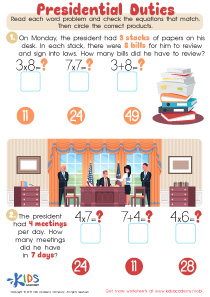
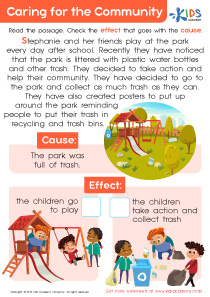
Counting skills Social Studies Worksheets for Ages 6-8
4 filtered results
-
From - To
Unlock your child's potential with our engaging Counting Skills Social Studies Worksheets for ages 6-8. These resources blend math and social studies education, enhancing numerical understanding while exploring communities, cultures, and history. Each worksheet offers innovative counting exercises, tailored to kindergarten and early elementary students. Kids will enjoy counting objects, analyzing graphs, and recognizing patterns. Our fun and interactive approach ensures students enthusiastically build foundational life skills. Perfect for home or classroom use, these worksheets provide a strong groundwork for lifelong learning and curiosity. Empower your child’s educational journey with our expertly curated Counting Skills Social Studies Worksheets!
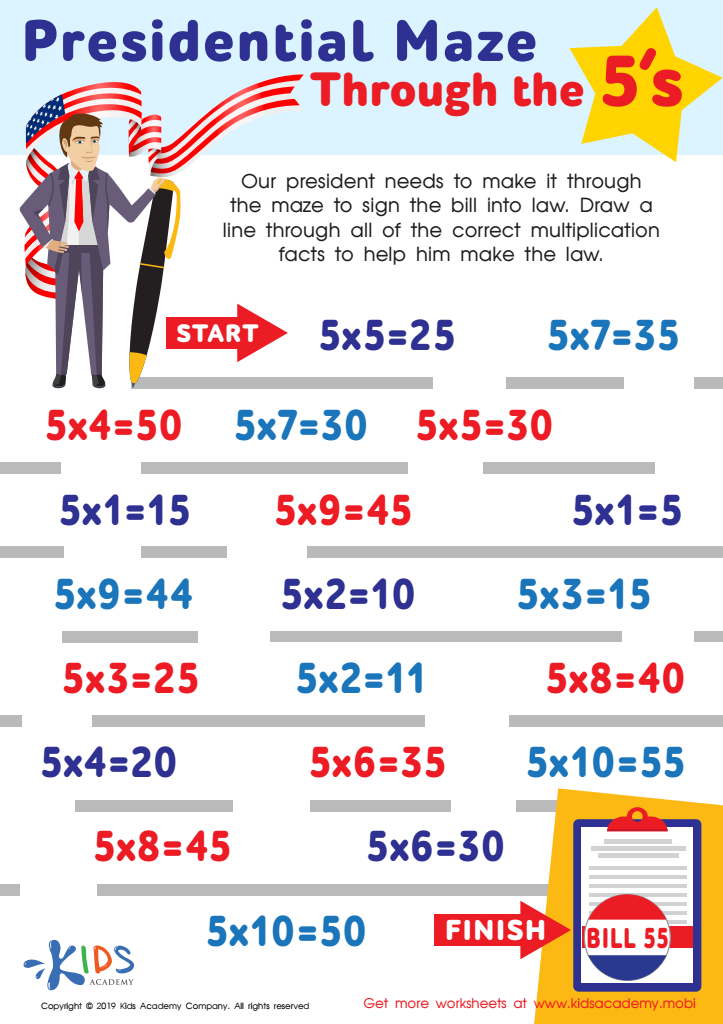
Presidential Maze Through the 5’s Worksheet
 Assign to My Students
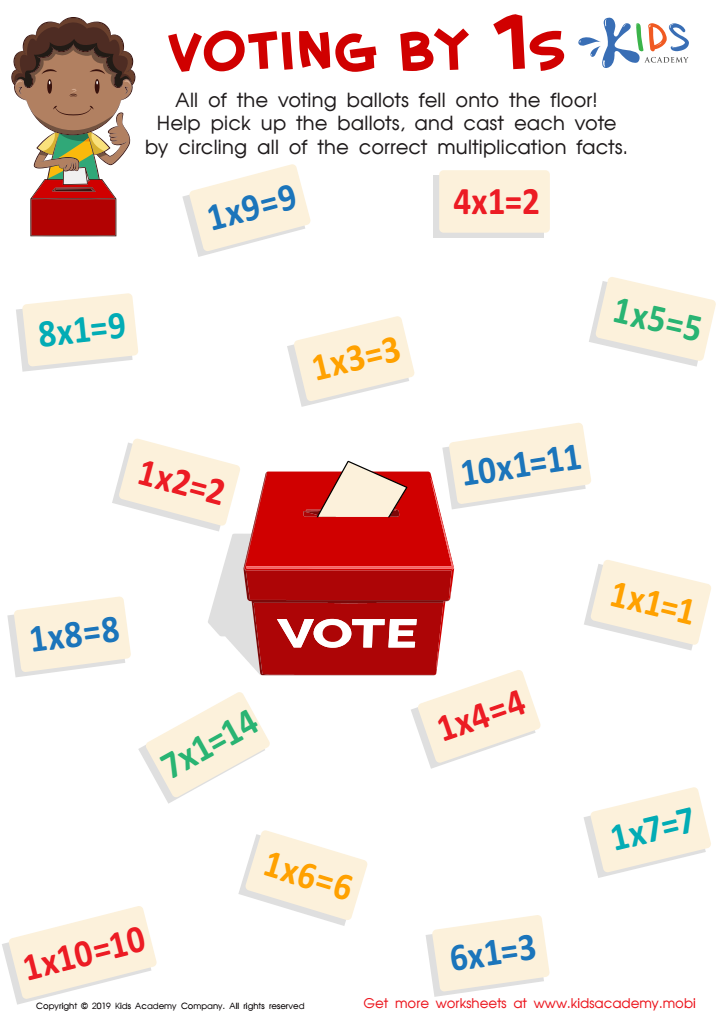
Voting by 1s Worksheet
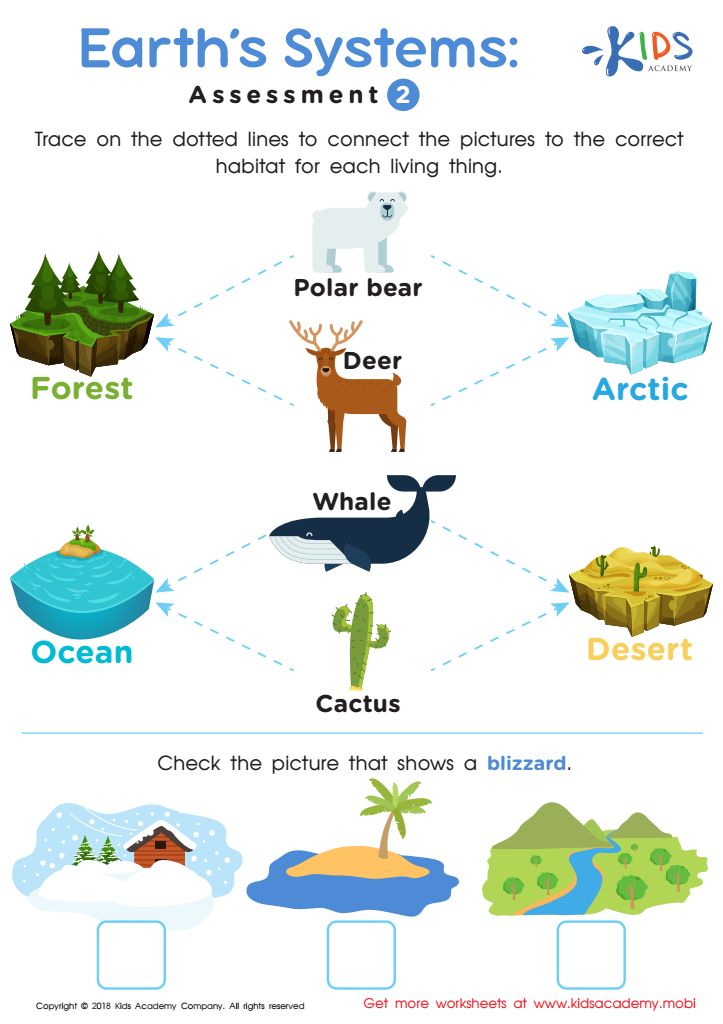
Earth's Systems: Assessment 2
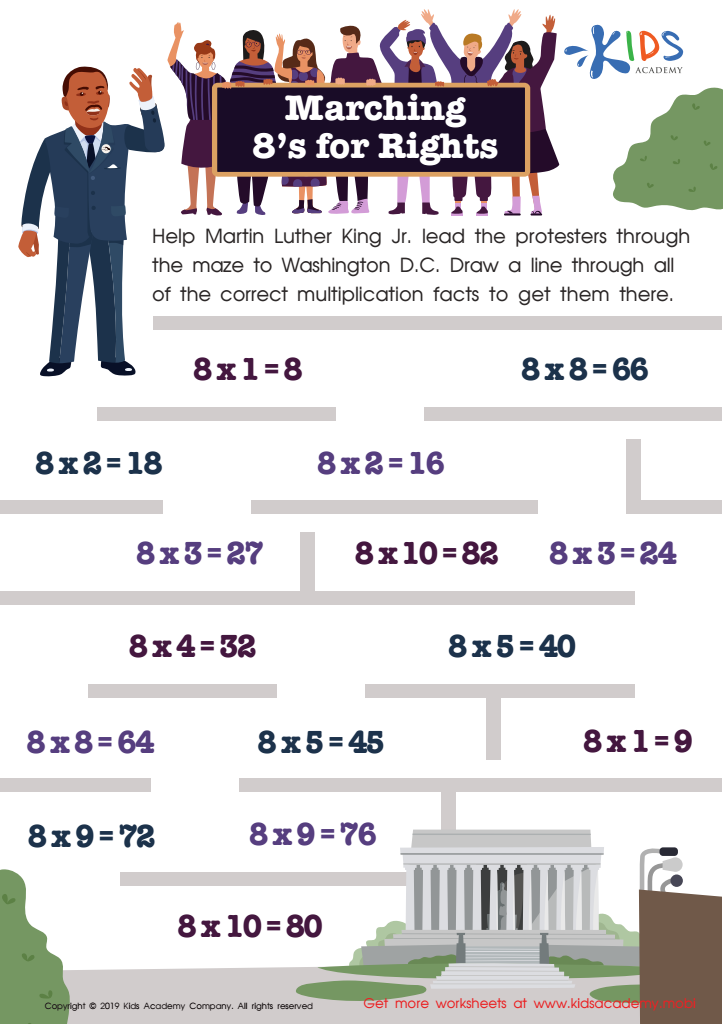
Marching 8’s for Rights Worksheet








Counting skills and social studies for ages 6-8 play a crucial role in a child's development and understanding of the world. Parents and teachers should prioritize these areas because they form foundational skills necessary for academic and life success.
Counting skills are the bedrock of early math education. They help children understand numbers, recognize patterns, and develop problem-solving abilities. Proficiency in counting is essential for more advanced math concepts, like addition, subtraction, and understanding place value. These skills also translate into practical life situations, such as measuring ingredients for a recipe, telling time, or managing money.
Social studies foster an understanding of community, society, and the world around them. It helps children develop a sense of history, geography, and cultural awareness. Learning about diverse communities and values promotes empathy, respect, and social skills, which are crucial in an increasingly interconnected world. Early exposure to social studies can ignite a child's curiosity and inspire civic-minded and informed future citizens.
Combined, counting skills and social studies equip children with cognitive abilities and socio-emotional intelligence, making them well-rounded and better prepared to tackle challenges both inside and outside the classroom. Prioritizing these subjects ensures children have a balanced, comprehensive early education that supports their overall development.