Enhance your child’s handwriting skills with our "Alphabet Recognition Cursive Writing Worksheets" designed specifically for ages 6-8! These engaging worksheets combine fun and education, helping young learners recognize and practice cursive letters. Kids will gain confidence as they trace and write each letter in a structured format, reinforcing their understanding of letter shapes and strokes. Our materials promote fine motor skills and prepare children for more advanced writing tasks. Ideal for both classroom and home use, these worksheets turn learning into an enjoyable experience. Start your child’s journey towards cursive mastery today and watch their handwriting flourish!

Check out this FREE Trial Lesson on Cursive Writing for age 6-8!

Short and Long Vowel Sort

Favorites
With answer key
Interactive
  • 6-8
  • Alphabet Recognition
  • Cursive Writing
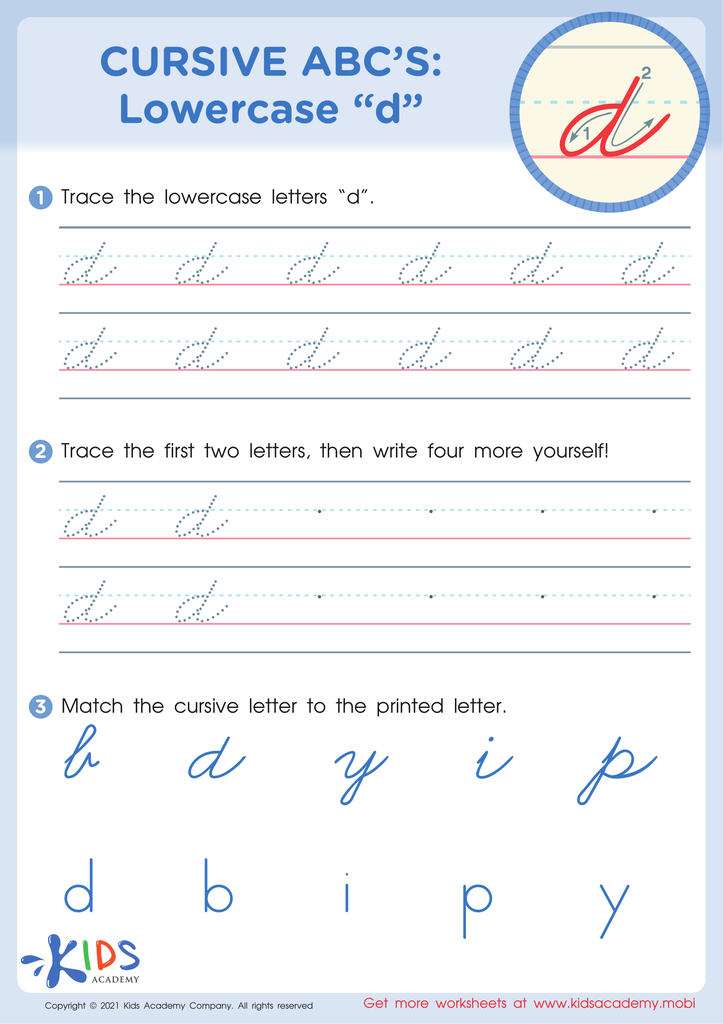
Cursive ABCs: Lowercase d

Cursive ABCs: Lowercase d

To make learning fun, introduce colorful worksheets! These help young learners perfect their cursive lowercase 'd'. By the end, they'll be better at writing and identifying the letter. It's an easy and enjoyable exercise for kids!
Cursive ABCs: Lowercase d
Worksheet
Cursive ABCs: Uppercase E

Cursive ABCs: Uppercase E

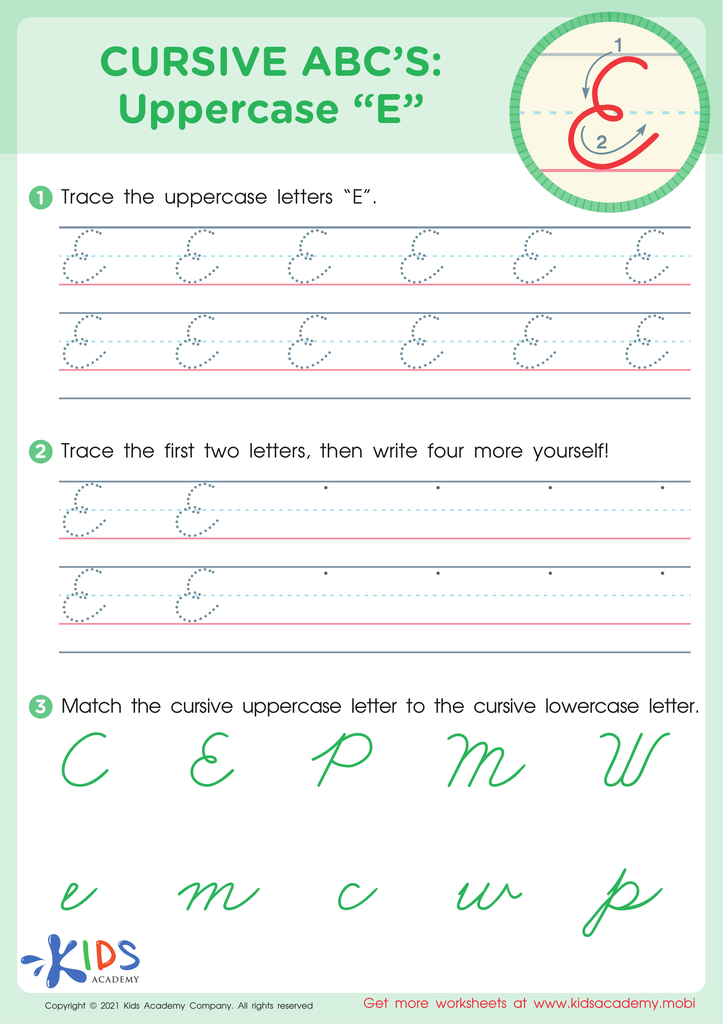
Ask your child if they can identify the letter 'E' and give examples. Each letter is unique, so provide coaching. Have them trace cursive 'E' to become familiar and boost confidence. Then, ask them to write it on their own.
Cursive ABCs: Uppercase E
Worksheet
Cursive ABCs: Uppercase G

Cursive ABCs: Uppercase G

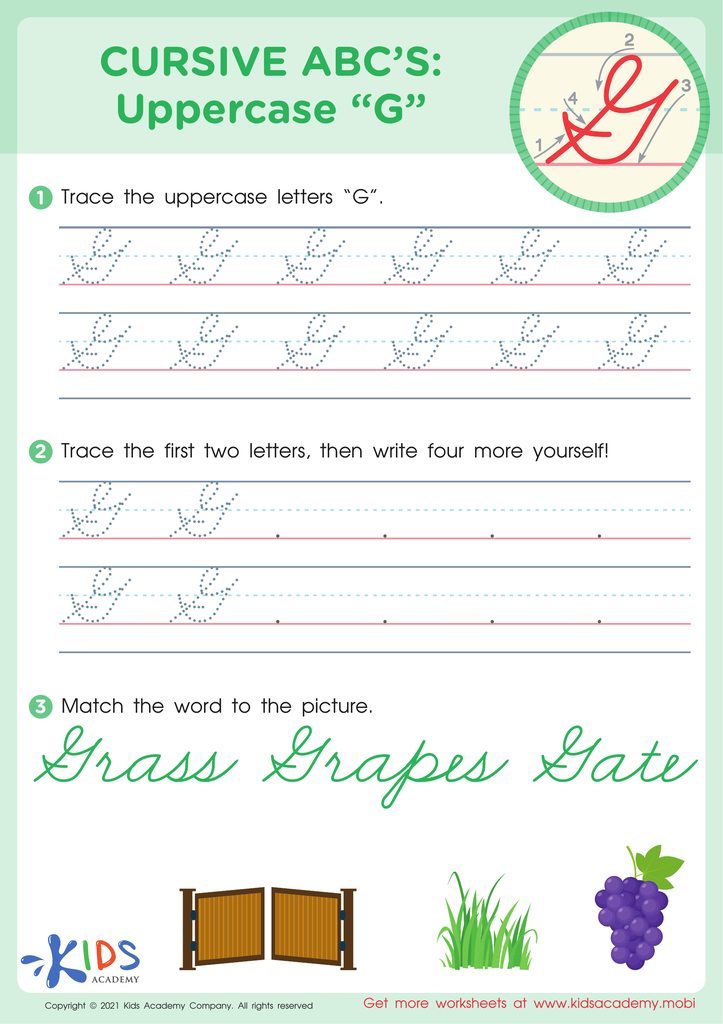
Remind your kids of words beginning with 'G' like 'girl' and 'goat'. Ask them to give examples too. Use this tracing worksheet to help your kids practice writing the cursive uppercase 'G'. It'll help them perfect their motor skills and get better at cursive letters.
Cursive ABCs: Uppercase G
Worksheet
Cursive ABCs: Lowercase c

Cursive ABCs: Lowercase c

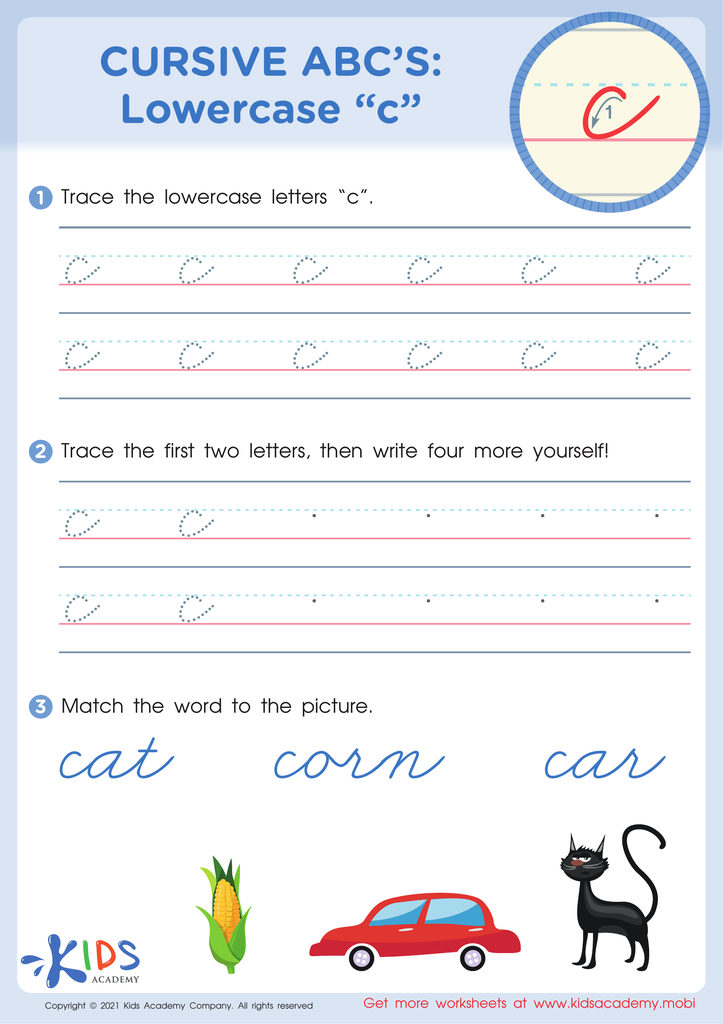
Once your child has successfully printed their letters, help them learn to recognize and write the alphabet in cursive. Struggling? This worksheet is perfect to assist them. Writing is an essential skill for kids to learn, so do all you can to help them. Use these tracing worksheets and guide them as they write the lowercase letter 'c' in cursive.
Cursive ABCs: Lowercase c
Worksheet
Cursive ABCs: Lowercase b

Cursive ABCs: Lowercase b

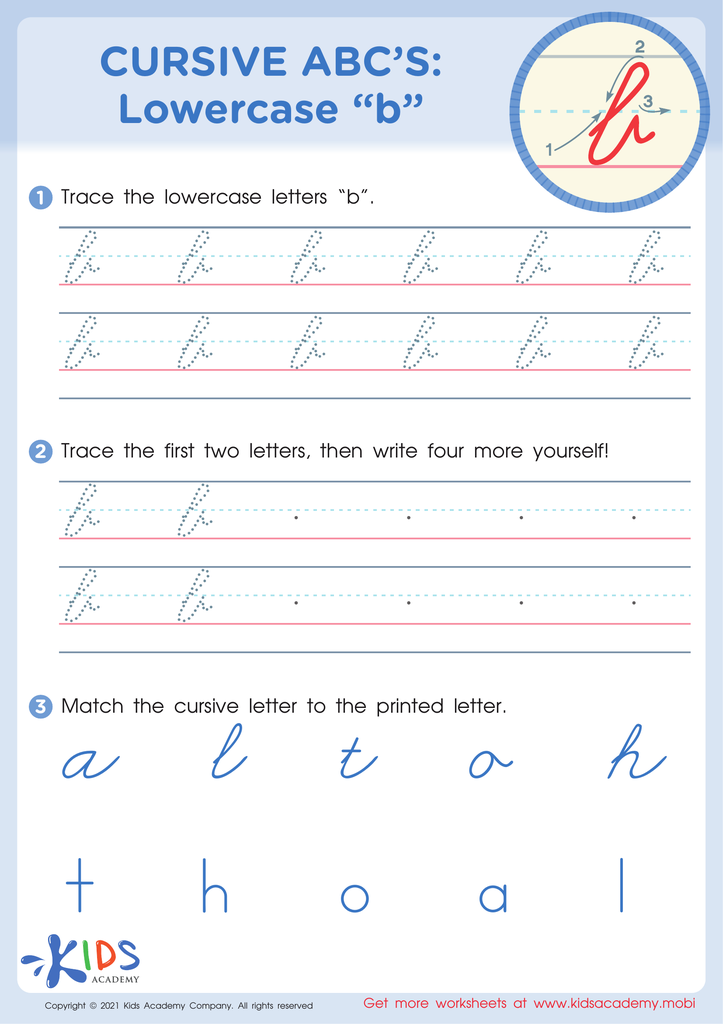
Trace two lines of lowercase b's with your kids. Guide them through the loops and swirls to help them learn cursive handwriting. Then let them practice writing the letter b themselves in the last two lines. With this exercise, your kids should become better at writing and recognizing the lowercase cursive b.
Cursive ABCs: Lowercase b
Worksheet
Cursive ABCs: Uppercase A

Cursive ABCs: Uppercase A

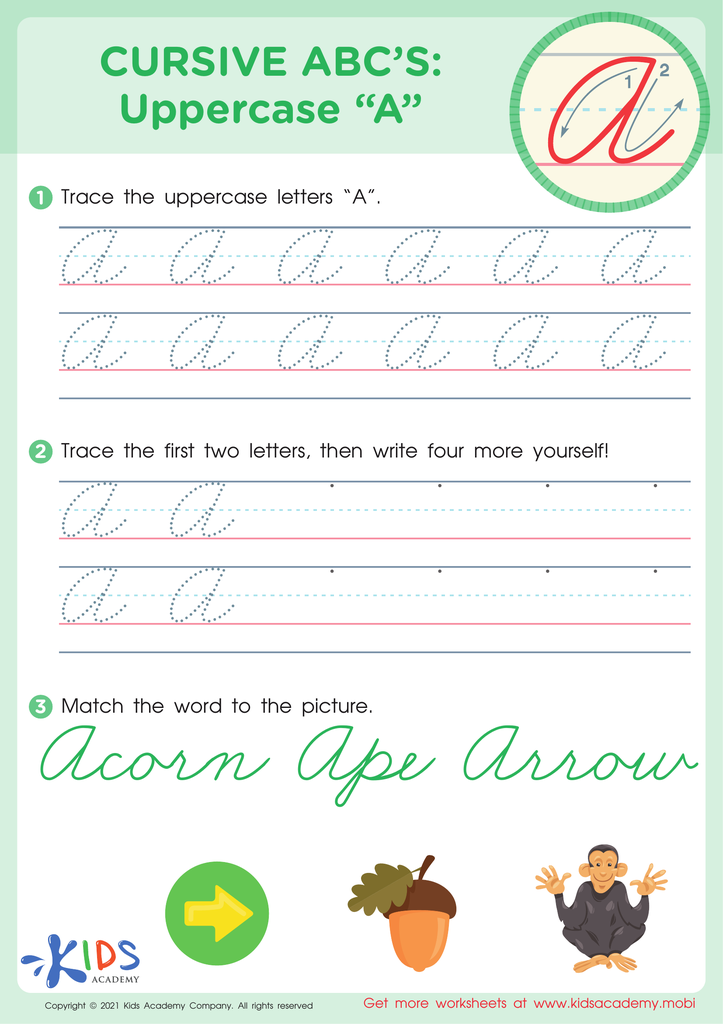
Help your kids develop their writing skills with our great tracing sheets. Improve their motor skills, as well as their vocabulary, by guiding them through tracing the dotted lines for the uppercase letters of the alphabet. When they are ready, let them practice writing the letters on their own for improved confidence.
Cursive ABCs: Uppercase A
Worksheet
Cursive ABCs: Uppercase H

Cursive ABCs: Uppercase H

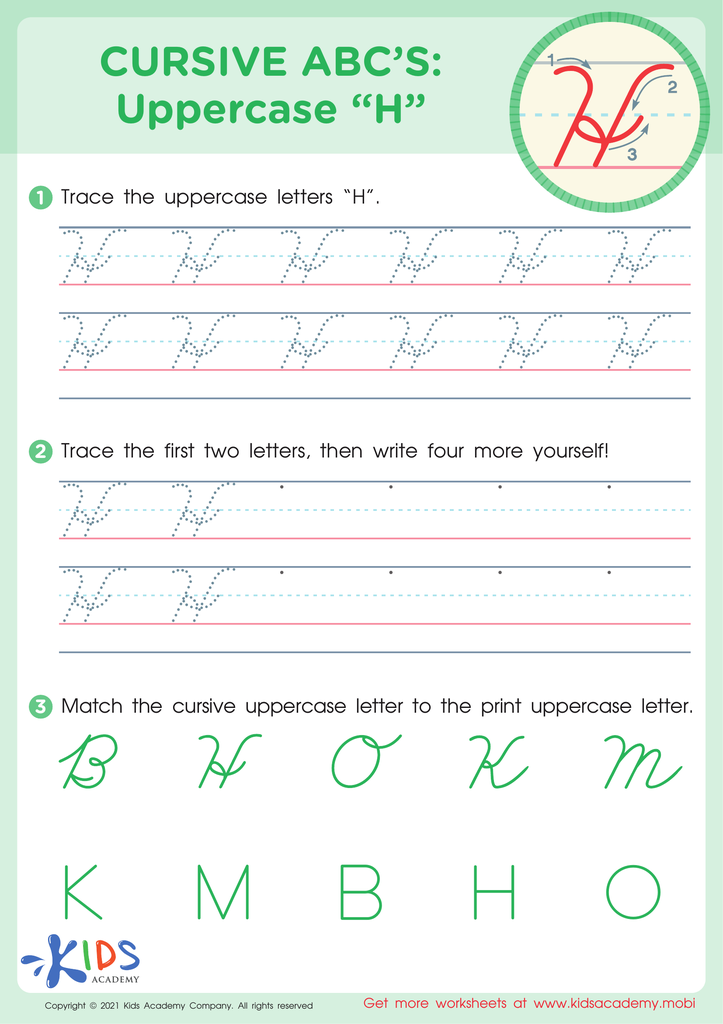
Have your child recite the alphabet and give you words beginning with H. This tracing sheet is perfect to help them improve their handwriting. Guide their hands as they trace the uppercase H, then have them practise writing it alone. At the bottom is an exercise to check their letter recognition.
Cursive ABCs: Uppercase H
Worksheet


Alphabet recognition and cursive writing are fundamental skills for children aged 6 to 8, essential for academic success and personal development. During this developmental stage, children not only learn to recognize letters—both uppercase and lowercase—but also begin to form connections between letters and sounds, which is crucial for reading and writing proficiency.

Cursive writing offers additional benefits, as it can improve fine motor skills and hand-eye coordination. It encourages fluidity in writing, enabling children to develop a personal style and gain confidence in expressing their thoughts on paper. Research suggests that cursive writing can also enhance cognitive skills, such as memory retention and processing speed.

Moreover, engaging with alphabet recognition and cursive writing fosters a sense of accomplishment in children. Mastery of these skills supports their capacity to communicate effectively and enhances their overall academic experience.

Parents and teachers play a vital role in encouraging these skills, creating an enriching environment that fosters literacy and creativity. By prioritizing alphabet recognition and cursive writing, adults can help cultivate a love for learning, laying the groundwork for future academic and personal success. This over-helping children strengthens their self-esteem and paves the way for lifelong learning.