Syllable identification Grammar Worksheets for Ages 6-8
5 filtered results
-
From - To
Unlock your child's potential with our Syllable Identification Grammar Worksheets for ages 6-8! These engaging, printable resources are designed to help young learners understand syllables and improve their reading and writing skills. The activities focus on teaching kids to identify and count syllables within words, enhancing their phonemic awareness. Worksheets include colorful visuals, interactive exercises, and fun challenges that make learning enjoyable. Perfect for home or classroom use, our syllable worksheets boost confidence and build essential language skills, setting a solid foundation for future learning. Explore the joys of syllable identification with your child today!
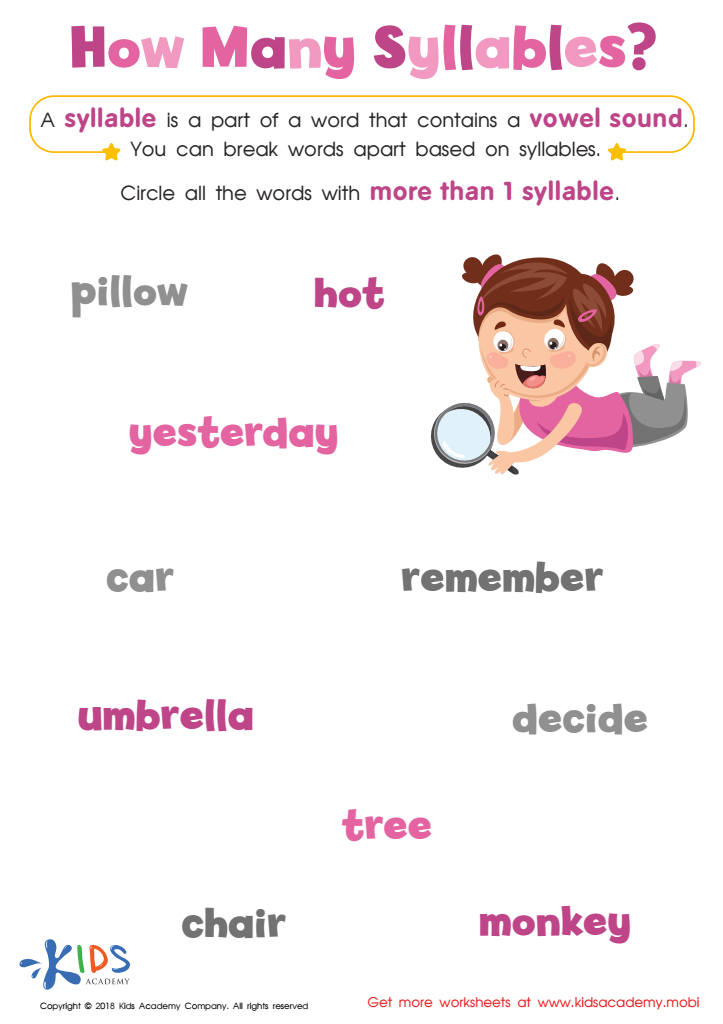
Reading: How Many Syllables Worksheet
 Assign to My Students
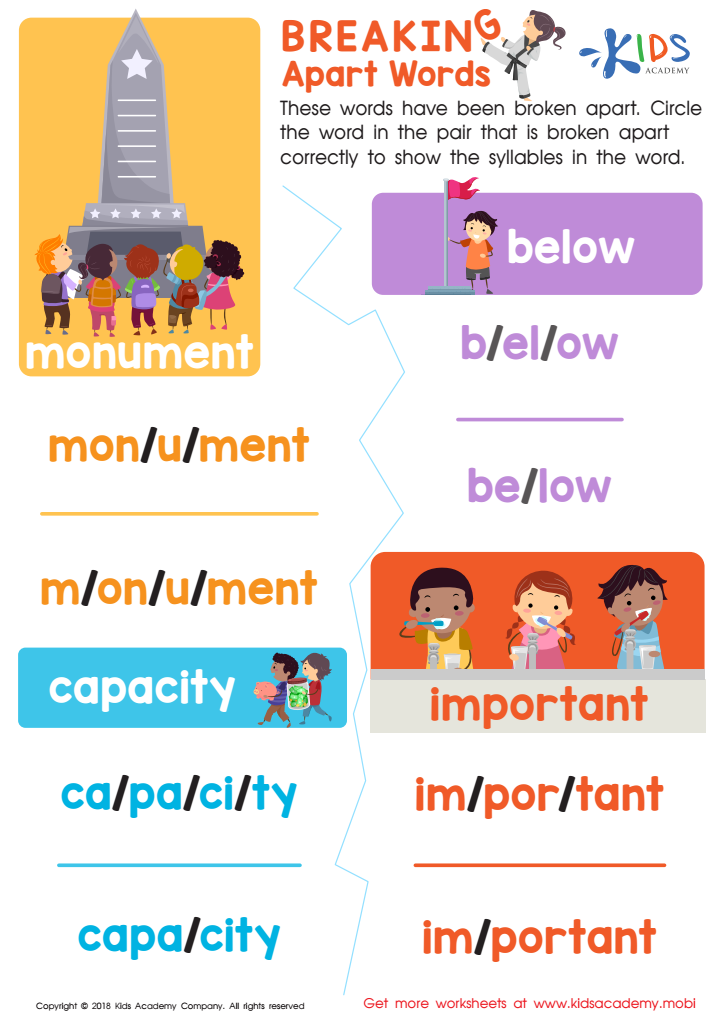
Breaking Apart Words Worksheet
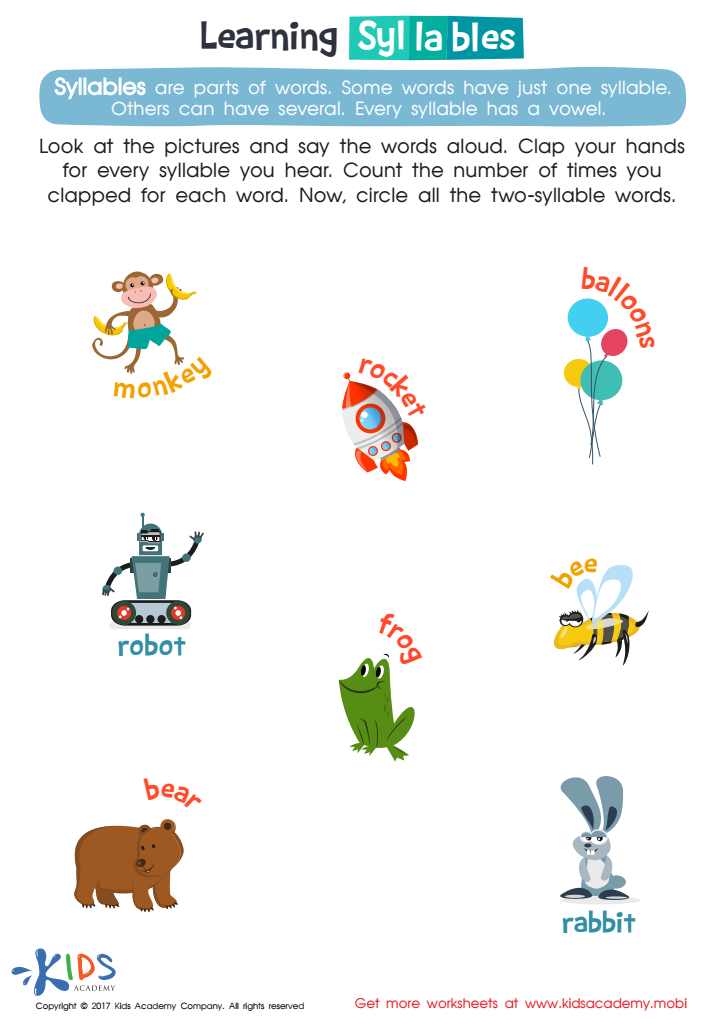
Learning Syllables Word Structure Worksheet
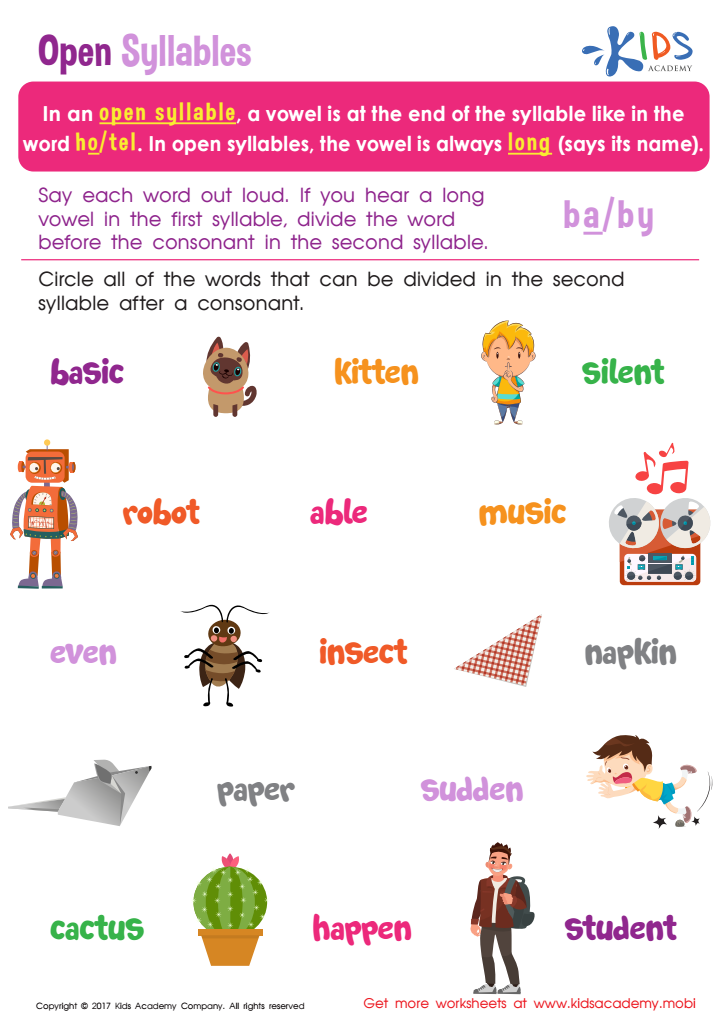
Open Syllable Printable Worksheet
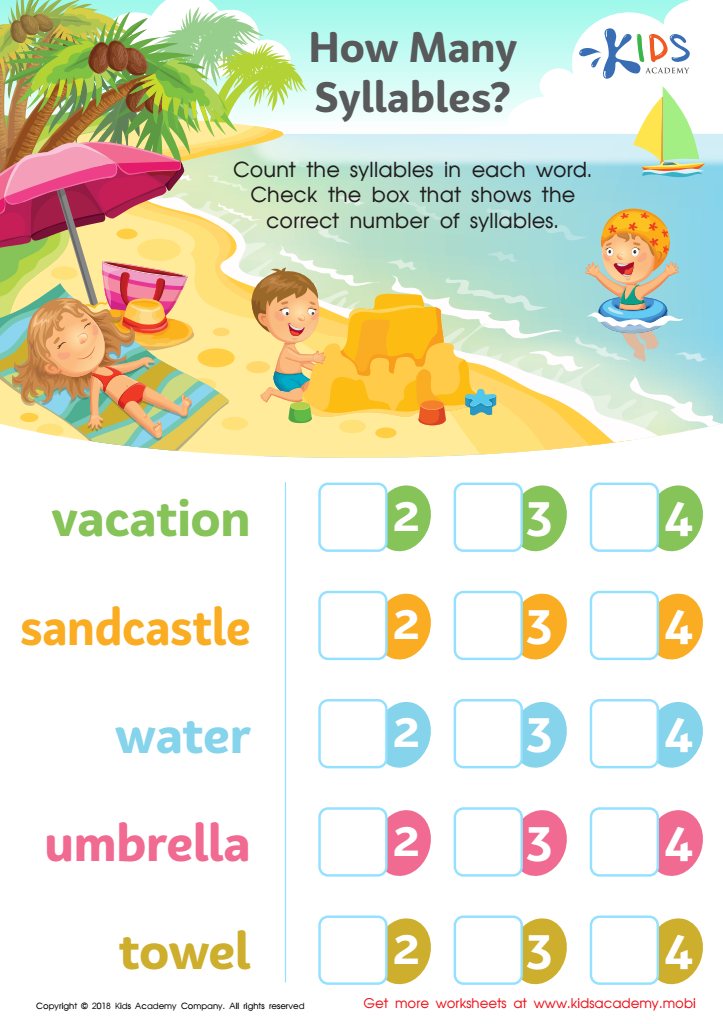
How Many Syllables Worksheet




Syllable identification is a crucial aspect of literacy development for children aged 6-8, making it important for both parents and teachers. First and foremost, understanding syllables helps young learners improve their reading skills. By breaking words into manageable parts, children can decode unfamiliar words and enhance their pronunciation. This foundational skill boosts their confidence as readers, encouraging a love for books and storytelling.
Moreover, syllable identification fosters improved spelling abilities. When children recognize syllable patterns, they can better predict spelling rules and correctly break down complex words. This not only aids writing fluency but also enriches their vocabulary.
Additionally, phonological awareness—an understanding of sound structures in language—strengthens overall language skills. As children grasp how words are constructed, they become more adept at understanding grammatical concepts, paving the way for advanced literacy skills crucial in later education.
Furthermore, engaging children in syllable-naming games and activities promotes teamwork and communication skills; aligning with social emotional learning goals. These activities provide a fun, interactive way to enhance literacy while deepening the connection between parents and teachers with the children.
In summary, fostering syllable identification is essential for reading proficiency, writing skills, vocabulary development, and overall confidence in young learners.