Punctuation understanding Writing Worksheets for Ages 6-8
5 filtered results
-
From - To
Help your child master punctuation with our engaging "Punctuation Understanding Writing Worksheets" designed for ages 6-8. These worksheets provide fun and interactive activities that encourage young learners to recognize and use various punctuation marks correctly, enhancing their writing skills! From periods and commas to question marks and exclamation points, each worksheet fosters a deep understanding through clear examples and practice exercises. Perfect for at-home learning or classroom use, these resources are tailored to support your child's development and boost their confidence in writing. Unlock your child's potential while making learning enjoyable—download our worksheets today and watch them thrive!
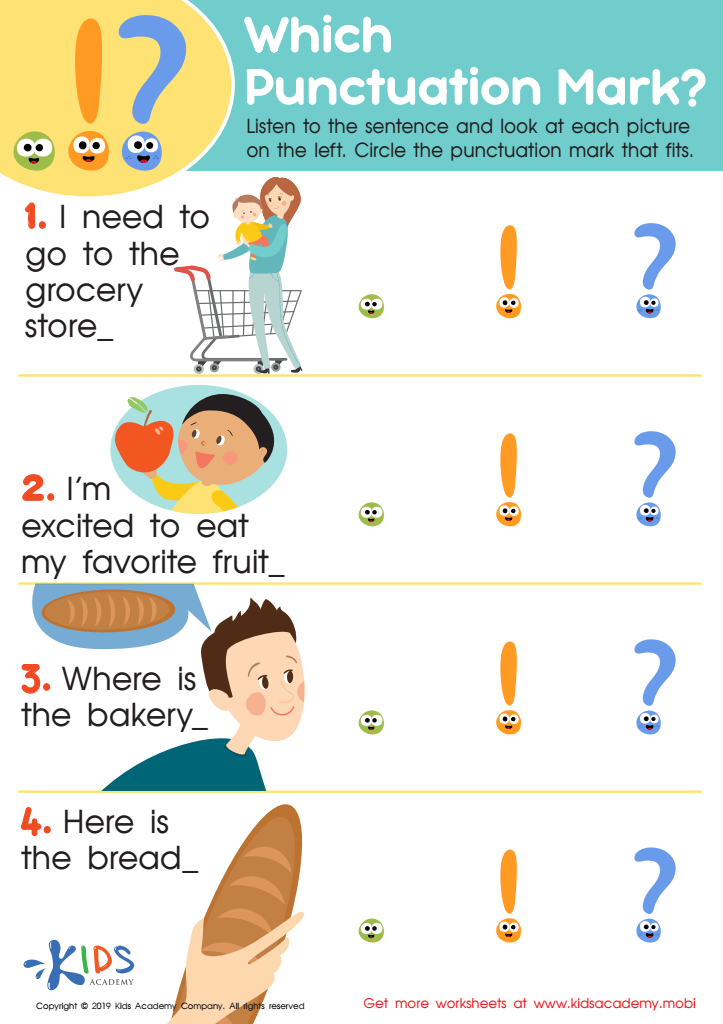
Which Punctuation Mark Worksheet
 Assign to My Students
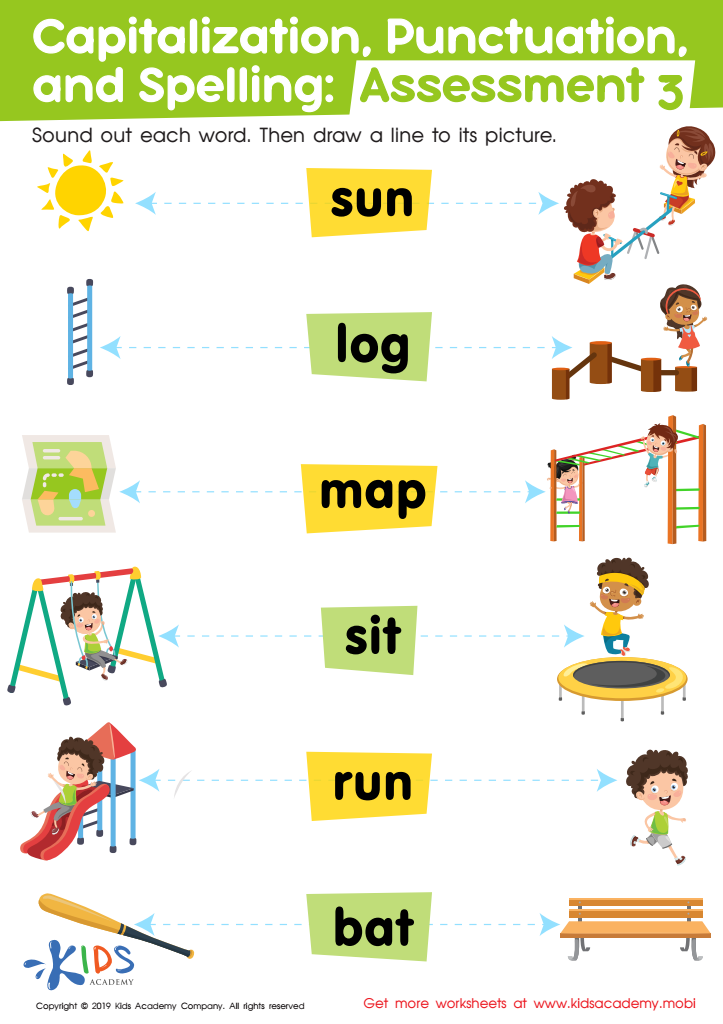
Capitalization. Punctuation. Spelling. Assessment 3 Worksheet
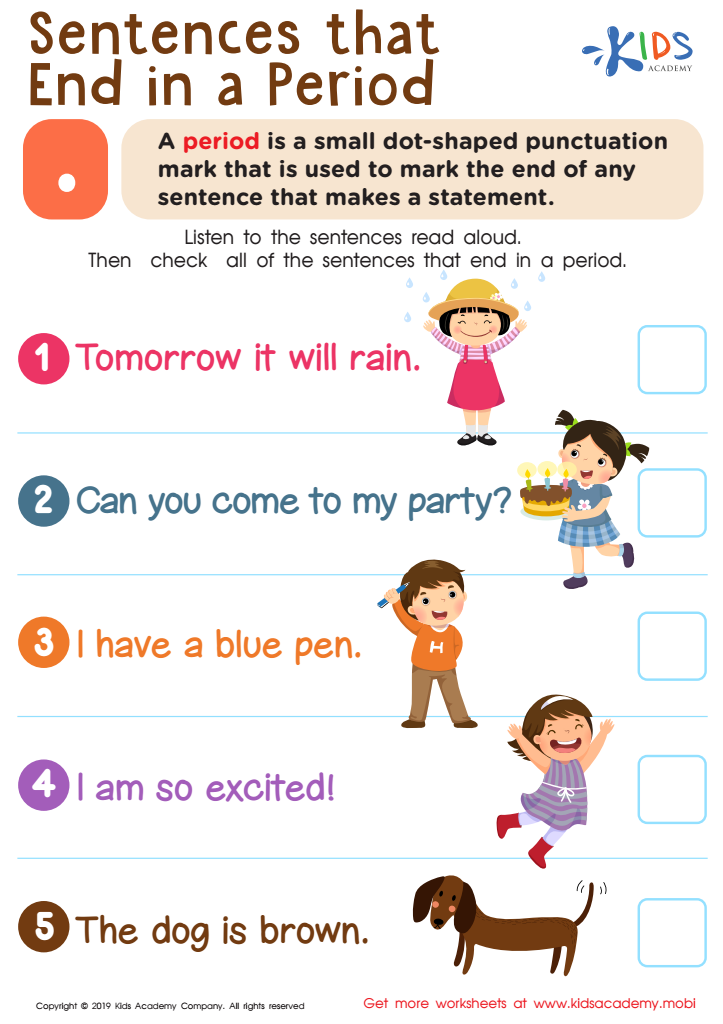
Sentences That End in a Period Worksheet
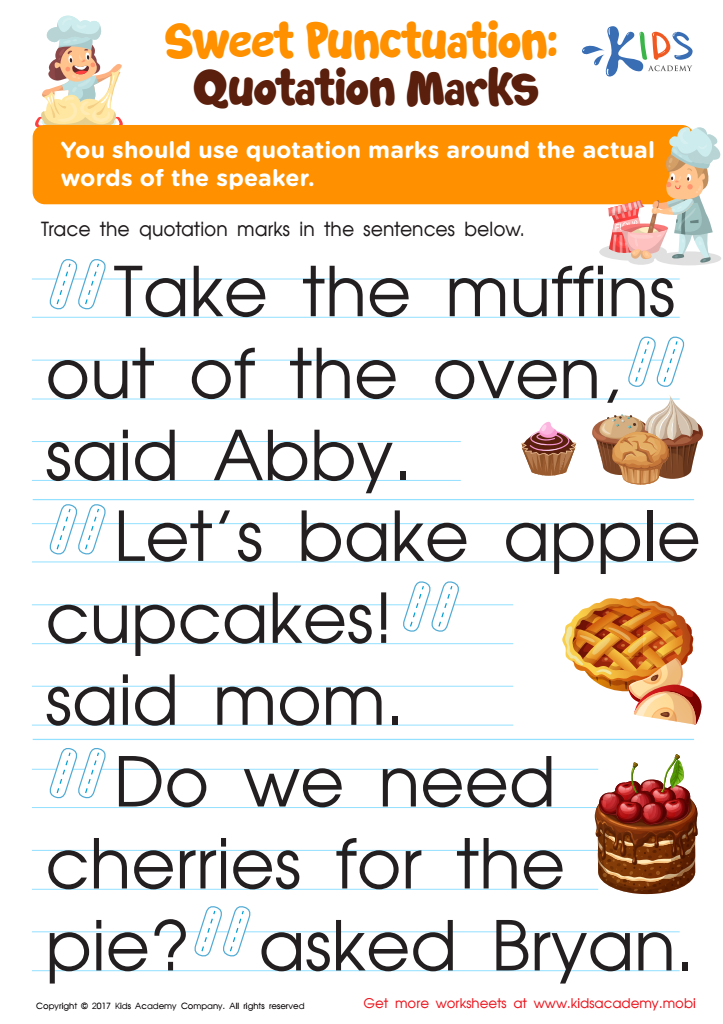
Commas and Quotation Marks Worksheet
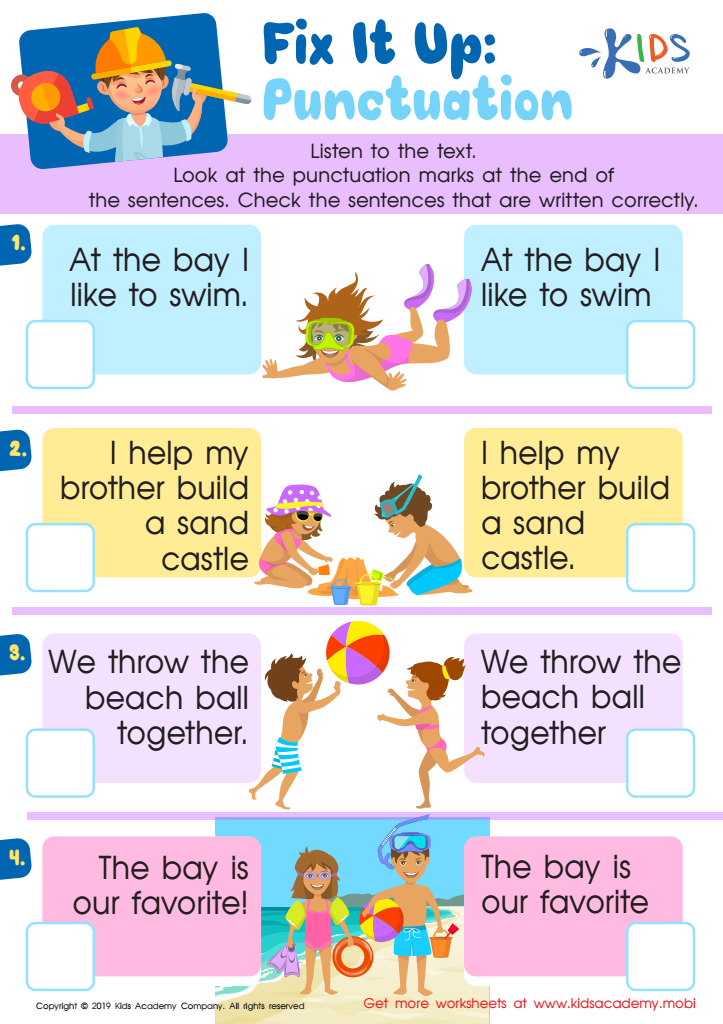
Fix Punctuation Worksheet


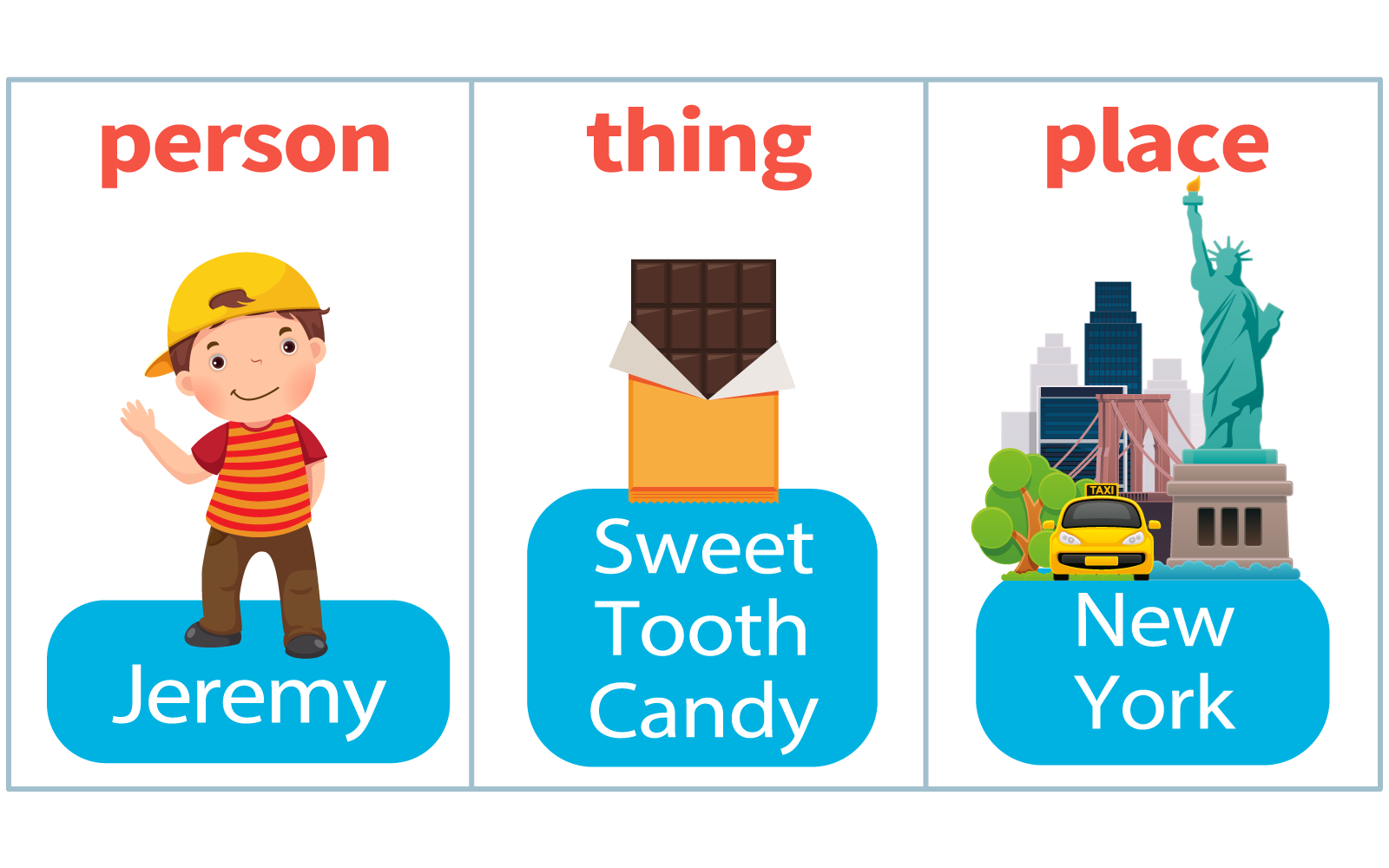




Punctuation plays a crucial role in developing writing skills for children ages 6-8. Understanding punctuation helps young learners convey their thoughts and ideas clearly and effectively, establishing a foundation for strong communication. When children grasp the function of punctuation marks like periods, commas, and question marks, they begin to understand sentence structure, thereby enhancing their reading comprehension.
For parents and teachers, fostering punctuation understanding instills confidence in their child's writing abilities. Children who use punctuation correctly can express their ideas without confusion. Moreover, punctuation helps create rhythm and tone in writing, making stories more engaging.
Engaging with punctuation early ensures that students avoid common pitfalls down the line, allowing them to evolve into proficient writers. Incorporating fun activities such as games and interactive exercises can make learning about punctuation enjoyable, ensuring that children see it as a key skill rather than a chore.
Ultimately, when parents and teachers emphasize punctuation understanding, they equip children with essential tools that not only aid in academic success but also enhance their overall communication skills, preparing them for future challenges in both their educational and personal lives.








