Sentence structuring Punctuation Worksheets for Ages 6-8
3 filtered results
-
From - To
Enhance your child's writing skills with our engaging "Sentence Structuring Punctuation Worksheets" designed for ages 6-8! These interactive worksheets provide fun activities that focus on the fundamentals of punctuation and sentence construction. Young learners will explore how to effectively use periods, commas, and question marks to create clear, concise sentences. Our resources encourage critical thinking and creativity, allowing children to boost their writing confidence while developing proper grammar. Perfect for at-home practice or classroom use, these worksheets make learning to write enjoyable and straightforward. Start building your child's foundational writing skills today with our comprehensive, learner-friendly materials!
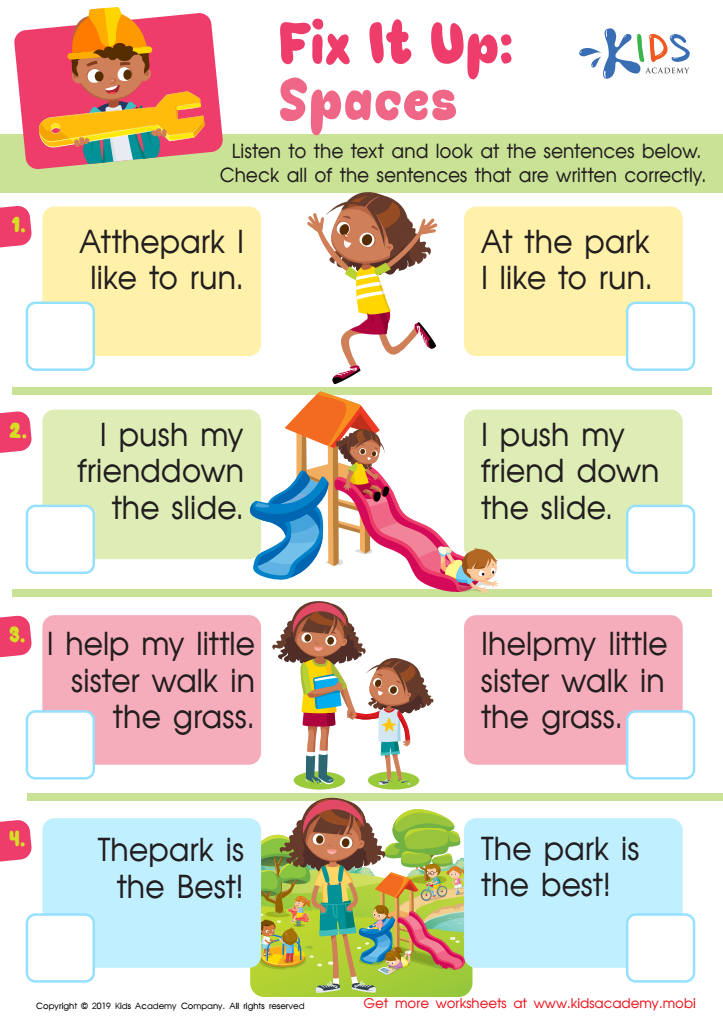
Fix Spaces Worksheet
 Assign to My Students
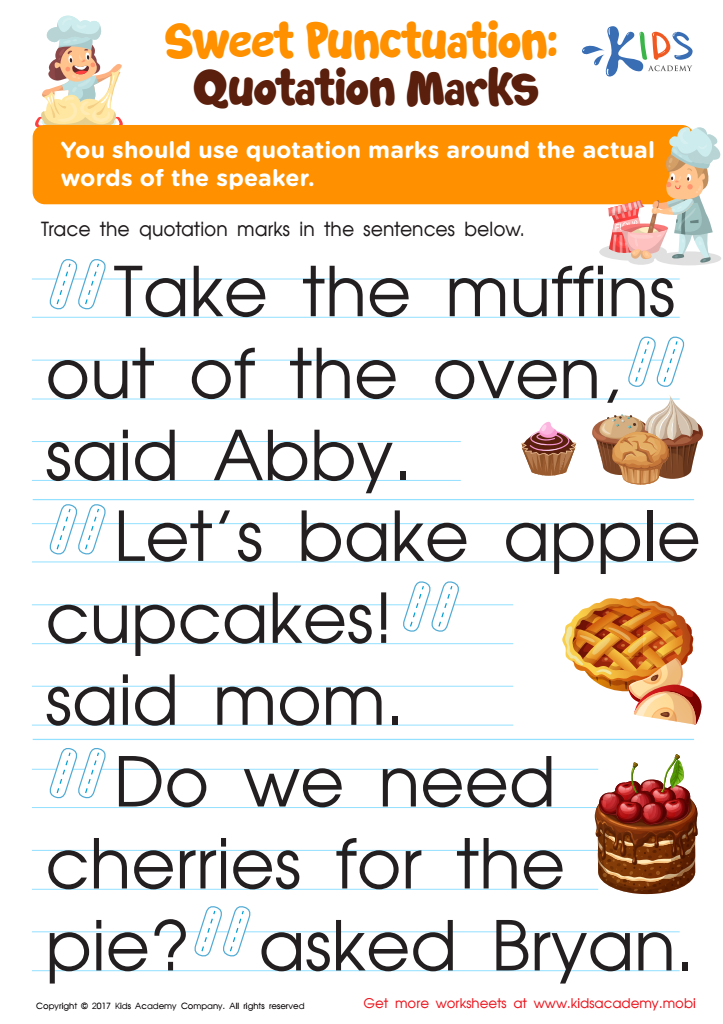
Commas and Quotation Marks Worksheet
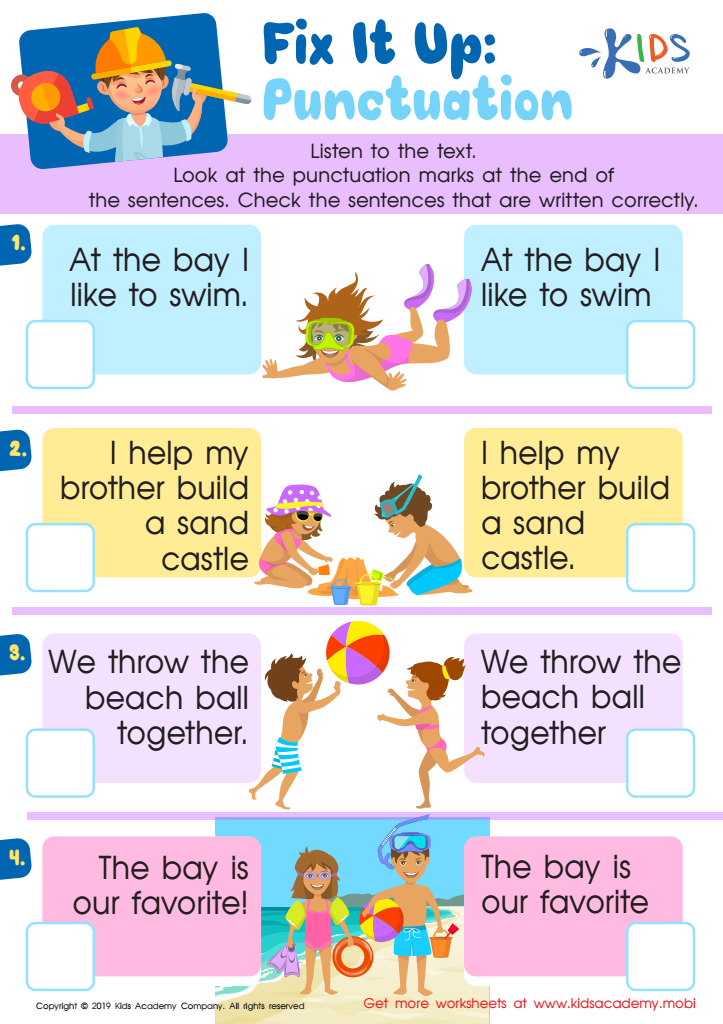
Fix Punctuation Worksheet



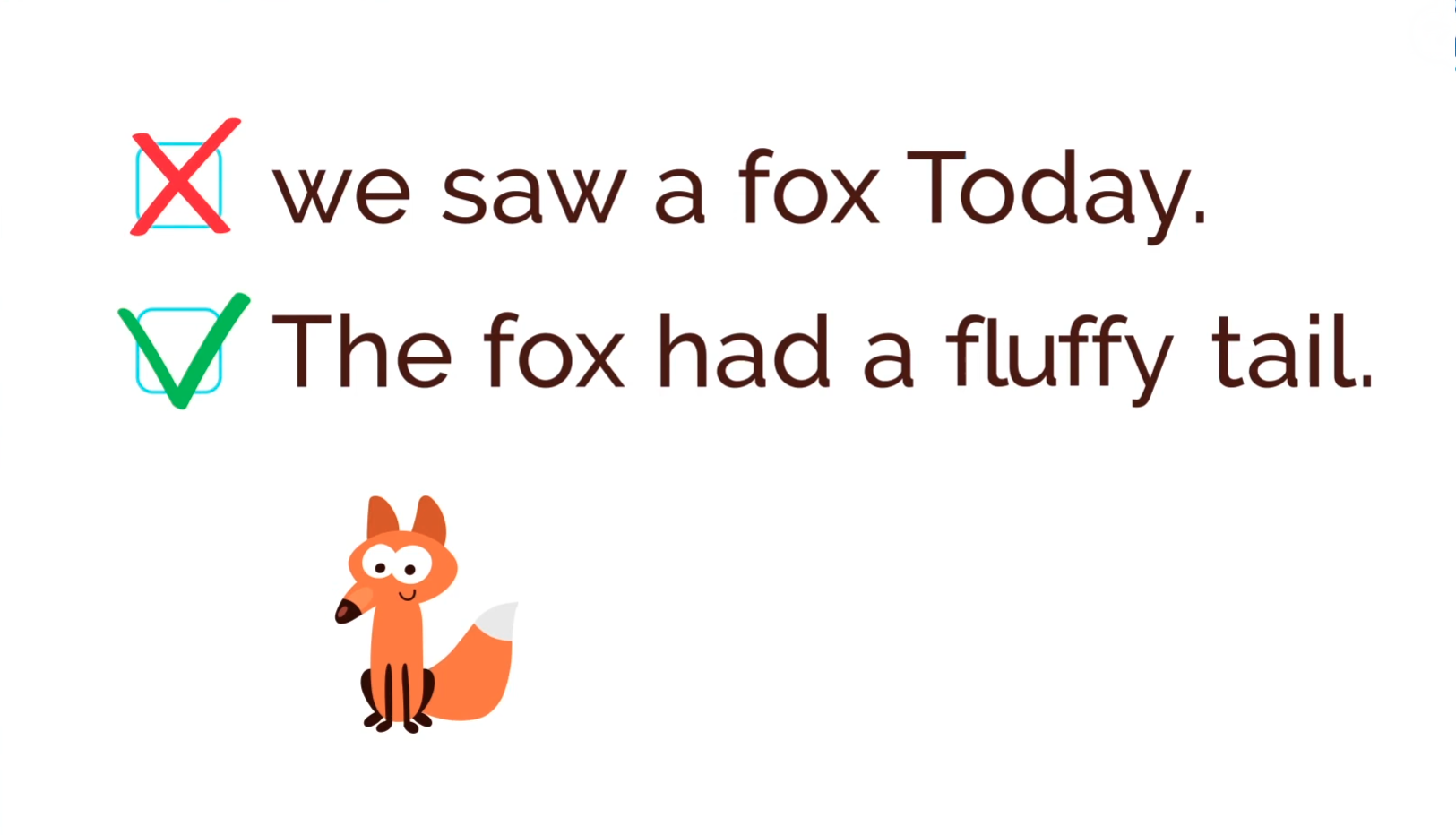


Understanding sentence structure and punctuation is crucial for children aged 6-8, as it lays the foundation for effective communication and academic success. At this age, kids are transitioning from learning to read to reading to learn. Mastery of sentence construction enables them to express their thoughts clearly and logically, fostering greater confidence in both spoken and written language.
Teachers play a vital role in guiding students through this process, introducing concepts like subjects, predicates, and the proper use of punctuation marks such as periods, commas, and question marks. These elements not only contribute to clarity but also aid in improving comprehension skills. When children grasp how to structure their ideas and properly punctuate their sentences, they can engage more fully in discussions, follow complex instructions, and enjoy reading more.
Parents, too, should be invested in this aspect of learning. By encouraging practice at home—whether through writing stories or correcting homework—parents can support their child's development. Strong sentence structure and punctuation are not just academic skills; they empower children to communicate effectively, share their experiences, and connect with others—all fundamental skills for their future and lifelong learning. Ultimately, a solid grasp of these concepts fosters better literacy, confidence, and critical thinking.








