Color Identification Alphabet Worksheets for Ages 6-9
5 filtered results
-
From - To
Enhance your child's learning experience with our Color Identification Alphabet Worksheets designed for ages 6-9! These engaging worksheets blend the essentials of color recognition and alphabet mastery, making learning fun and interactive. Children will explore a vibrant array of colors while identifying letters and corresponding words, reinforcing their knowledge through enjoyable activities. Perfect for classrooms or at-home practice, these worksheets help develop early literacy and cognitive skills. Whether it’s coloring, matching, or tracing, each worksheet is crafted to spark creativity and enthusiasm for learning. Dive into a colorful alphabet journey with us and watch your child's skills flourish!
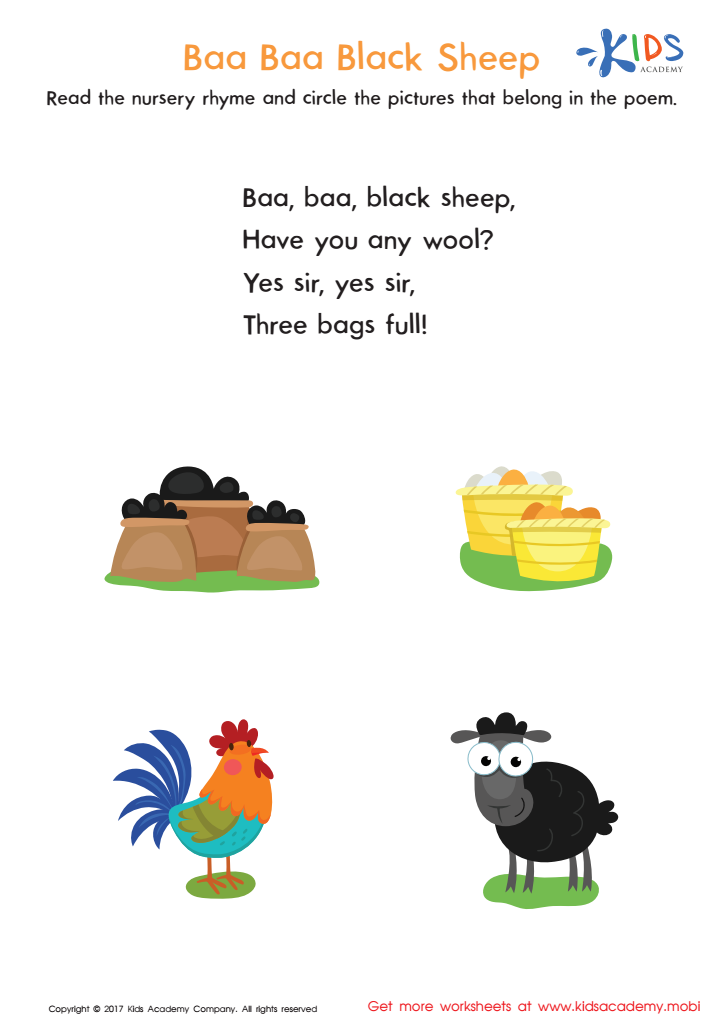
Baa Baa Black Sheep Printable
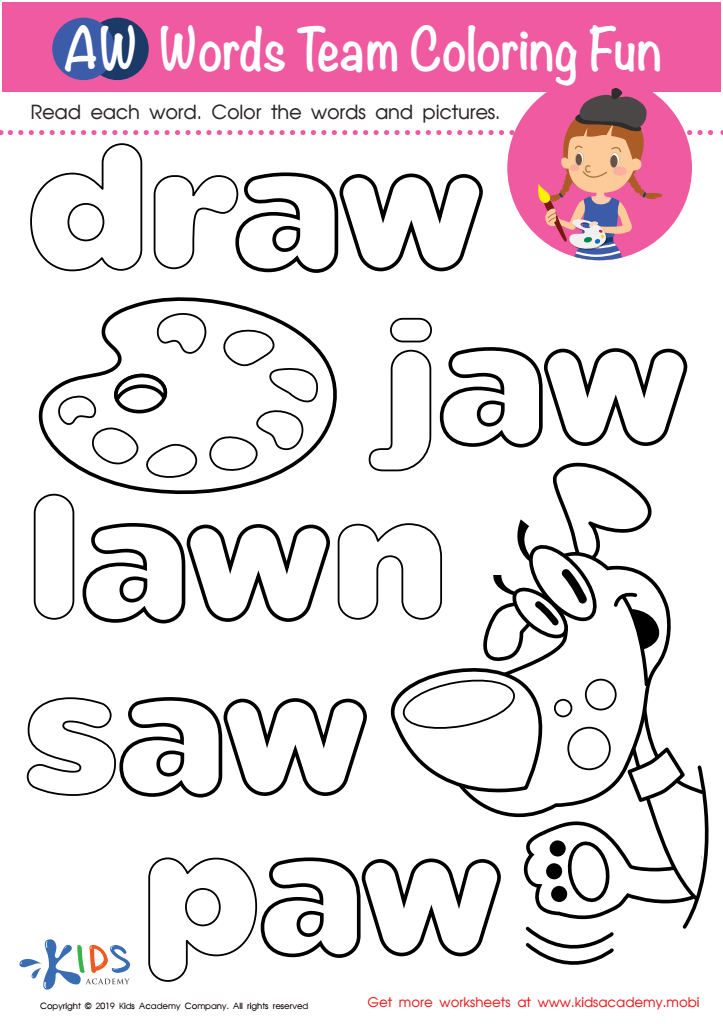
AW Words Team Coloring Fun Worksheet
 Assign to My Students
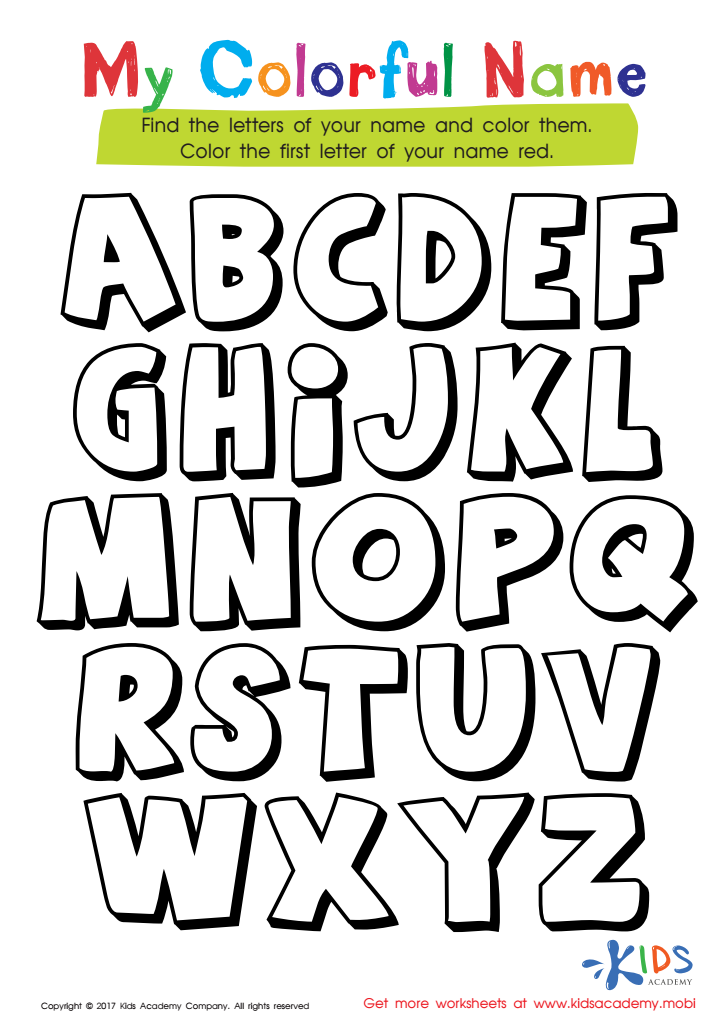
My Colorful Name Worksheet
Assign to My Students
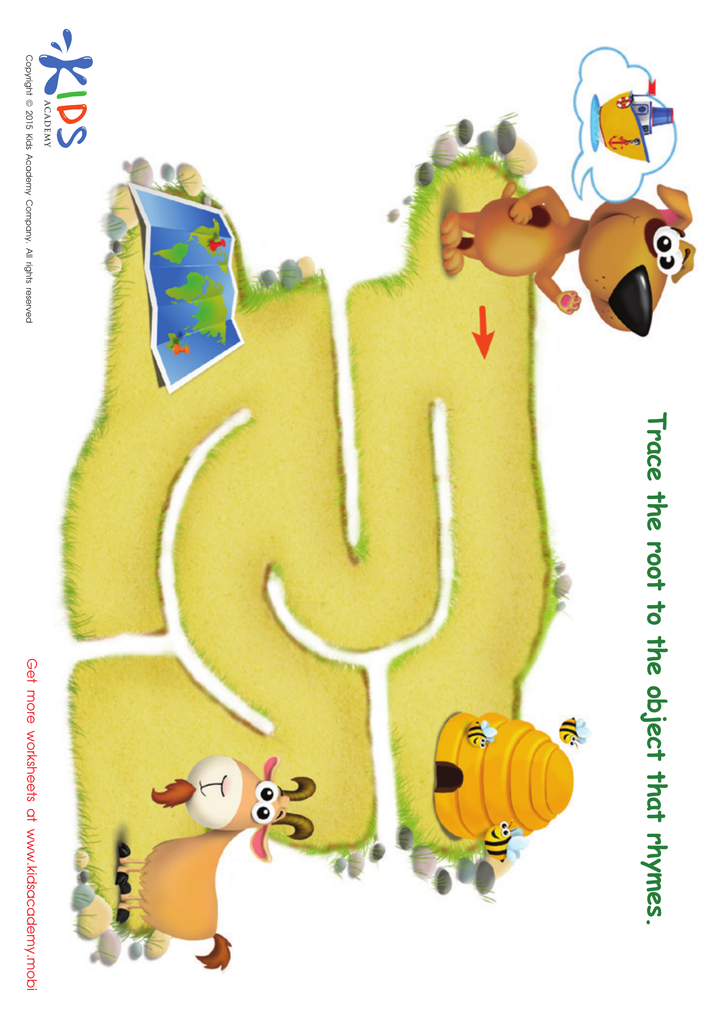
Boat Rhyming Words Worksheet
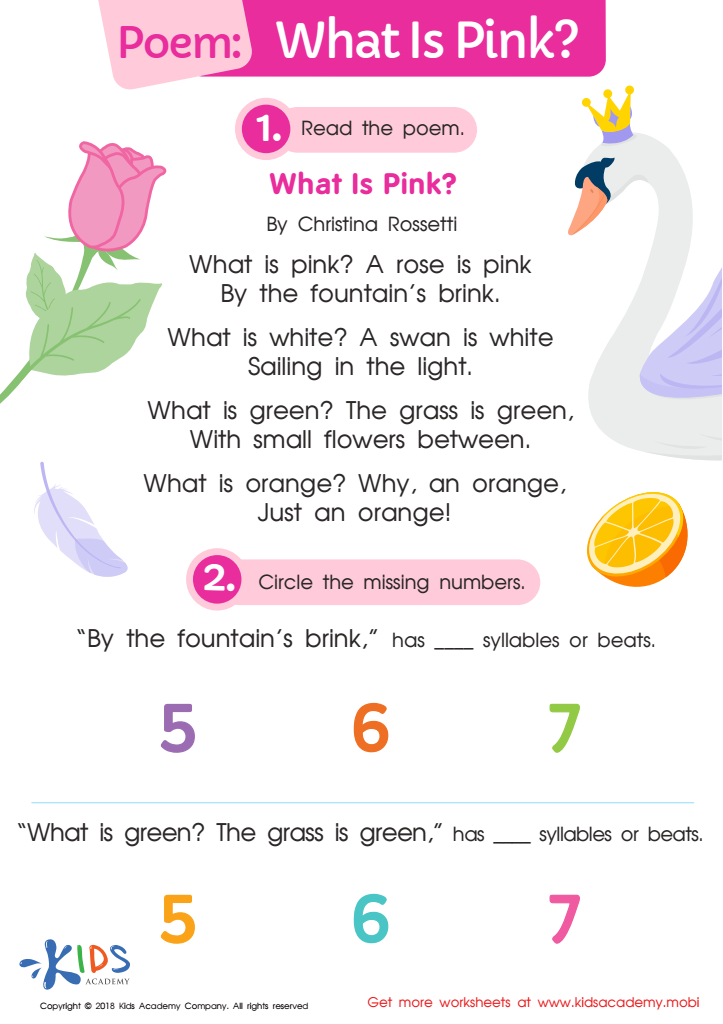
Poem: What Is Pink? Worksheet





Color identification is a critical aspect of early childhood education, particularly for children aged 6-9. During this pivotal developmental stage, children refine their cognitive, social, and emotional skills, and understanding colors can significantly enhance these areas.
Firstly, color identification aids cognitive development by stimulating visual perception and language skills. Familiarity with colors helps children describe their world, organize information, and communicate effectively. It also lays the groundwork for more complex concepts such as blending colors and categorizing objects.
Secondly, colors play a significant role in children's emotional experiences. Different colors can evoke feelings and moods, aiding teachers and parents in creating a supportive learning environment that acknowledges and nurtures children's emotional responses.
Moreover, the Color Identification Alphabet fosters creativity and imagination, allowing children to express themselves through art and interactive play. This promotes problem-solving skills and encourages imaginative thinking.
Lastly, by engaging with color-related activities, parents and teachers can enhance bonding experiences, encouraging engagement in learning together. Ultimately, fostering color identification equips children with essential life skills, supporting their overall growth and developmental milestones. Therefore, it's important for both parents and teachers to prioritize and promote this foundational element of learning.







