Letter-sound correlation Alphabet Worksheets for Ages 6-9
3 filtered results
-
From - To
Discover the perfect Letter-sound Correlation Alphabet Worksheets for children aged 6-9. These engaging, printable sheets are designed to boost your child's phonetic skills, aligning each letter with its corresponding sound. Ideal for early readers, our worksheets provide comprehensive practice through fun and interactive activities. These resources not only aid in phonemic awareness but also enhance reading fluency, spelling, and language development. Empower your child's literacy journey with Kids Academy's expertly crafted alphabet worksheets tailored for effective and enjoyable learning. Dive into the world of letters and sounds to give your young learner a head start in reading proficiency!
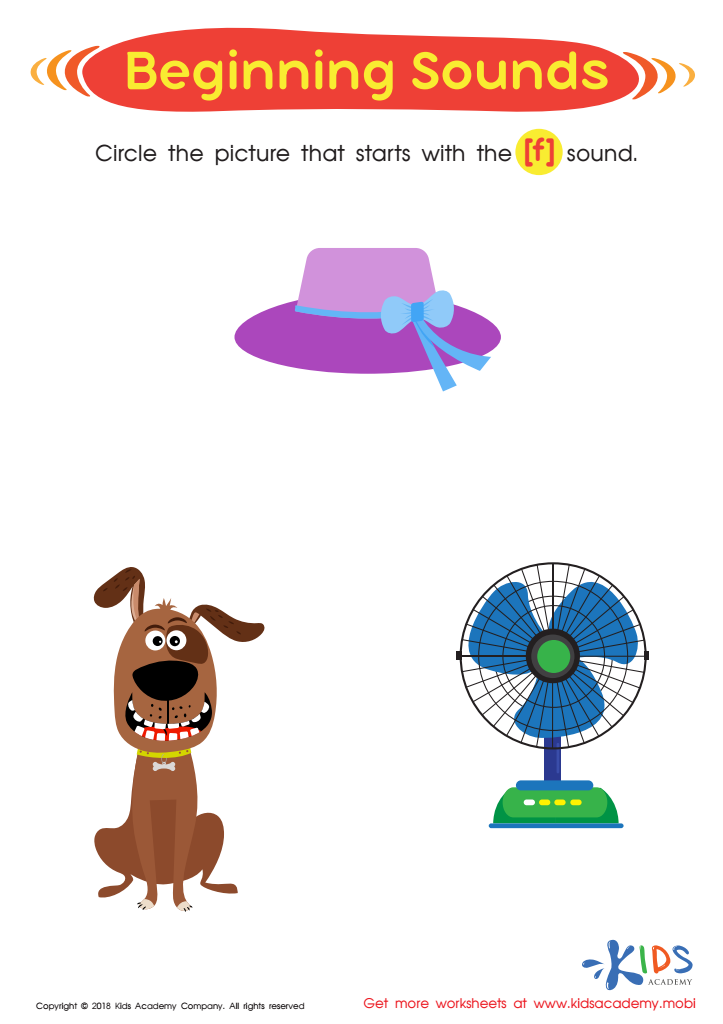
Beginning Sounds Assessment Printable
 Assign to My Students
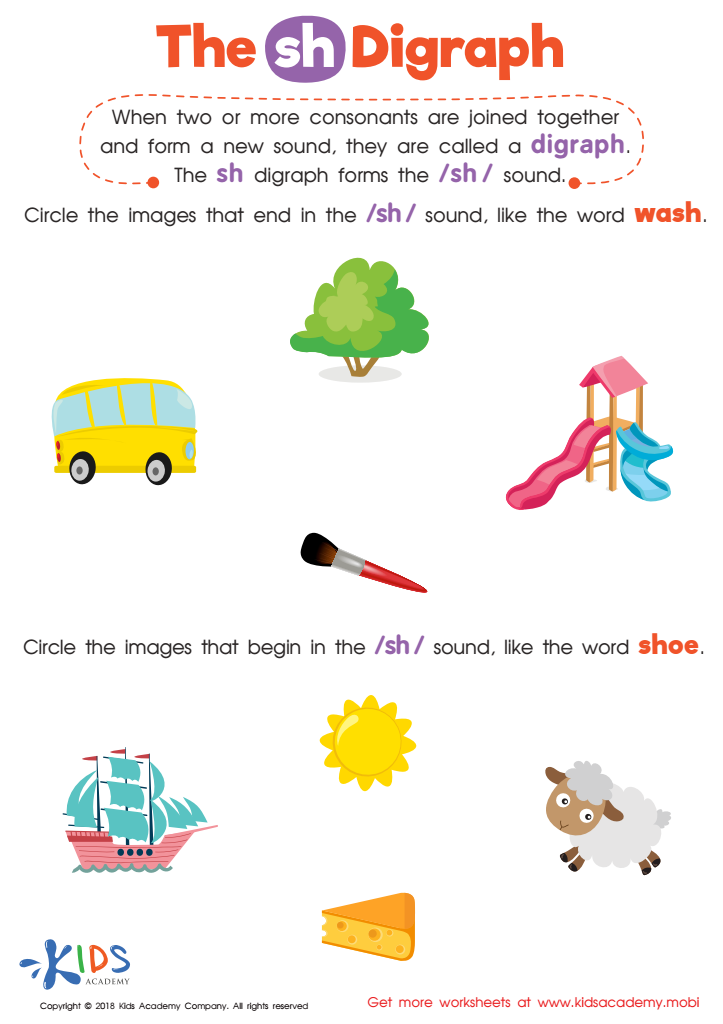
The SH Digraph Worksheet
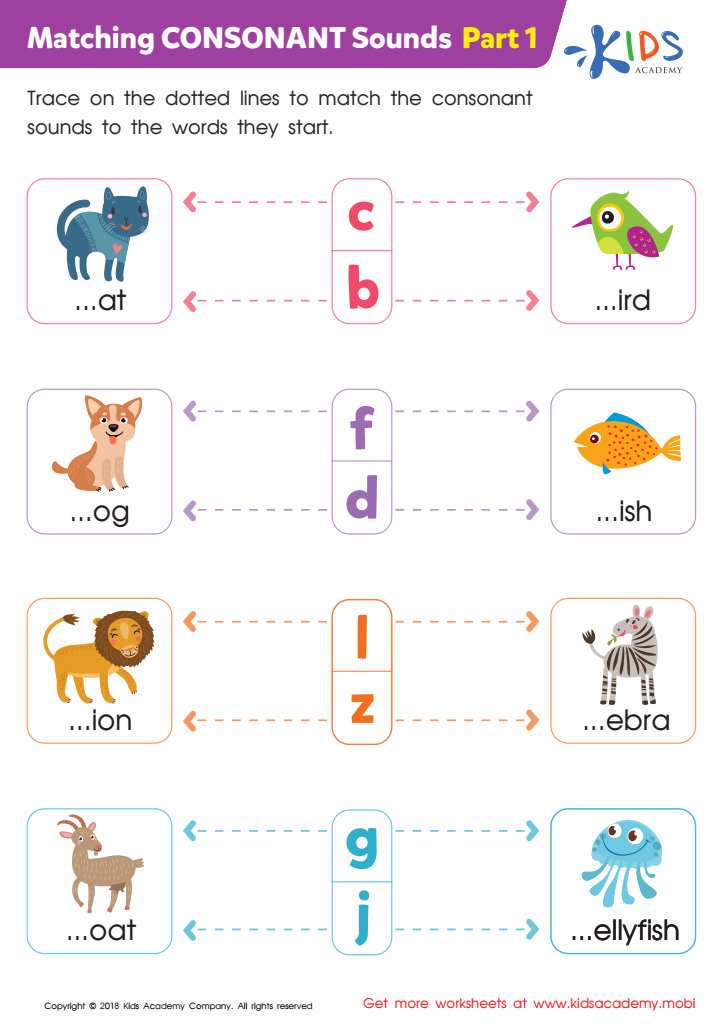
Matching Consonant Sounds: Part 1 Worksheet








Understanding letter-sound correlations, also known as phonics, is critical for children aged 6-9. This period marks a foundational stage in literacy development, where the ability to recognize and match letters with their corresponding sounds plays a significant role in reading and writing proficiency.
Firstly, letter-sound correlation is vital for decoding words. When children can systematically connect letters to sounds, they can easily break down unfamiliar words, boosting their reading fluency. This ability directly influences their vocabulary expansion, comprehension skills, and overall academic success.
Secondly, a solid grasp of phonics enhances spelling accuracy. Understanding how sounds map to specific letters enables children to spell words correctly. This skill is essential for clear, effective written communication, impacting academic performance in all subjects.
Moreover, early success in reading fosters a love for learning. Children who can read fluently are more likely to engage with books and educational materials independently, nurturing a lifelong passion for discovery and knowledge.
Lastly, parental and teacher engagement in phonics education creates a supportive learning environment. When adults show interest and reinforce these skills at home and in school, children receive consistent, comprehensive practice, boosting their confidence and motivation.
In sum, prioritizing letter-sound correlation during these formative years sets the stage for academic achievement and instills invaluable literacy skills.







