
Lowercase identification Alphabet Worksheets for Ages 6-9
5 filtered results
Difficulty Level
Grade
Age
-
From - To
Subject
Activity
Standards
Discover our engaging "Lowercase Identification Alphabet Worksheets" designed specifically for children aged 6-9. These printable resources help young learners develop essential skills in recognizing and identifying lowercase letters in a fun and interactive way. Through a variety of worksheets featuring vibrant illustrations and exciting activities, kids can practice their lowercase letter identification while enhancing their reading and writing foundation. Ideal for homeschooling or classroom settings, our worksheets cater to different learning styles, ensuring every child can thrive. Encourage your child's literacy journey with our carefully crafted activities that make learning enjoyable and effective! Download and watch their confidence grow!
Favorites
With answer key
Interactive
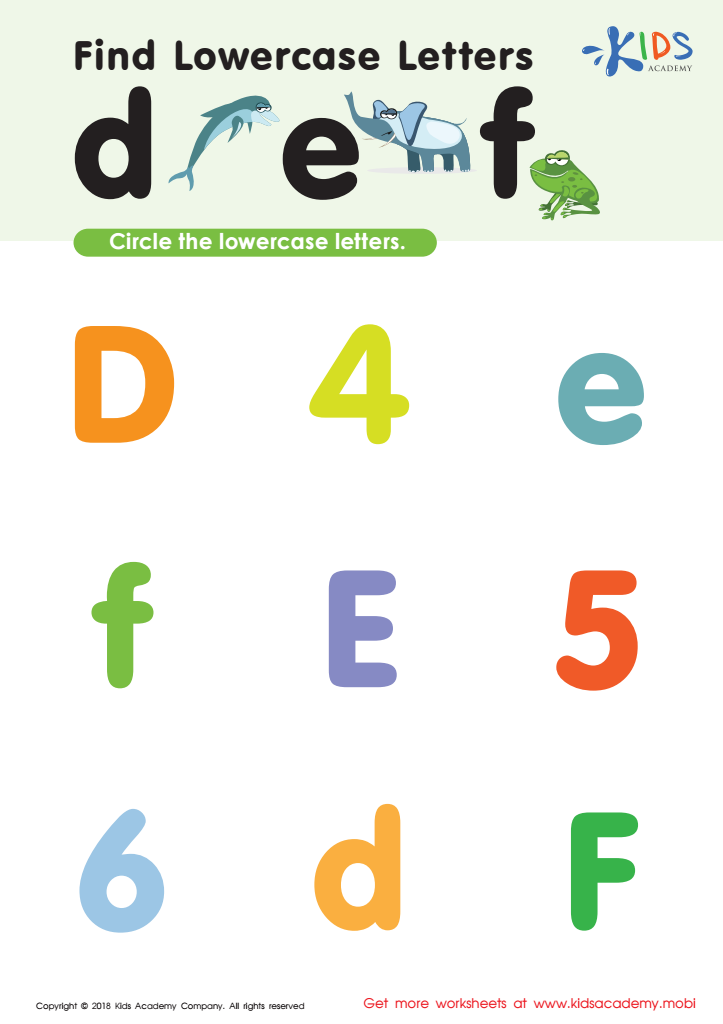
Find Lowercase Letters d e f Worksheet
Engage your child's brain with this fun, colorful worksheet. They'll identify and circle lowercase letters among other numbers and uppercase letters in bright colors. This will keep their attention as they learn, and can be downloaded in PDF form!
 Assign to My Students
Find Lowercase Letters d e f Worksheet
Worksheet
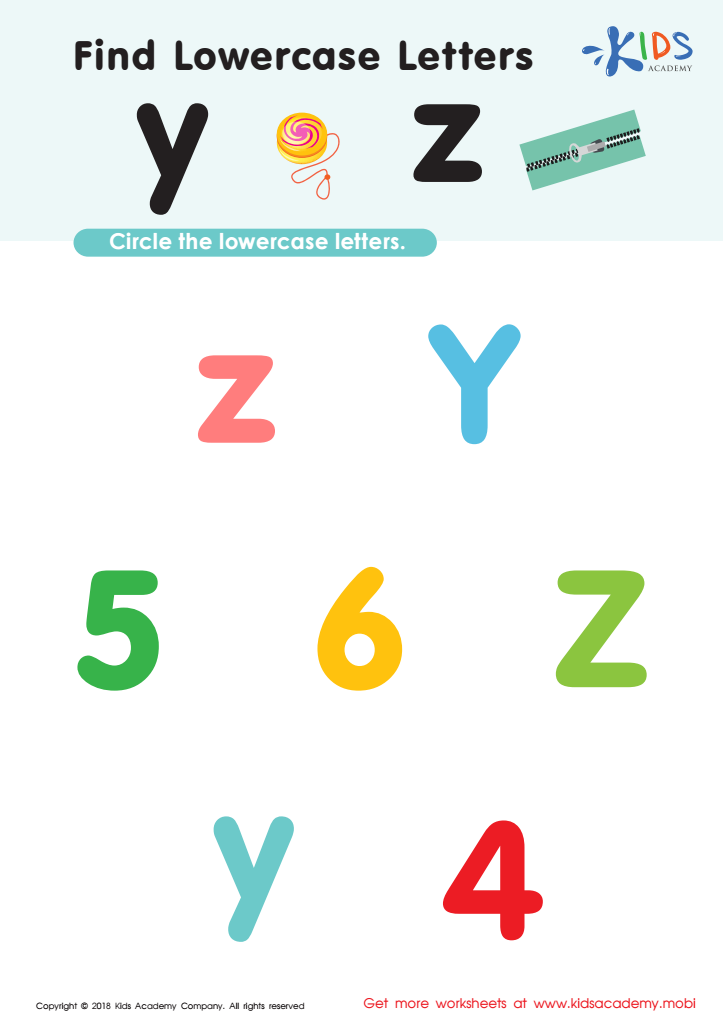
Find Lowercase Letters y z Worksheet
Help your kid learn the alphabet. Before they can move on to words and reading, they must first know the lower and uppercase letters. Show them how to find the letters y and z in this worksheet, which is filled with uppercase letters and numbers. Together, find and circle them.
Find Lowercase Letters y z Worksheet
Worksheet
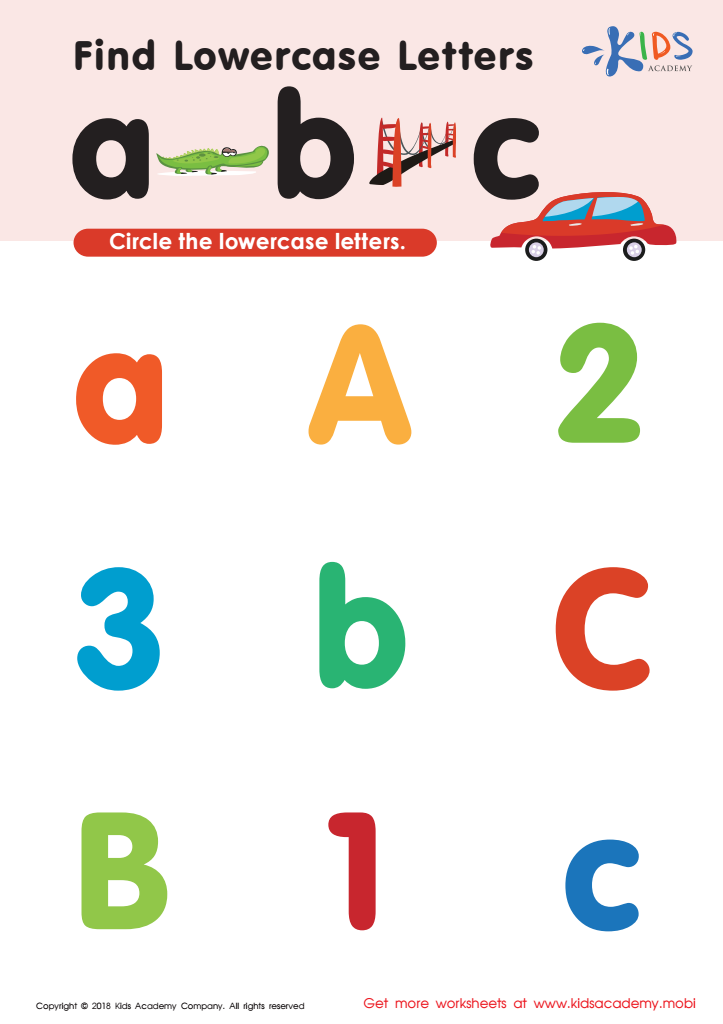
Find lowercase letters a b c Worksheet
Help your child identify lowercase letters with this worksheet. Carefully look at each letter and have your child circle the lowercase ones. This exercise is vital in helping them understand the alphabet and the difference between lower and uppercase letters.
Find lowercase letters a b c Worksheet
Worksheet
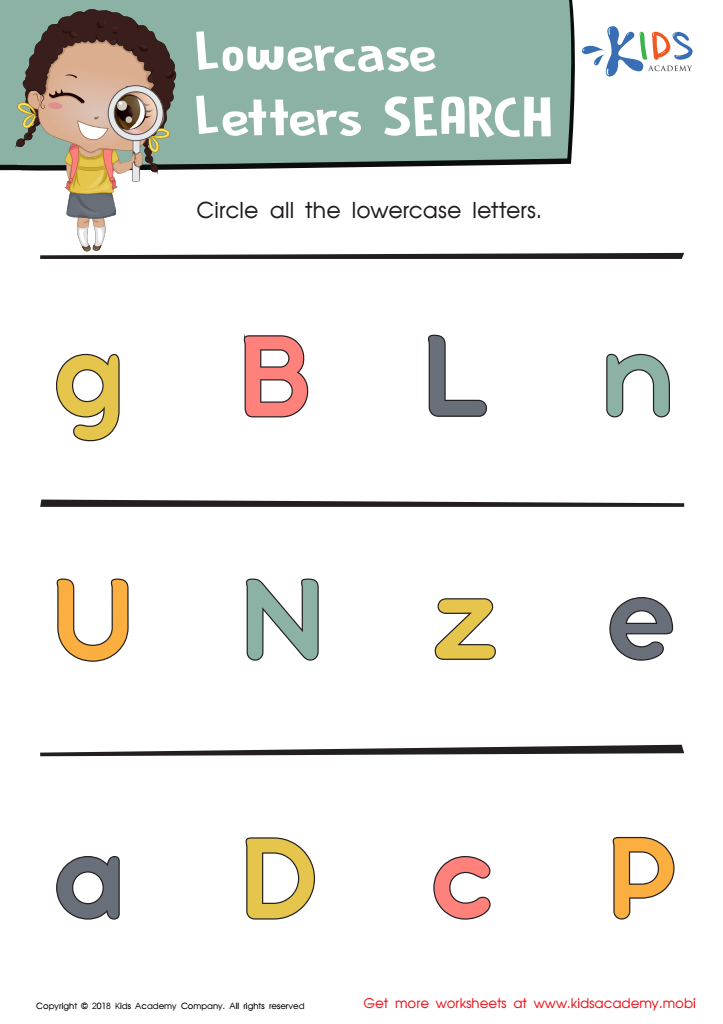
Lowercase Letters Search: Assessment Worksheet
Circle all the lowercase letters in this worksheet. Identify them among a mix of uppercase and lowercase letters. Your child will have fun with this exercise thanks to its bright primary colors. Enjoyment and learning go hand-in-hand!
Lowercase Letters Search: Assessment Worksheet
Worksheet
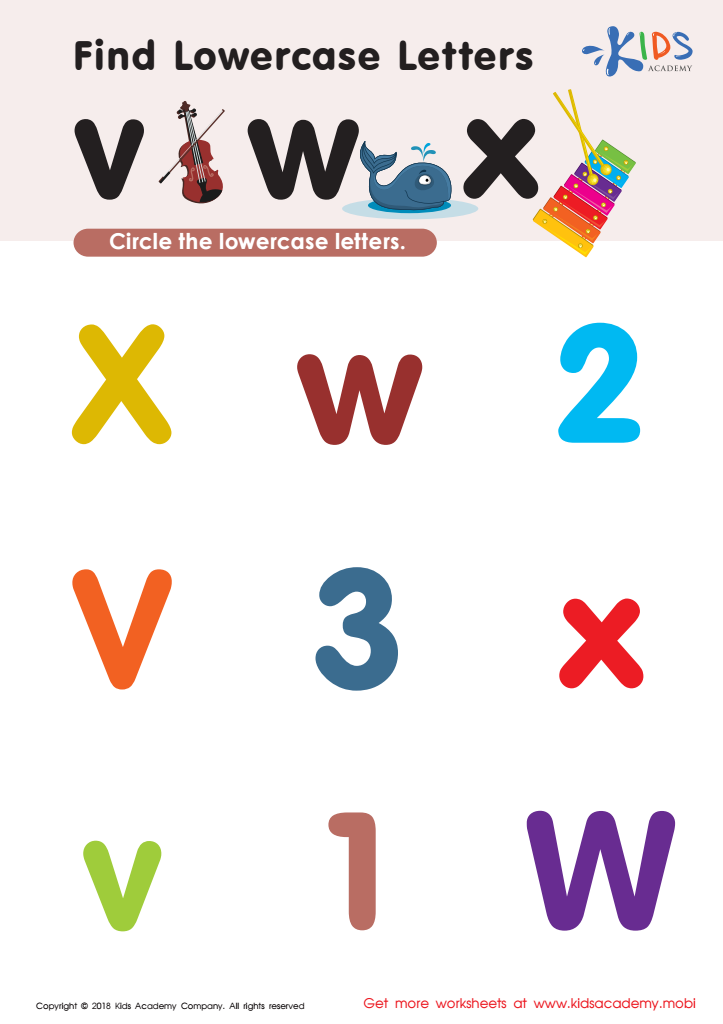
Find Lowercase Letters v w x Worksheet
If your child doesn't know the alphabet, get them this helpful worksheet. It's an easy exercise to build their understanding of the alphabet and lowercase letters. Find the letters v, w, and x among other uppercase letters and numbers in the downloadable PDF.
Find Lowercase Letters v w x Worksheet
Worksheet
Join Kids Academy for Free
Who is primarily going to use this learning content?








Lowercase letter identification is a crucial skill for children aged 6 to 9, as it forms the foundation for literacy development. Mastery of lowercase letters allows children to recognize and read common words, enhancing their reading fluency and comprehension. Early identification of these letters supports phonemic awareness, aiding in phonics instruction and spelling skills, which are vital components of effective reading strategies.
Parents and teachers should care about lowercase identification because it not only impacts literacy but also boosts children’s confidence in their reading abilities. When children can efficiently identify and use lowercase letters, they feel empowered to engage in more reading activities, fostering a joy for literacy. This engagement is essential, as reading skill development during these formative years directly influences academic success in later grades.
Furthermore, understanding lowercase letters helps children navigate written texts, as most writing and print is lowercase, reflecting everyday communication like emails, books, and signs. This skill empowers them to participate actively in their learning experiences and enhances their ability to communicate ideas effectively. Supporting lowercase letter identification ultimately converges towards greater academic achievement, fostering lifelong learning and growth. Thus, it is vital for parents and teachers to prioritize this essential literacy skill.







