Rhyme recognition Alphabet Worksheets for Ages 6-9
4 filtered results
-
From - To
Enhance your child's literacy skills with our engaging Rhyme Recognition Alphabet Worksheets for ages 6-9. These printable worksheets are designed to help children recognize and generate rhyming words, fostering phonemic awareness and alphabet knowledge. Each worksheet offers fun activities including matching, coloring, and puzzle-solving to make learning enjoyable. Perfect for both classroom use and at-home practice, these resources support early reading skills and contribute to a strong language foundation. Empower your young learners to excel in reading and phonics with our carefully crafted, educator-approved worksheets. Explore a world of rhyming fun today!
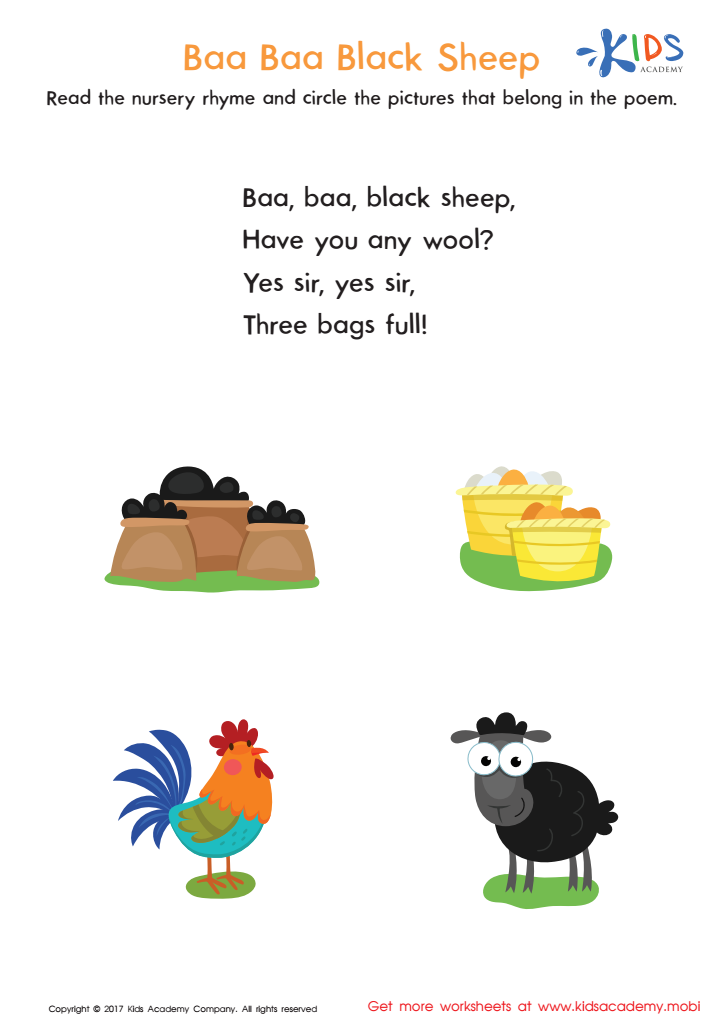
Baa Baa Black Sheep Printable
 Assign to My Students
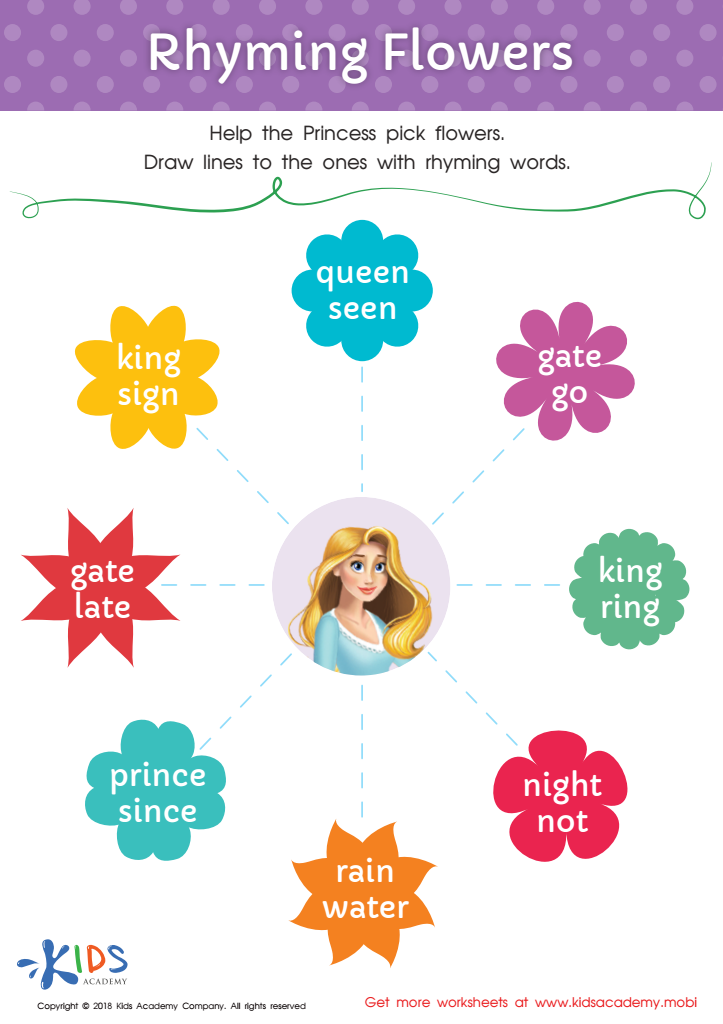
Rhyming Flowers Worksheet
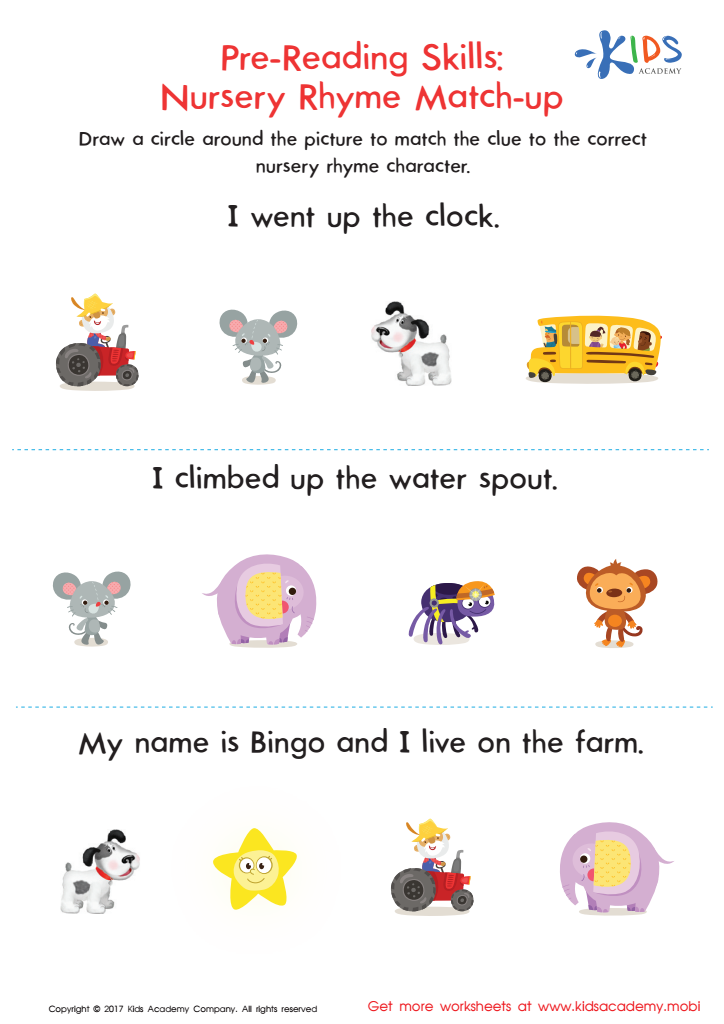
Nursery Rhyme Match–Up Worksheet
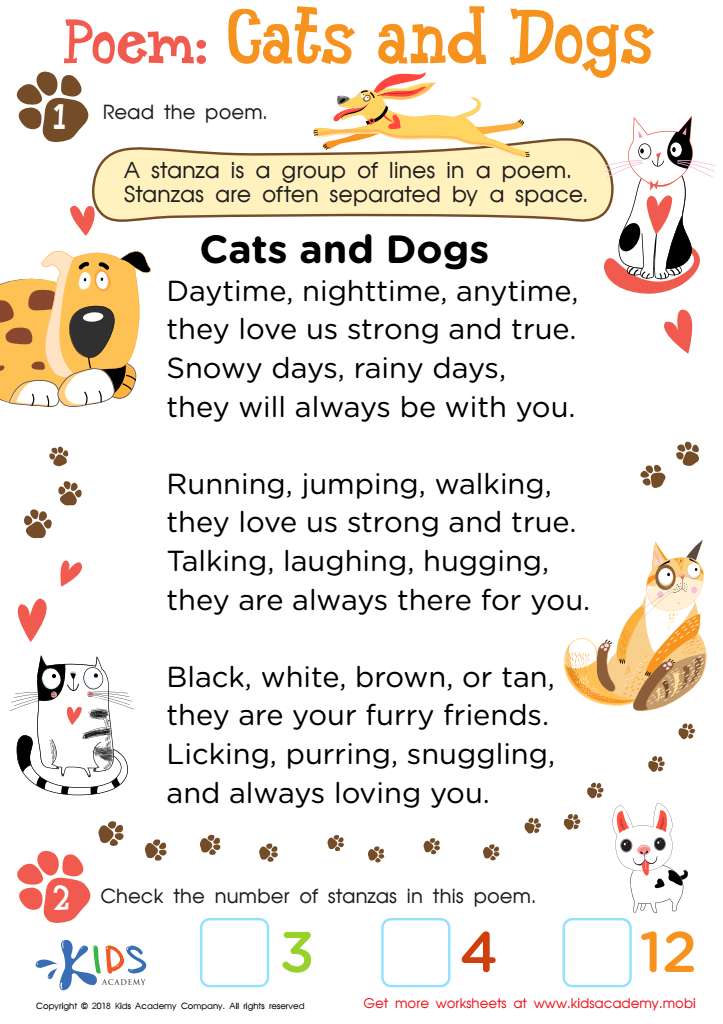
Poem: Cats and Dogs Worksheet







Rhyme recognition in the alphabet is a critical skill for children aged 6-9, playing a foundational role in their language and literacy development. At this age, children are developing phonemic awareness—the ability to hear, identify, and manipulate individual sounds in words. Recognizing rhymes helps reinforce this skill, as children learn to notice similarities and differences in sounds, which is essential for reading and spelling.
Engaging with rhymes boosts auditory discrimination, enabling children to discern subtle sound patterns and improve their pronunciation. This, in turn, enriches their vocabulary and comprehension, as they become more attuned to the playful and repetitive nature of language, enhancing memorization and recall.
For parents and teachers, fostering rhyme recognition is also about making learning fun and interactive. Rhyming games, songs, and activities capture children’s imagination and hold their attention, turning abstract concepts into enjoyable experiences. As children successfully recognize rhymes, they build confidence in their reading abilities.
Moreover, rhyme recognition supports the development of critical thinking and prediction skills. Predicting rhyming words involves making connections and anticipating outcomes, which are valuable cognitive skills. Emphasizing rhyme recognition ensures that children develop strong reading foundations, setting the stage for future academic success and a lifelong love of literature.







