Rhyming skills development Alphabet Worksheets for Ages 6-9
4 filtered results
-
From - To
Unleash the joy of learning with our Rhyming Skills Development Alphabet Worksheets for ages 6-9. Designed by educational experts, these engaging worksheets help children master rhyming while enhancing their alphabet knowledge. Each worksheet introduces delightful rhyming activities that make learning fun and interactive. Kids will improve phonemic awareness, build vocabulary, and develop critical reading skills as they match and create rhyming words. Perfect for both classroom use and home practice, our worksheets provide a structured yet playful approach to foundational language skills. Equip young learners with the tools they need to excel in reading and communication.
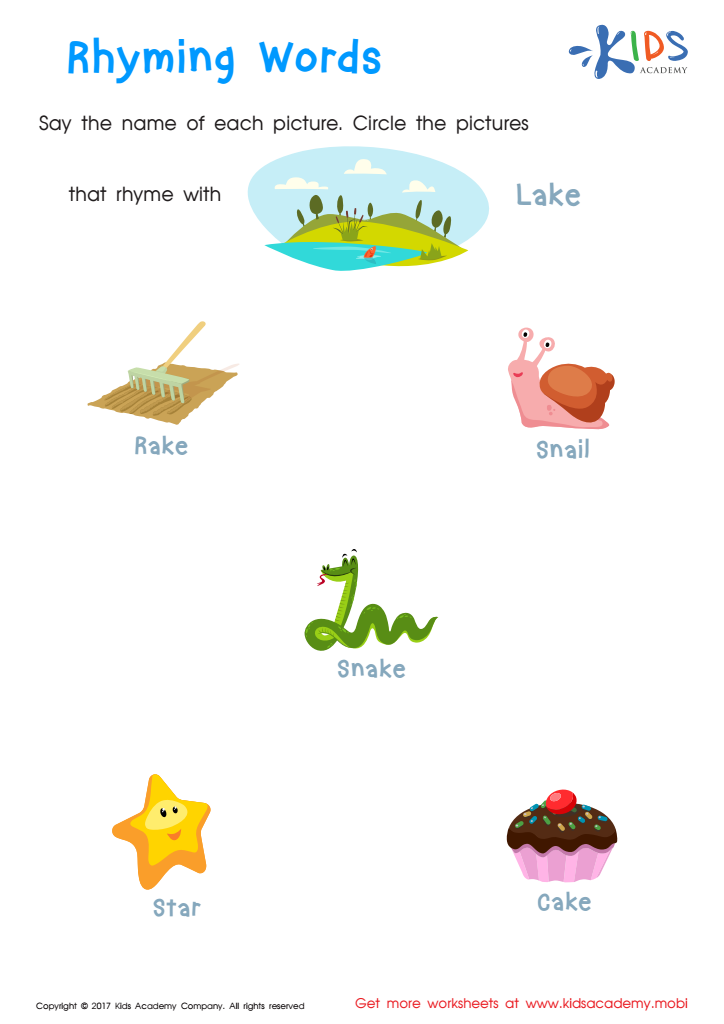
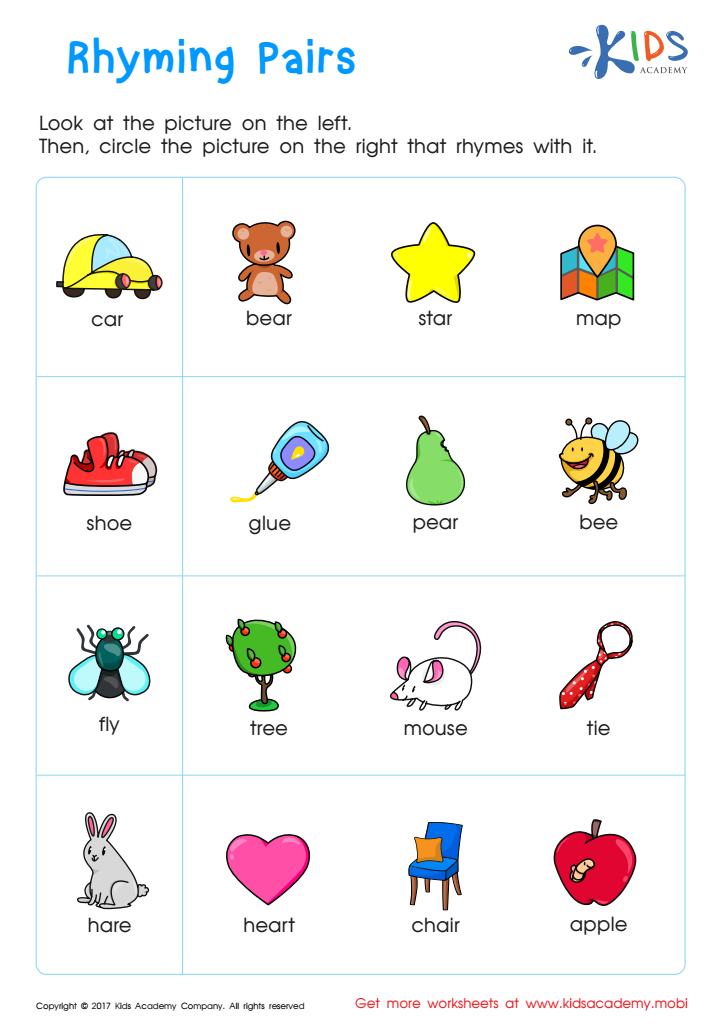
Rhyming Words Rhyming Worksheet
 Assign to My Students
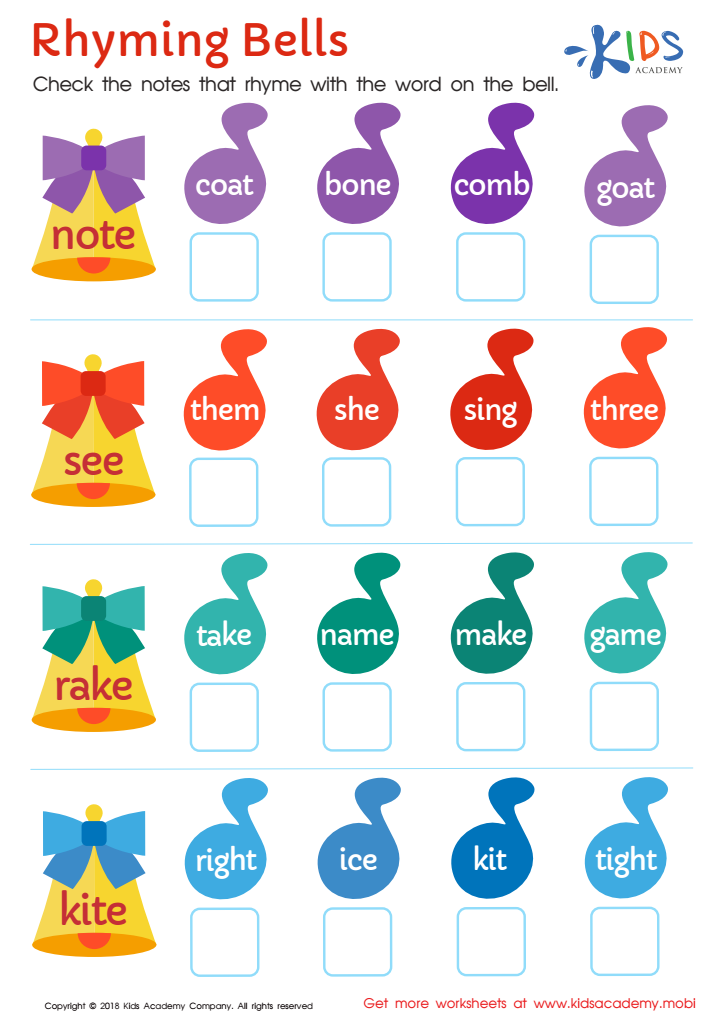
Rhyming Bells Worksheet
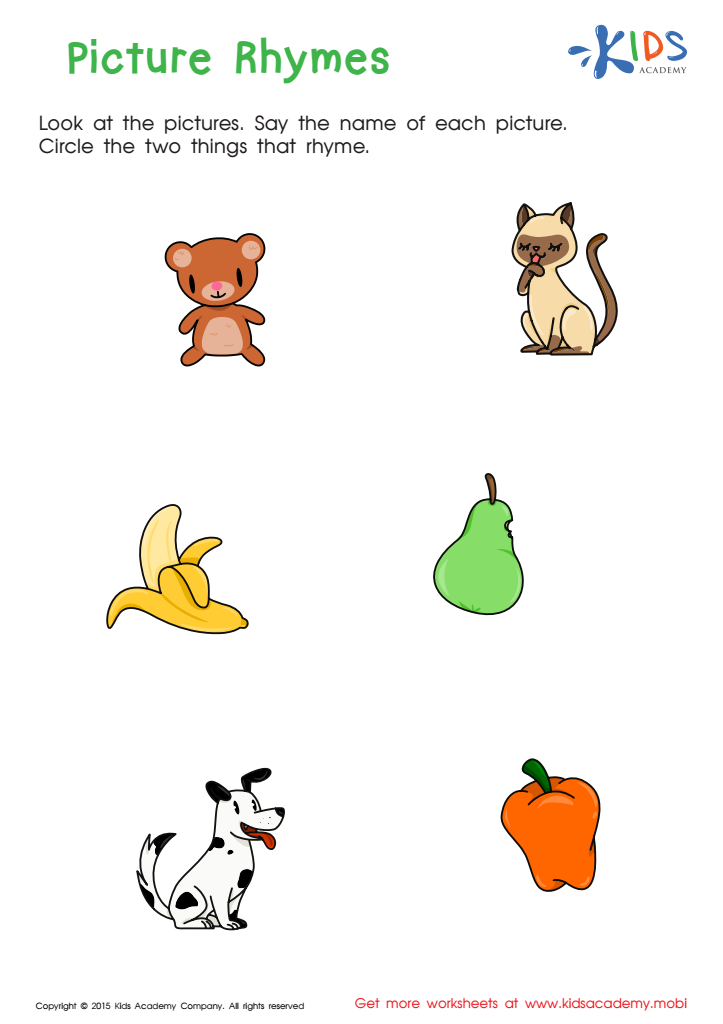
First Words: Picture Rhymes Worksheet








Rhyming skills and alphabet knowledge are foundational elements in early childhood literacy that parents and teachers should highly value for children ages 6-9. Rhyming helps kids recognize sound patterns within words, which enhances their phonological awareness—a critical precursor to reading proficiency. When children can identify and produce rhyming words, they become adept at segmenting and substituting sounds, fostering their ability to decode new words. Moreover, rhyming can make learning engaging and fun, thus promoting a love for language and reading.
Understanding the alphabet is another crucial component. Mastery of alphabet letters and their corresponding sounds forms the backbone of a child's ability to read and write. Knowing the alphabet enables children to understand the mechanics of reading, which includes everything from recognizing letters and knowing their order to linking letters with their associated sounds.
Integrating rhyming activities with alphabet learning makes literacy education richer and more connected. For instance, when children recognize that "cat," "bat," and "hat" not only rhyme but also follow a similar alphabetical order, their grasp of both phonemic patterns and letter recognition strengthens. As parents and teachers nurture these skills, they equip children with essential tools for future academic success and effective communication. Thus, paying attention to rhyming skills and alphabet knowledge is critical for their overall literacy development.







