
Fine Motor Skills Tracing Letters Worksheets for Ages 6-9
34 filtered results
Difficulty Level
Grade
Age
-
From - To
Subject
Activity
Standards
Enhance your child's fine motor skills with our engaging tracing letters worksheets designed for ages 6-9! These worksheets provide a fun and interactive way for children to practice letter formation while improving their hand-eye coordination and pencil grip. Each printable sheet features a variety of letters for tracing, making it an ideal resource for building confidence in writing. With vibrant illustrations and easy-to-follow guidelines, your child will enjoy learning the alphabet in a hands-on way. These worksheets are perfect for both classroom use and at-home practice, ensuring a well-rounded approach to early literacy development. Begin your child's writing journey today!
Favorites
With answer key
Interactive
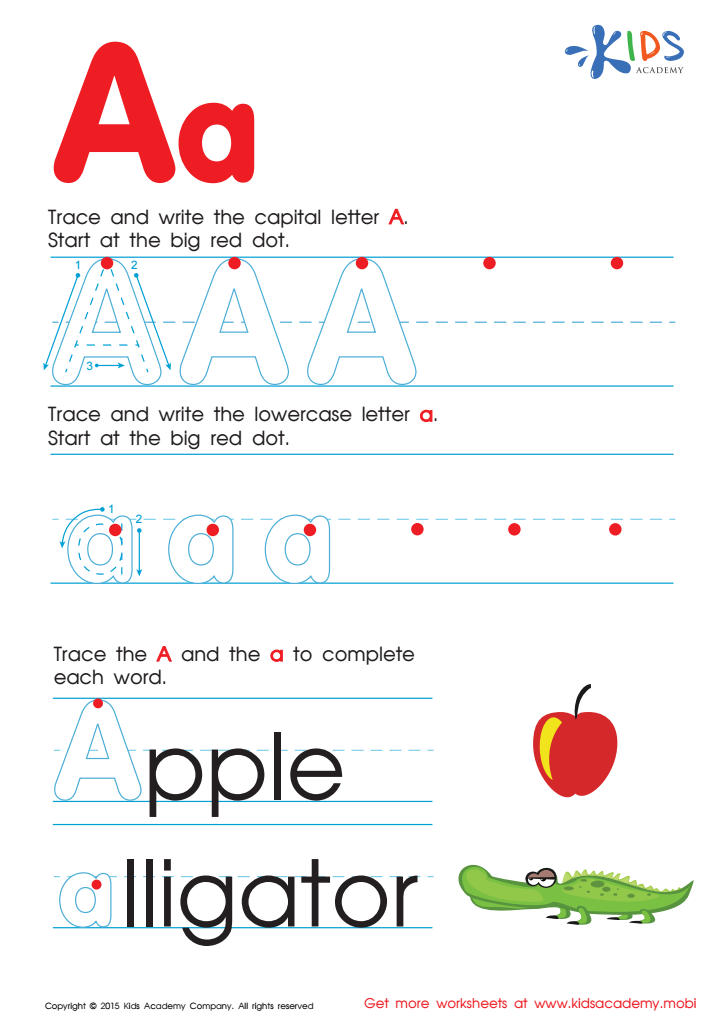
Letter A Tracing Page
Trace and write the letter "A"! Start with the big red dot, then do the capital and lowercase versions. Then write it again with two words - apple and alligator. Download more tracing worksheets at Kids Academy.
 Assign to My Students
Letter A Tracing Page
Worksheet
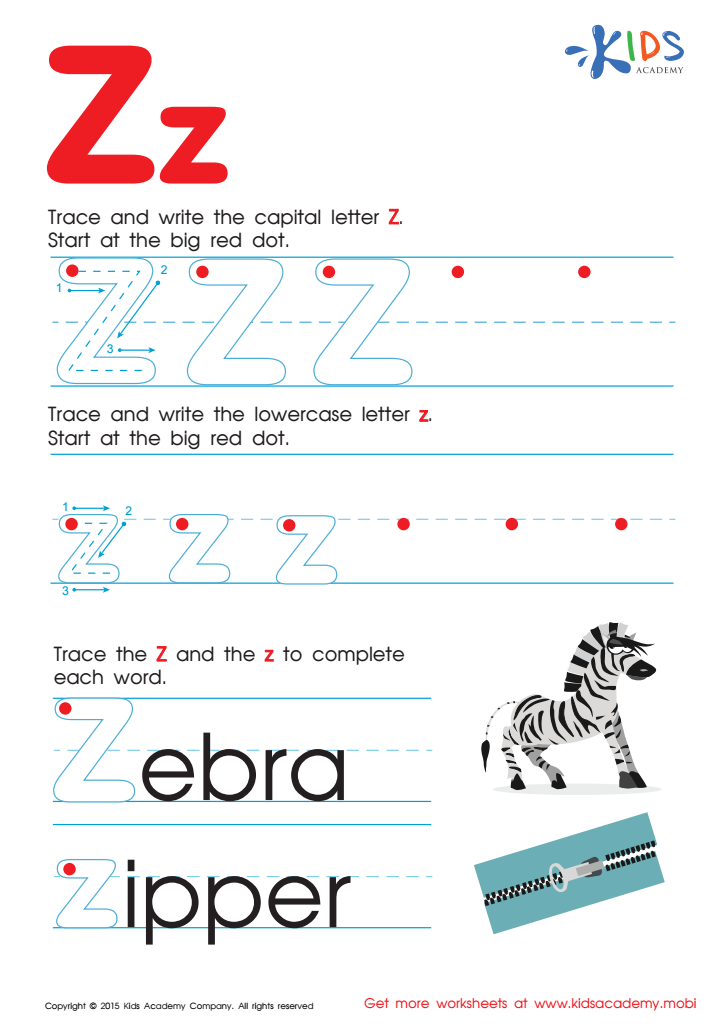
Letter Z Tracing Page
Trace and write capital "Z" and lowercase "z". Complete words "zebra" and "zipper". Be attentive and have fun! (80 words)
Letter Z Tracing Page
Worksheet
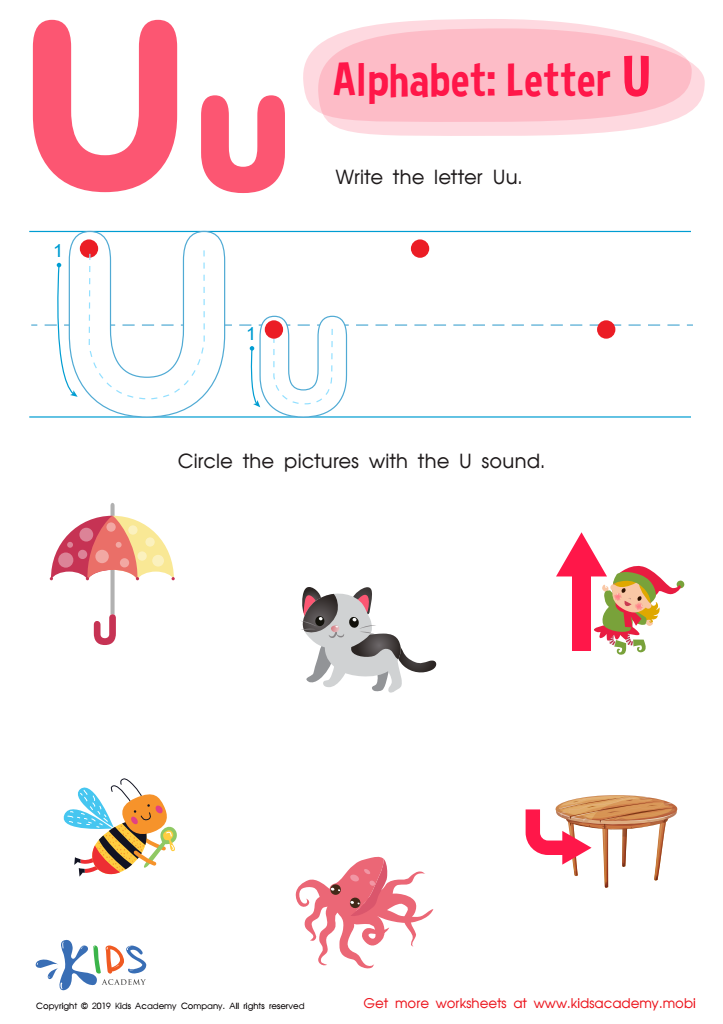
Letter U Tracing Worksheet
Your students can have fun and learn about the alphabet with this letter «U» worksheet. Pre-schoolers will trace the letter «U», circle words with the letter sound, and learn phonics while boosting their confidence. Doing these tasks will help them understand the letter more.
Letter U Tracing Worksheet
Worksheet
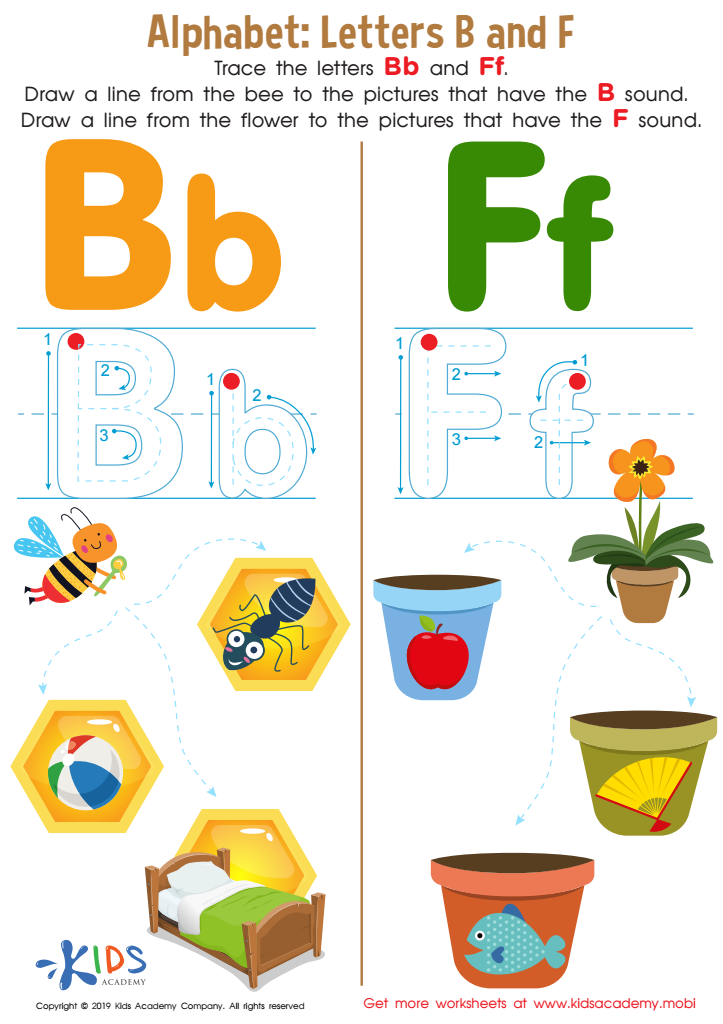
Letters B and F Tracing Worksheet
Does your kid know the letters B and F? This tracing sheet helps them practice by tracing each letter, then drawing a line from a bee and a flower to related words. Recognizing words with pictures develops a great skill, and students will master it in no time!
Letters B and F Tracing Worksheet
Worksheet
Letter O Tracing Page
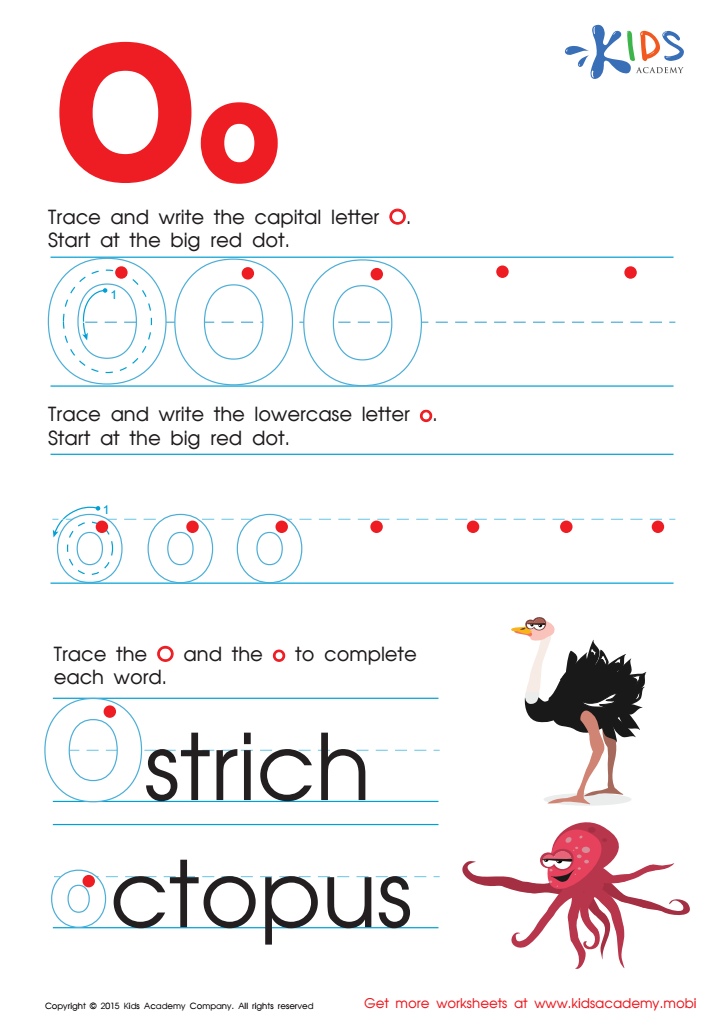
Practice writing the letter "O" with our new worksheet. Trace and write the letter several times, starting at the red dot. First do the uppercase letter, then the lowercase. Use the pictures to complete the words "Ostrich" and "octopus". Kids Academy offers more fun alphabet worksheets.
Letter O Tracing Page
Worksheet
Letter R Tracing Page
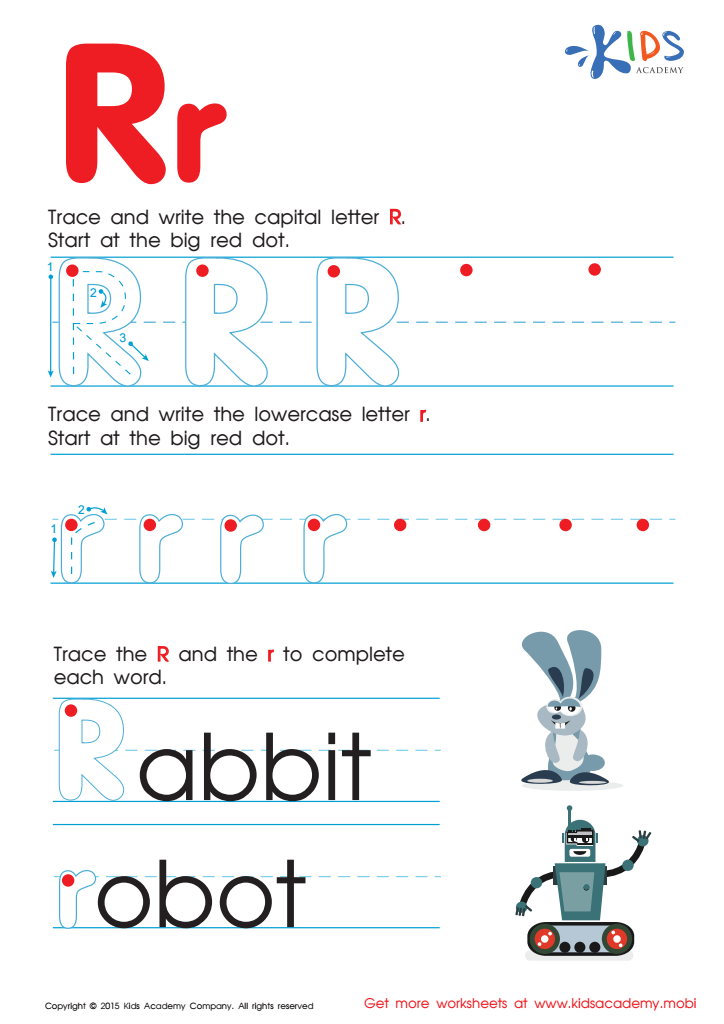
Trace and write the letter "R" with this worksheet for kindergarten. Start with the uppercase, then move on to the lowercase. Write the letters several times for practice. Then help complete the words for the rabbit and robot, spelling carefully. More ABC worksheets can be found at Kids Academy.
Letter R Tracing Page
Worksheet
Letter X Tracing Page
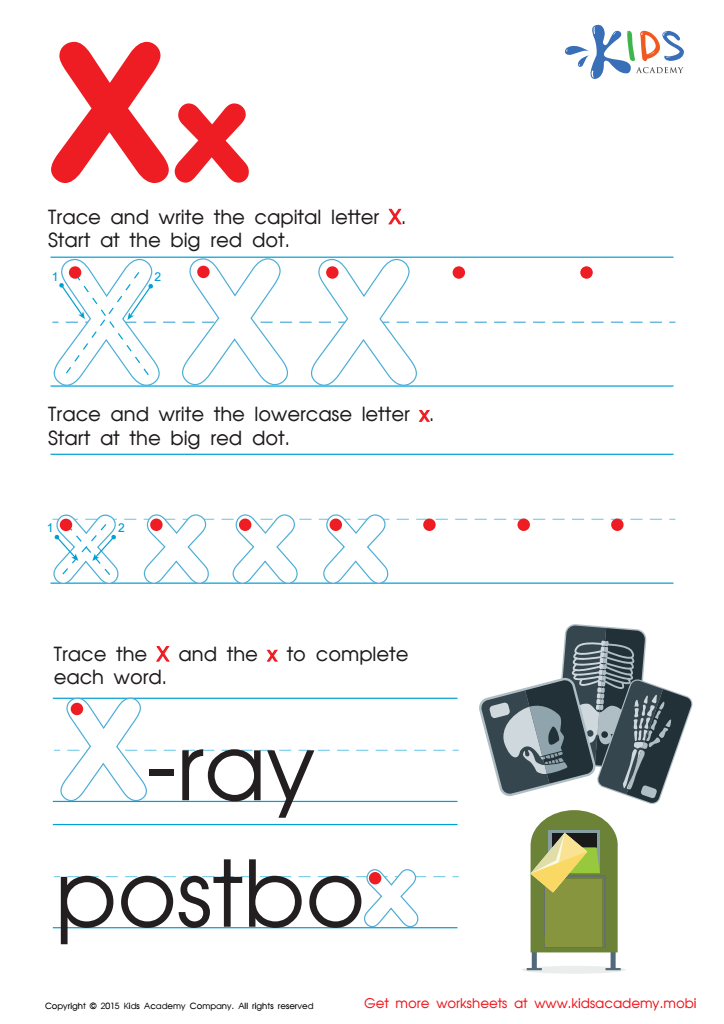
Trace the uppercase letter "X" to learn, then write it yourself and practice. Then do the same with the lowercase "x" before completing the words "X-ray" and "postbox". Enjoy our alphabet printables!
Letter X Tracing Page
Worksheet

Letter P Tracing Page
Trace the lines from the red dot to learn to write "P"! Then practice this letter with the fun activities: complete the word "Pig" and "Pumpkin". Check out Kids Academy to get more free ABC worksheets.
Letter P Tracing Page
Worksheet
Letter I Tracing Page
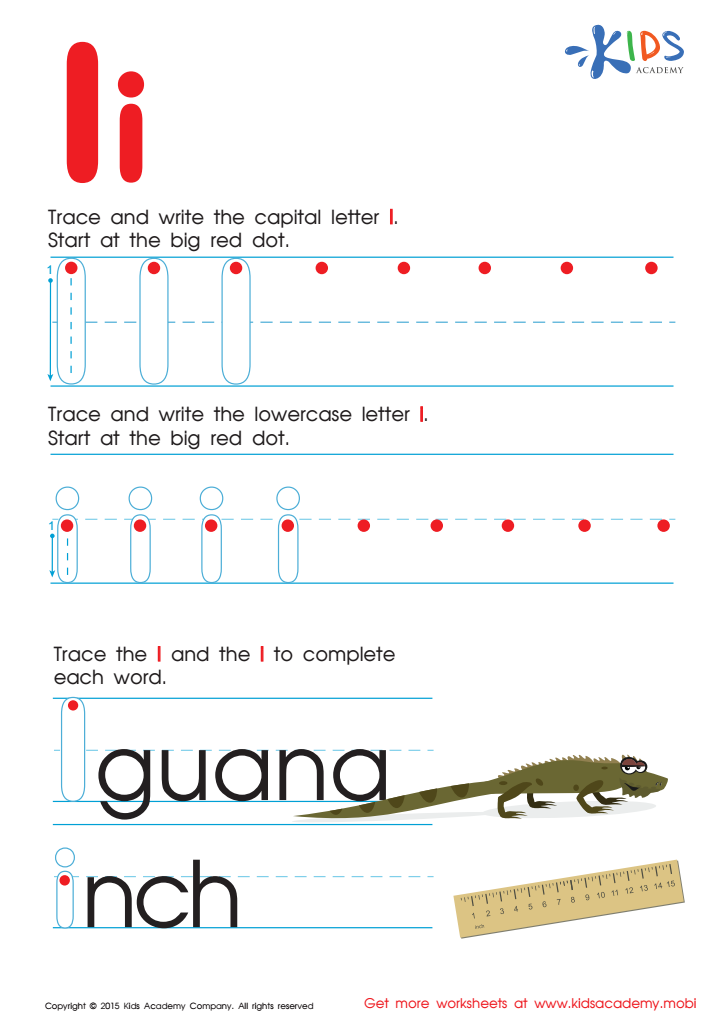
Trace and write "I" uppercase and lowercase. An iguana's tail looks like the uppercase "I" and the lowercase "i" is as small as an inch. Make learning fun with Kids Academy worksheets.
Letter I Tracing Page
Worksheet
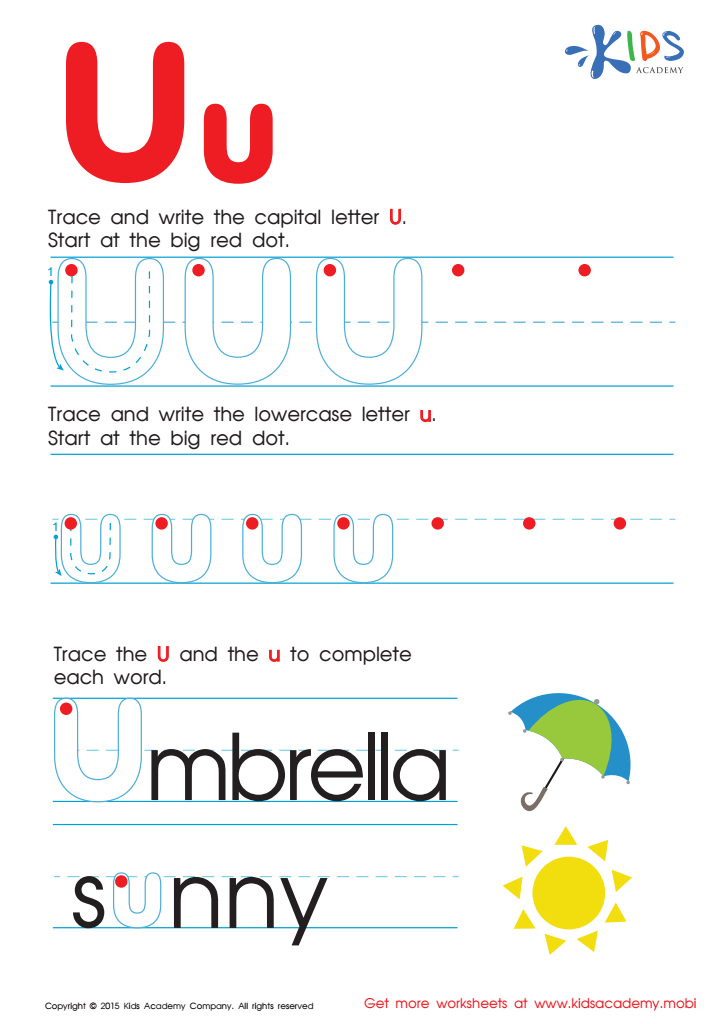
Letter U Tracing Page
Ready to trace and write the letter "U"? Use our worksheet and practice tracing both uppercase and lowercase letters. Complete the words "umbrella" and "sunny" with a capital "U". Check our full collection of alphabet printables for more activities.
Letter U Tracing Page
Worksheet
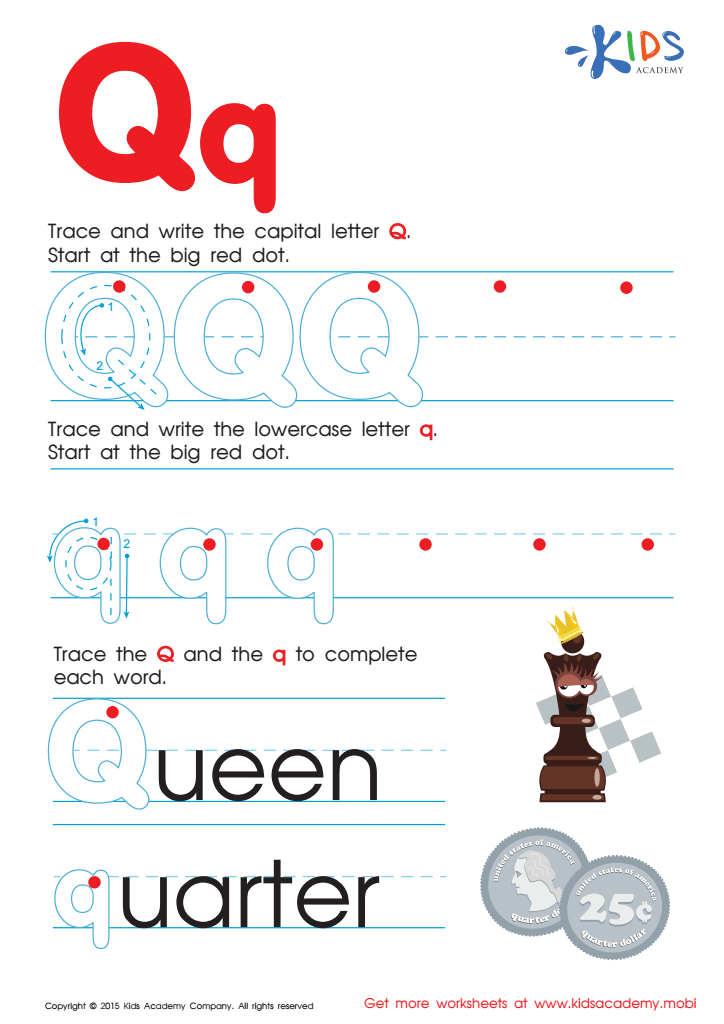
Letter Q Tracing Page
Learn the letter "Q"! Trace and write it a few times in upper and lowercase. Then help the Queen by writing her initial letter. Finally, write "quarters" and practice with more alphabet worksheets.
Letter Q Tracing Page
Worksheet
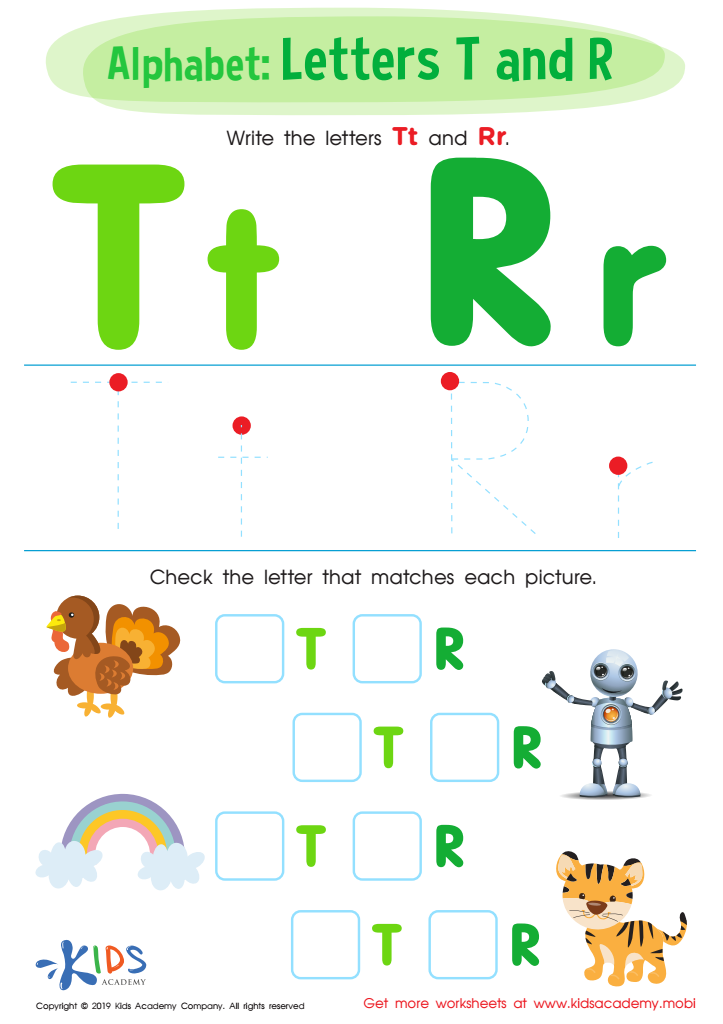
Letters T and R Worksheet
Is your kid bored with basic letter learning? Try this Letters T & R traceable sheet! It combines tracing and picture matching to help solidify fundamental skills. Your child will gain a better understanding and have fun at the same time.
Letters T and R Worksheet
Worksheet
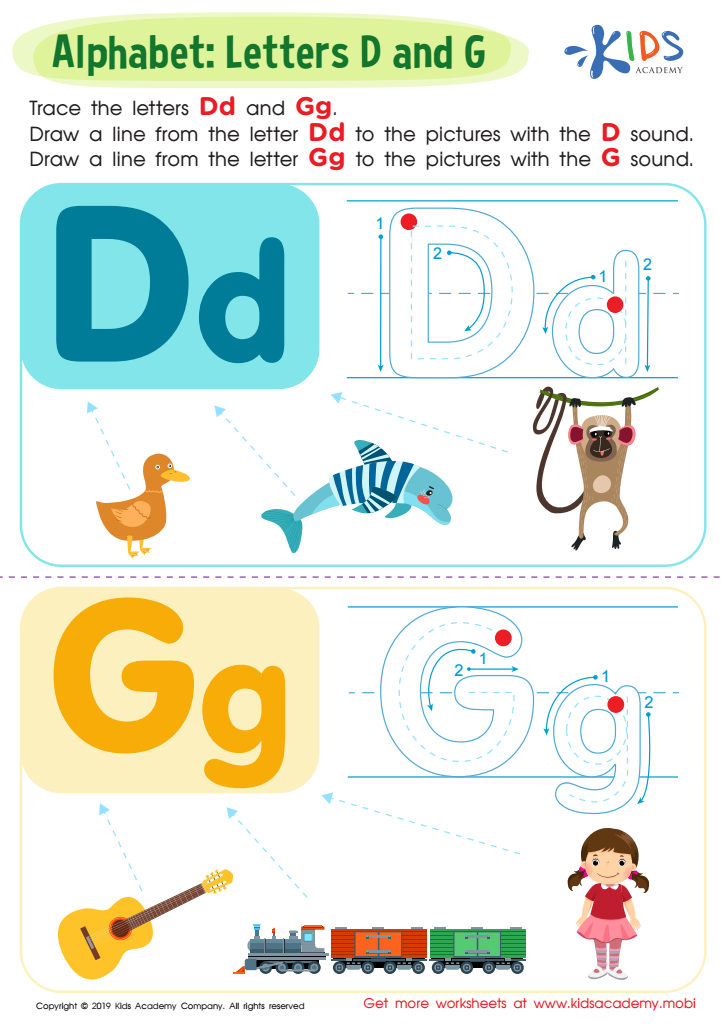
Letter D and G Tracing Worksheet
Kids can explore their imagination with the 'Alphabet: Letters D and G' worksheet! They'll trace capital and lowercase "D" and "G" and trace a line from the words. Colorful animals and objects make the task more fun and entertaining!
Letter D and G Tracing Worksheet
Worksheet
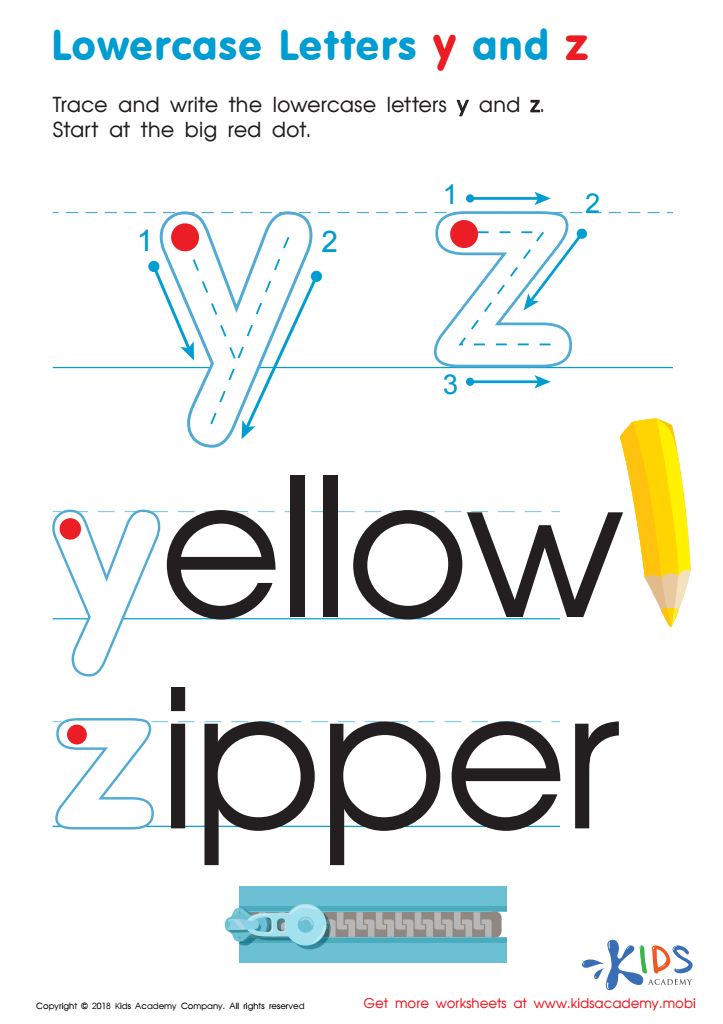
Lowercase Letters y z Worksheet
Help your child get a good start in writing and reading by tracing and writing the lowercase letters y and z. With this activity, they will learn the alphabet, which is essential for literacy success. Guide them through the worksheet and make sure they form the letters correctly. This will help them learn the basics needed to write and read fluently.
Lowercase Letters y z Worksheet
Worksheet
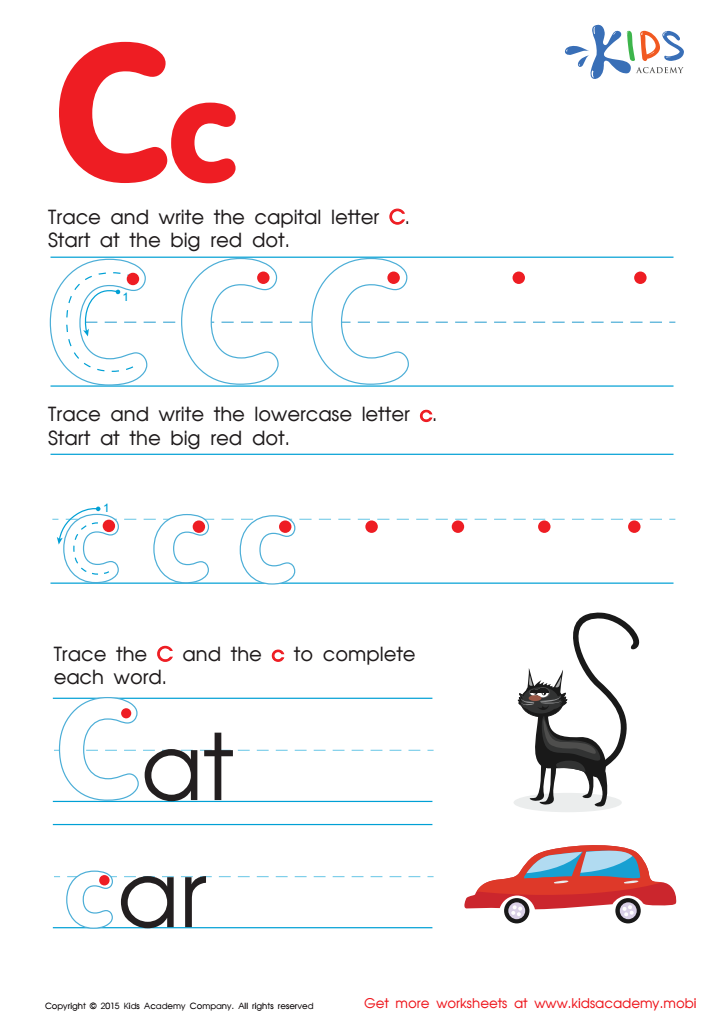
Letter C Tracing Page
Trace and write the letter 'C'! Put the pencil at the red dot then follow the lines – the capital letter first then the lowercase one. Cats love it and so will you! Get more free printables to practice tracing and writing.
Letter C Tracing Page
Worksheet
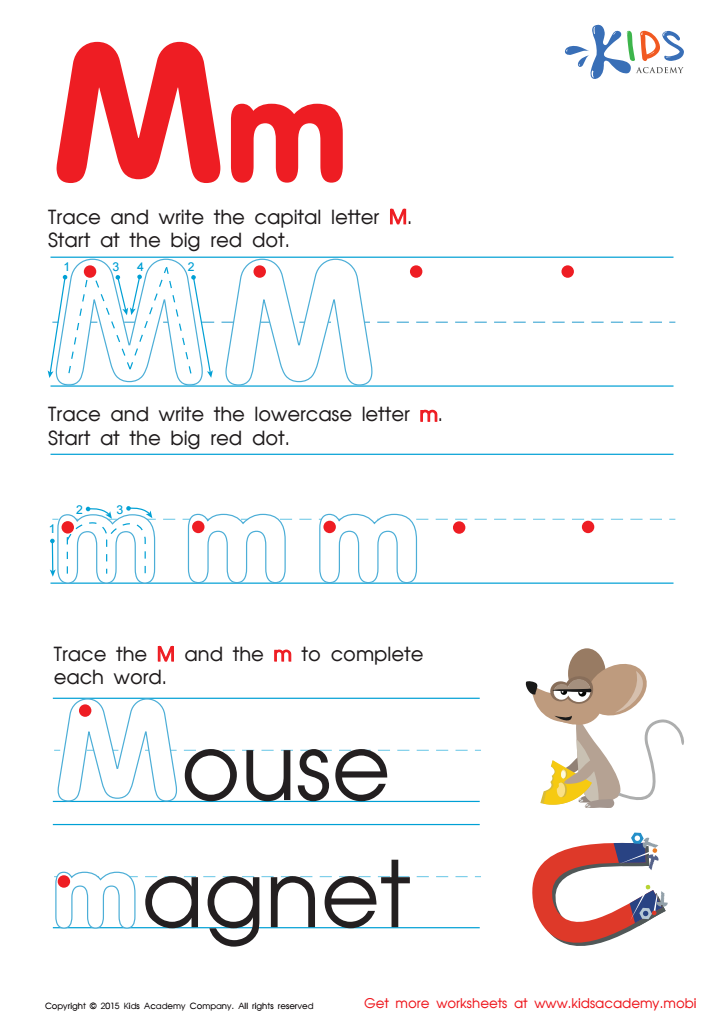
Letter M Tracing Page
Trace and write the letter "M" to help kids learn the alphabet. Start at the red dot and practice several times. Trace the capital letter first, then move on to the lowercase. Complete words like "mouse" and "magnet" in the further exercise. Get more free printables here.
Letter M Tracing Page
Worksheet
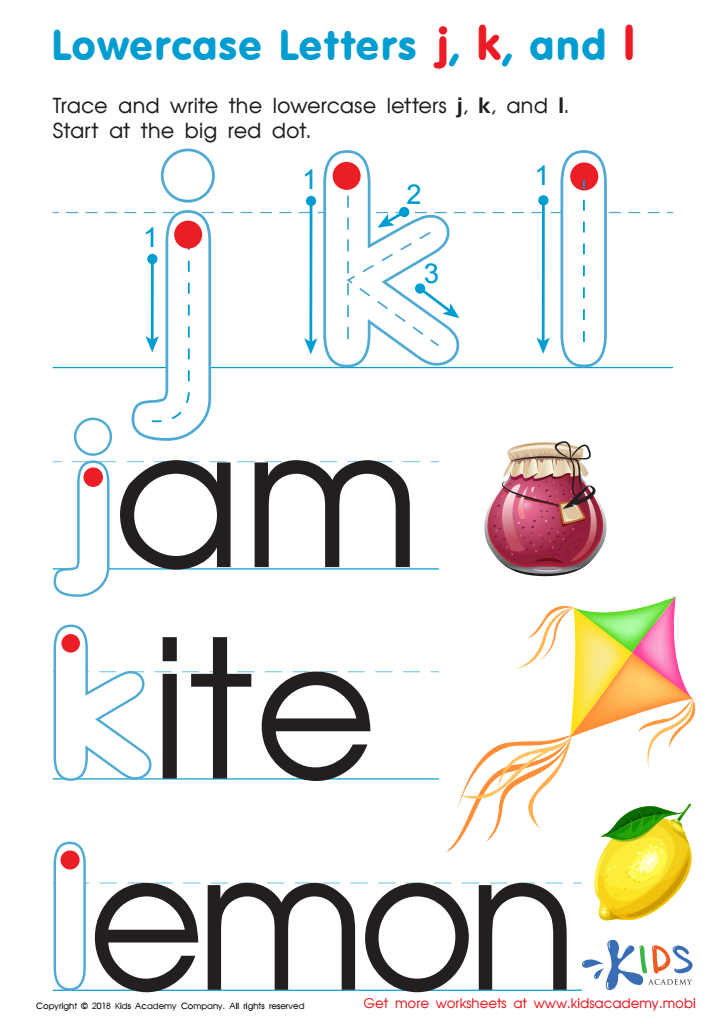
Lowercase Letters j k l Worksheet
Teach your child the difference between uppercase and lowercase letters. Have them trace and write the lowercase letters j, k, and l, starting at the red dot. Guide your child's hand to form the letters correctly.
Lowercase Letters j k l Worksheet
Worksheet
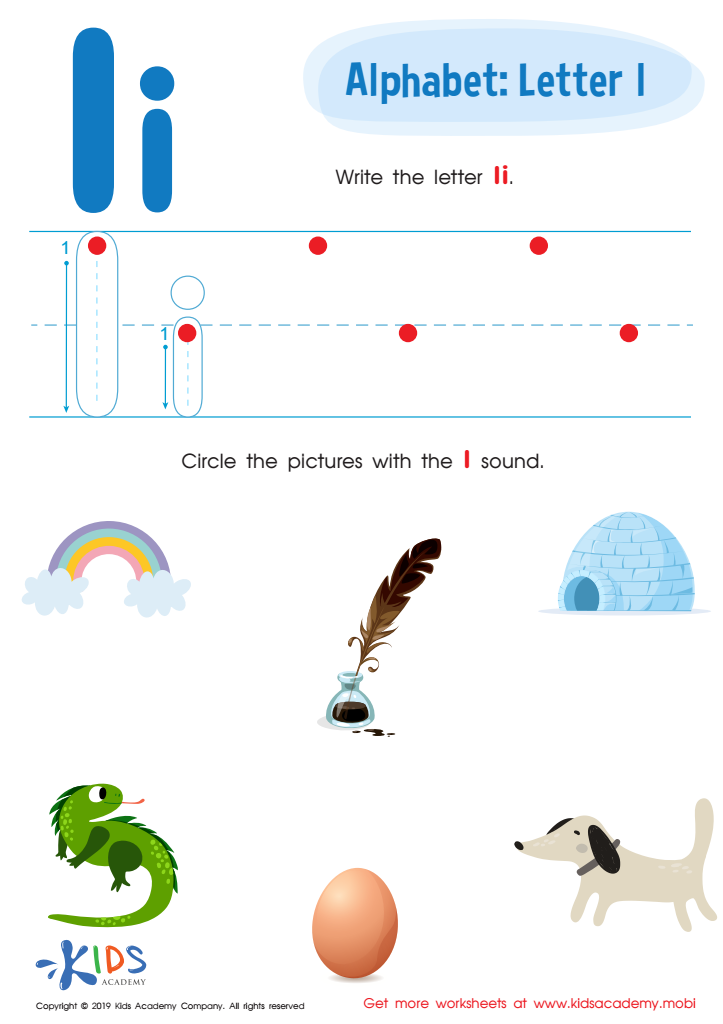
Letter I Tracing Worksheet
Kids can hone tracing, writing and identifying skills for the letter 'I' with this worksheet. Whether visual or reading/writing learners, every child can benefit from the tasks - tracing, writing and circling objects beginning with 'I'. This free sheet will soon get preschoolers confident with the 'I' letter!
Letter I Tracing Worksheet
Worksheet
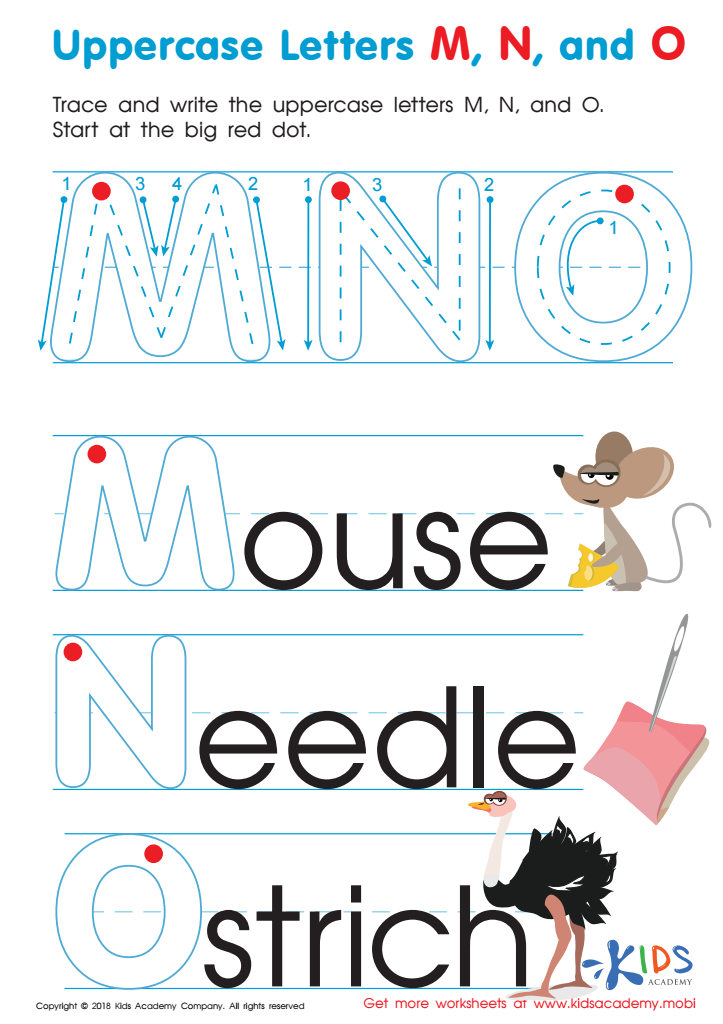
Uppercase Letters M, N, and O Worksheet
Download our easy-to-understand worksheet to help kids write M and N with ease! They'll trace dotted lines and follow arrows as they fill in the letters using a big red dot as a guide. The cute graphics will help them remember sounds too! Get your child writing quickly and confidently with this fun activity.
Uppercase Letters M, N, and O Worksheet
Worksheet

Letter G Tracing Page
Get ready to trace the letter "G" – with a big red spot as the starting point, trace the lines and watch the letter appear. Uppercase and lowercase letters are both easy and fun to write. Give it a go and finish the word "go". Play the guitar and say "hello" to a funny ghost!
Letter G Tracing Page
Worksheet
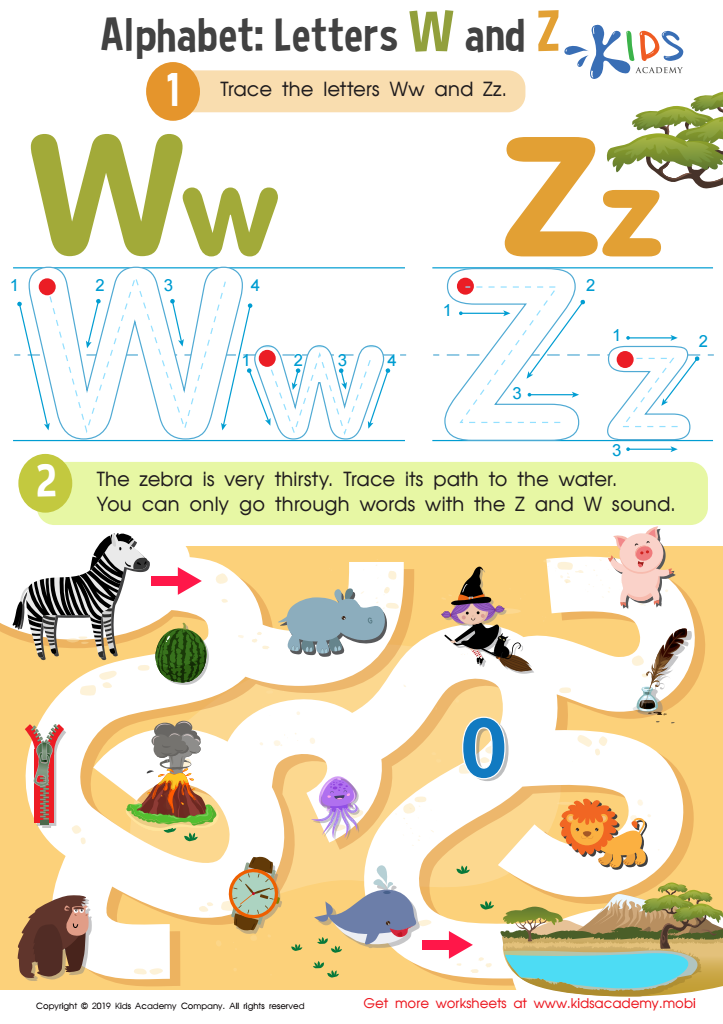
Letters W and Z Tracing Worksheet
Kids will go on a safari exploration of letters W and Z with this worksheet. Students will trace «W» and «Z» and then help the zebra find their watering hole, only following the path of the «W» and «Z» words among many others. It'll be a fun learning activity!
Letters W and Z Tracing Worksheet
Worksheet
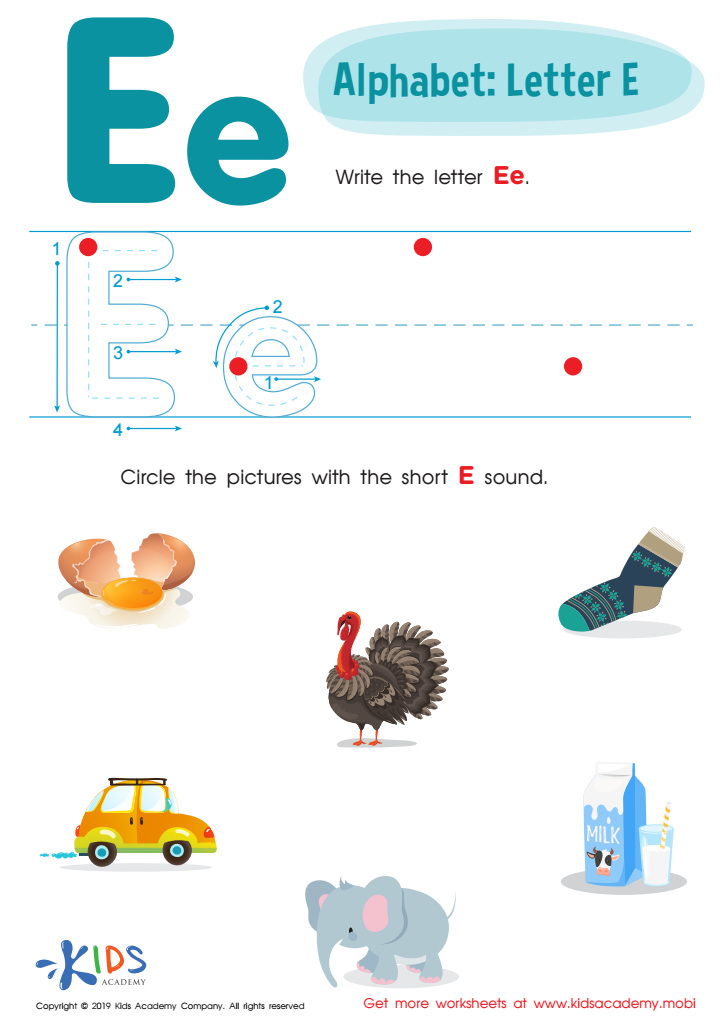
Letter E Tracing Worksheet
Students trace and write uppercase and lowercase letter E. They sound out "E" words, choosing those with short "E" sounds. Preschoolers identify the difference between the 'E' sounds in words like "egg" and "turkey." A tracing sheet helps them to understand.
Letter E Tracing Worksheet
Worksheet
Letters X and Q Tracing Worksheet
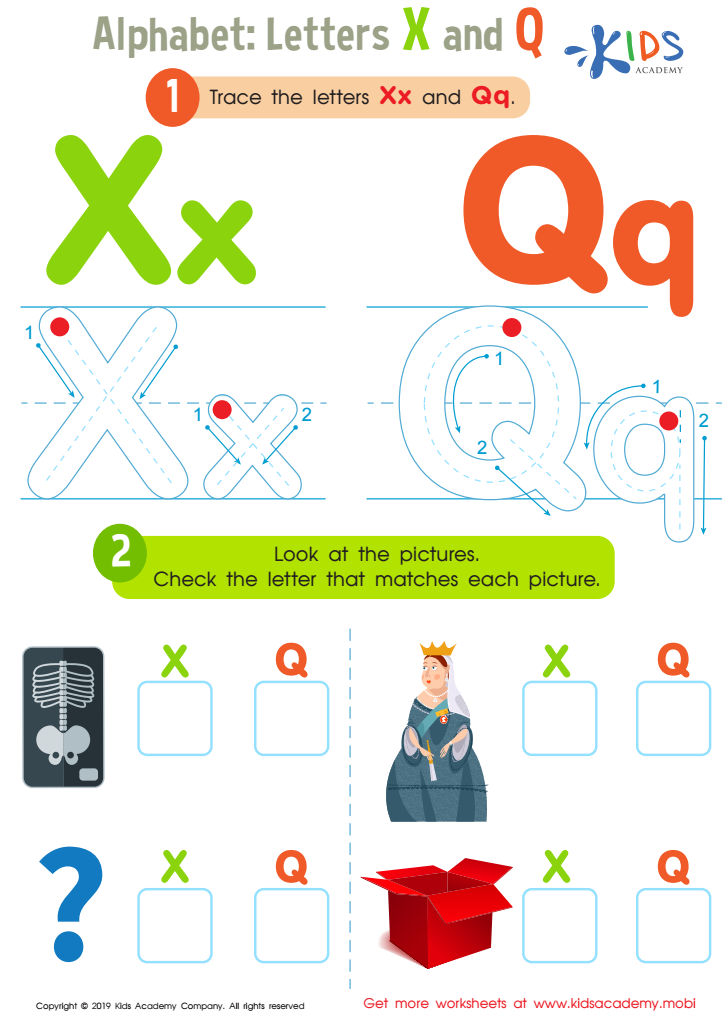
Do you want your students to improve writing and letter recognition? This worksheet is a great place to start! Kids can trace the letters «X» and «Q» and identify pictures that match each letter. With a little encouragement, they'll do a great job!
Letters X and Q Tracing Worksheet
Worksheet
Lowercase Letters m n o Worksheet
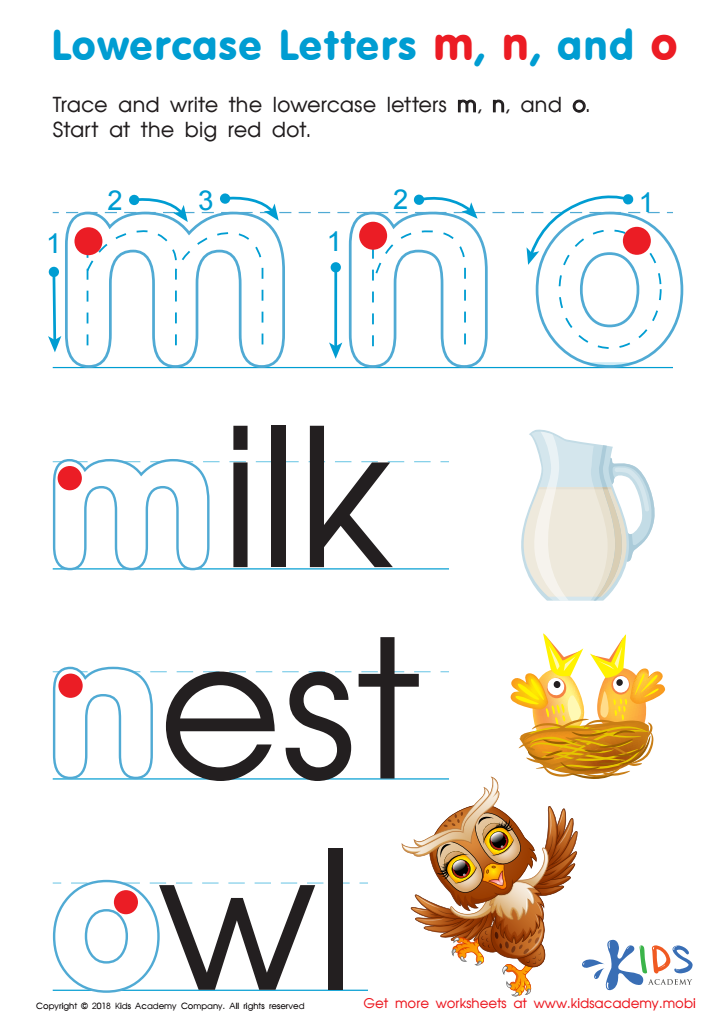
Help your child learn the alphabet with letter tracing. Show them the difference between uppercase and lowercase letters by working through this free worksheet, tracing and writing lowercase m, n and o.
Lowercase Letters m n o Worksheet
Worksheet
Join Kids Academy for Free
Who is primarily going to use this learning content?








Fine motor skills are essential for children's overall development, particularly for ages 6-9 when they are learning to write and read. Tracing letters is one of the most effective ways to enhance these skills, as it helps children refine their hand-eye coordination, finger dexterity, and control. These skills are critical not only for writing, but also for everyday tasks such as buttoning shirts, using utensils, and performing crafts.
Teachers and parents should prioritize engaging children in tracing activities because it fosters independence and confidence. As children practice writing letters, they receive immediate feedback on their progress, which motivates them to improve and persevere. This also lays the foundation for better handwriting, a vital component in academic success.
Furthermore, working on letter tracing can strengthen cognitive skills by reinforcing letter recognition and phonological awareness, which are key for literacy development. Fine motor skills connect directly to cognitive growth; thus, supporting children in this area can enhance their overall learning experience.
Lastly, incorporating tracing activities into daily routines can provide valuable sensory experiences, making learning enjoyable and interactive. By engaging with these skills, parents and teachers can significantly contribute to children’s long-term educational achievements and everyday life skills.








