Astronomy basics Worksheets for Ages 6-9
3 filtered results
-
From - To
Explore the wonders of the cosmos with our engaging "Astronomy Basics Worksheets" designed for ages 6-9! These printable activities introduce young learners to the fascinating world of astronomy through fun, interactive lessons that cover planets, stars, moons, and space exploration. With captivating visuals and age-appropriate content, our worksheets help children develop learning skills while igniting their curiosity about the universe. Perfect for classroom or at-home learning, these activities make exploring the night sky accessible and exciting. Help your child embark on an astronomical adventure and foster their love for science with "Astronomy Basics Worksheets" from Kids Academy.
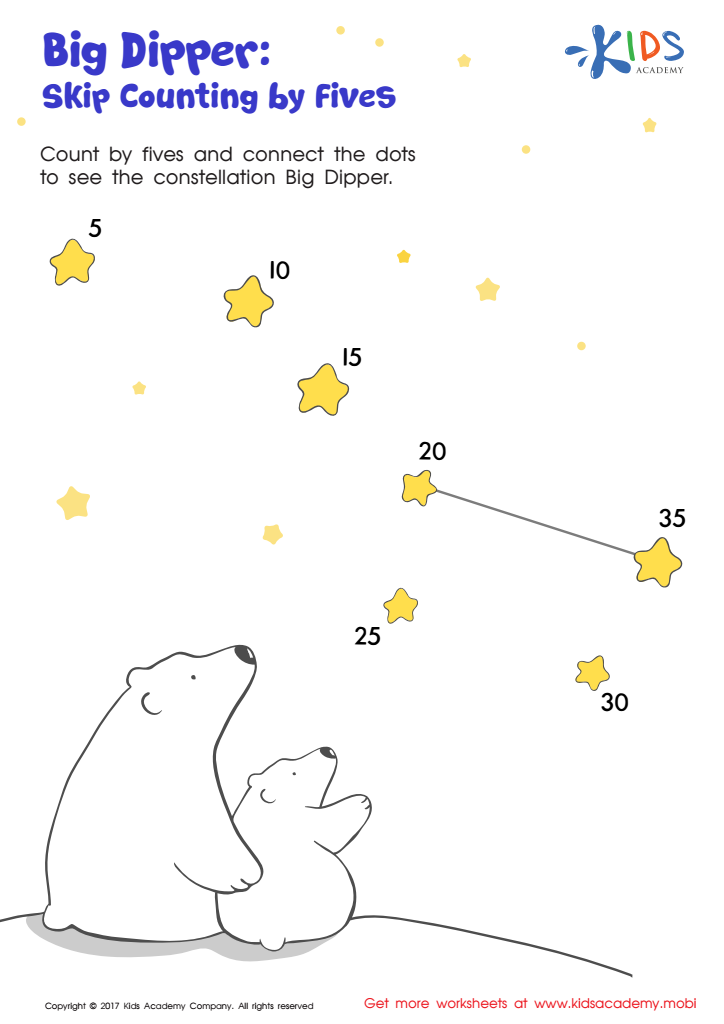
 Assign to My Students
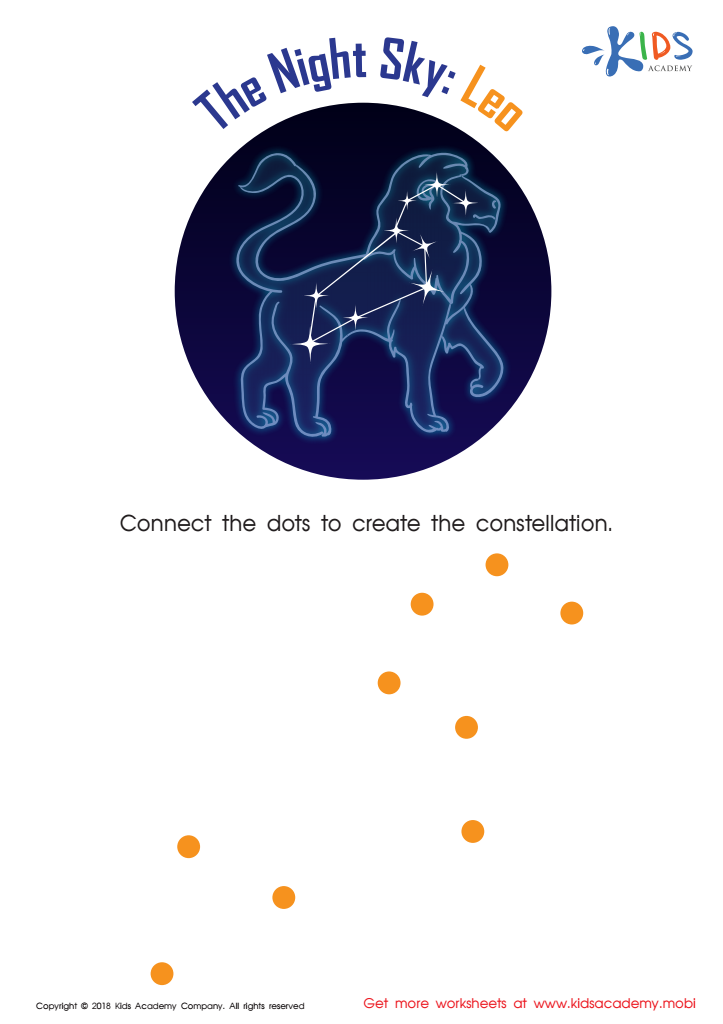
The Night Sky: Leo Worksheet
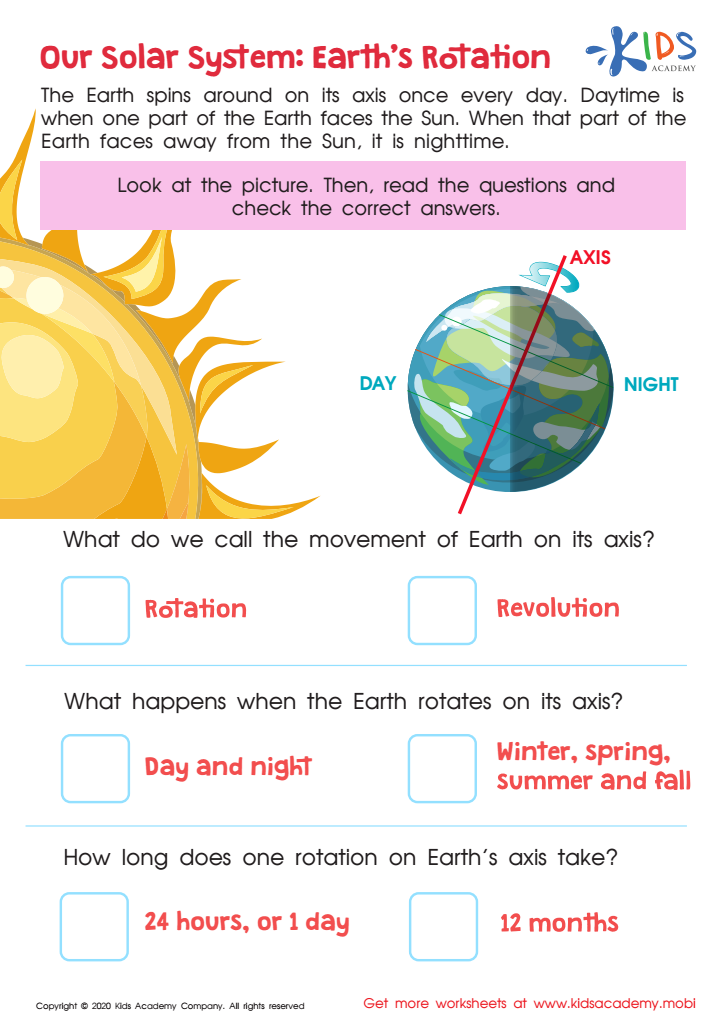
Our Solar System: Earth's Rotation Printable





.jpg)

Introducing astronomy basics to children ages 6-9 is beneficial for their overall development and understanding of the world. At this age, kids are naturally curious and imaginative—they love asking questions about the sky, stars, and the universe. Engaging them with astronomy taps into this curiosity, encouraging critical thinking and a passion for learning.
Learning about astronomy helps children develop important skills such as observation and reasoning. When kids learn why the sky is blue, how the moon changes shape, or why stars twinkle, they practice scientific thinking by asking questions, making observations, and forming conclusions. Astronomy also fosters a sense of wonder and curiosity about the universe, which can inspire lifelong interest in science, technology, engineering, and mathematics (STEM).
Moreover, understanding basic astronomical concepts can enhance children’s grasp of their place in the universe. They begin to realize that Earth is part of a vast cosmos, promoting a sense of global understanding and humility. It can also instill an appreciation for nature and the environment, seeing how fragile and unique our planet is.
Lastly, astronomy encourages parental engagement and quality time. Exploring the night sky together or visiting a planetarium can be bonding experiences. Ultimately, teaching astronomy to young children nurtures important cognitive skills, emotional growth, and a broader perspective on life.








