Categorizing objects Worksheets for Ages 6-9
5 filtered results
-
From - To
Unlock your child's learning potential with our engaging "Categorizing Objects Worksheets" designed for ages 6-9. These worksheets help young learners develop critical thinking skills by encouraging them to group, classify, and organize various objects based on different attributes such as color, shape, and size. With a variety of fun and visually appealing activities, children will enhance their ability to identify similarities and differences while broadening their vocabulary. These worksheets not only support academic growth but also foster enthusiasm for learning through interactive play. Discover the joy of understanding categories with our resourceful and educational printables today!
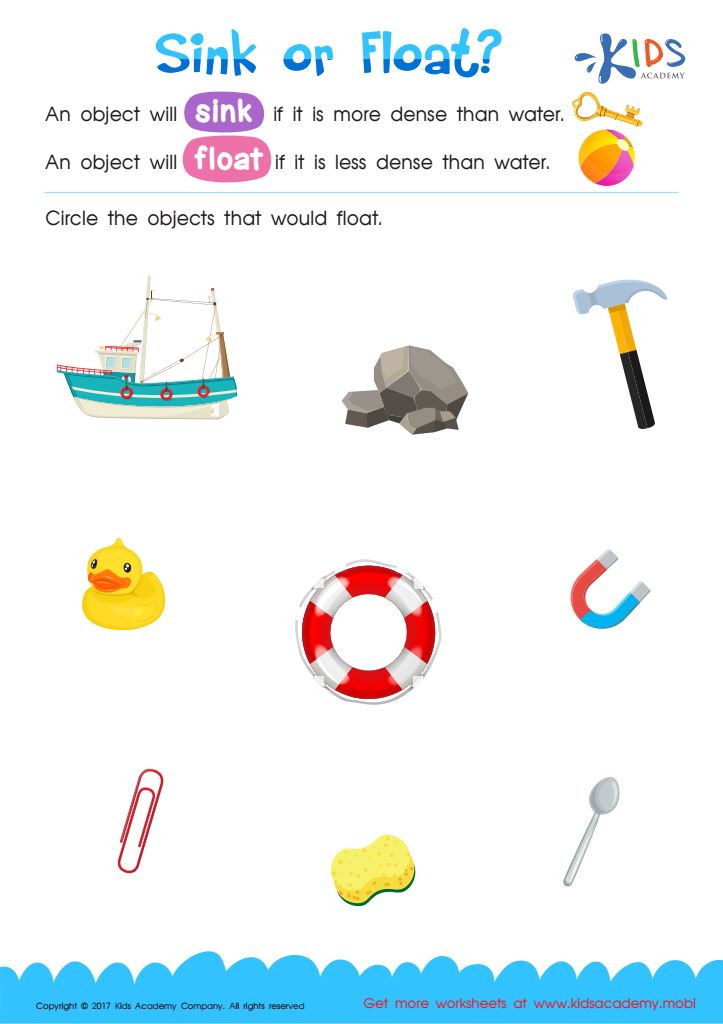
Sink or Float Printable
 Assign to My Students
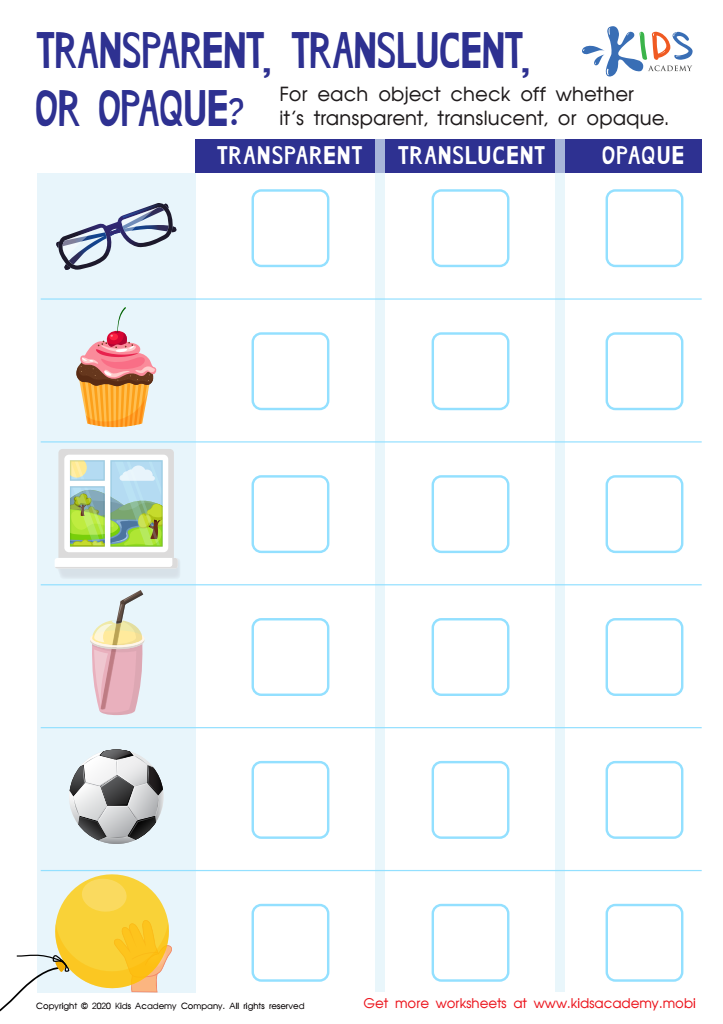
Transparent, Translucent, or Opaque Worksheet
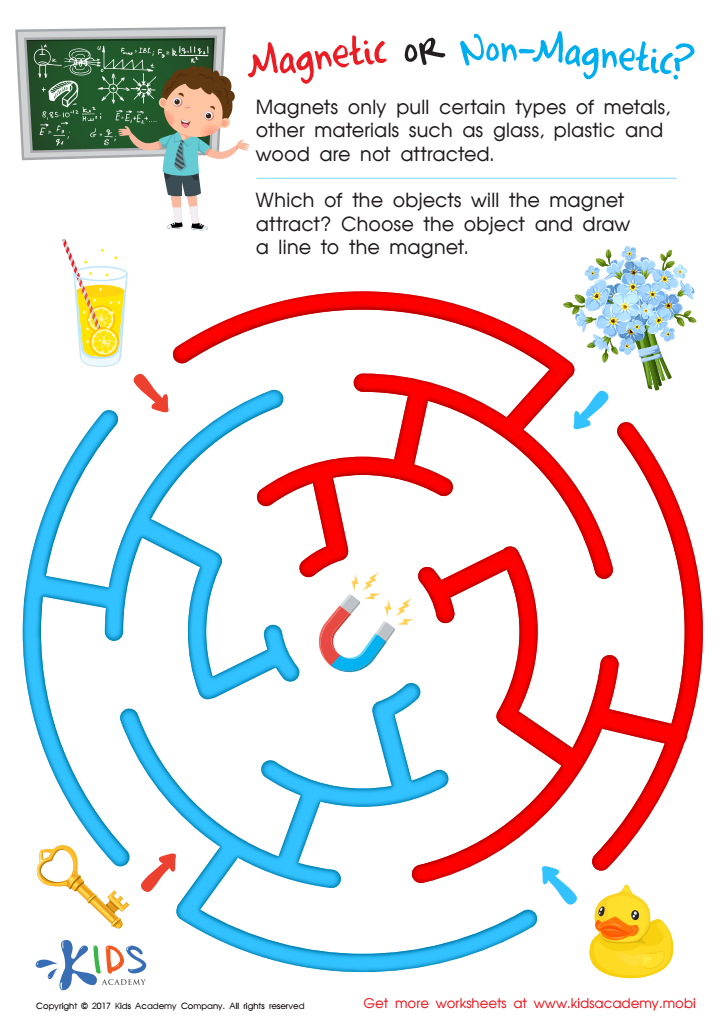
Magnetic or Non–Magnetic Worksheet
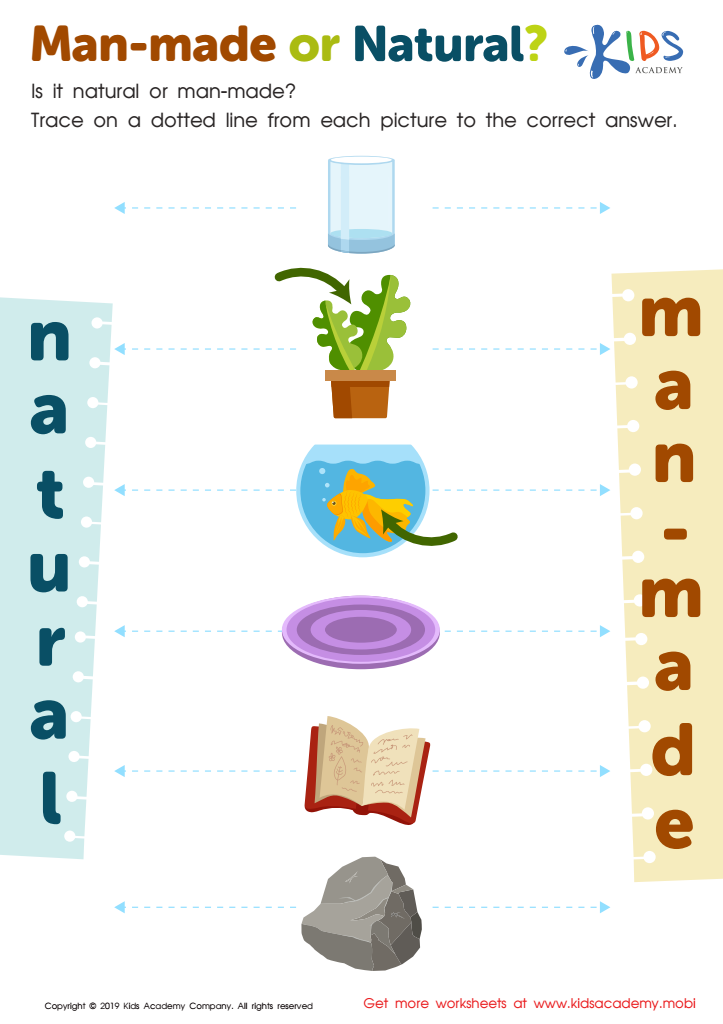
Man-Made or Natural? Worksheet






Categorizing objects is an essential skill for children aged 6-9, and parents and teachers should prioritize its development for several reasons. First, categorization helps children make sense of the world around them. By grouping objects based on similarities, such as color, shape, or function, children enhance their analytical thinking and improve their ability to recognize patterns. This foundational skill supports academic success in subjects like mathematics and science, where classification is often necessary.
Moreover, categorization develops language skills. As children infer relationships between objects, they enhance their vocabulary and comprehension. For instance, when grouping animals, they learn labels like "mammals" or "reptiles," which expands both their understanding and communication abilities.
Socially and emotionally, categorization fosters problem-solving skills and boosts confidence. As children identify categories and make choices, they gain a sense of mastery over their environment. This encourages independence and decision-making abilities.
In essence, teaching children to categorize objects not only aids cognitive development but also enhances language skills and promotes emotional growth. For parents and teachers, understanding its significance can lead to engaging activities that are both educational and enjoyable, ultimately paving the way for lifelong learning.








