Boost your child's handwriting skills with our engaging Letter Formation Worksheets, designed for ages 6-9! These expertly crafted activities guide young learners in forming letters accurately, enhancing their writing precision and confidence. Each worksheet features clear instructions and plenty of practice space, promoting fine motor development and letter recognition. Ideal for early elementary students, our letter formation worksheets make learning fun and effective. Perfect for classroom use or at-home practice, ensure smooth, legible handwriting with our comprehensive set of letter formation exercises. Explore our collection today and support your child's writing journey with ease!

Check out this FREE "Letter formation" Trial Lesson for age 6-9!

P

Favorites
With answer key
Interactive
  • 6-9
  • Letter formation
Letter a worksheets
Letter a worksheets

Letter A Tracing Page

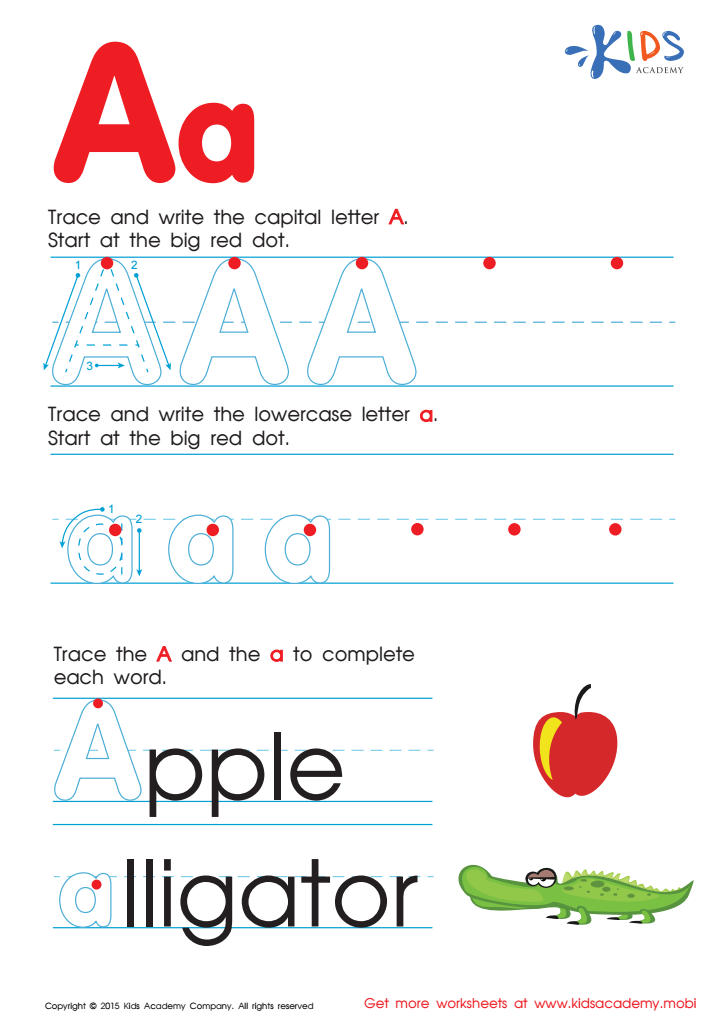
Trace and write the letter "A"! Start with the big red dot, then do the capital and lowercase versions. Then write it again with two words - apple and alligator. Download more tracing worksheets at Kids Academy.
Letter A Tracing Page
Worksheet
Letter P worksheets
Letter P worksheets

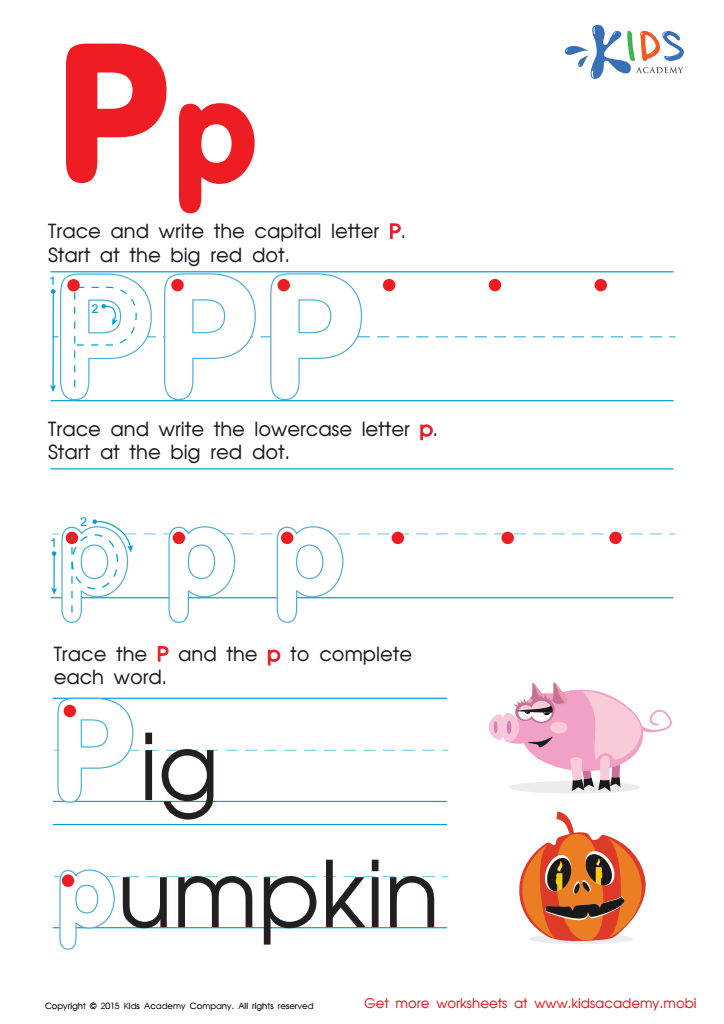
Letter P Tracing Page

Trace the lines from the red dot to learn to write "P"! Then practice this letter with the fun activities: complete the word "Pig" and "Pumpkin". Check out Kids Academy to get more free ABC worksheets.
Letter P Tracing Page
Worksheet
Uppercase Letters G, H, and I Worksheet Preview

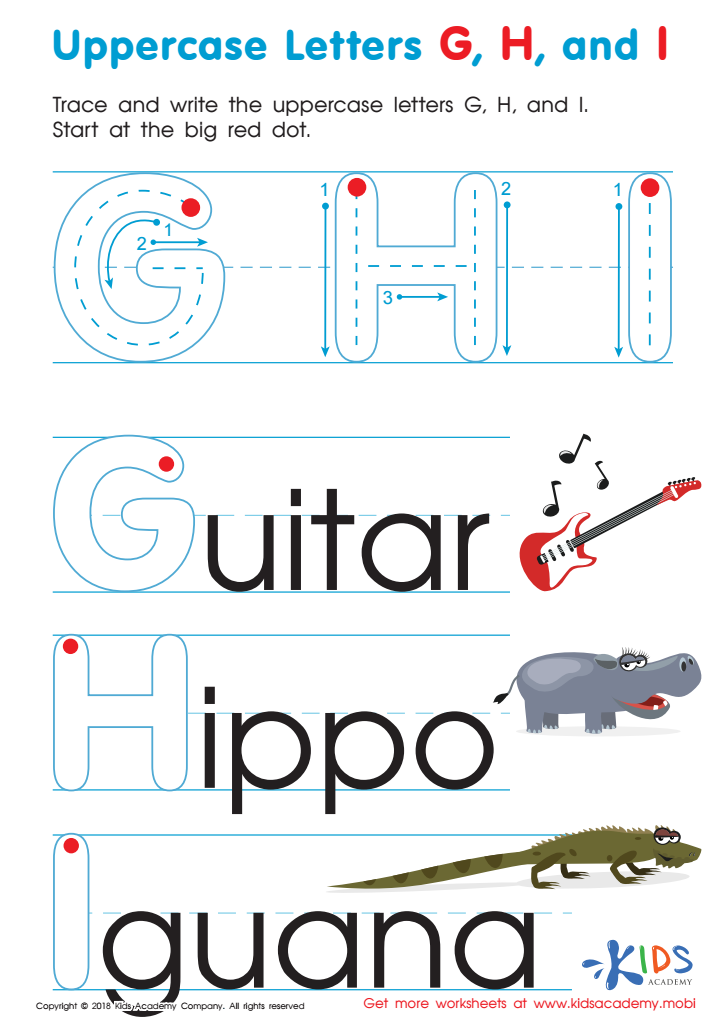
Uppercase Letters G, H, and I Worksheet

Trace each letter with the big red dot, connecting them to sounds as you go. Then write G to I. Congrats on a job well done! Rock on with a cute hippo and iguana while working on this delightful kindergarten worksheet!
Uppercase Letters G, H, and I Worksheet
Worksheet
letter G worksheets
letter G worksheets

Letter G Tracing Page

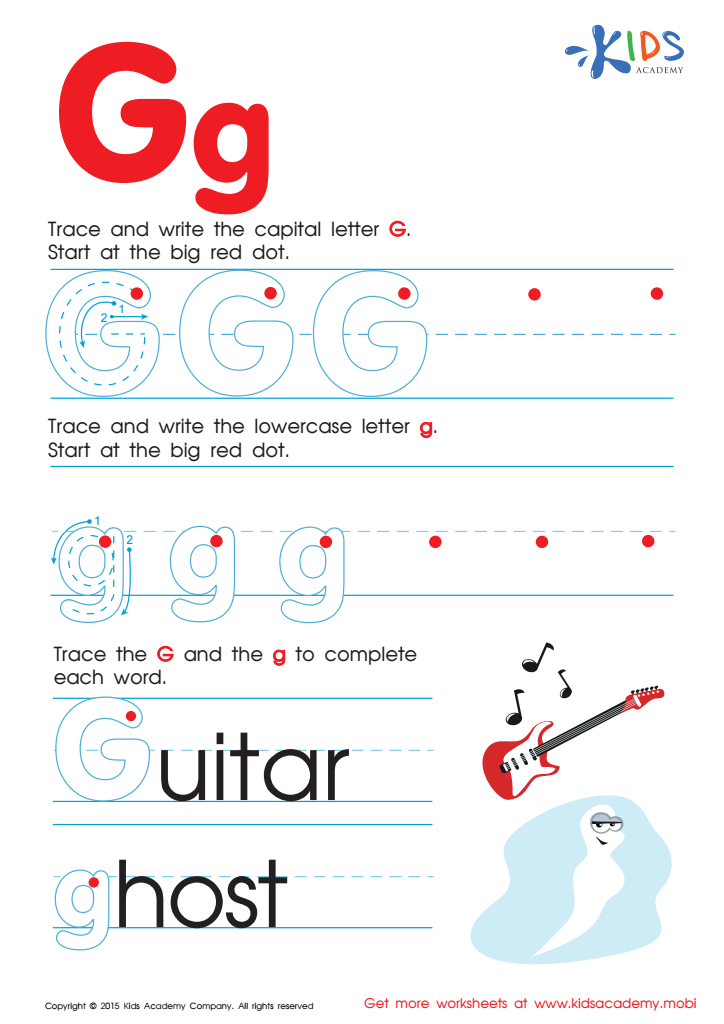
Get ready to trace the letter "G" – with a big red spot as the starting point, trace the lines and watch the letter appear. Uppercase and lowercase letters are both easy and fun to write. Give it a go and finish the word "go". Play the guitar and say "hello" to a funny ghost!
Letter G Tracing Page
Worksheet
Name It! Worksheet
Name It! Worksheet

Name It! Worksheet

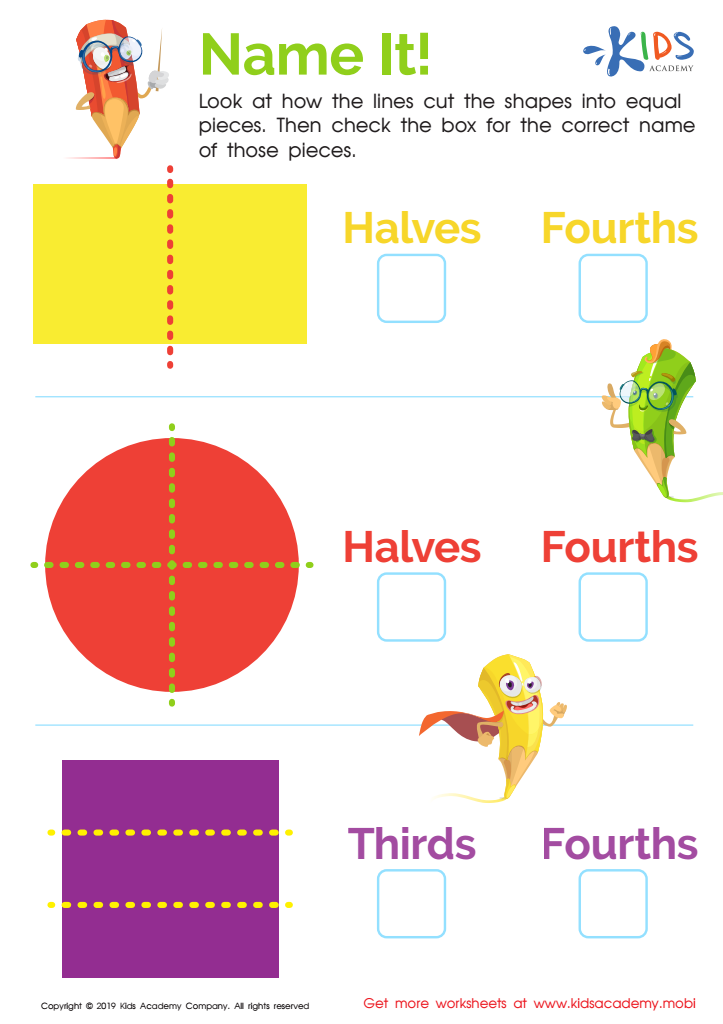
When teaching fractions, help children understand that they are groups divided into equal pieces. Introduce denominators and numerators with pictures to illustrate. Use this free fraction worksheet with colourful shapes divided into halves, thirds, and fourths to help them identify the fractions.
Name It! Worksheet
Worksheet
Letter Y Coloring Page

Letter Y Coloring Sheet

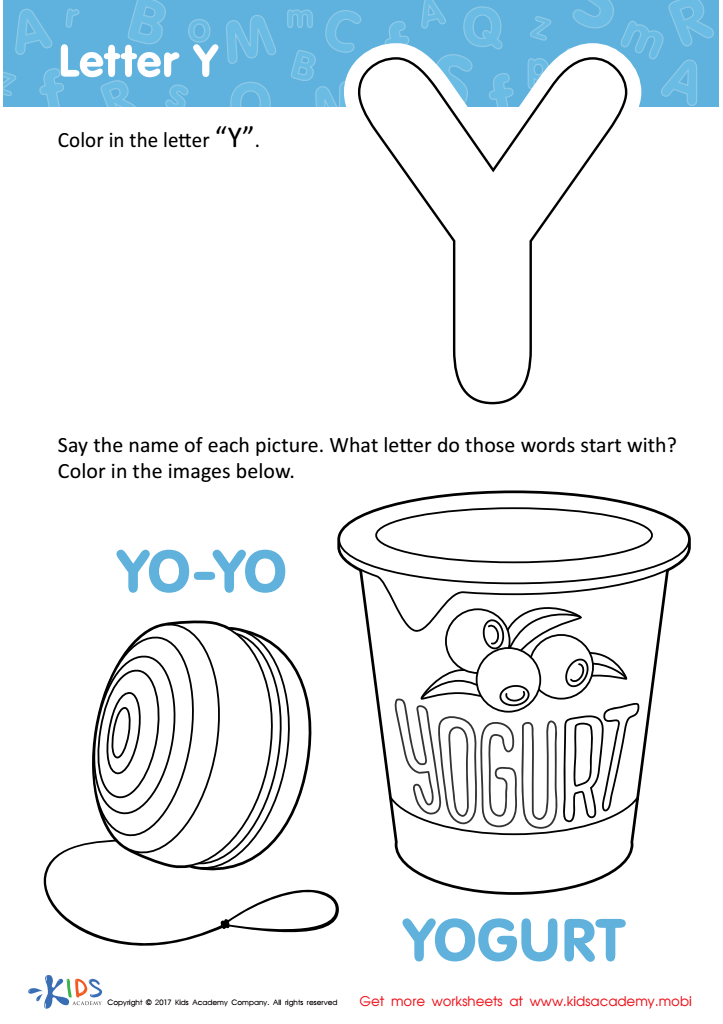
Let's celebrate letter "Y"! Here's a fun coloring page that'll help your child learn this end-of-the alphabet letter. It's packed with familiar objects that'll help build their art and literacy skills. So let's say "Yay"!
Download (PDF)
Assign to My Students
Letter Y Coloring Sheet
Worksheet
Lowercase Letters v w x Worksheet

Lowercase Letters v w x Worksheet

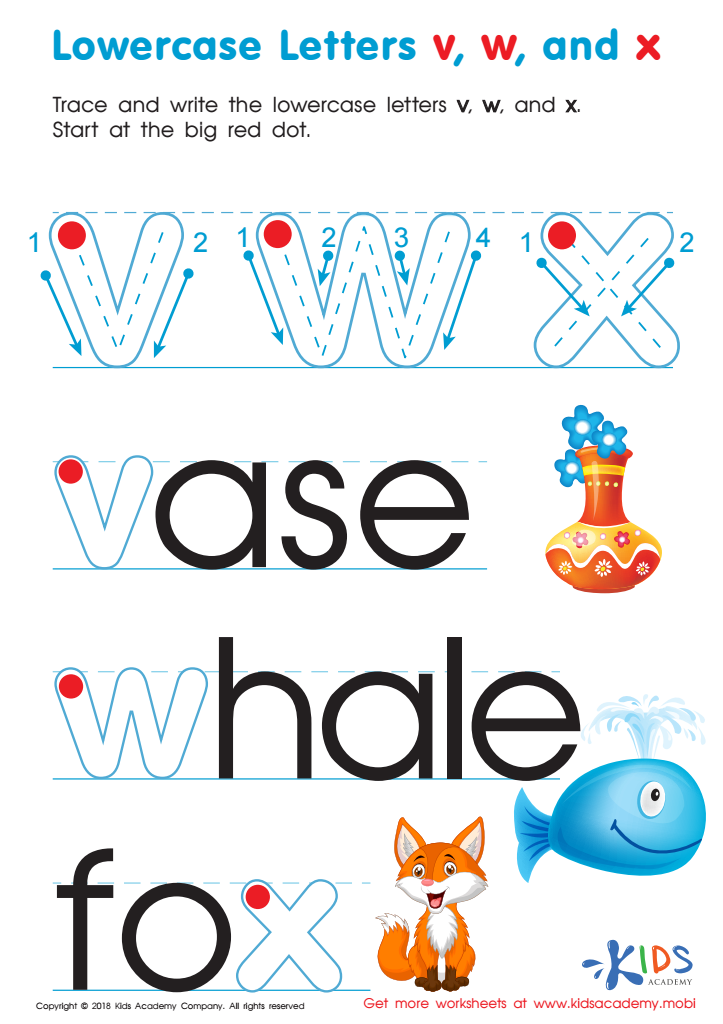
Help your child learn to write lowercase letters v, w, and x, starting at the big red dot. This activity will help them develop writing skills and correctly identify the letters. Guide them as they trace the letters and enjoy watching them improve!
Lowercase Letters v w x Worksheet
Worksheet
Rhyming Words PDF Worksheets, Pen

Pen Rhyming Words Worksheet

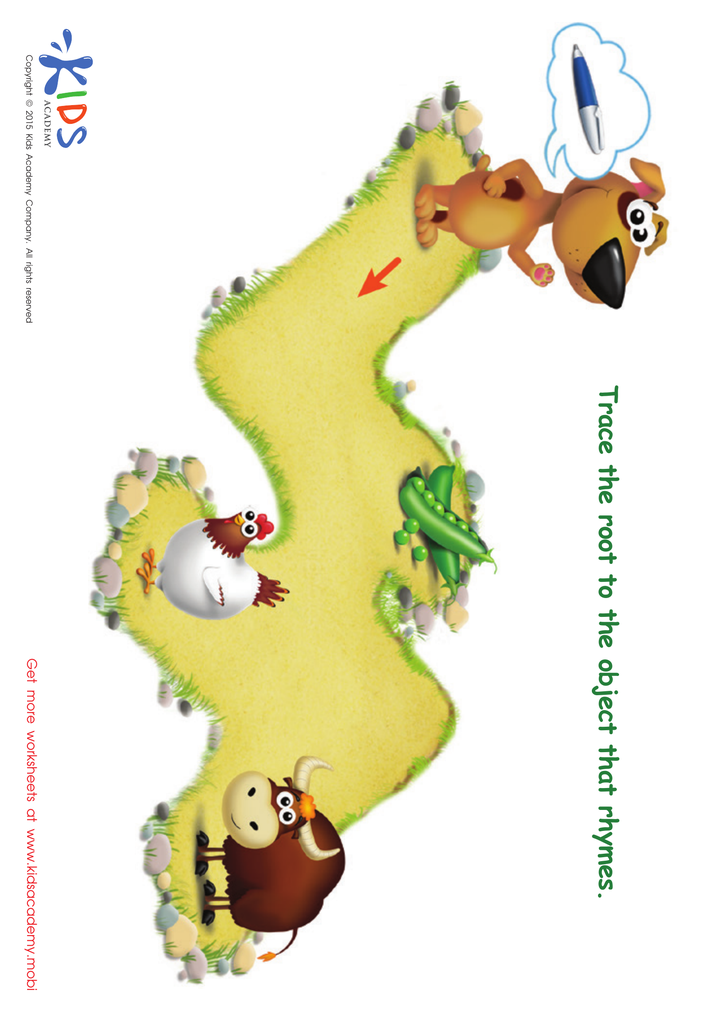
Check out the cute pup, pondering away. He's thinking of a root word - no suffix or prefix. Now check the hen, green beans, and the cow. Can you find the word that rhymes with pen? Draw a line from the root word to its rhyme for this simple yet beneficial worksheet. It helps young learners practice hearing and recognizing rhymes.
Pen Rhyming Words Worksheet
Worksheet


Letter formation is crucial for children aged 6-9 because this period marks a critical stage in developing foundational writing skills. Proper letter formation not only influences the legibility of a child's handwriting but also impacts their overall academic performance. As children learn to write, they solidify their understanding of language structures, which enhances their reading abilities. When letters are formed correctly, kids can transcribe their thoughts more efficiently, supporting both their creative and analytical processes.

For parents and teachers, prioritizing correct letter formation can prevent potential struggles with handwriting that could arise later in a child's education. Children who form letters clearly and consistently are more confident in their writing tasks, facilitating smoother communication and reducing frustration. Additionally, poor handwriting can lead to reduced self-esteem as students might feel embarrassed by their writing compared to their peers.

Moreover, good penmanship directly links to cognitive and motor skills development. Fostering fine motor skills helps children in other areas such as coordination and spatial awareness. Structured and engaging handwriting practice nurtures attention to detail and patience, qualities beneficial for various learning aspects. Therefore, investing time in teaching and reinforcing correct letter formation sets the stage for successful academic growth and personal development.