Math application skills Worksheets for Ages 6-9
3 filtered results
-
From - To
Discover our engaging Math Application Skills worksheets designed specifically for children aged 6 to 9! These interactive resources help young learners develop essential math skills through fun and challenging activities. Each worksheet focuses on real-life applications of math concepts, reinforcing critical thinking and problem-solving abilities. From basic addition and subtraction to more complex equation-solving, our materials cater to a variety of learning styles. Whether at home or in the classroom, these worksheets provide students with the practice they need to build confidence and mastery in math. Explore our collection and support your child's mathematical journey today!
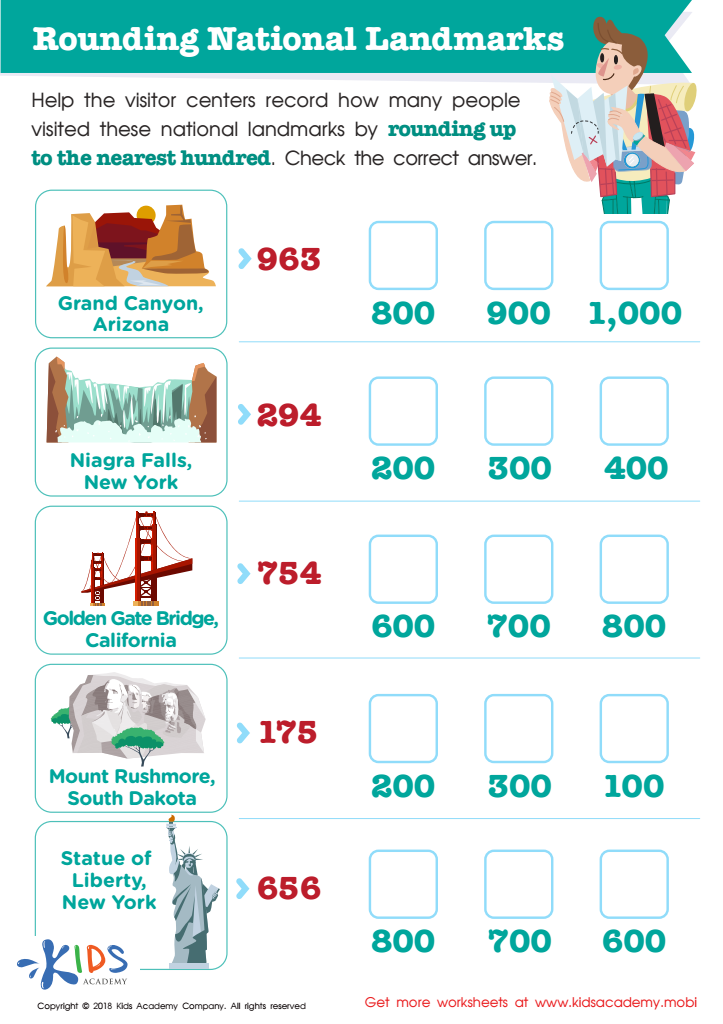
Rounding National Landmarks Worksheet
 Assign to My Students
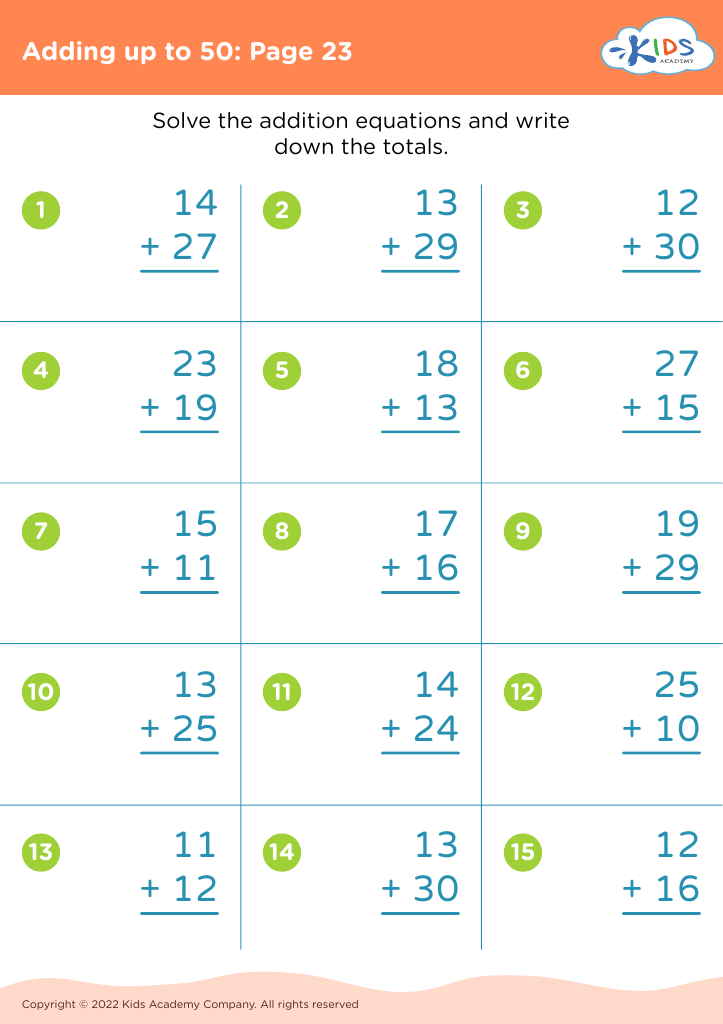
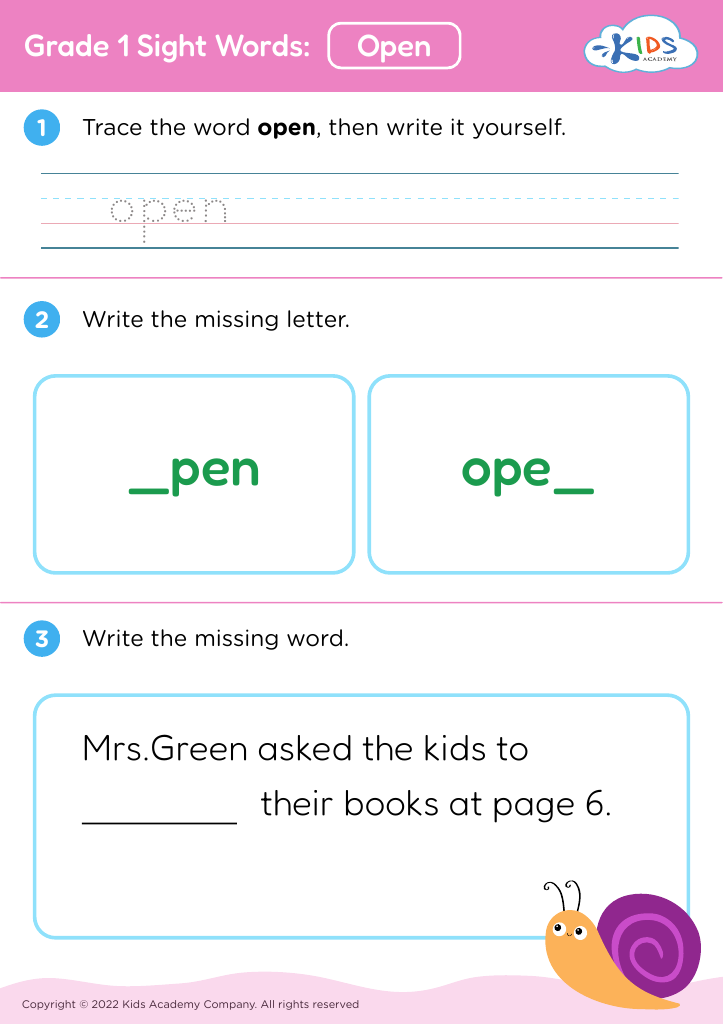








Math application skills are crucial for children ages 6-9, as they form the foundation for lifelong learning and problem-solving. At this age, children not only learn basic math concepts but also start to apply them to real-world situations. This is essential for developing critical thinking and analytical skills. When parents and teachers emphasize practical applications of math, such as budgeting their allowance, measuring ingredients for a recipe, or figuring out the time needed to complete a task, children learn to see math as a useful tool rather than an abstract subject.
Additionally, fostering math application skills can build a child's confidence and engagement in the subject. When students realize how math is involved in their everyday lives—like playing games, shopping, or planning events—they become more motivated to learn and explore mathematical ideas.
Moreover, integrating applied math into lessons not only enhances students' comprehension but also improves retention. Hands-on experiences and real-life examples make learning more relatable.
By encouraging the development of these skills, parents and teachers can ensure that children are not only prepared for future academic challenges but also equipped to navigate daily life, fostering both independence and a positive attitude towards math.








