Phonological awareness Worksheets for Ages 6-9
5 filtered results
-
From - To
Enhance your child's reading skills with our engaging Phonological Awareness Worksheets designed for ages 6-9! These printable resources help young learners strengthen their listening and phonemic skills through fun, age-appropriate activities. Each worksheet focuses on essential abilities, including rhyme recognition, syllable counting, and sound manipulation. Ideal for at-home learning or classroom use, you’ll find a variety of exercises tailored to captivate young minds. By fostering phonological awareness, your child will build a solid foundation for reading and literacy. Explore our worksheets today and support your child's journey to becoming a confident reader!
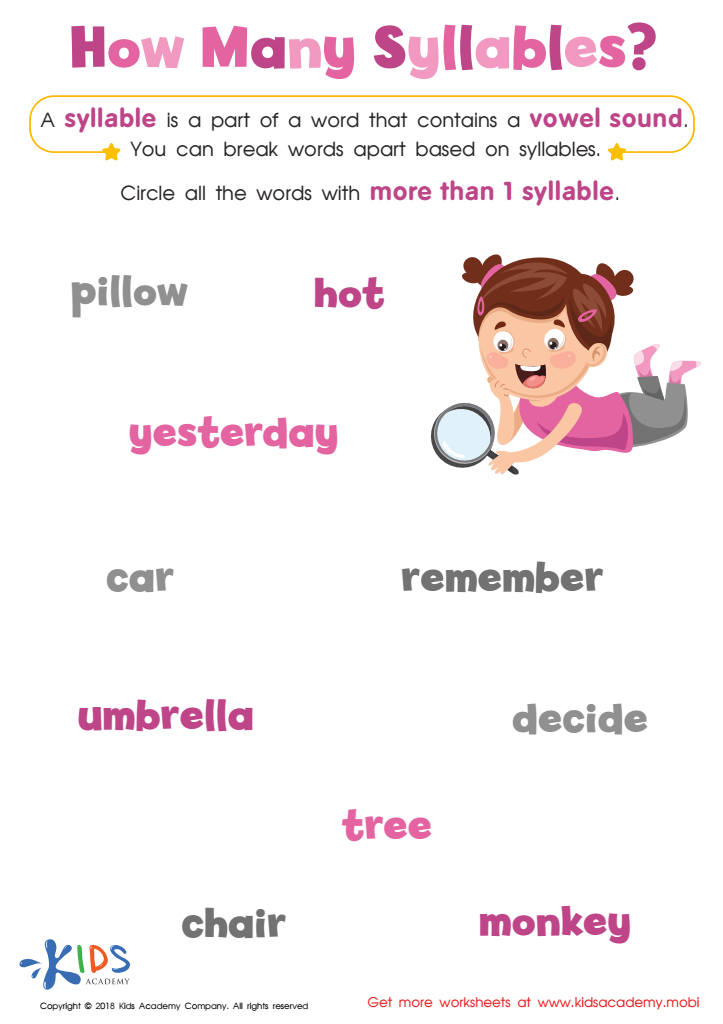
Reading: How Many Syllables Worksheet
 Assign to My Students
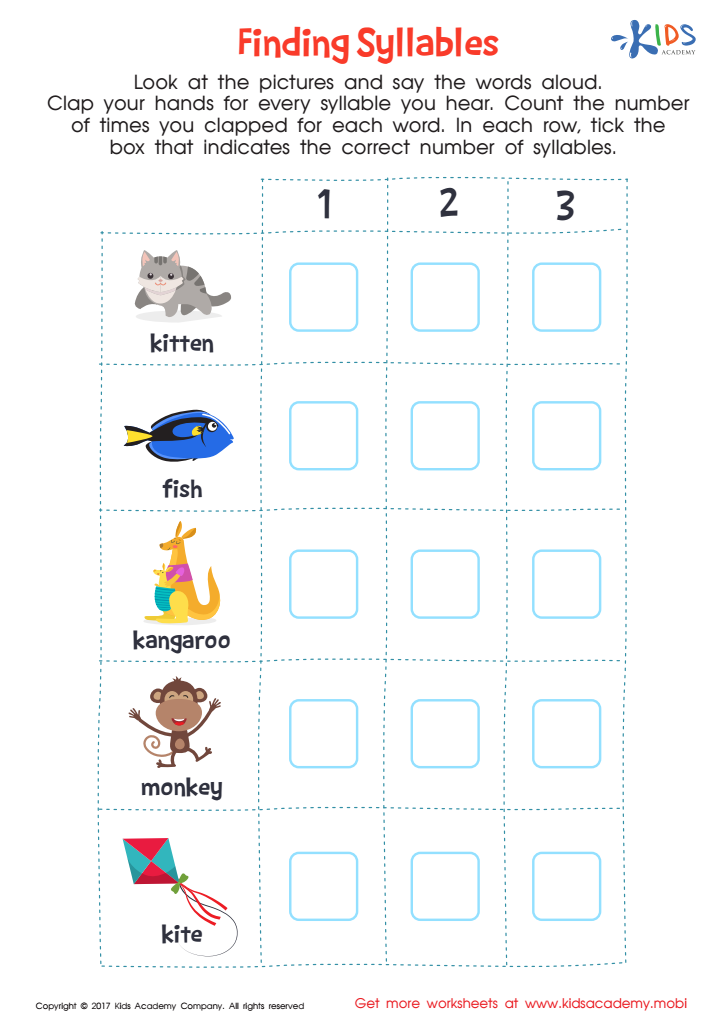
Finding Syllables Word Structure Worksheet
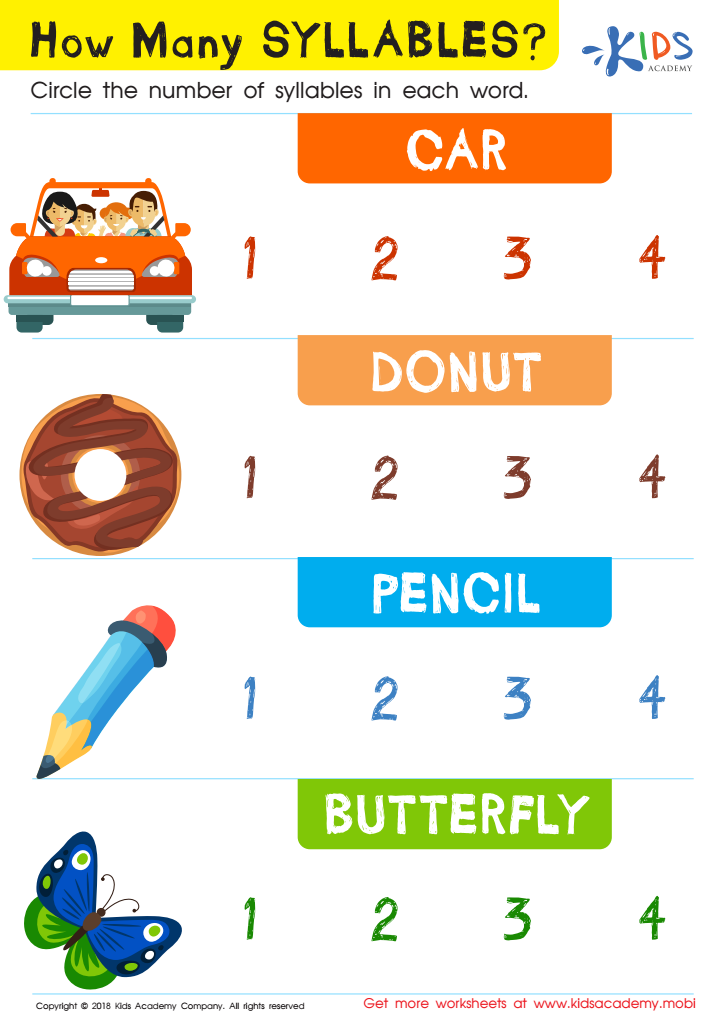
How Many Syllables? Worksheet
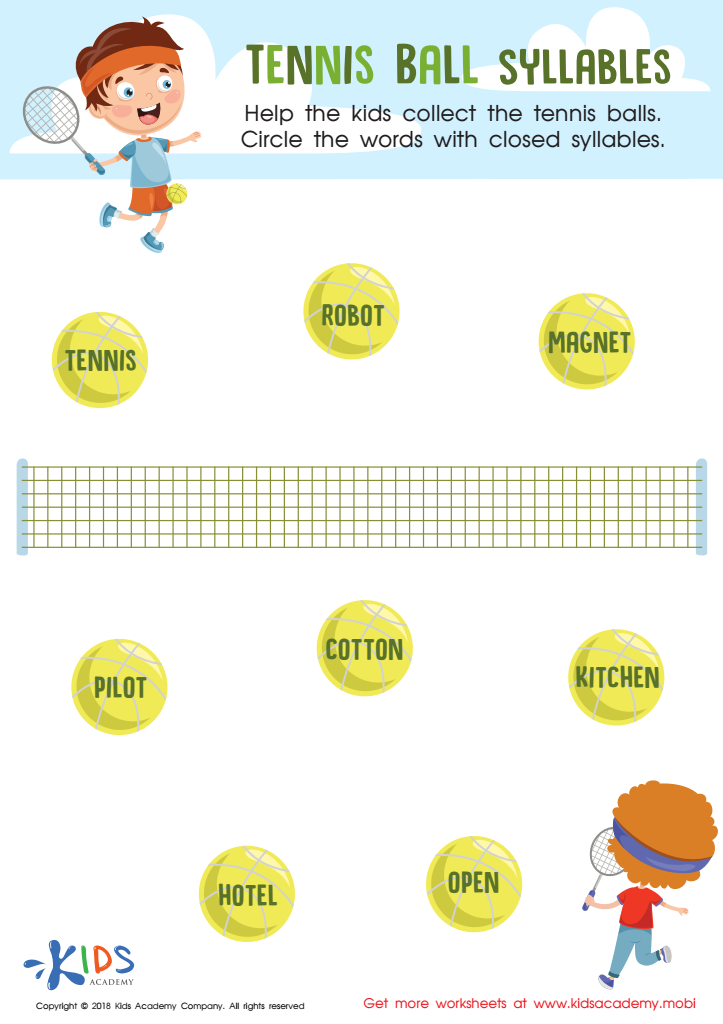
Tennis Ball Syllables Worksheet
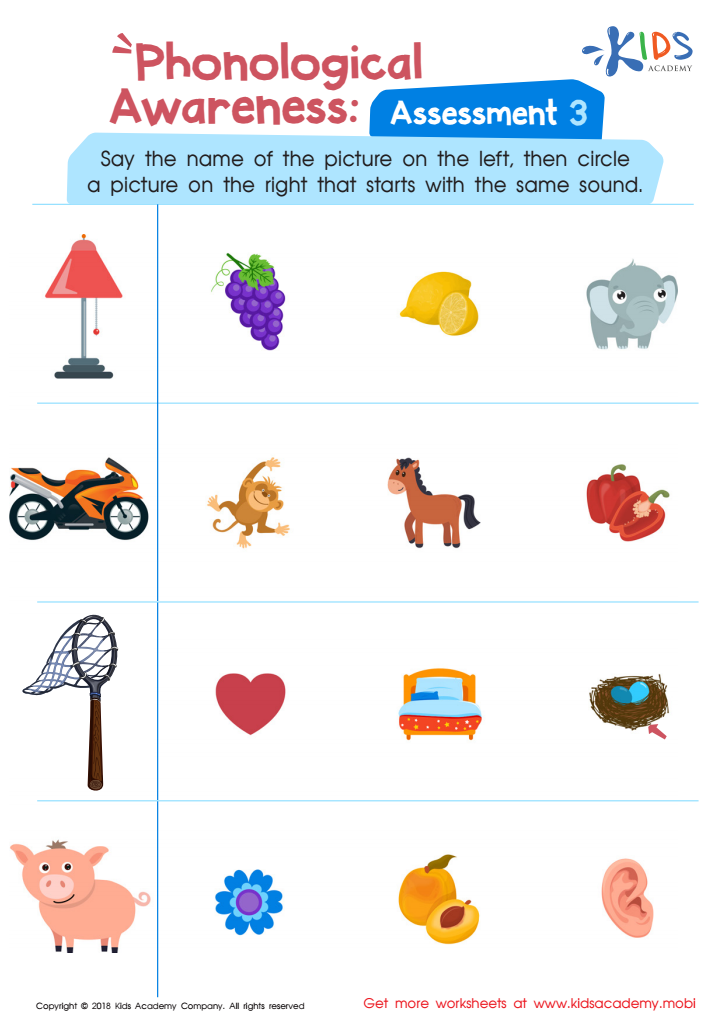
Phonological Awareness: Assessment 3 Worksheet








Phonological awareness is a critical skill for children aged 6 to 9, laying the foundation for reading and writing. It involves the ability to recognize and manipulate sounds in spoken language, including rhymes, syllables, and phonemes. Parents and teachers should prioritize phonological awareness for several key reasons.
Firstly, research links strong phonological awareness to reading success. Children who can identify and manipulate sounds are better equipped to decode words, improving their reading fluency and comprehension. This skill becomes especially crucial as children encounter more complex texts in upper elementary grades.
Secondly, phonological awareness supports spelling and writing skills. By understanding the sound structures of words, children can apply phonetic rules when writing, leading to more accurate spelling and greater confidence in their writing abilities.
Moreover, promoting phonological awareness fosters a love for language and literacy from an early age. Engaging in fun activities, such as rhymes and word games, encourages children to play with sounds, enhancing their overall language development.
Lastly, parents and teachers who focus on these skills help create strong readers and writers, empowering children for academic success and a lifelong appreciation of learning. Investing in phonological awareness during these formative years is essential for building literacy skills crucial for future educational achievement.








