Understand sequencing Worksheets for Ages 6-9
4 filtered results
-
From - To
Explore our engaging sequencing worksheets designed for children aged 6-9, designed to enhance critical thinking and comprehension skills. These worksheets provide a fun and interactive way for kids to learn to order events logically, improving their storytelling abilities and understanding of processes. Each activity encourages young learners to sequence pictures and words, fostering essential cognitive skills such as problem-solving and analytical thinking. Parents and educators can easily download and print these resources to support classroom learning or at-home practice. Boost your child’s sequencing skills today and watch their confidence soar as they master this vital learning concept!
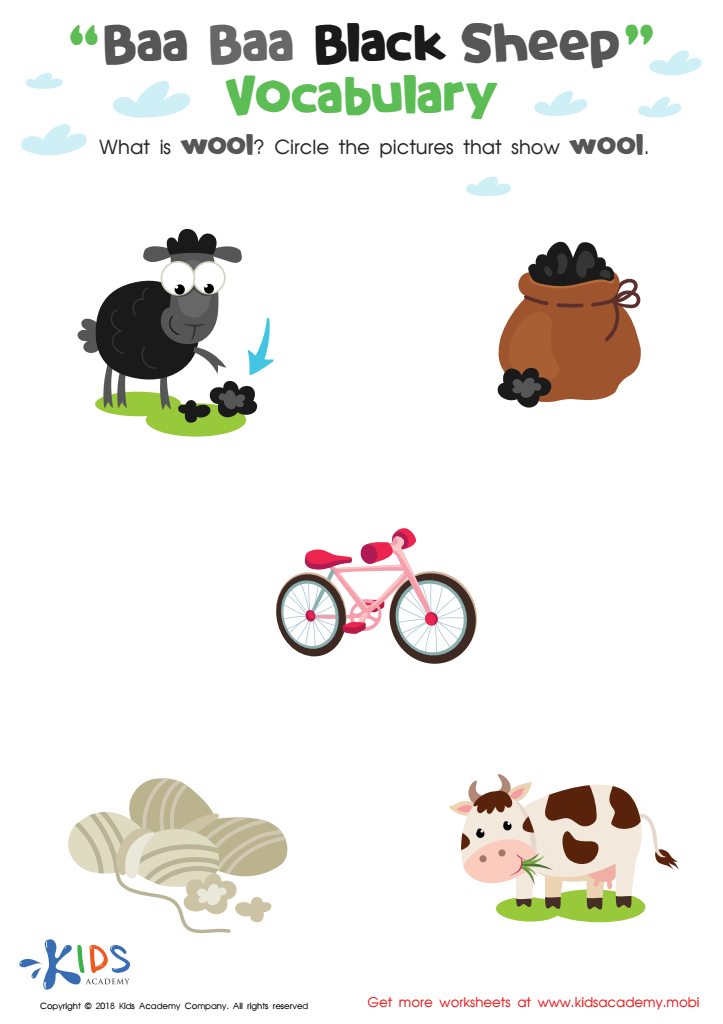
Baa Baa Black Sheep: Vocabulary Worksheet
 Assign to My Students
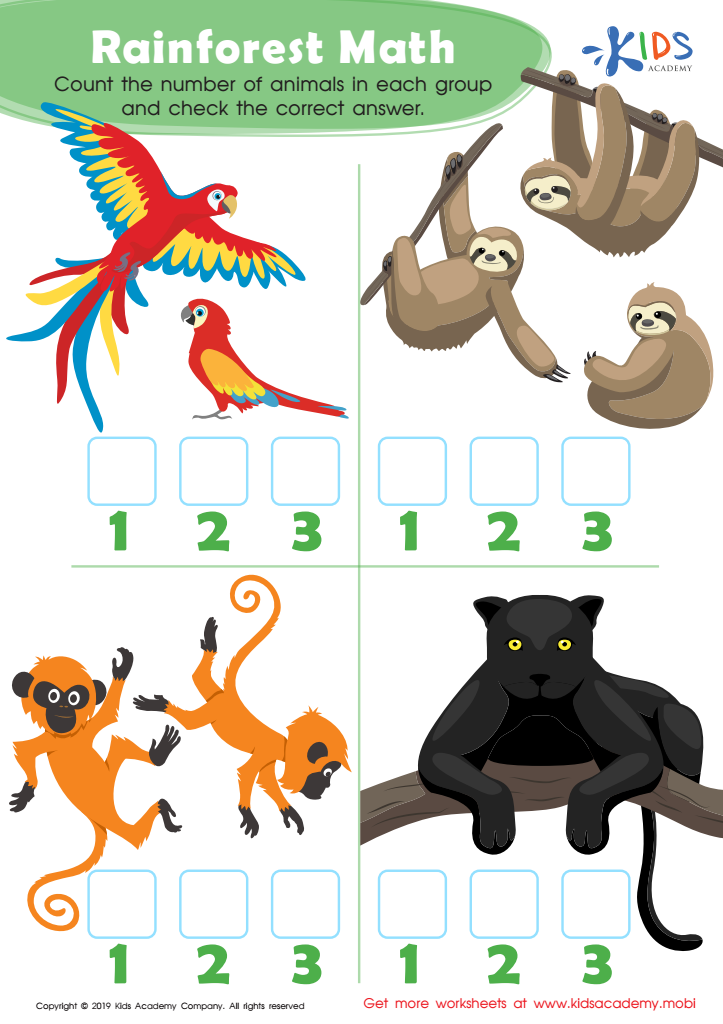
Rainforest Math Worksheet
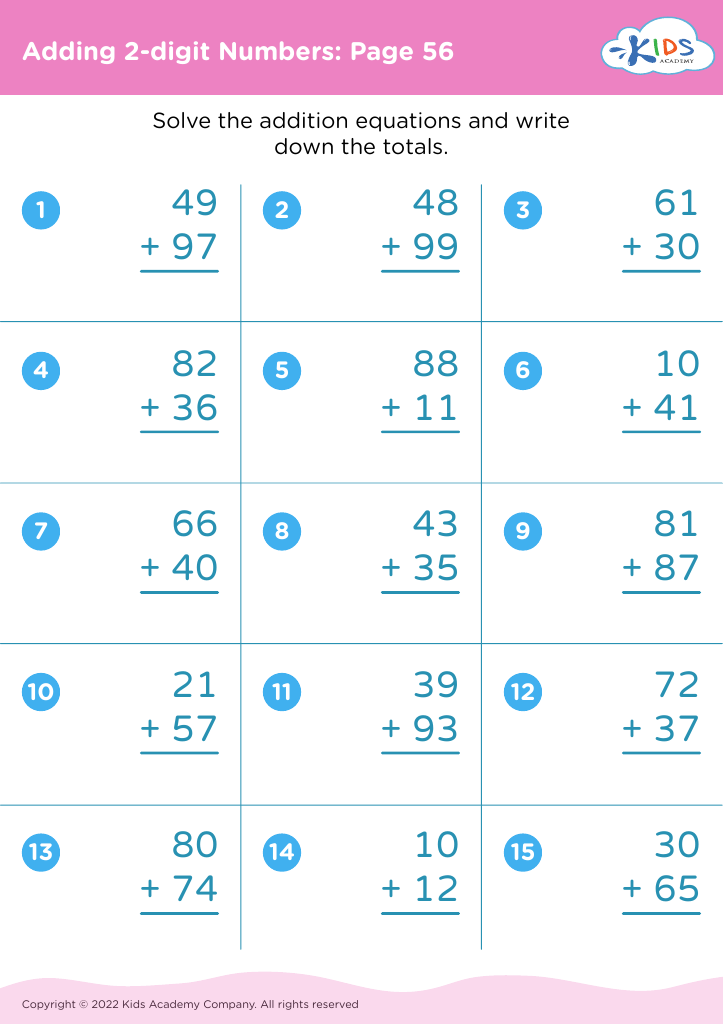
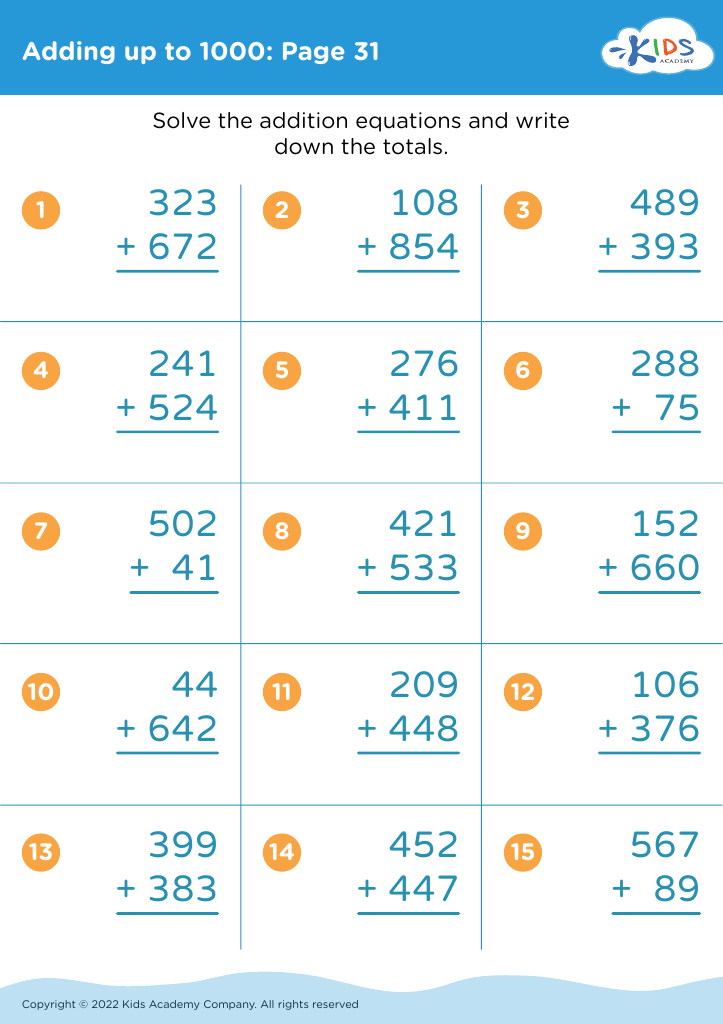








Understanding sequencing is crucial for children ages 6-9 as it lays the foundation for critical cognitive and academic skills. Sequencing involves organizing events or steps in a logical order, which is essential for tasks like storytelling, following directions, and problem-solving. At this age, children are developing their literacy skills; being able to sequence events in a story helps them comprehend narratives and enhances their reading comprehension.
Moreover, sequencing is fundamental in math, as it aids in understanding concepts such as addition and subtraction, multi-step problems, and the very basics of algebra. By mastering sequencing, children not only improve their academic skills but also develop executive functioning abilities, including planning and organization.
For parents and teachers, fostering an understanding of sequencing can encourage independent thinking and boost self-esteem in children. Engaging children in activities like creating timelines, cooking with measured steps, or recounting daily events fosters strong sequencing skills. Ultimately, a solid grasp of sequencing equips children with the tools they need to tackle more complex tasks in the future, preparing them for ongoing learning and success both in and out of the classroom. Investing in these skills is essential for a child's holistic development.








