Understanding clocks Worksheets for Ages 6-9
6 filtered results
-
From - To
"Understanding Clocks Worksheets for Ages 6-9" on Kids Academy provides engaging and educational resources designed to teach young children how to read and interpret both analog and digital clocks. These printable worksheets feature a variety of interactive activities that make learning about time fun and accessible. Through creative exercises and colorful illustrations, children practice fundamental skills such as recognizing numbers, understanding hours and minutes, and gaining confidence in telling time. Ideal for home or classroom use, these worksheets help lay the groundwork for strong time management skills and are aligned with early-grade curriculum standards.
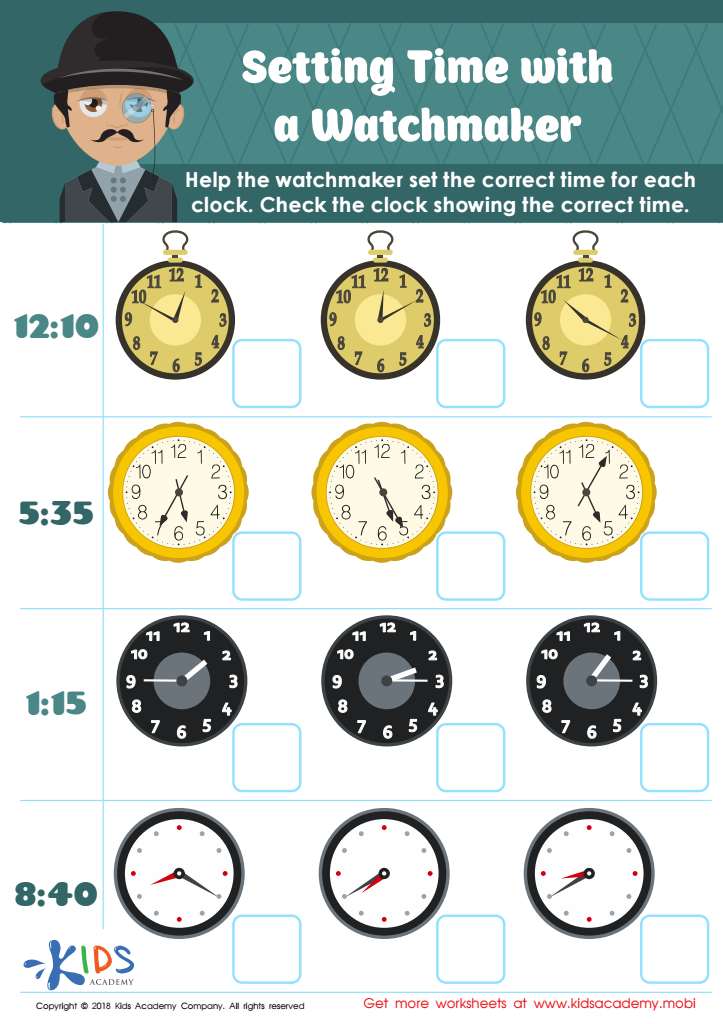
Setting Time with Watchmaker Worksheet
 Assign to My Students
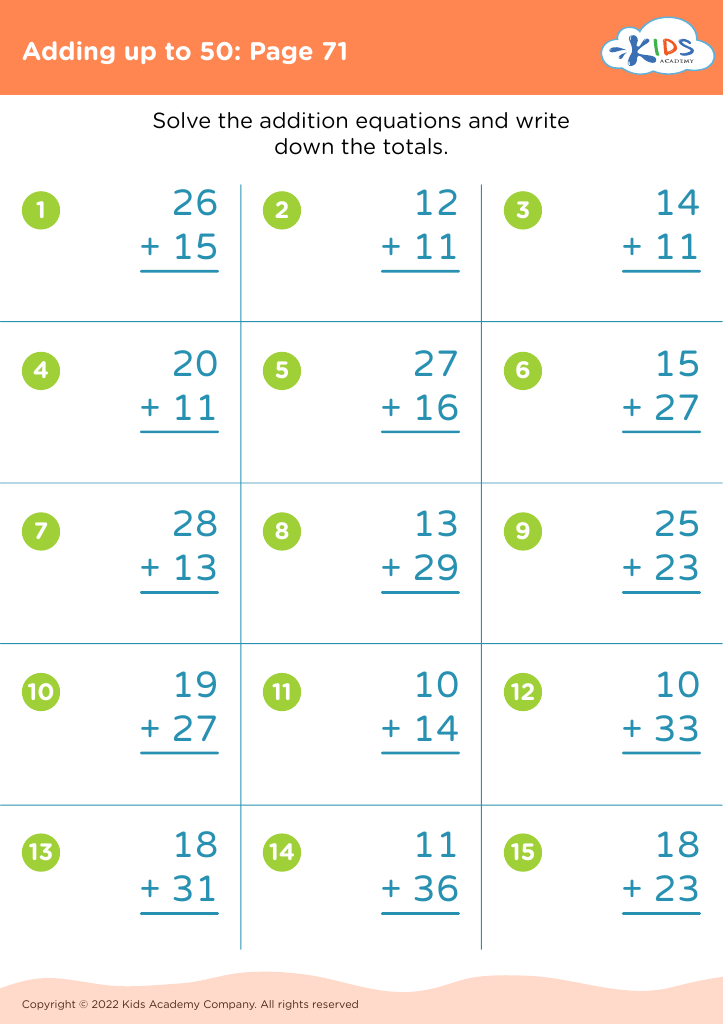
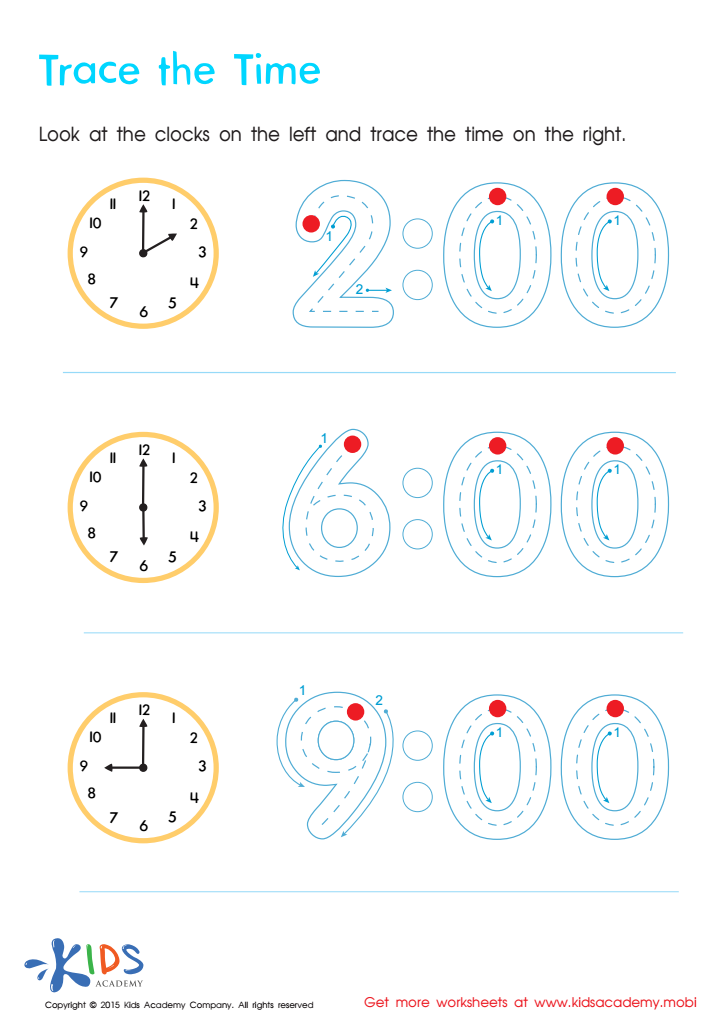
Telling The Time Worksheet: Part 2
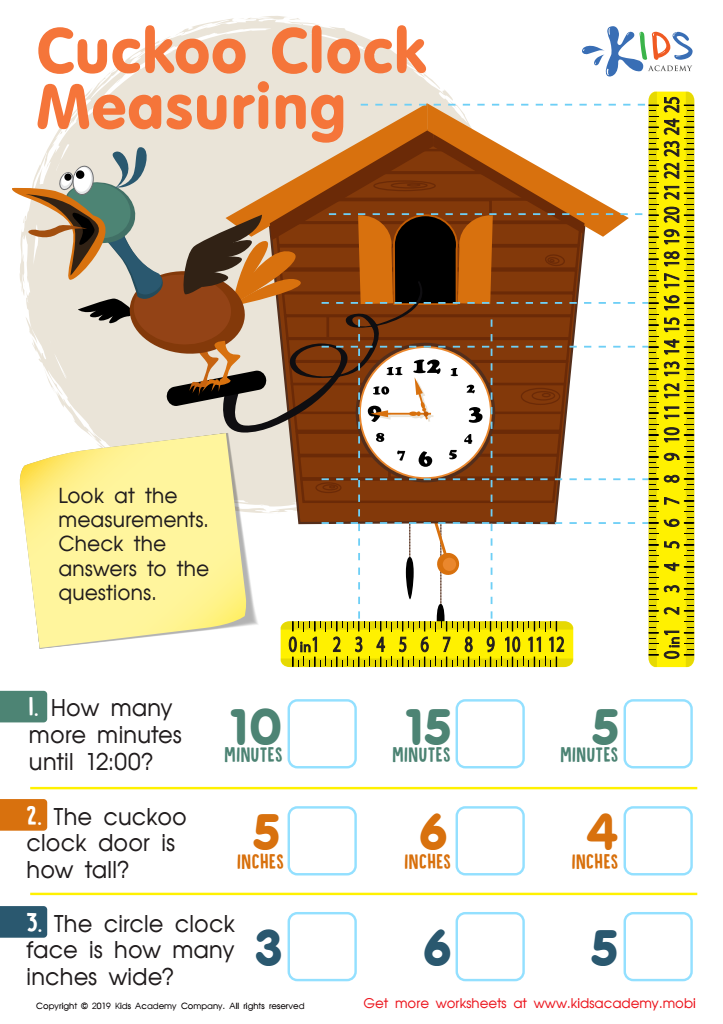
Cuckoo Clock Measuring Worksheet
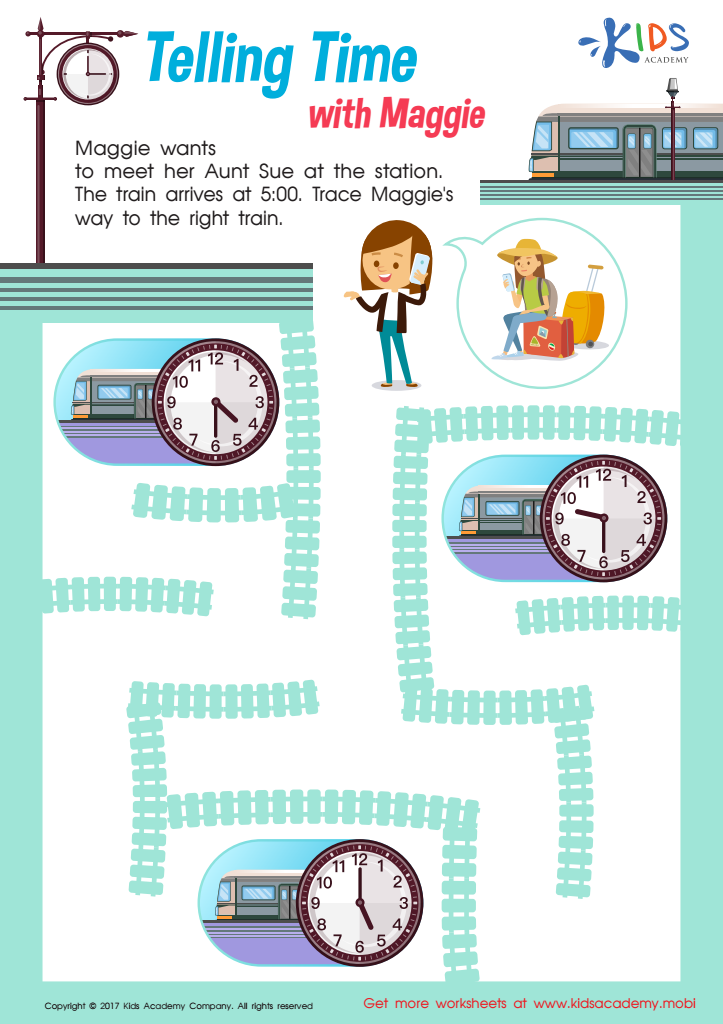
Telling Time With Maggie Time Worksheet



.jpg)
.jpg)



Understanding clocks is a fundamental skill that is crucial for children ages 6-9, and it is important for both parents and teachers to prioritize this learning. Knowing how to tell time helps children develop a sense of order and discipline. It enables them to manage their daily activities more effectively, from waking up on time for school to understanding the structure of their school day, including knowing when it’s time for lunch, recess, or a particular class.
Mastering the use of both analog and digital clocks enhances a child's numeracy skills. Reading an analog clock requires understanding fractions and intervals, while digital clocks strengthen their number recognition and sequencing skills. This dual proficiency lays a solid foundation for more advanced mathematical concepts.
Moreover, understanding time teaches responsibility and independence. Recognizing the importance of punctuality helps children understand and respect time's value, aligning with good habits that last a lifetime. For teachers, being able to relay these concepts ensures a classroom runs smoothly, empowers students to track their assignments, and nurtures cognitive skills such as memory and planning.
Parents also benefit from children learning about clocks as it eases the routine transitions at home and aids in establishing consistent schedules. Collectively, clock-reading skills are essential in fostering a well-rounded, responsible, and self-reliant child.








