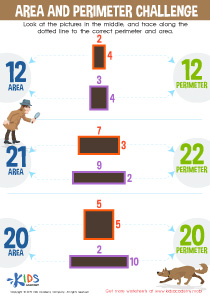
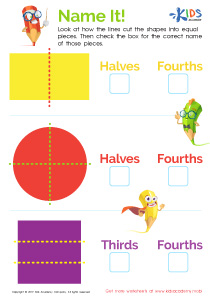
Spatial awareness 2D Shapes Worksheets for Ages 6-9
3 filtered results
-
From - To
Unlock the world of geometry with our "Spatial Awareness 2D Shapes Worksheets for Ages 6-9." Specially designed to enhance young learners' mathematical abilities, these engaging worksheets help children identify, compare, and manipulate 2D shapes. Perfect for developing critical thinking and problem-solving skills, each activity is meticulously crafted to promote an understanding of spatial relationships. As kids explore circles, triangles, squares, and more, they build a strong foundation in geometry, preparing them for future success in math. Ideal for classroom use or at-home practice, these worksheets make learning fun and effective. Make math exciting with our comprehensive resources!
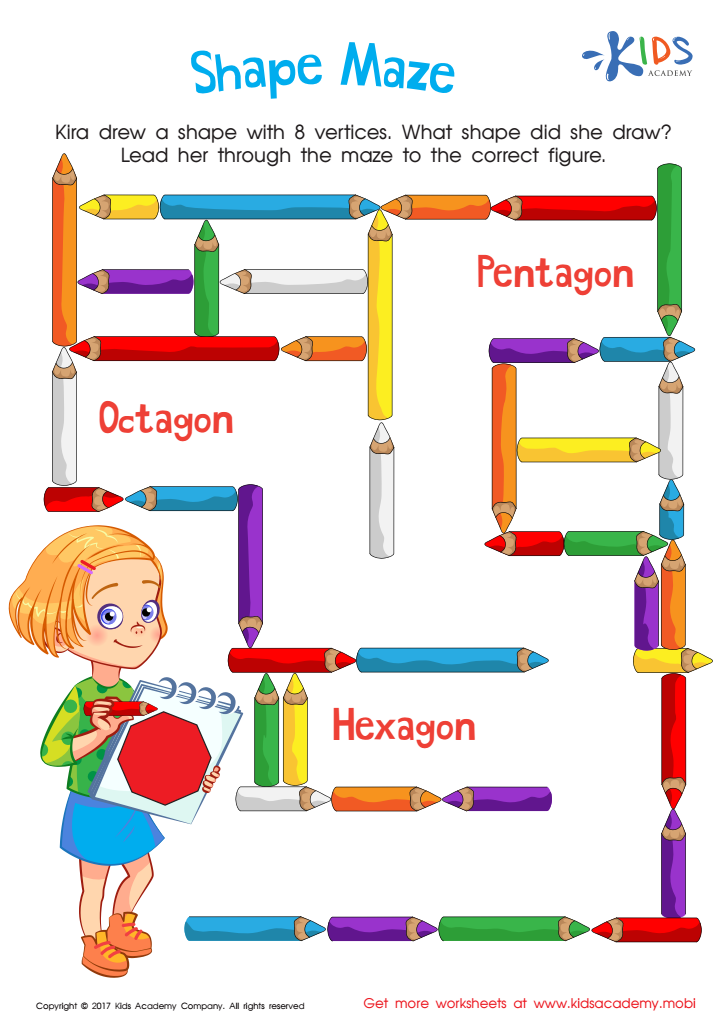
Shape Maze Worksheet
 Assign to My Students

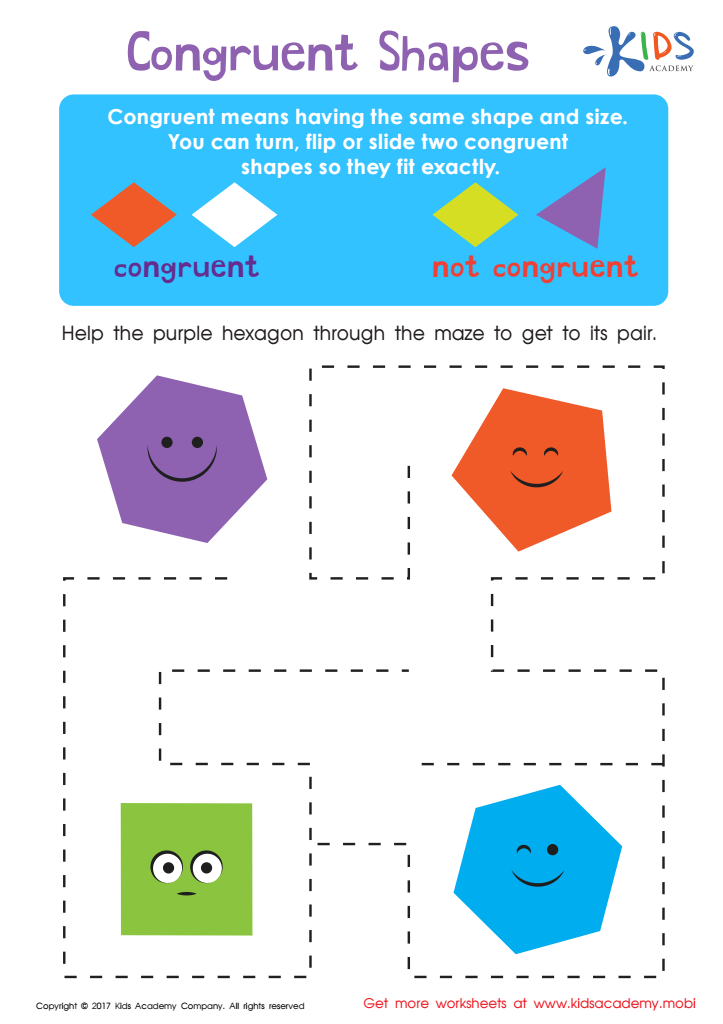
Congruent Shapes Worksheet
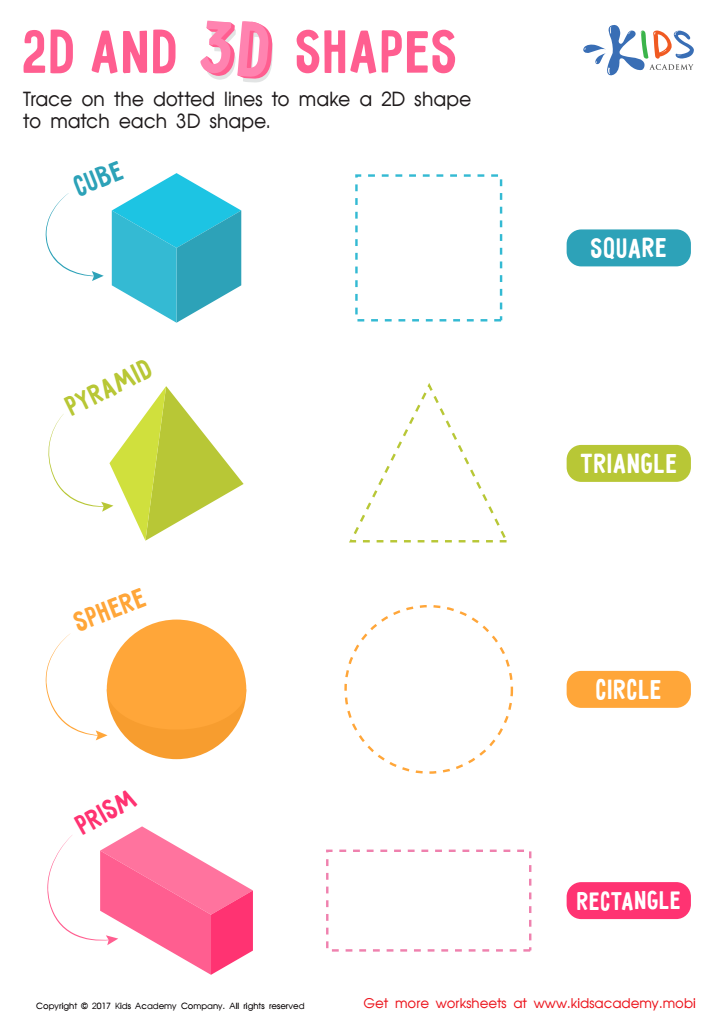
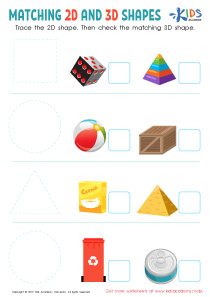
2D and 3D Shapes Worksheet








Spatial awareness and understanding 2D shapes are critical for children ages 6-9 as these skills form the foundation for future learning and development in several key areas.
First and foremost, spatial awareness helps children understand their orientation in relation to their environment. This includes gauging distances, recognizing patterns, and comprehending map and diagram layouts—all of which are essential everyday skills.
From an academic perspective, proficiency in recognizing and manipulating 2D shapes directly supports early math skills. Shapes are fundamental for grasping concepts such as symmetry, geometry, and fractions. Identifying shapes also aids in visual discernment, which boosts reading and writing abilities by improving children’s ability not only to recognize and recall letters but also to understand their different orientations.
Moreover, spatial skills have been linked to long-term success in STEM fields. Engaging children in activities that stimulate spatial reasoning, such as puzzles, drawing, and block-building, has been shown to enhance problem-solving abilities and logical thinking.
Finally, developing strong spatial skills contributes to children's overall cognitive development. These skills encourage creative thinking, imagination, and a thorough understanding of the physical world, which can enhance children's interactions and experiences.
Ensuring kids gain a solid grasp on these concepts early on sets the stage for academic success and critical life skills, making it incredibly important for parents and teachers to prioritize spatial awareness and 2D shapes in their learning activities.