Visual discrimination 2D Shapes Worksheets for Ages 6-9
5 filtered results
-
From - To
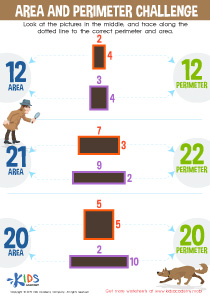
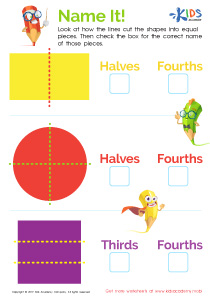
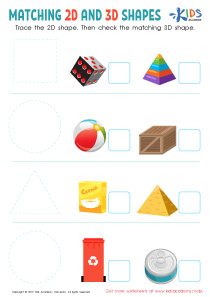
Enhance your child's visual discrimination skills with our 2D Shapes Worksheets, perfect for ages 6-9. These engaging worksheets are designed to help young learners identify and differentiate between various 2D shapes, promoting critical thinking and improving geometric understanding. Each activity combines fun and education, making learning a delightful experience. Perfect for both home and classroom use, our worksheets cover a range of shapes, patterns, and visual puzzles to capture your child's interest. Visit our web page to explore our collection and give your child the tools they need for successful shape recognition and visual learning.
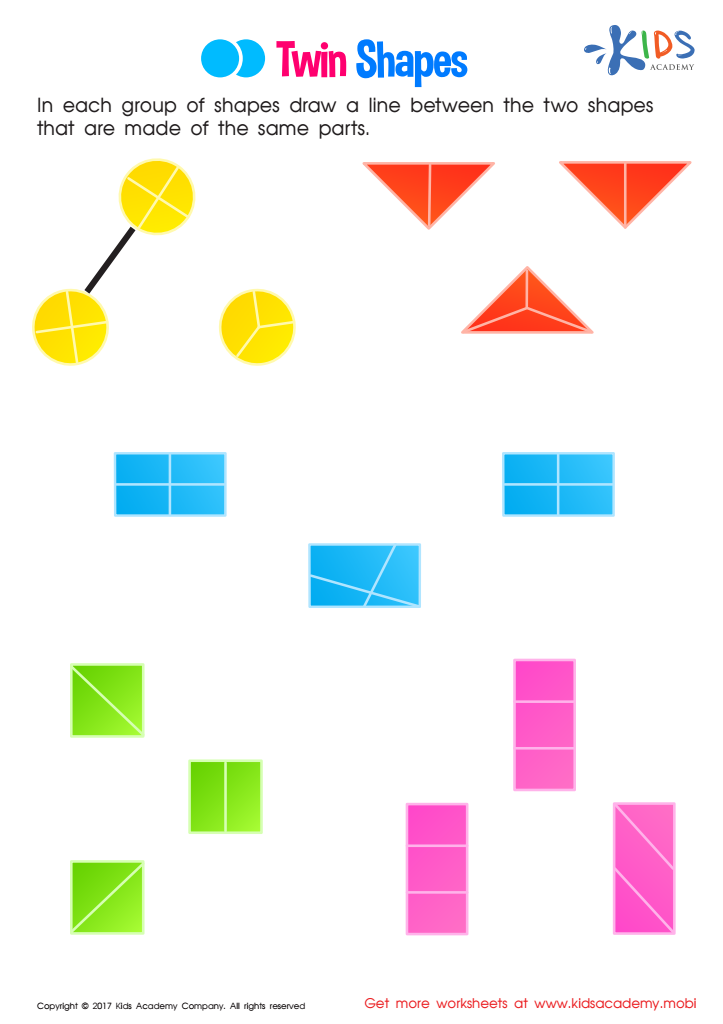
Twin Shapes Worksheet
 Assign to My Students



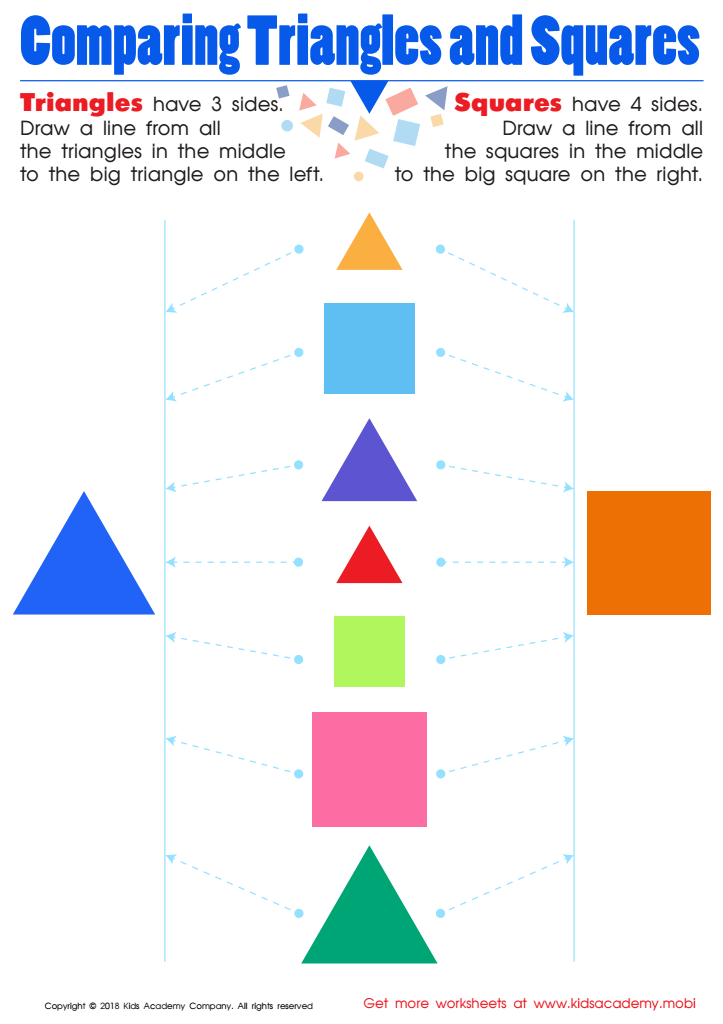
Comparing Triangles Squares Worksheet
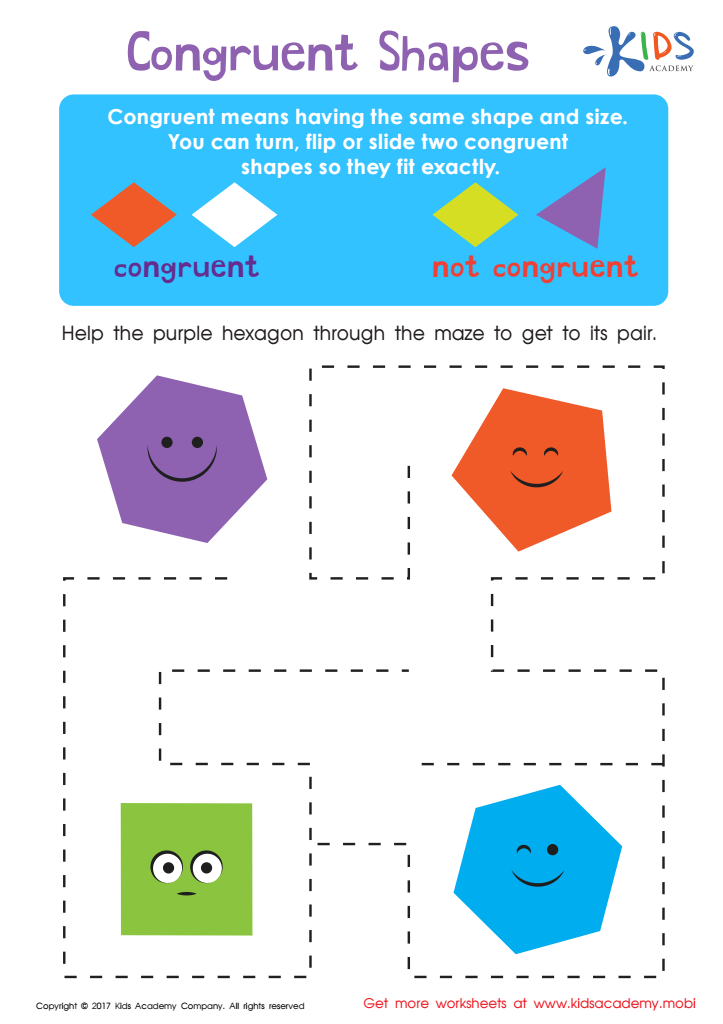
Congruent Shapes Worksheet
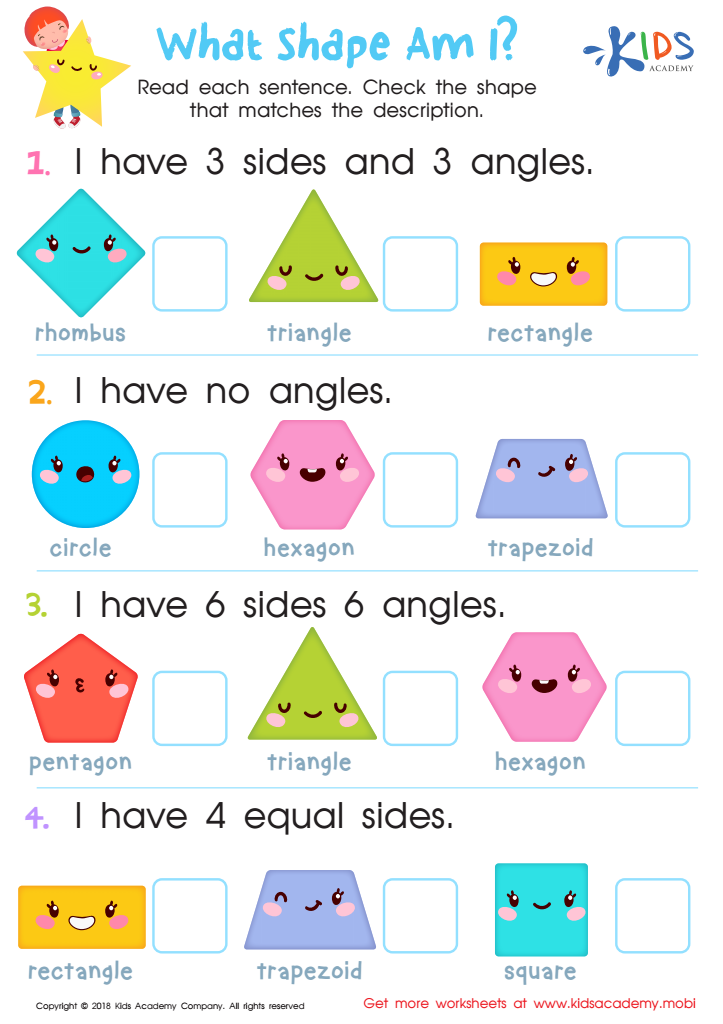
What Shape Am I? Worksheet
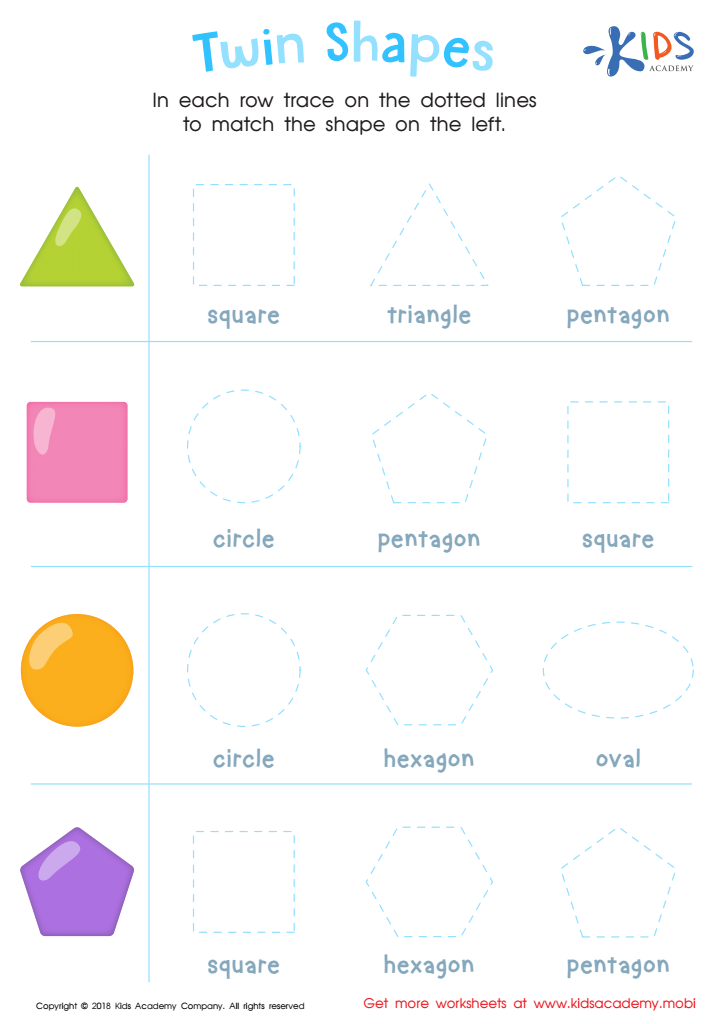
Twin Shapes Dot-to-Dot Worksheet








Visual discrimination refers to the ability to recognize details in visual images. It is crucial for early development and is particularly significant for children aged 6-9 when it comes to recognizing and understanding 2D shapes. This skill directly impacts their ability to succeed in foundational academic areas such as reading, writing, and mathematics.
Parents and teachers should care about visual discrimination of 2D shapes because it helps children distinguish between letters and numbers, which can often look similar (e.g., "b" and "d" or "6" and "9"). This differentiation is essential for accurate reading and writing, forming the basis for literacy skills. In mathematics, recognizing and manipulating 2D shapes helps with understanding spatial relationships, geometry, and problem-solving, all of which are part of early math curricula.
Moreover, strong visual discrimination skills enhance a child’s ability to follow instructions, organize their thoughts, and complete tasks effectively. Socially, children who can seamlessly interact with their environment through accurate shape and detail recognition find it easier to navigate classrooms and form positive social interactions. Thus, by focusing on activities that enhance visual discrimination, such as sorting shapes, puzzles, and drawing, parents and teachers can substantially support a child’s cognitive and social development.