Addition Practice Addition & Subtraction Worksheets for Ages 6-9 - Page 5
102 filtered results
-
From - To
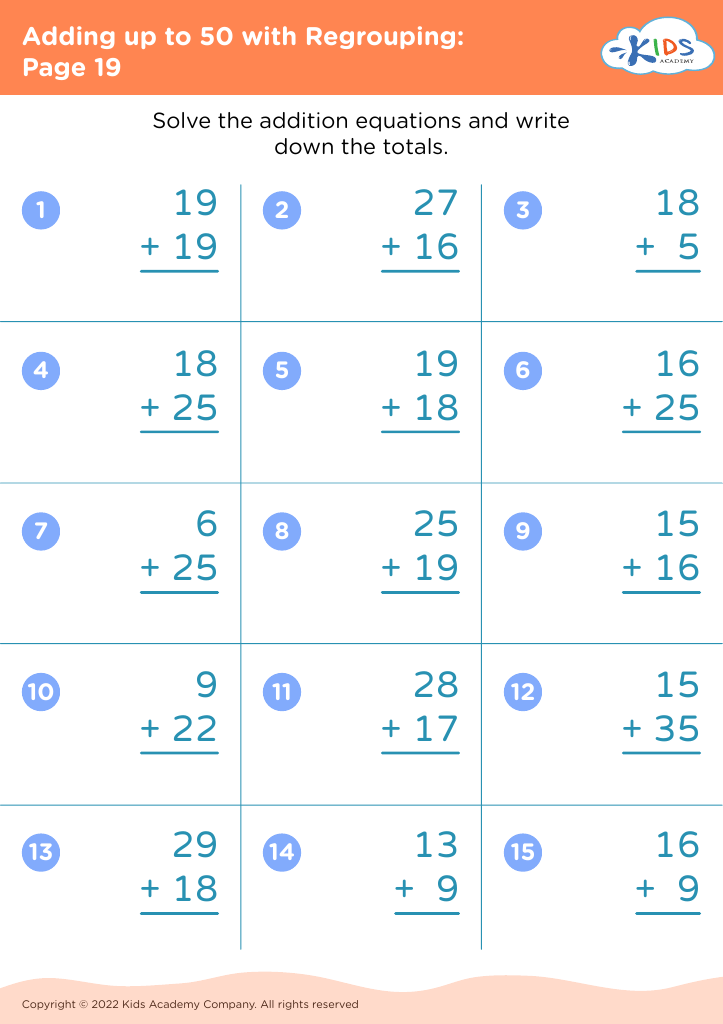
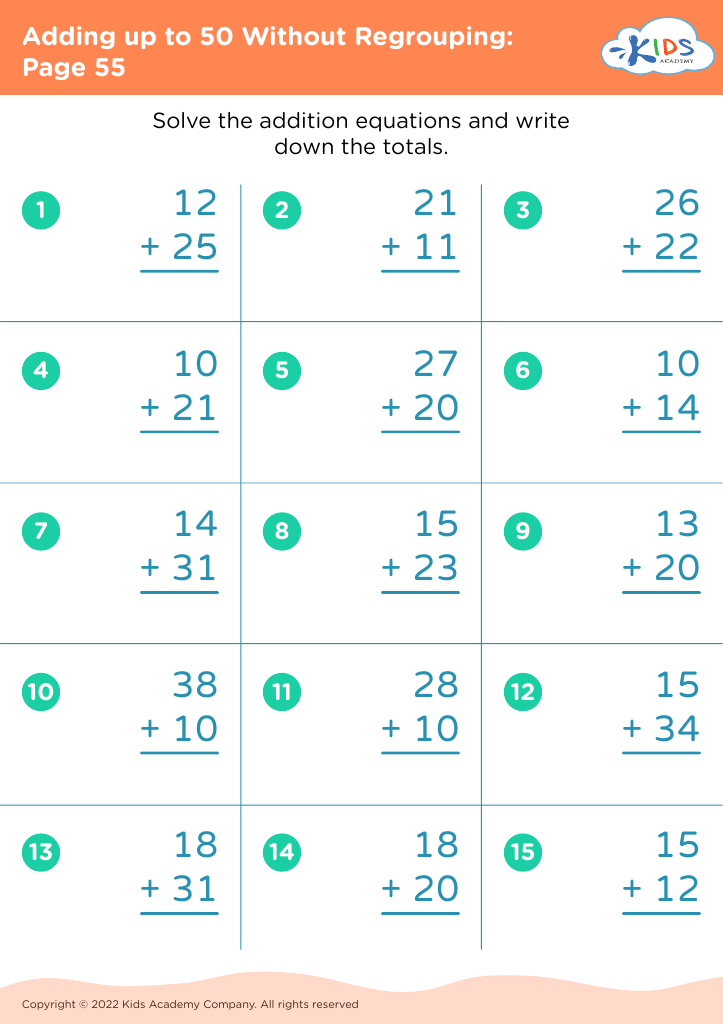
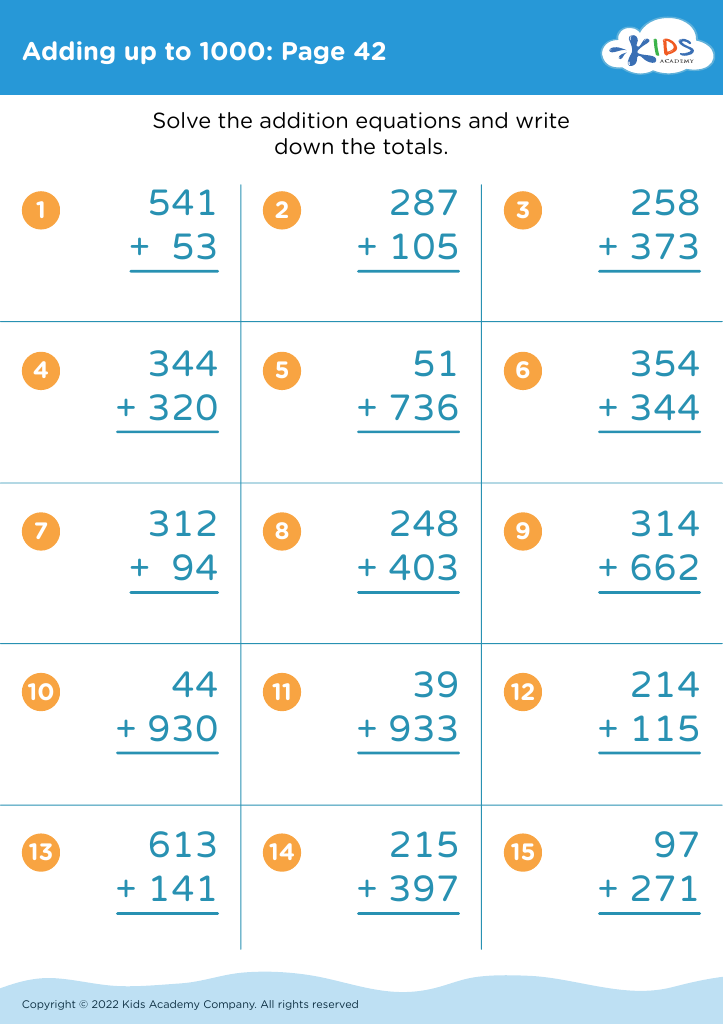
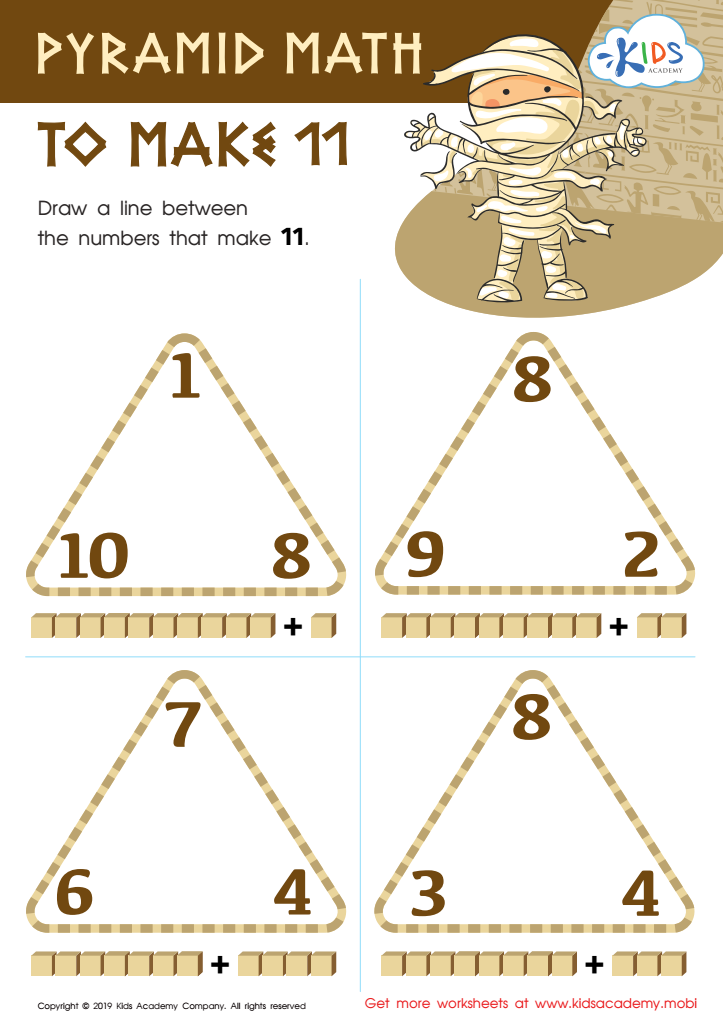
Pyramid Math to Make 11 Worksheet
 Assign to My Students
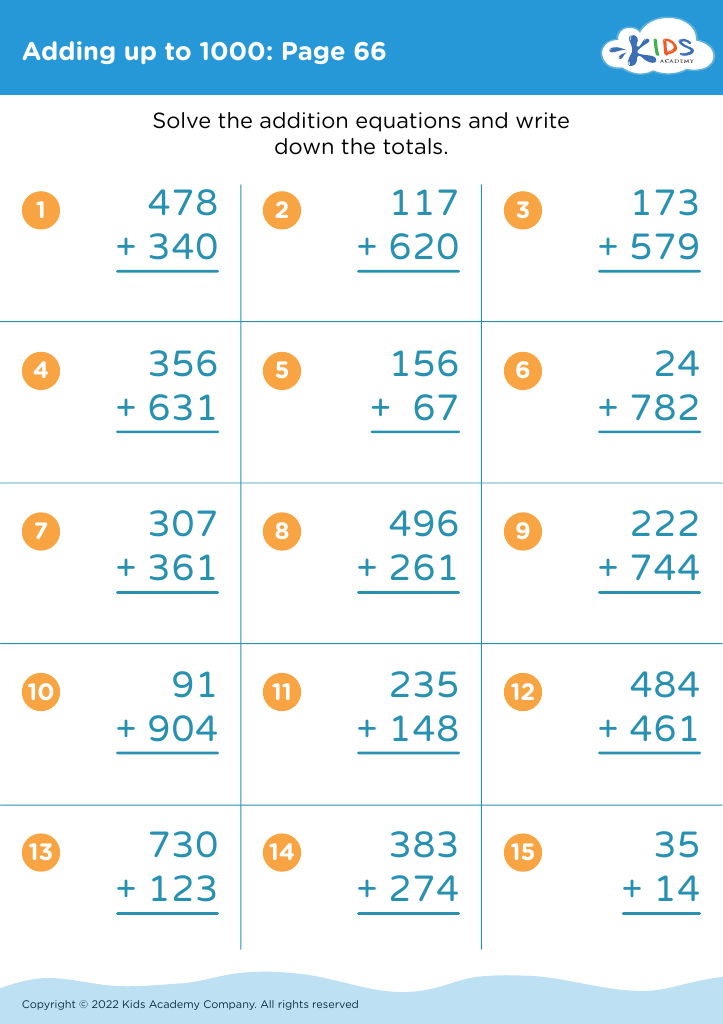
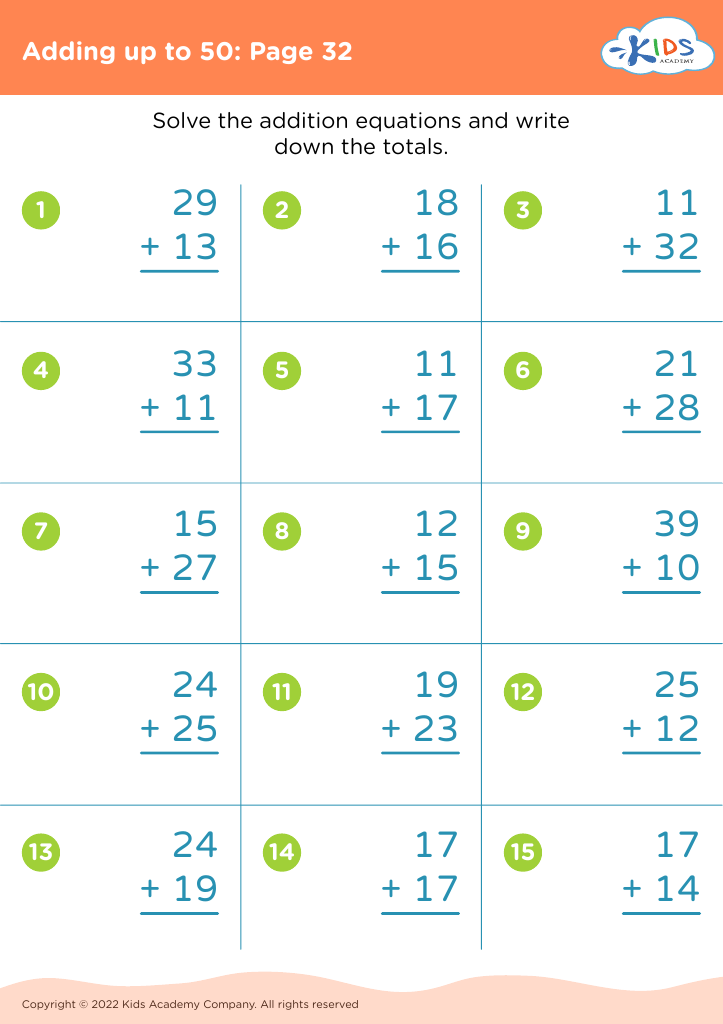








Parents and teachers should prioritize addition and subtraction practice for children aged 6-9 because these skills form the foundation for all future mathematics learning. This developmental stage is crucial, as children transition from concrete understanding—using physical objects—to abstract problem-solving. Mastery of basic addition and subtraction not only enhances arithmetic skills, but also fosters critical thinking and resilience, encouraging children to tackle more complex mathematical concepts later on.
Practicing addition and subtraction helps develop number sense, spatial awareness, and logical reasoning. It's essential for everyday situations, such as budgeting or measuring, making it a vital life skill. Moreover, proficiency in these operations boosts children’s confidence in their mathematical abilities, reducing anxiety towards math as they advance in their education.
In today’s digital age, engaging methods—like games and interactive apps—make learning these concepts enjoyable, increasing motivation and retention. Ultimately, by focusing on addition and subtraction during this period, parents and teachers equip children with essential tools for academic success and everyday problem-solving, laying a groundwork for lifelong learning and mastery of mathematics. By fostering a positive attitude towards these skills early on, adults can help shape confident, competent learners who are prepared for future challenges.








