Check out this FREE Trial Lesson on Addition & Subtraction for age 6-9!

D

Favorites
With answer key
Interactive
  • 6-9
  • Comparing Fractions
  • Addition & Subtraction
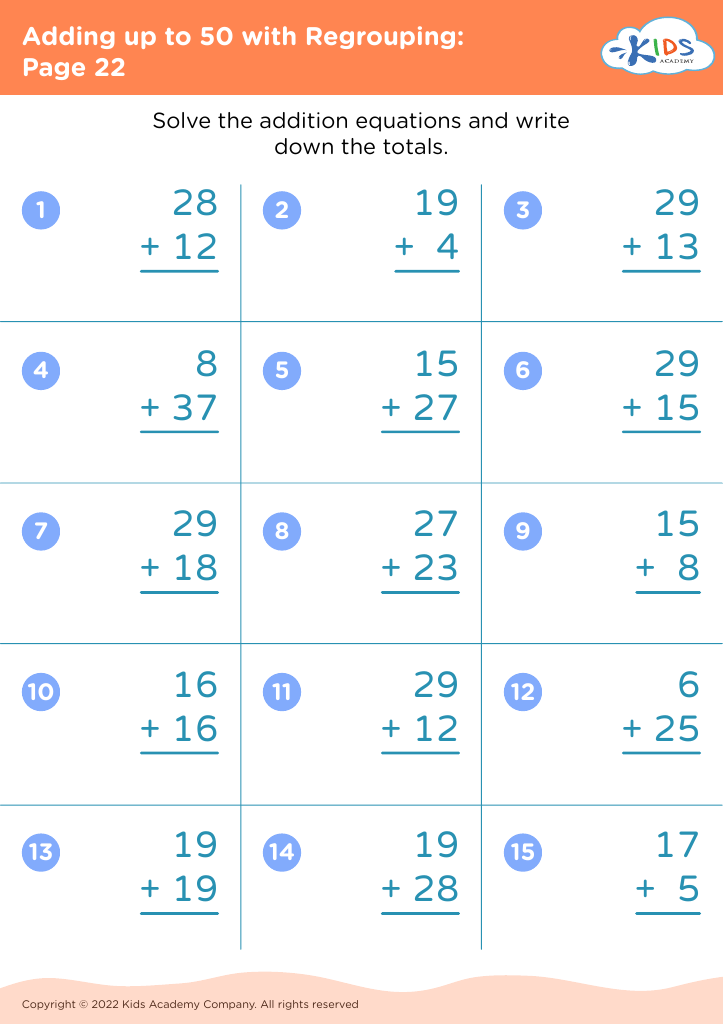
Adding up to 50 with Regrouping: Page 22
Worksheet
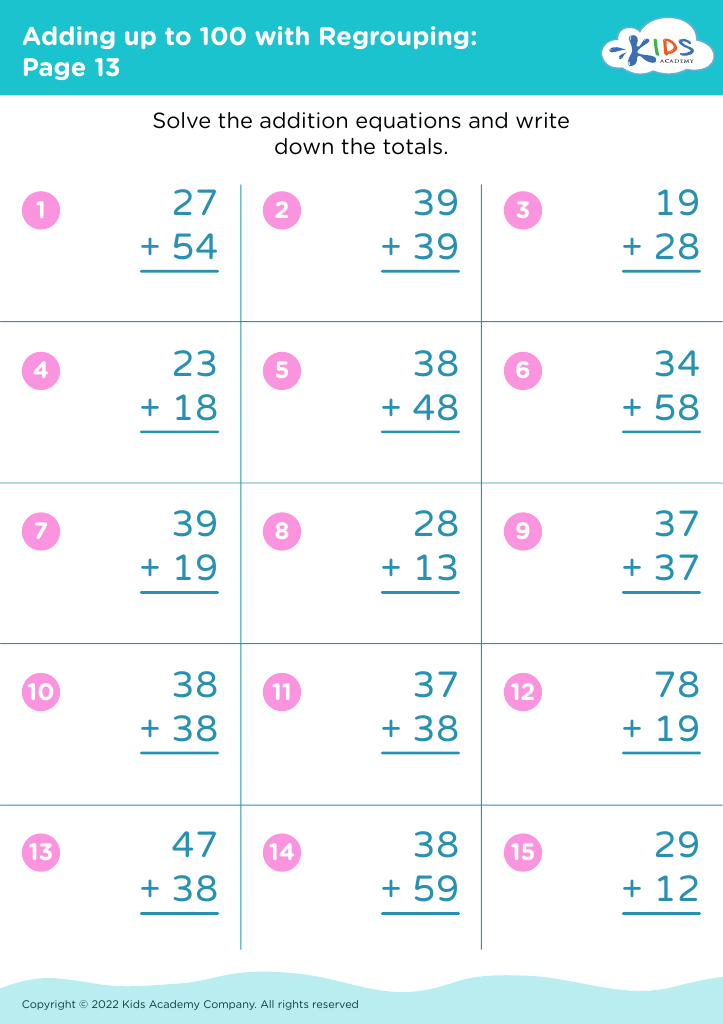
Adding up to 100 with Regrouping: Page 13
Worksheet
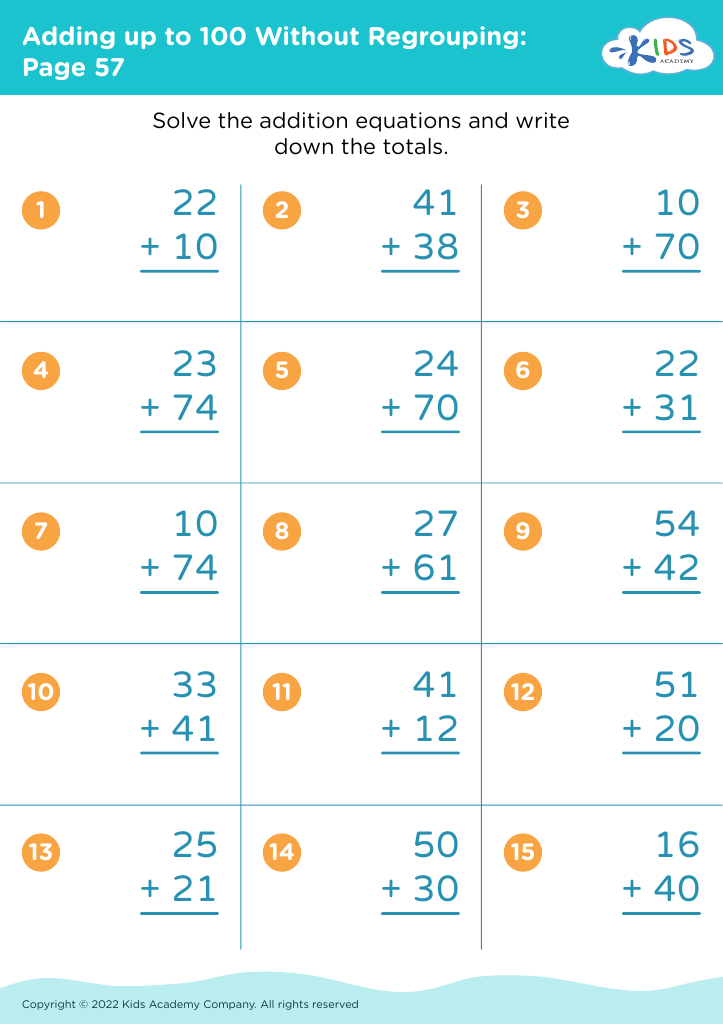
Adding up to 100 Without Regrouping: Page 57
Worksheet
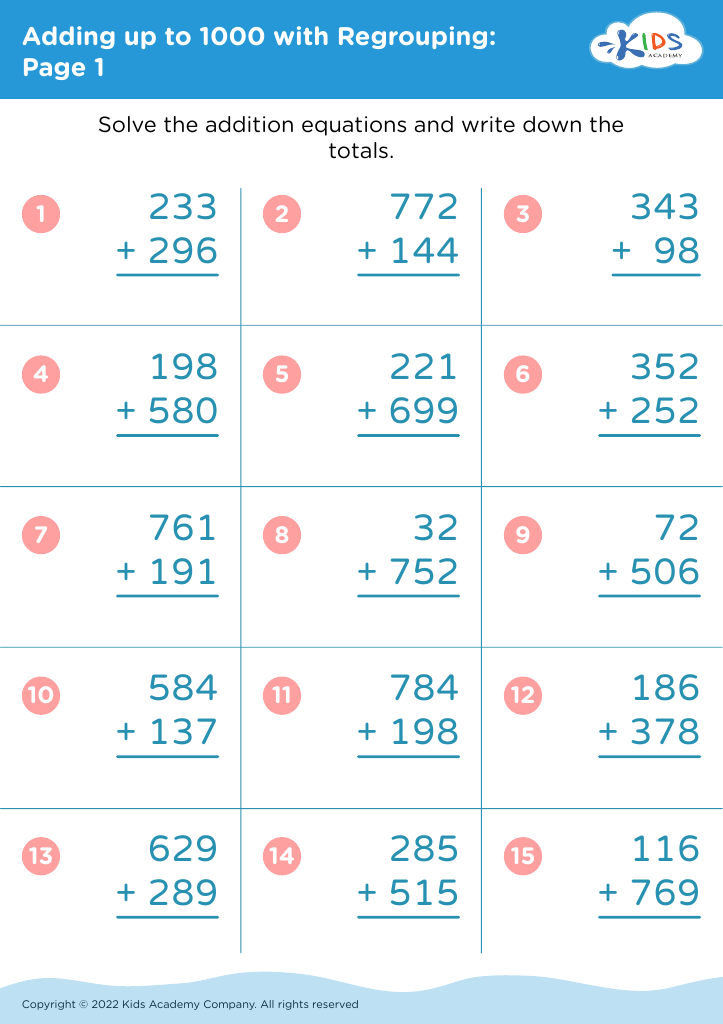
Adding up to 1000 with Regrouping: Page 1
Worksheet
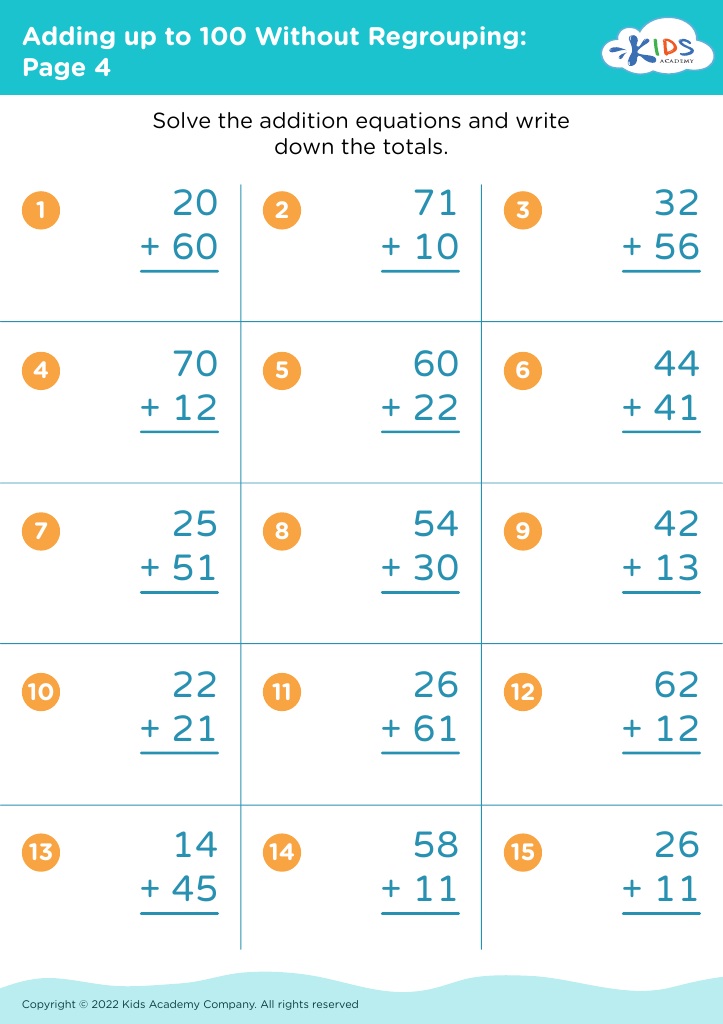
Adding up to 100 Without Regrouping: Page 4
Worksheet
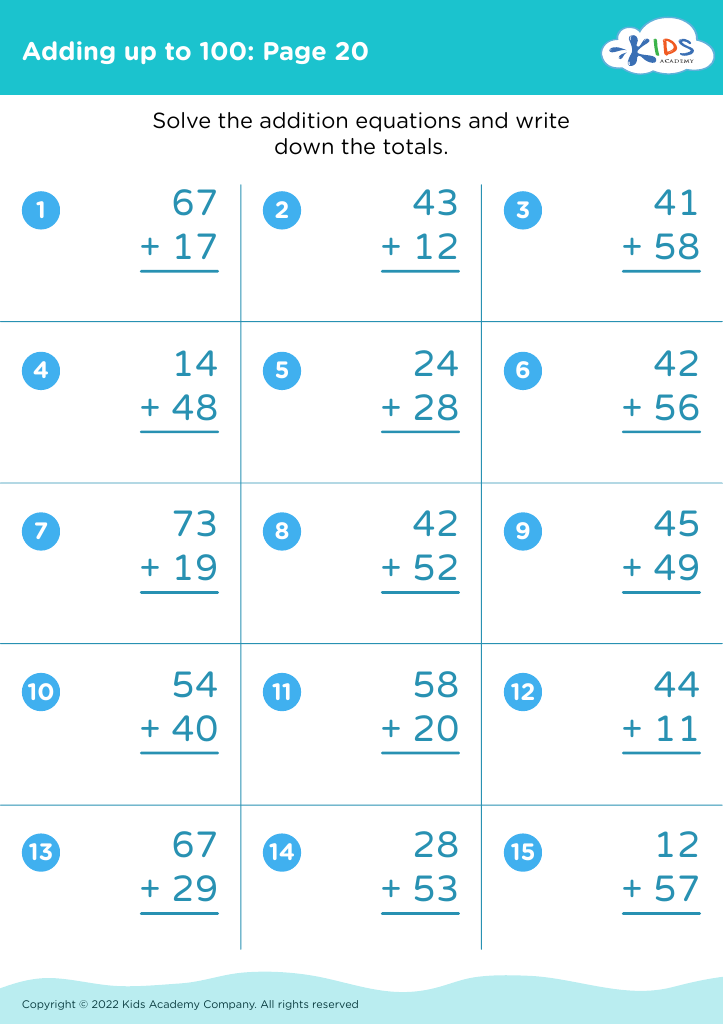
Adding up to 100: Page 20

Adding up to 100: Page 20

Adding up to 100: Page 20
Worksheet
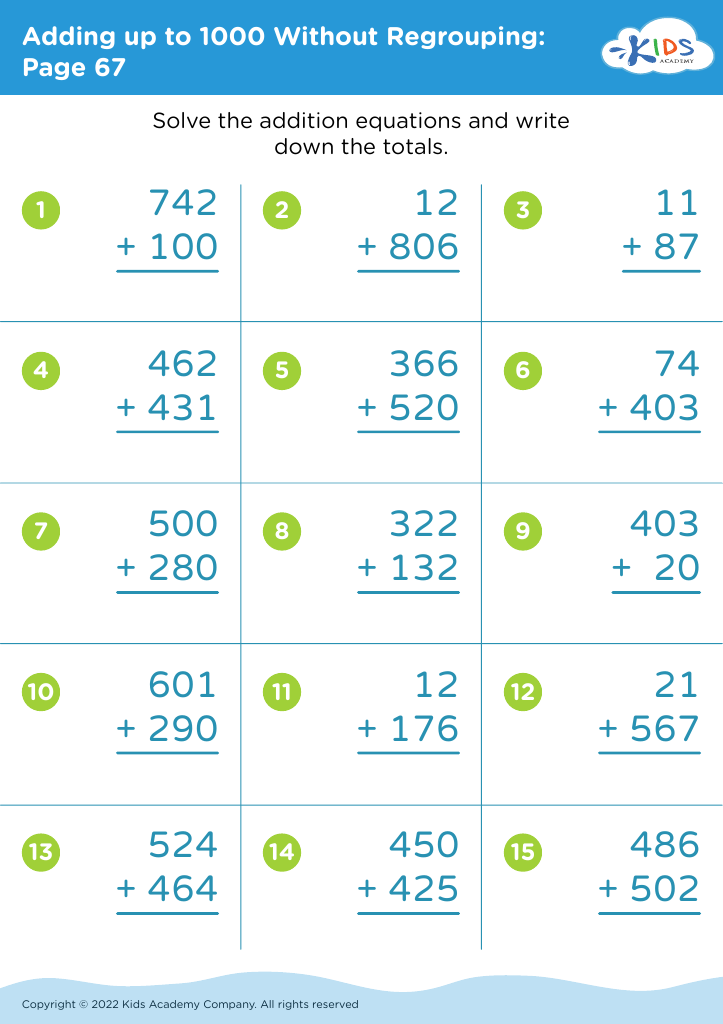
Adding up to 1000 Without Regrouping: Page 67
Worksheet
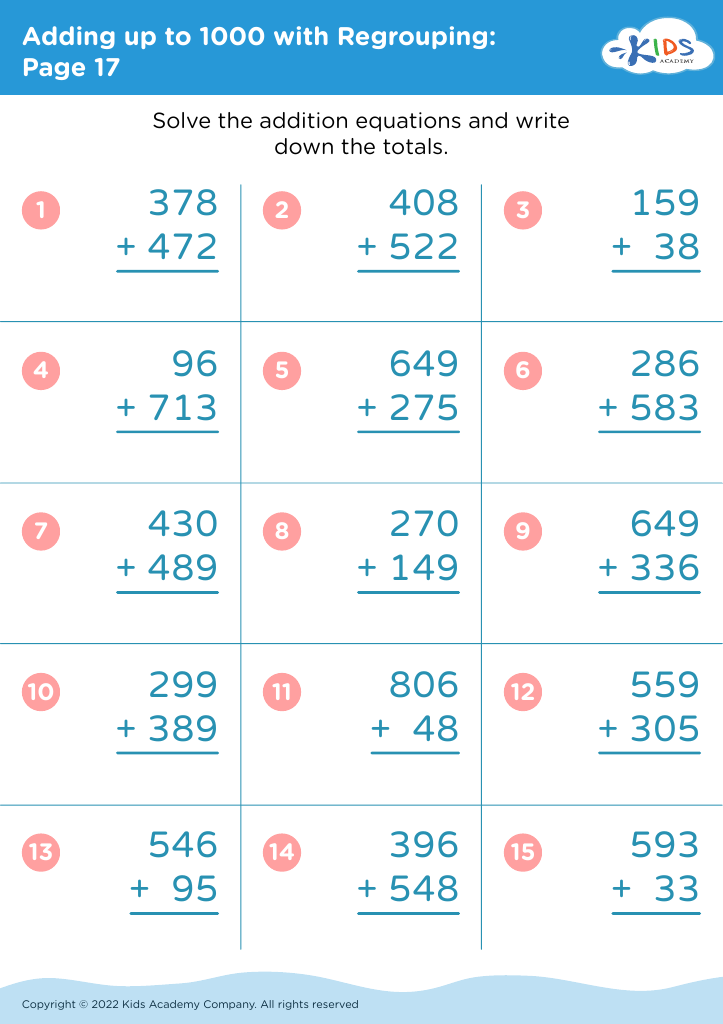
Adding up to 1000 with Regrouping: Page 17
Worksheet
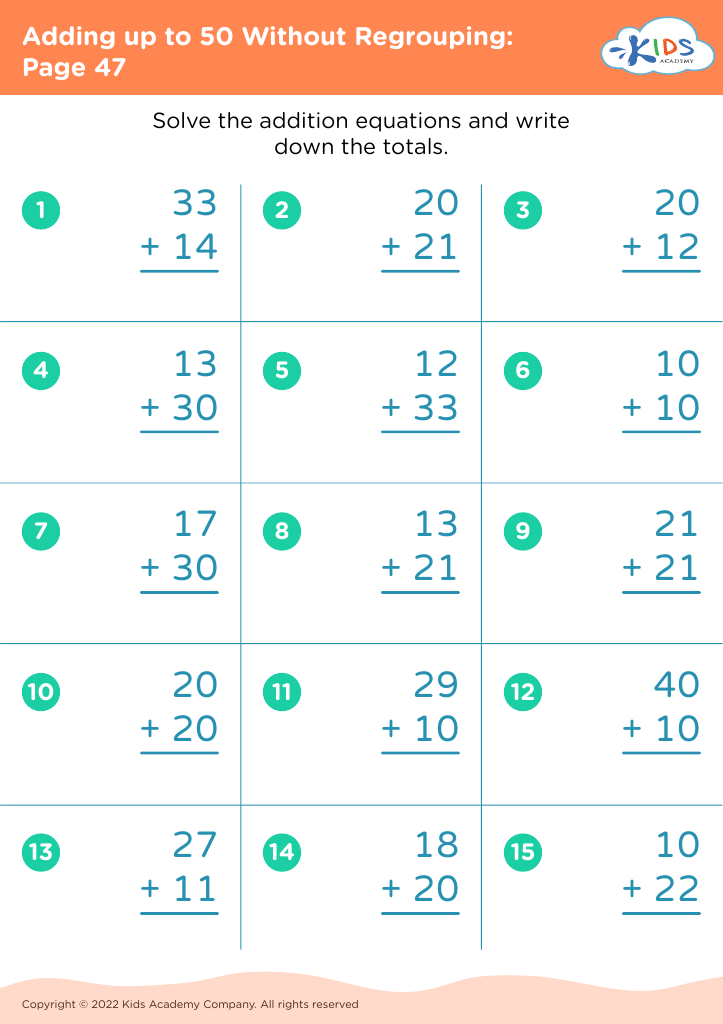
Adding up to 50 Without Regrouping: Page 47
Worksheet
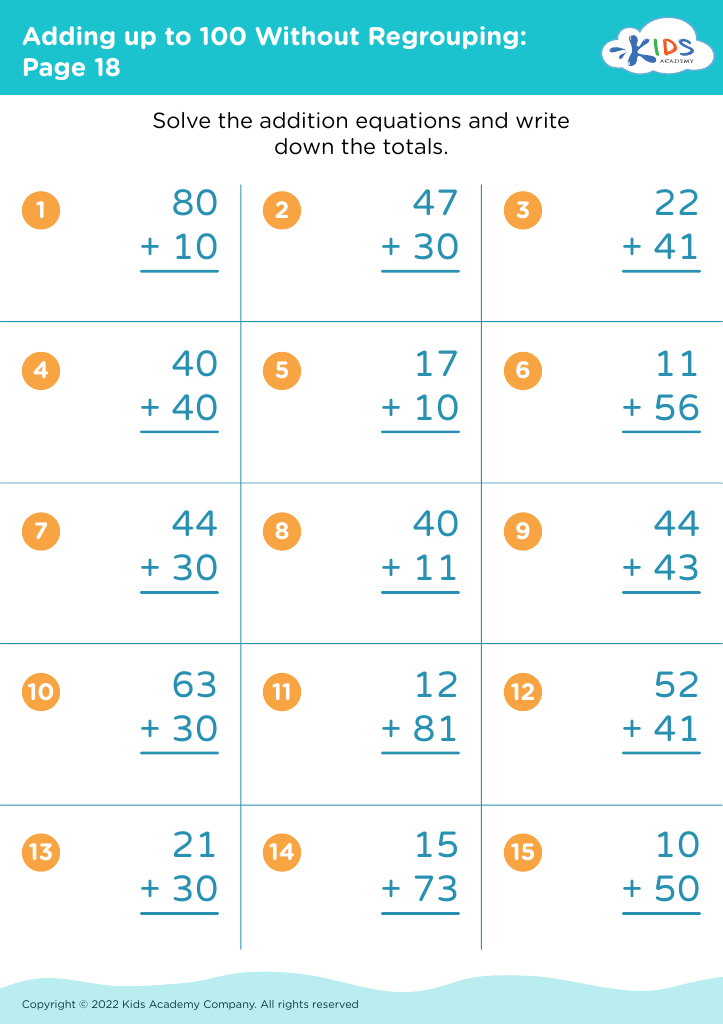
Adding up to 100 Without Regrouping: Page 18
Worksheet
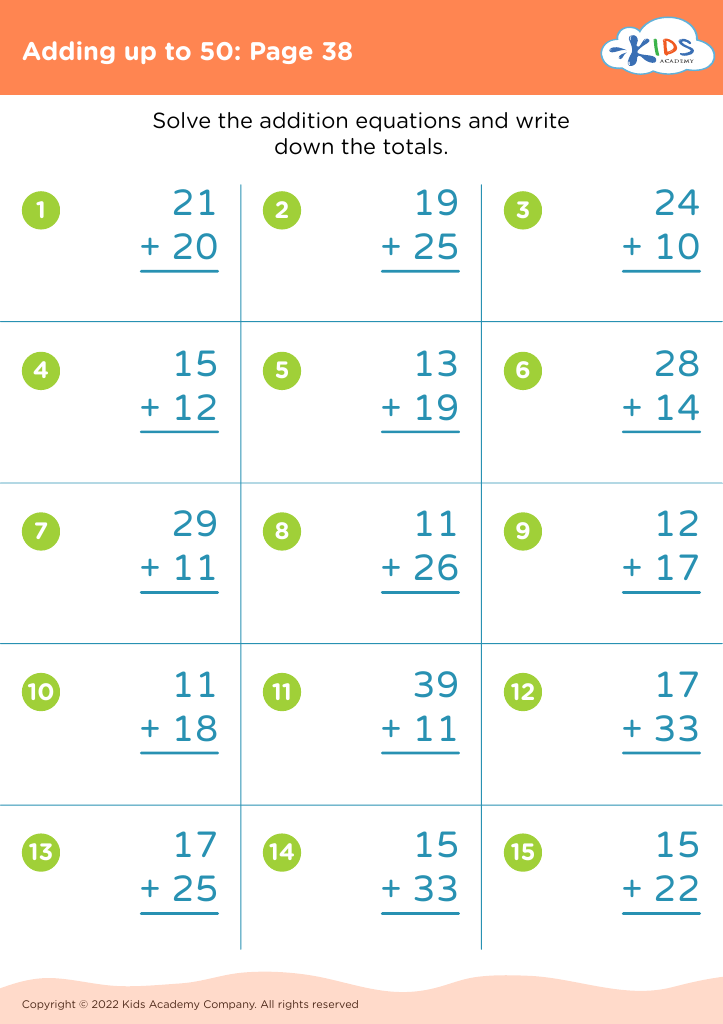
Adding up to 50: Page 38

Adding up to 50: Page 38

Adding up to 50: Page 38
Worksheet
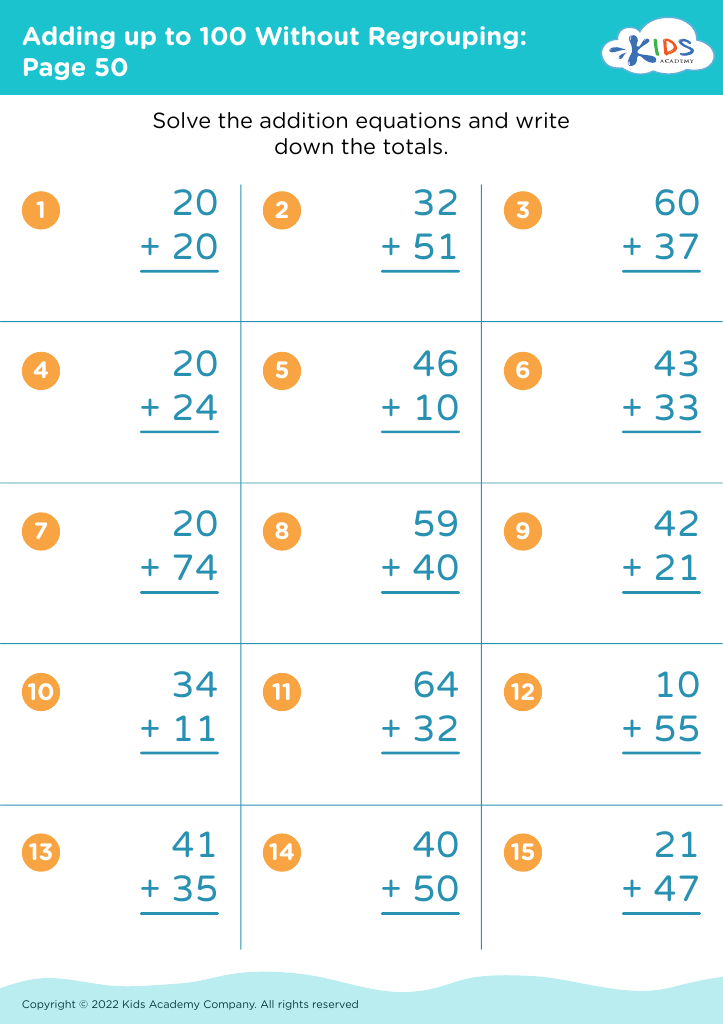
Adding up to 100 Without Regrouping: Page 50
Worksheet
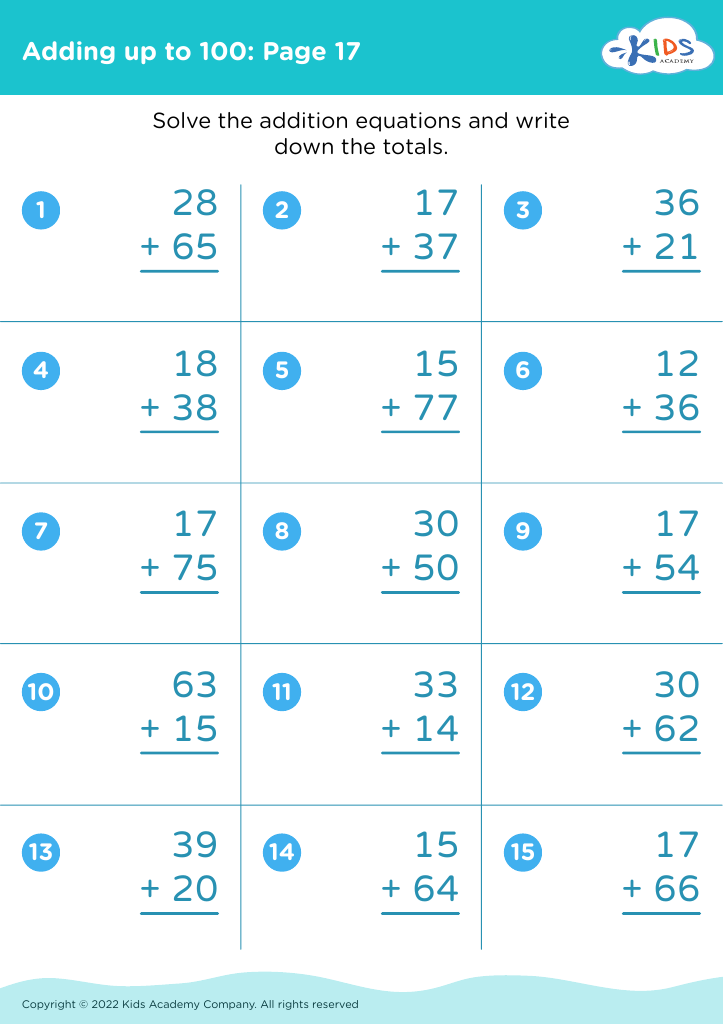
Adding up to 100: Page 17

Adding up to 100: Page 17

Adding up to 100: Page 17
Worksheet
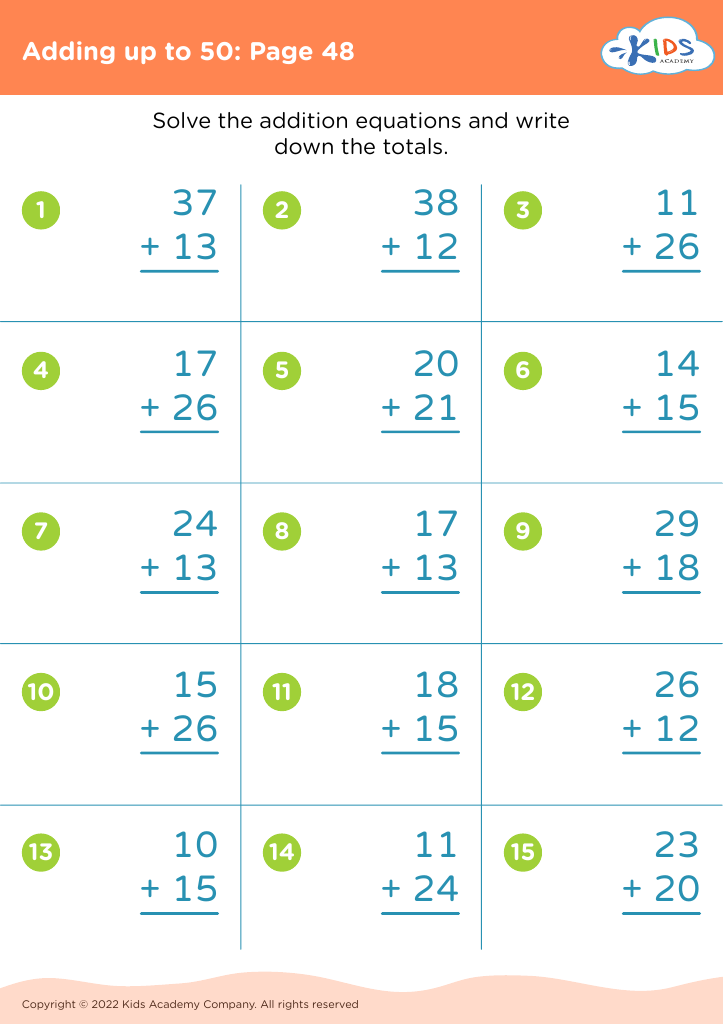
Adding up to 50: Page 48

Adding up to 50: Page 48

Adding up to 50: Page 48
Worksheet
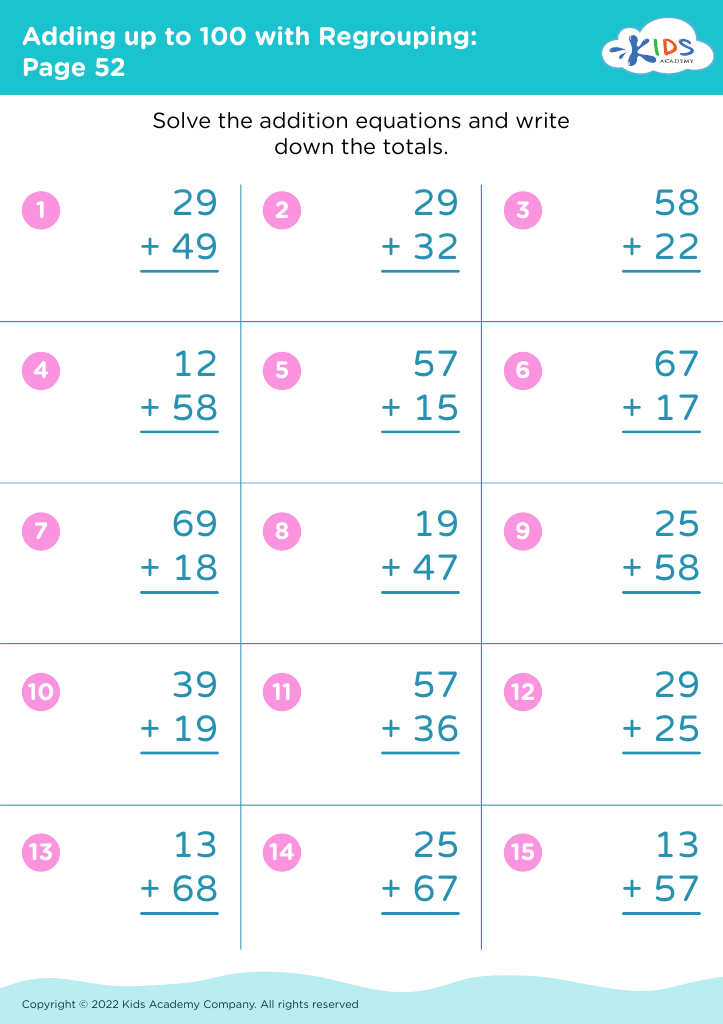
Adding up to 100 with Regrouping: Page 52
Worksheet
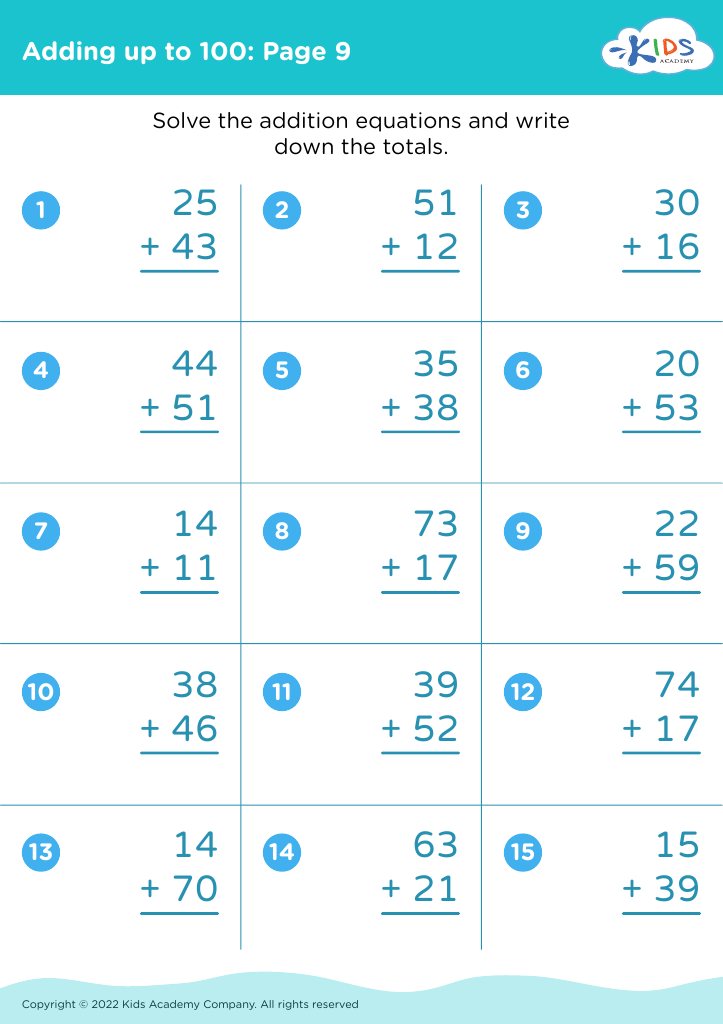
Adding up to 100: Page 9

Adding up to 100: Page 9

Adding up to 100: Page 9
Worksheet
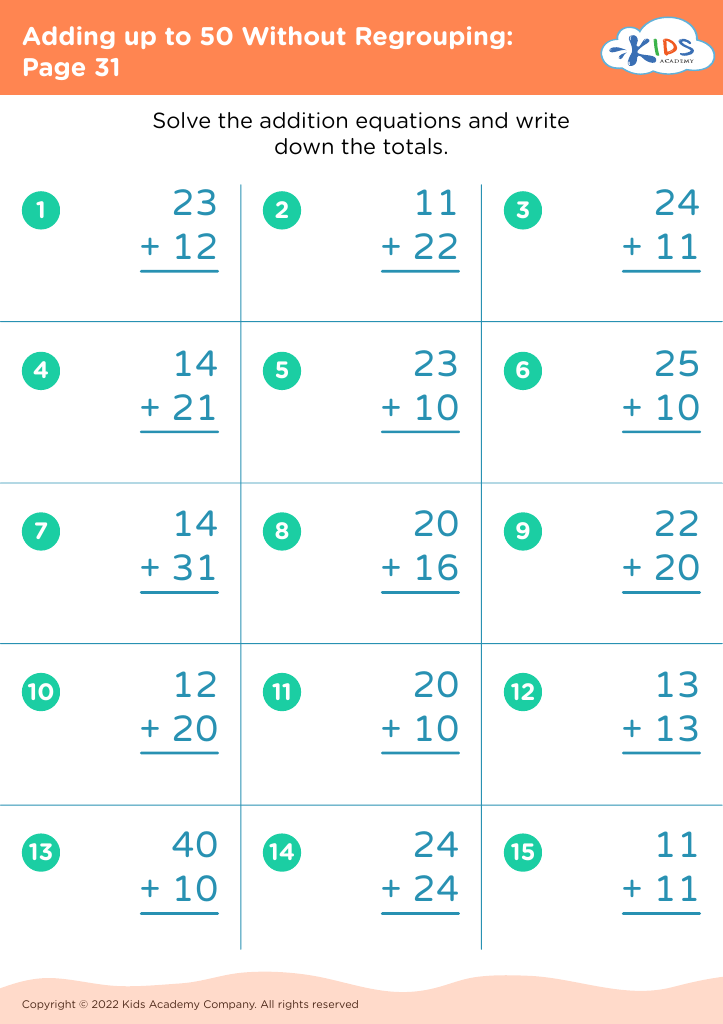
Adding up to 50 Without Regrouping: Page 31
Worksheet
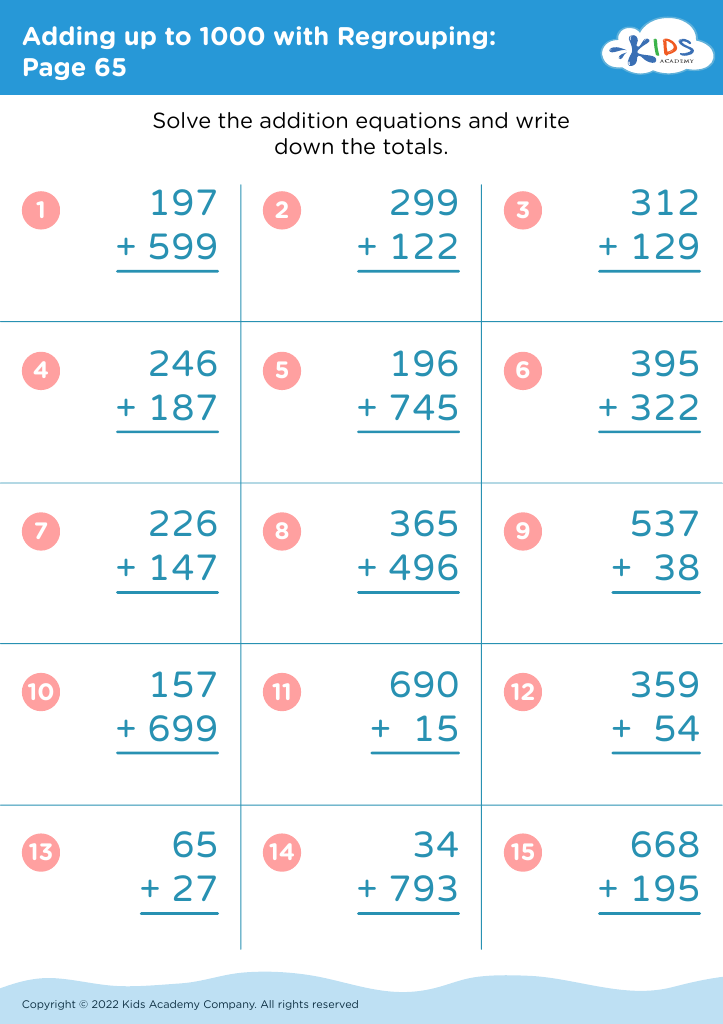
Adding up to 1000 with Regrouping: Page 65
Worksheet
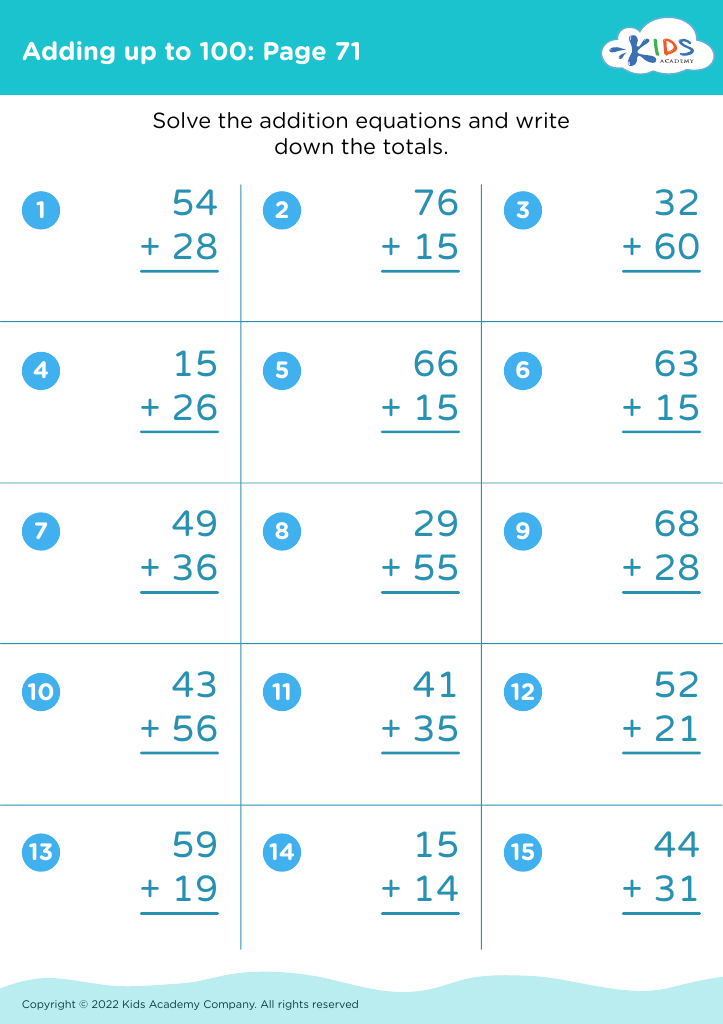
Adding up to 100: Page 71

Adding up to 100: Page 71

Adding up to 100: Page 71
Worksheet
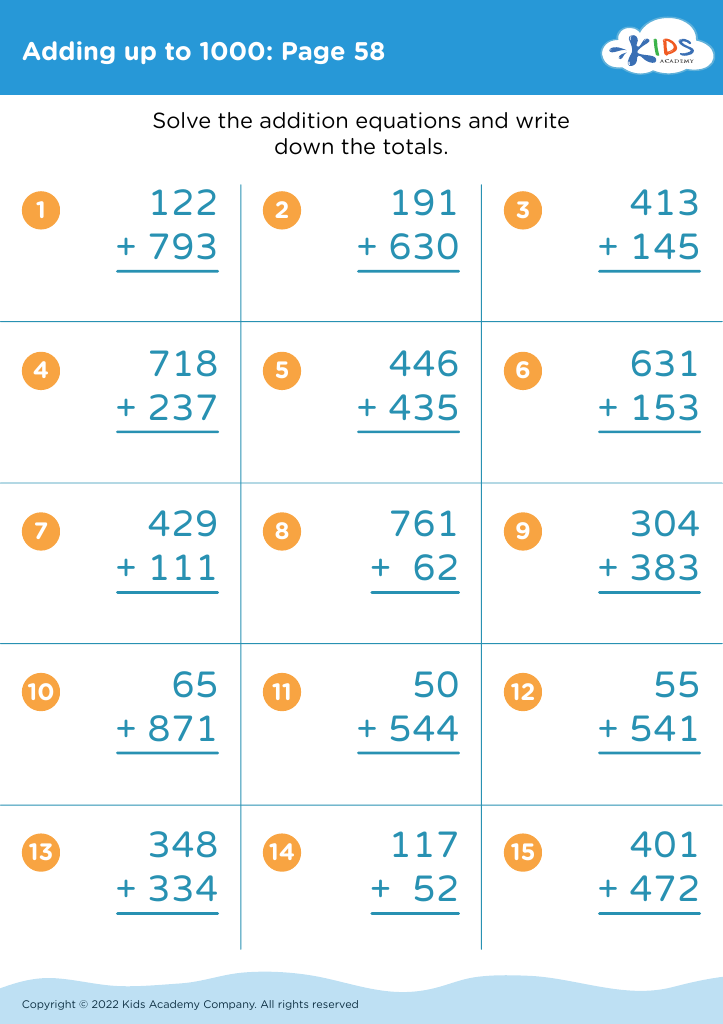
Adding up to 1000: Page 58

Adding up to 1000: Page 58

Adding up to 1000: Page 58
Worksheet
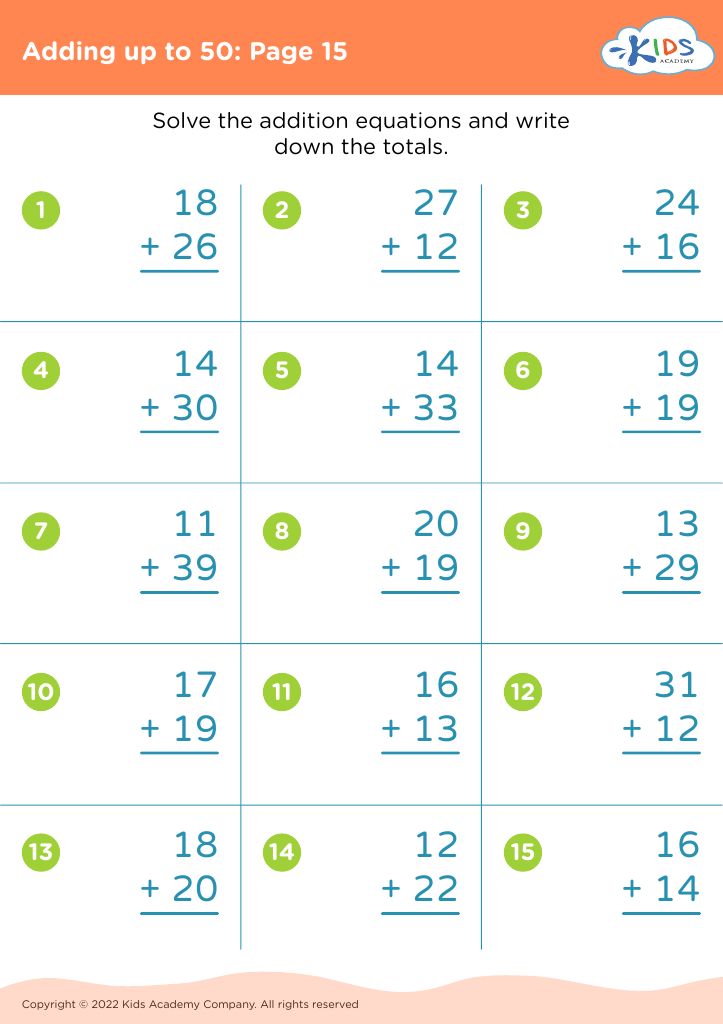
Adding up to 50: Page 15

Adding up to 50: Page 15

Adding up to 50: Page 15
Worksheet
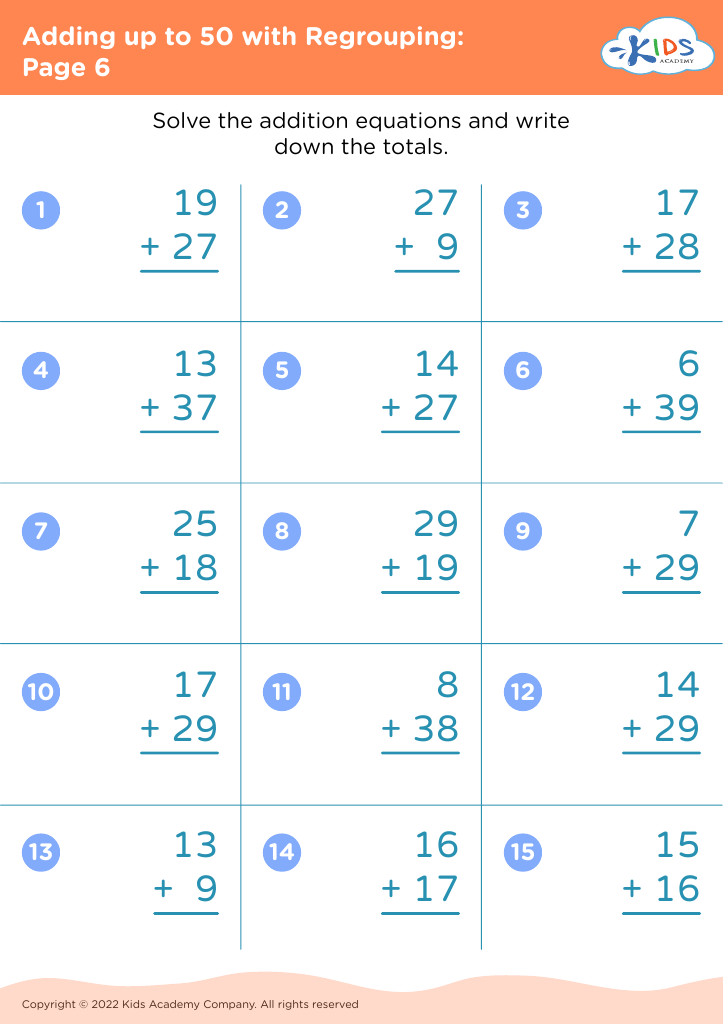
Adding up to 50 with Regrouping: Page 6
Worksheet
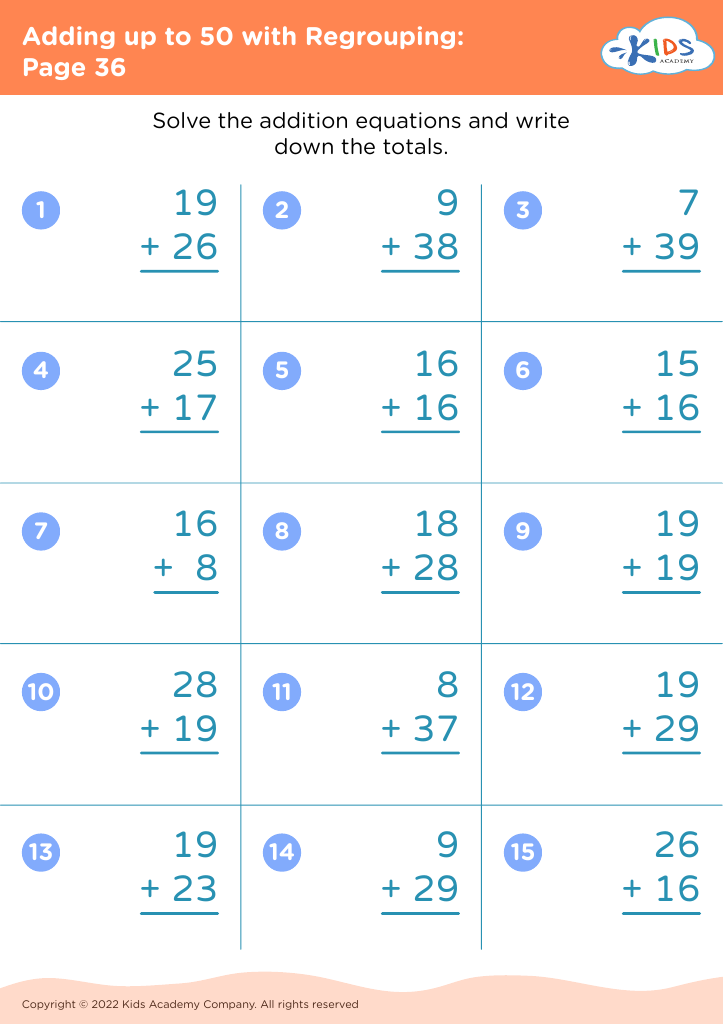
Adding up to 50 with Regrouping: Page 36
Worksheet
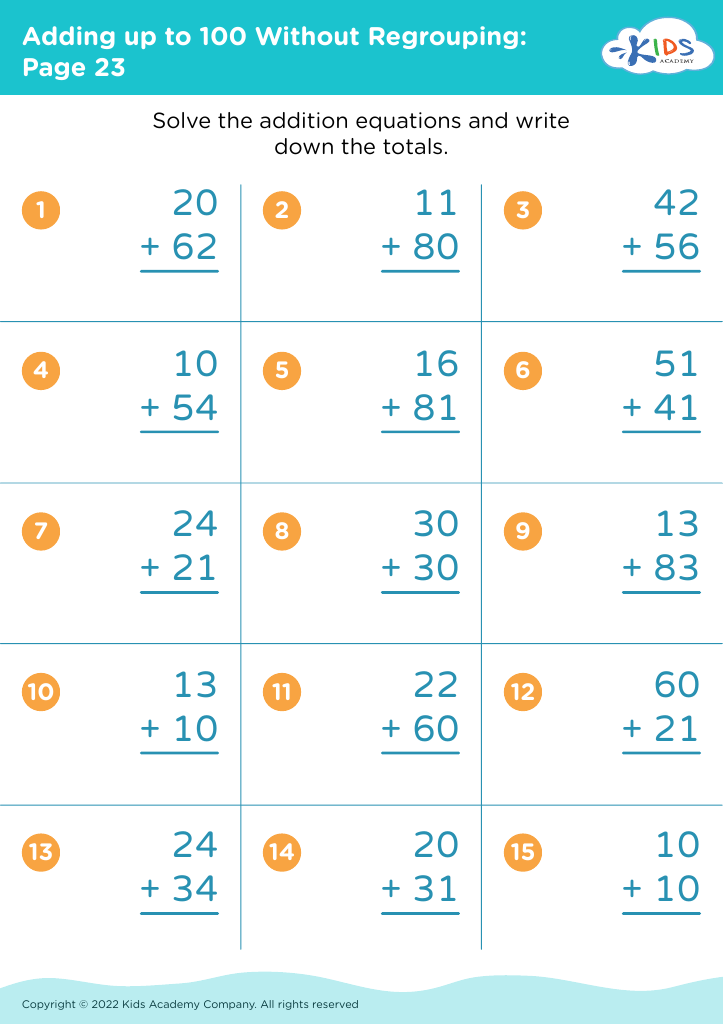
Adding up to 100 Without Regrouping: Page 23
Worksheet


Parents and teachers play a crucial role in a child's mathematical development, particularly when it comes to understanding fractional concepts during ages 6-9. Comparing fractions through addition and subtraction is essential for several reasons. Firstly, it sets the groundwork for more advanced mathematical concepts. At this stage, children are developing their number sense and reasoning abilities; comparing fractions reinforces the understanding of relationships between numbers, such as "greater than" or "less than."

Secondly, engaging with fractions fosters critical thinking skills. By evaluating which fractions are larger or how they can be combined or separated, students learn to analyze problems and come up with solutions. This skill not only applies to mathematics but also translates into real-life situations, such as sharing food or dividing resources.

Furthermore, understanding fractions is pivotal in developing persistence and confidence in math. When children work collaboratively with parents or teachers on these concepts, they strengthen their communication skills and learn to approach challenges with a positive mindset. Ultimately, fostering a solid grasp of comparing fractions forms a bridge to future success in mathematics and enhances overall cognitive development, making it vital for educators and parents to prioritize this area in a child's learning journey.