Enhance Vocabulary Addition & Subtraction Worksheets for Ages 6-9
4 filtered results
-
From - To
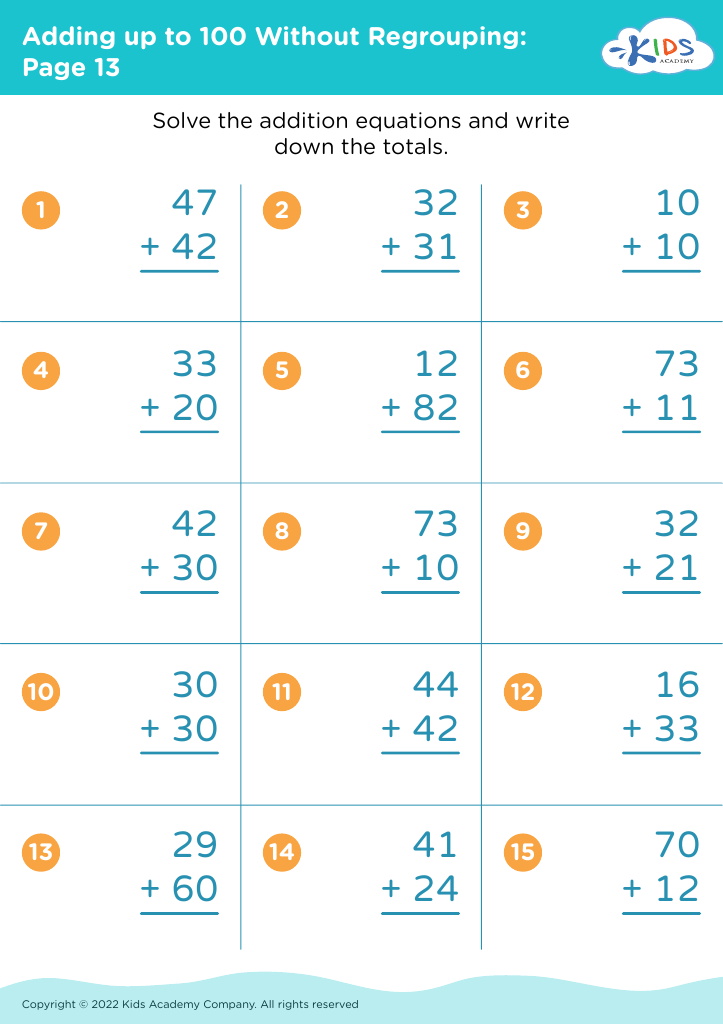
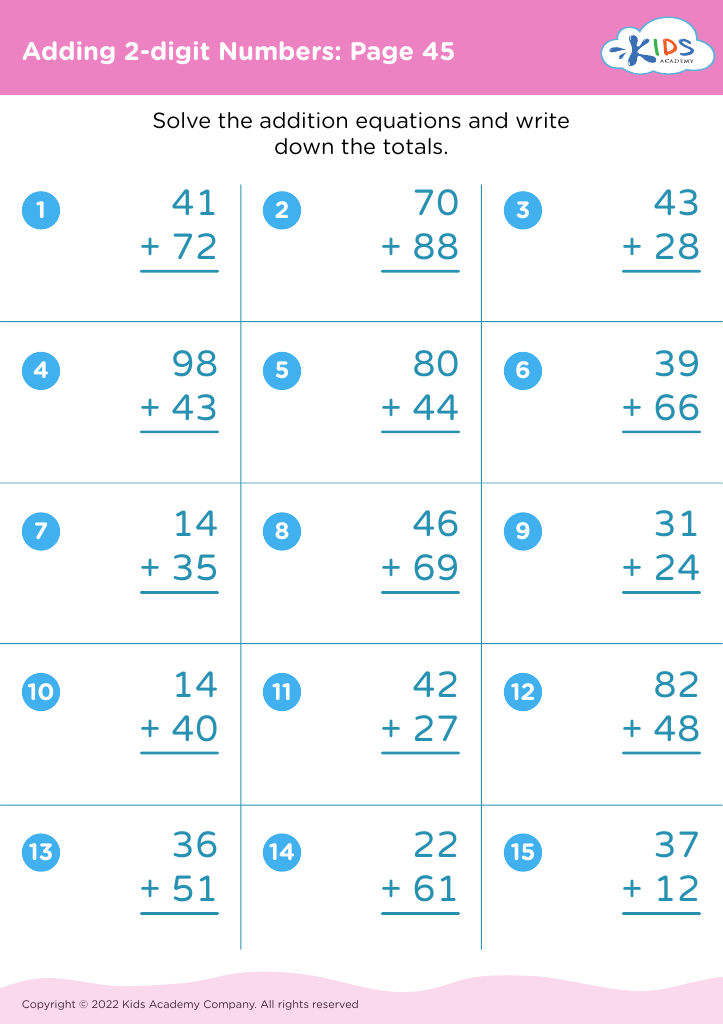
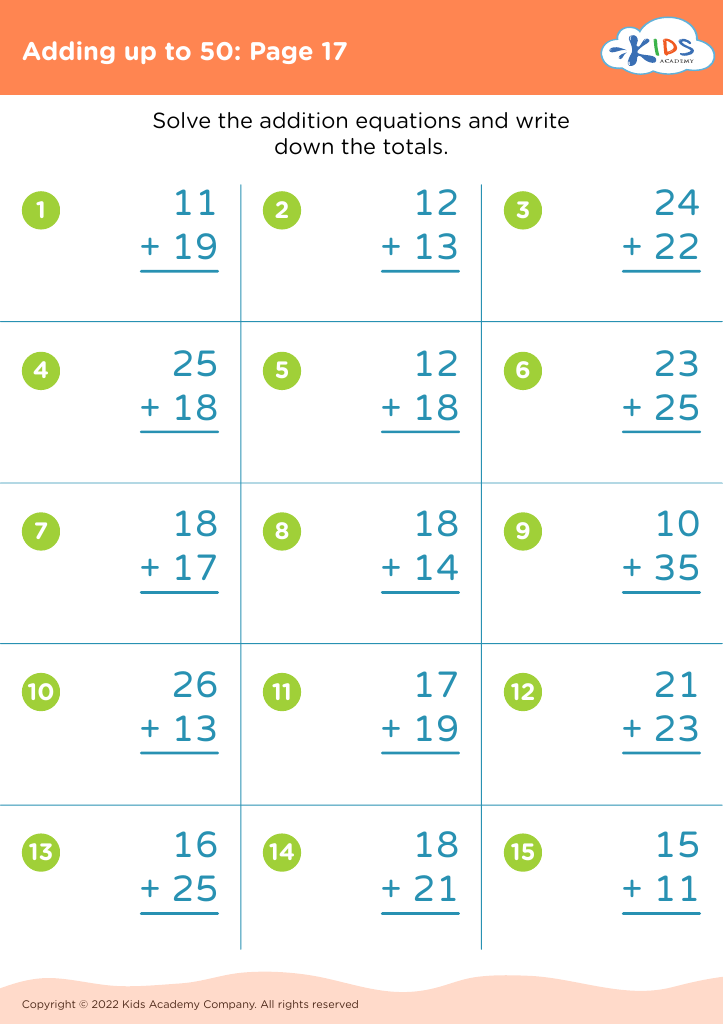
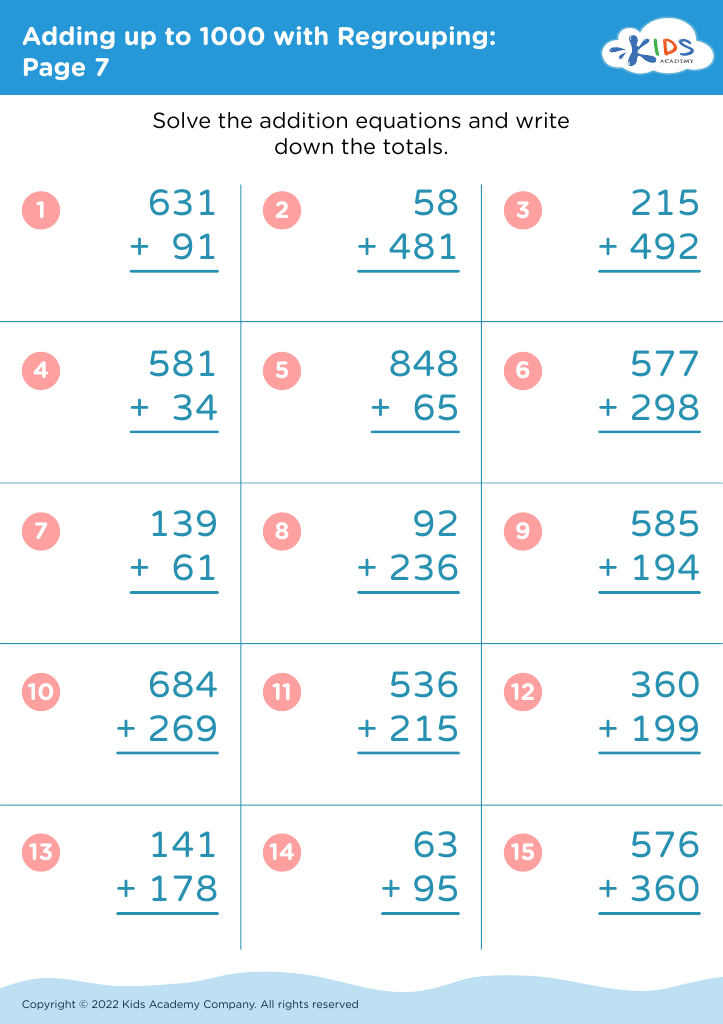
Boost your child's math and language skills with our "Enhance Vocabulary Addition & Subtraction Worksheets" designed for ages 6-9. These engaging worksheets not only support essential skills in addition and subtraction but also enrich vocabulary through fun and interactive activities. Each worksheet presents a variety of math problems alongside opportunities to learn new words, ensuring a well-rounded educational experience. By integrating mathematics with vocabulary enhancement, kids can develop critical thinking and comprehension abilities. Perfect for home or classroom use, these worksheets are a valuable resource to help children build confidence in both math and language arts. Explore our collection and watch their skills soar!








Enhancing vocabulary for addition and subtraction in children ages 6-9 is crucial for their mathematical development and overall literacy. As young learners engage with numerical concepts, they encounter specific terms related to operations—such as sum, difference, add, subtract, and more. A strong vocabulary in these areas helps students grasp mathematical concepts more efficiently, leading to improved problem-solving skills.
Moreover, language and math are intertwined; as children learn to articulate their thought processes, they build confidence and clarity in both disciplines. Understanding mathematical vocabulary allows students to communicate their reasoning effectively, whether verbally or in written form. This communication is essential for collaboration with peers, participation in classroom discussions, and explaining their approaches to parents and teachers.
Additionally, a rich vocabulary can stimulate enthusiasm for learning. When children can articulate their thoughts and understand instructions clearly, they feel more empowered in their learning journey. Lastly, as basic math skills are foundational for future mathematical principles, enhancing vocabulary early on lays the groundwork for success in more complex topics. Thus, parents and teachers should prioritize vocabulary development in math to foster both language skills and mathematical competence, ensuring a well-rounded education for children.








