Improving calculation skills Addition & Subtraction Worksheets for Ages 6-9
3 filtered results
-
From - To
Enhance your child's math abilities with our "Improving Calculation Skills: Addition & Subtraction Worksheets for Ages 6-9." Designed for young learners, these engaging worksheets provide a fun and interactive way to practice essential math concepts. Our resources help children master addition and subtraction through a variety of exercises, ensuring a solid foundation for future success in mathematics. Tailored to suit various learning styles, these worksheets promote critical thinking and problem-solving skills in a playful environment. Foster a love for math while building confidence—download our worksheets today and watch your child's calculation skills flourish! Suitable for home or classroom use.
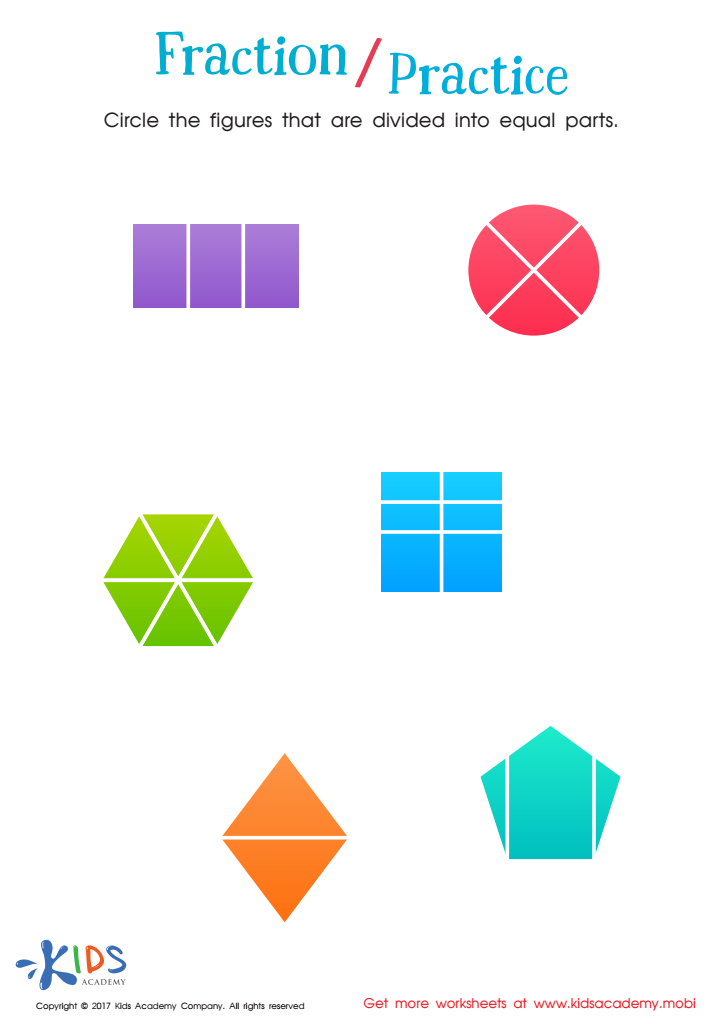
Fractions: Shapes Worksheet
 Assign to My Students
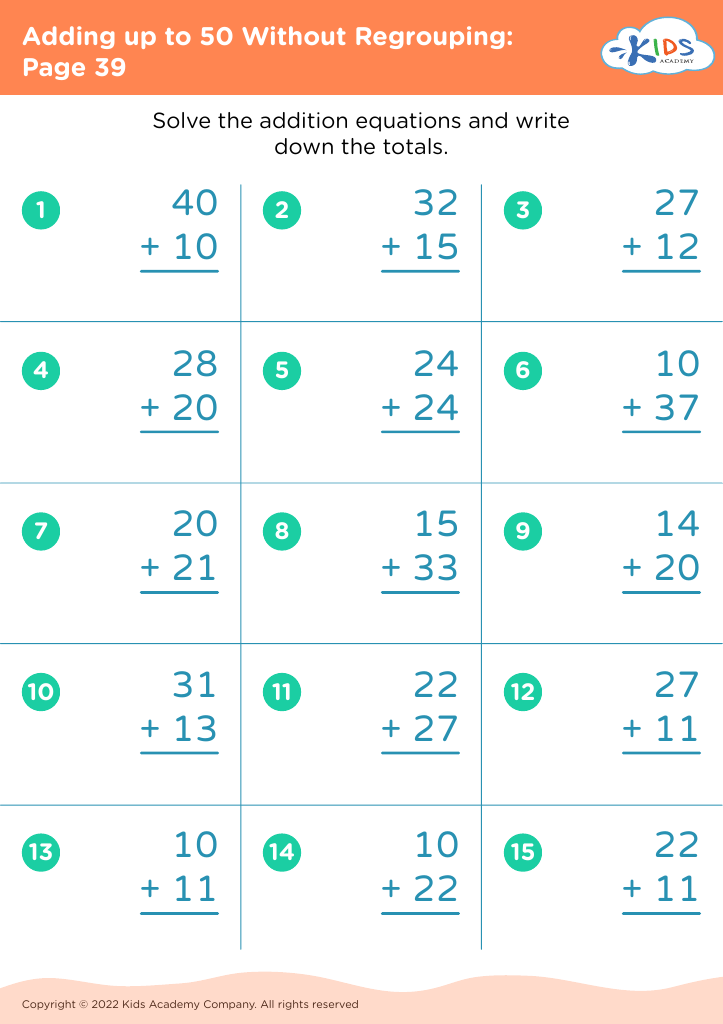
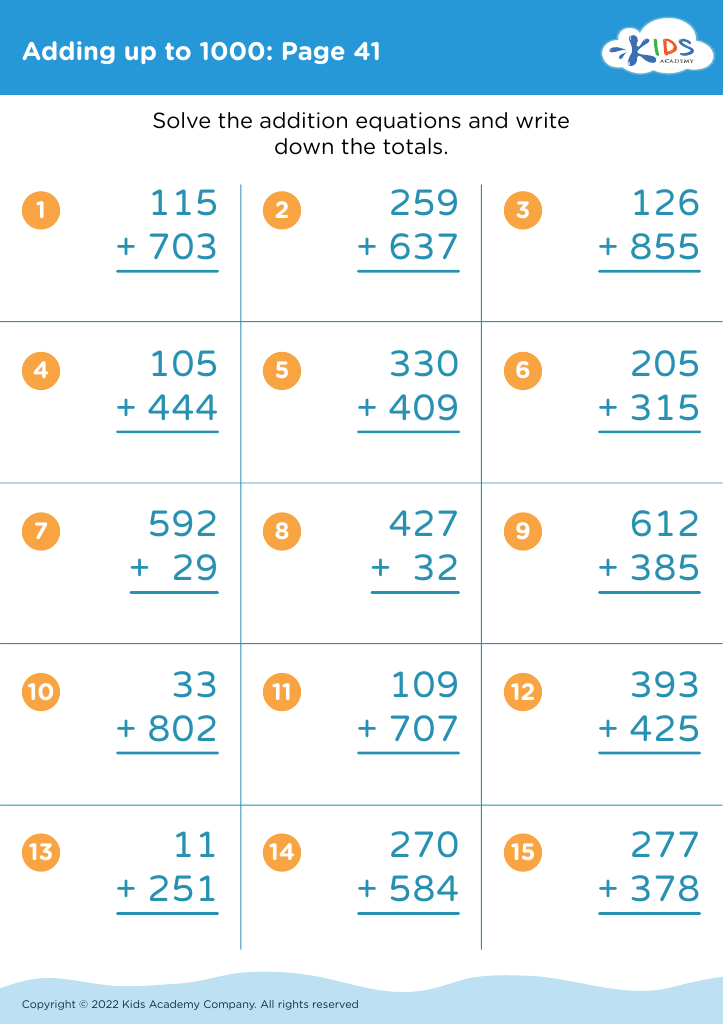








Improving addition and subtraction skills in children aged 6-9 is crucial for their overall cognitive development and academic success. During this formative stage, children are building the foundational math skills that will support future learning in subjects like math, science, and even daily problem-solving situations. Mastering these basic operations helps enhance critical thinking and logical reasoning abilities, allowing children to approach more complex concepts with confidence.
Additionally, strong calculation skills foster independence and self-esteem. When children feel proficient in their ability to add and subtract, they are more likely to participate actively in class, contribute to discussions, and tackle challenging tasks. Furthermore, these foundational skills promote positive attitudes towards math, making them less anxious and more engaged in learning.
Parents and teachers play a pivotal role in creating an environment that encourages the practice and reinforcement of these skills. Interactive games, real-life applications, and collaborative activities can make the learning process enjoyable. By prioritizing the improvement of calculation skills in young learners, caregivers are equipping them with essential tools that will serve their academic journey and daily life, ultimately fostering lifelong learners who approach math with confidence and curiosity.








