Attention to Detail Addition Worksheets for Ages 6-9
3 filtered results
-
From - To
Boost your child’s mathematical skills with our Attention to Detail Addition Worksheets, designed for kids aged 6-9! These interactive worksheets enhance not only adding skills but also improve focus and precision through engaging activities. Each worksheet features fun illustrations and challenges that encourage kids to carefully analyze problems before answering. As they work through diverse addition problems, they will develop critical thinking and attention to detail, essential for their academic success. Perfect for at-home learning or classroom use, our worksheets offer a blend of education and enjoyment, ensuring your child builds a strong foundation in math while having fun! Download now and inspire learning!
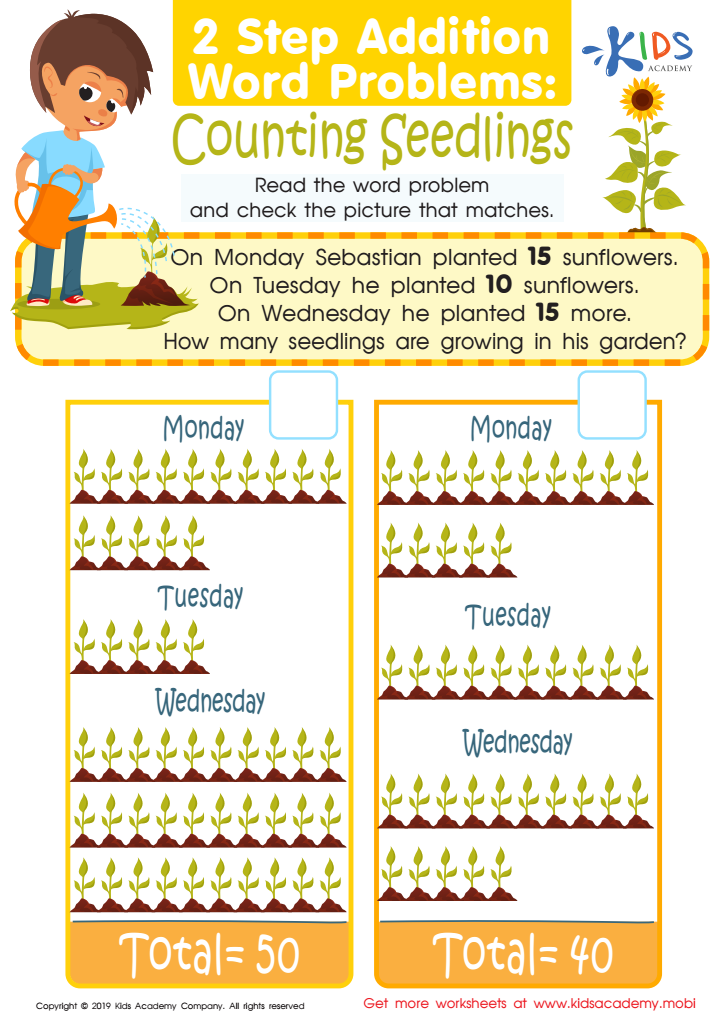
Counting Seedlings Worksheet
 Assign to My Students
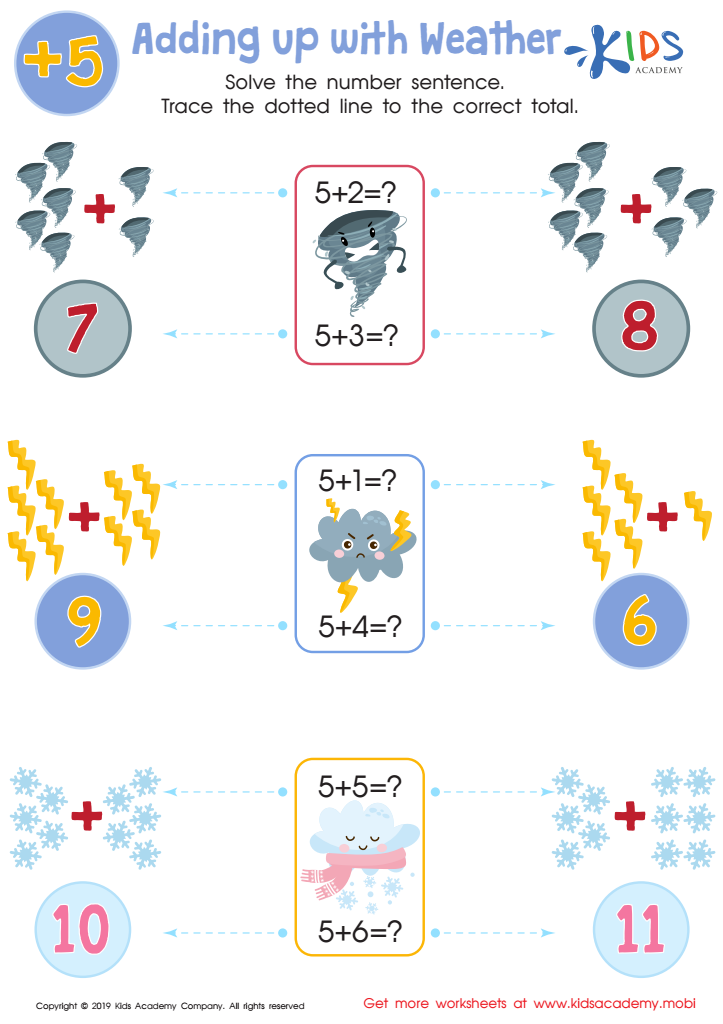
Adding up With Water Worksheet
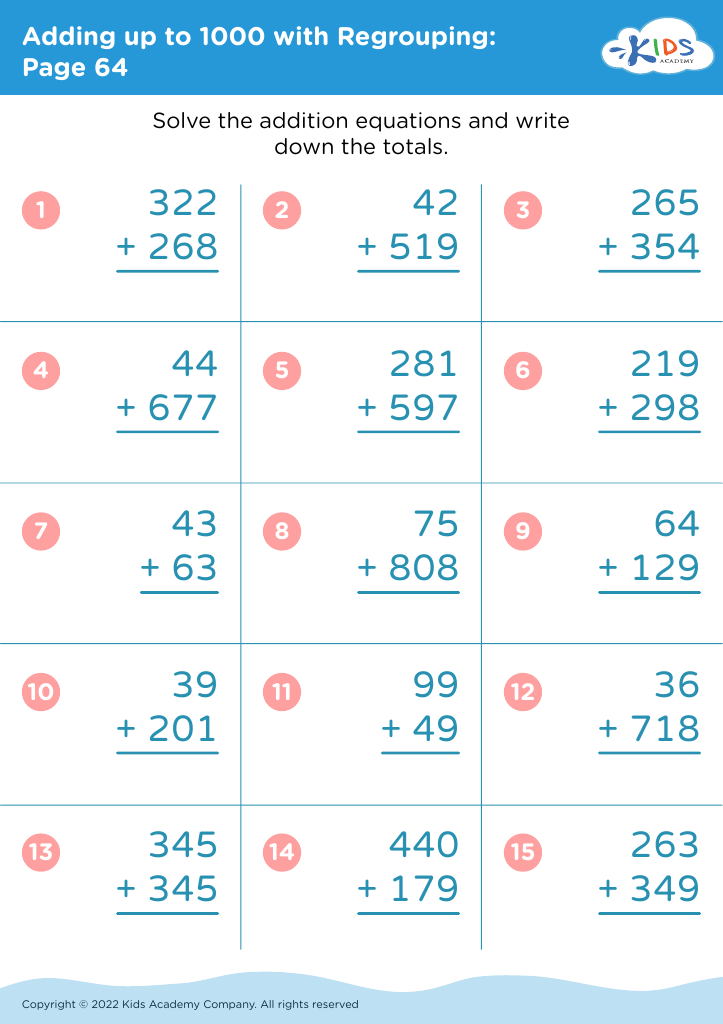






.jpg)

Attention to Detail Addition for children aged 6-9 is crucial for several reasons. At this developmental stage, children are cultivating foundational math skills, and strong attention to detail significantly enhances their ability to perform arithmetic with accuracy. This aids in recognizing patterns, understanding numerical relationships, and developing problem-solving skills that are essential for future mathematical concepts.
Moreover, promoting attention to detail fosters a sense of responsibility and persistence in learning. Children learn to carefully examine their work, reducing errors and building confidence in their abilities. As they practice paying attention to details in math, they are also developing focus and concentration, skills that benefit them across all subjects, including reading and science.
Additionally, incorporating practices like Attention to Detail Addition into learning routines can create a more engaging educational environment. This method can spark discussions about strategies, encourage cooperative learning, and evoke a sense of accomplishment when children see improvements in their performance.
Lastly, helping children appreciate the importance of detail not only supports their academic growth but also equips them with essential life skills, such as diligence and accuracy, which are valuable beyond the classroom. Therefore, both parents and teachers should actively nurture these skills in young learners.








