Improve reading skills Addition Worksheets for Ages 6-9 - Page 2
29 filtered results
-
From - To
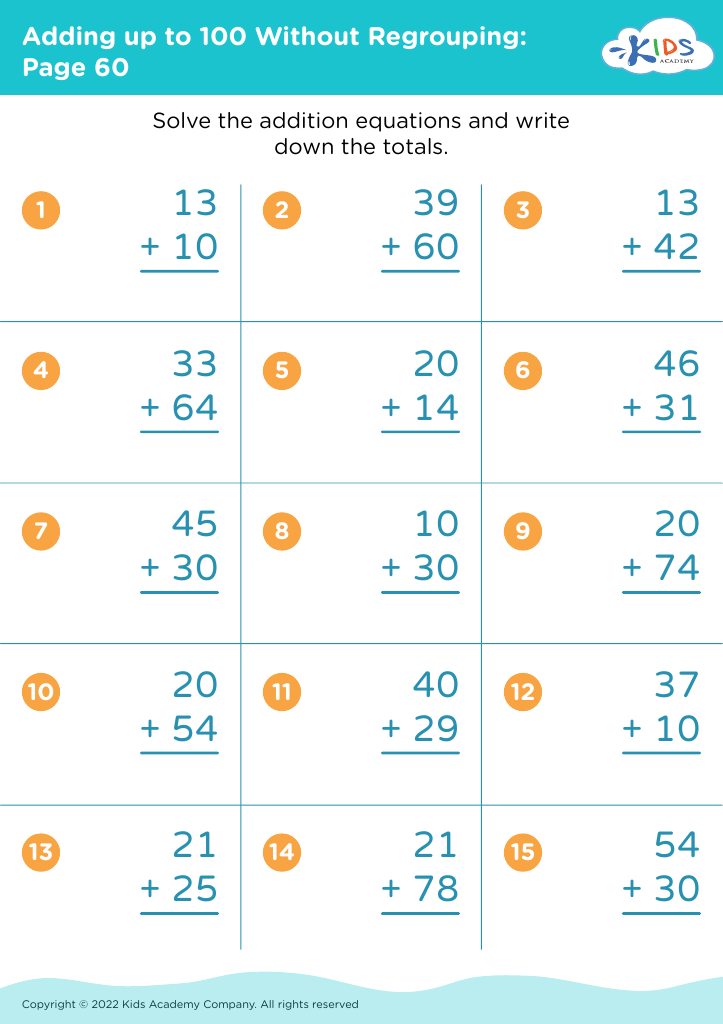








Improving reading skills for children ages 6-9 is crucial as it serves as the foundation for their overall educational development and future success. At this age, children are transitioning from "learning to read" to "reading to learn," making it a pivotal time to focus on reading proficiency to support their academic journey.
Firstly, strong reading skills enhance comprehension, vocabulary, and critical thinking, which are essential across all subjects. Children who read well are more likely to excel in subjects like math, science, and social studies, as they can better understand instructions, word problems, and complex concepts.
Secondly, reading fosters a love for learning and curiosity. When children find joy in reading, they are more likely to explore new topics, ideas, and cultures, contributing to their overall development and open-mindedness.
Moreover, developing reading skills early can boost confidence and self-esteem. Children who struggle with reading may face academic challenges and feelings of frustration or inadequacy. By supporting their reading skills, parents and teachers help build resilience and a positive attitude toward learning.
Finally, early reading skills are linked to better future outcomes. Research shows that children who are proficient readers by third grade are more likely to succeed academically later in life, demonstrating the long-term benefits of investing in their reading skills at an early age.








