
Observational skills Addition Worksheets for Ages 6-9
3 filtered results
Difficulty Level
Grade
Age
-
From - To
Subject
Activity
Standards
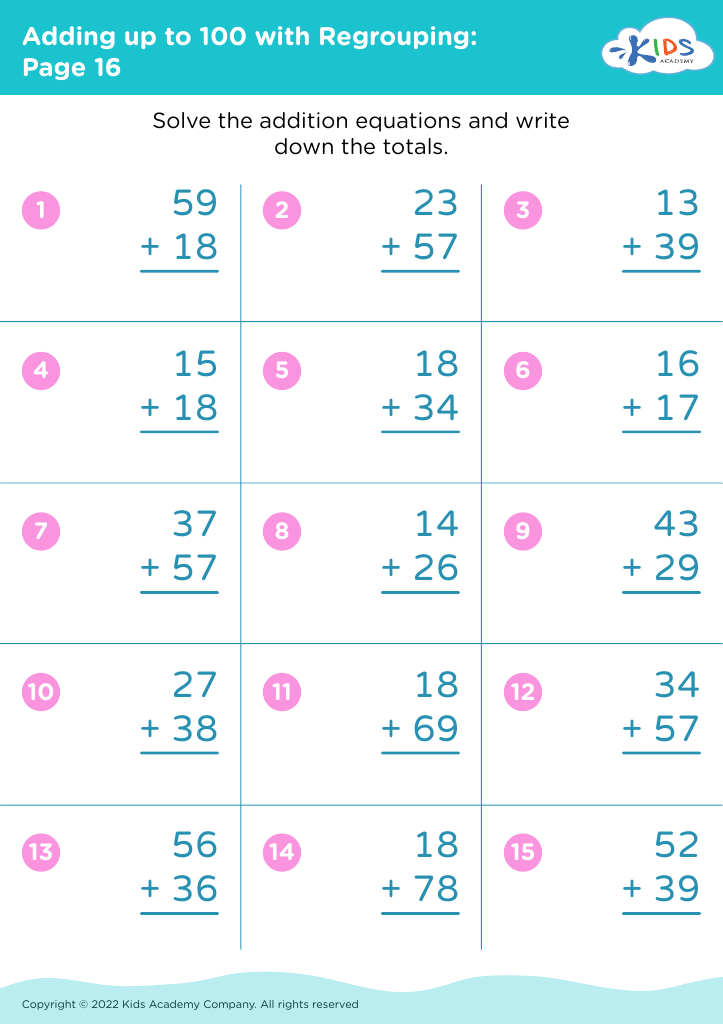
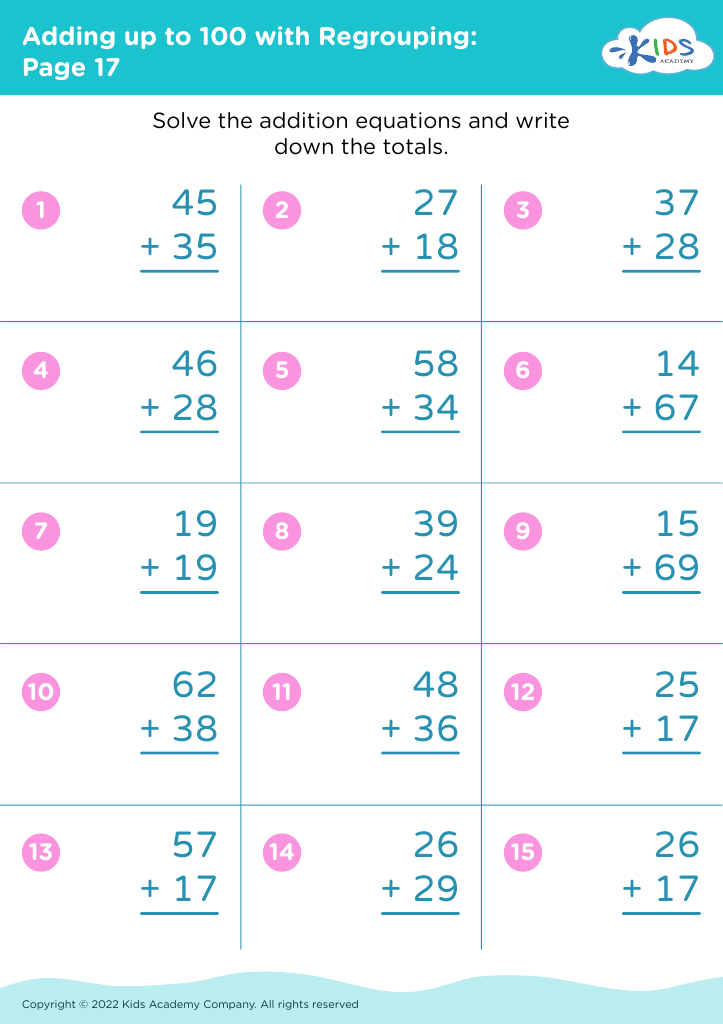
Enhance your child's math experience with our Observational Skills Addition Worksheets, designed specifically for ages 6-9. These engaging worksheets not only focus on addition but also encourage critical observation skills through fun and interactive activities. Children will learn to analyze patterns, identify details, and draw connections while mastering their addition skills. Featuring a variety of colorful illustrations and creative exercises, our worksheets cater to different learning styles, making math enjoyable. Perfect for classroom use or at-home practice, these resources provide children with foundational skills that support their overall cognitive development. Explore our collection and watch your child thrive in math!
Favorites
With answer key
Interactive
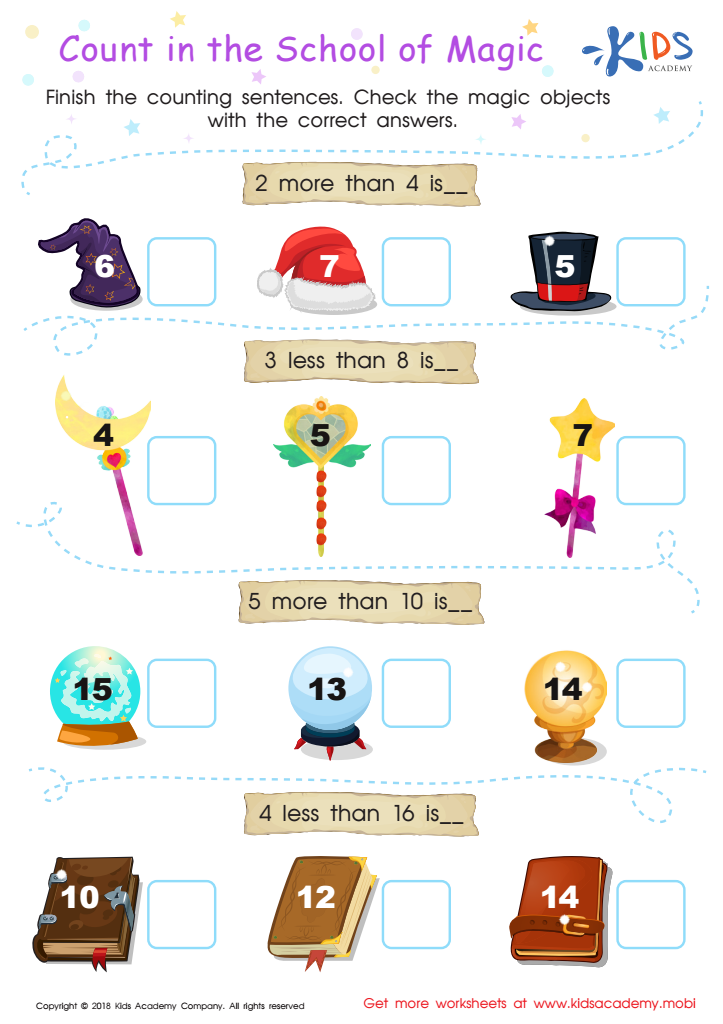
Count in the School of Magic Worksheet
Your math learners can explore the School of Magic with this worksheet. They'll read equations with addition and subtraction numbers under 20, count back and forth to find the answer, then complete the counting sentences. Fun pictures and easy accuracy make it an enjoyable and successful learning experience.
 Assign to My Students
Count in the School of Magic Worksheet
Worksheet
Join Kids Academy for Free
Who is primarily going to use this learning content?






.jpg)

Observational skills are crucial for children aged 6-9, particularly in relation to learning addition. During this development stage, children are honing their ability to notice patterns, recognize relationships, and analyze information—all fundamental components of mathematical thinking. When parents and teachers prioritize observational skills in teaching addition, they help children identify various ways to approach problems and discover different strategies.
For example, when kids observe the arrangement of objects, they can visualize number combinations, which leads to deeper understanding and retention of addition concepts. Encouraging children to relate math to real-life situations—such as counting objects during grocery shopping or keeping score in games—fosters these skills and makes learning enjoyable.
Moreover, by developing observational skills, children enhance their critical thinking capabilities. They learn to evaluate their thought processes, reason logically, and approach challenges with confidence. This foundational understanding of addition supports further mathematical learning and promotes overall academic success. Ultimately, by engaging in observational activities, parents and teachers can cultivate a rich learning environment that motivates children to explore math both inside and outside of the classroom, laying the groundwork for lifelong learning and curiosity.








