Filters

21 filtered results

Clear all filters
Favorites
With answer key
Interactive

21 filtered results

Difficulty Level

Grade


Unlock the power of mathematical understanding with our "Recognizing Patterns Addition Worksheets for Ages 6-9". Tailored for young learners, these engaging worksheets help children master addition by identifying and predicting patterns. As students connect numbers in a fun and interactive way, they develop essential problem-solving skills and build a strong math foundation. Ideal for both classroom and home use, these worksheets bring excitement to learning arithmetic, ensuring each step towards math competence is enjoyable. Boost your child's confidence and skills in addition by exploring our expertly-crafted worksheets designed to inspire a love for math.
Check out this FREE Trial Lesson on Addition for age 6-9!

Short and Long Vowel Sort

Favorites
With answer key
Interactive
  • 6-9
  • Recognizing Patterns
  • Addition
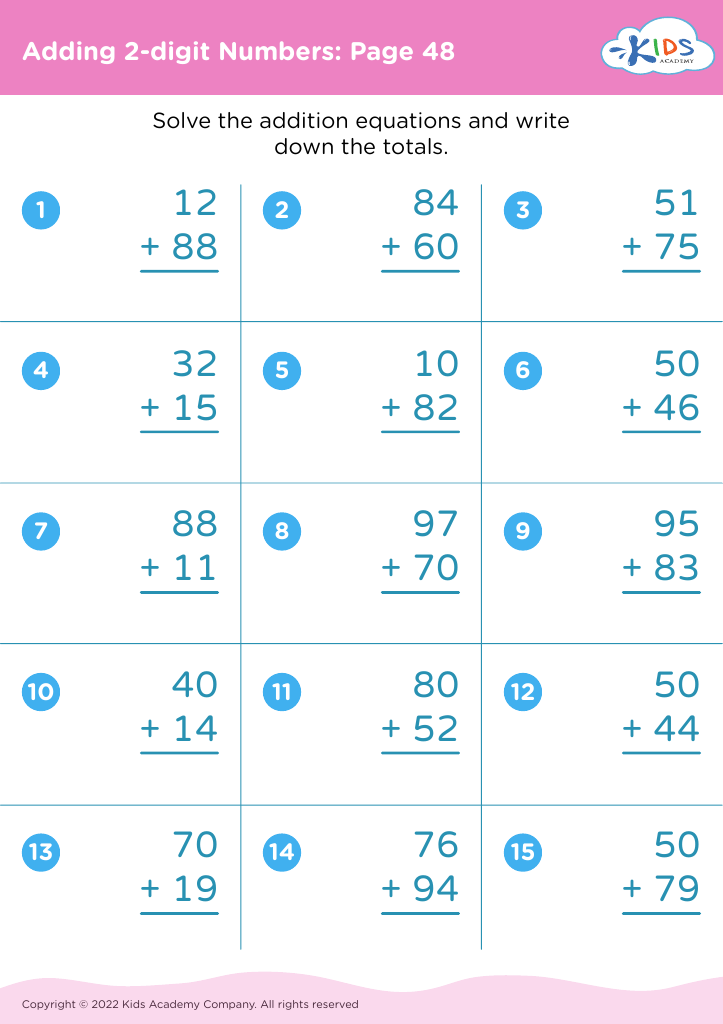
Adding 2-digit Numbers: Page 48

Adding 2-digit Numbers: Page 48

Adding 2-digit Numbers: Page 48
Worksheet
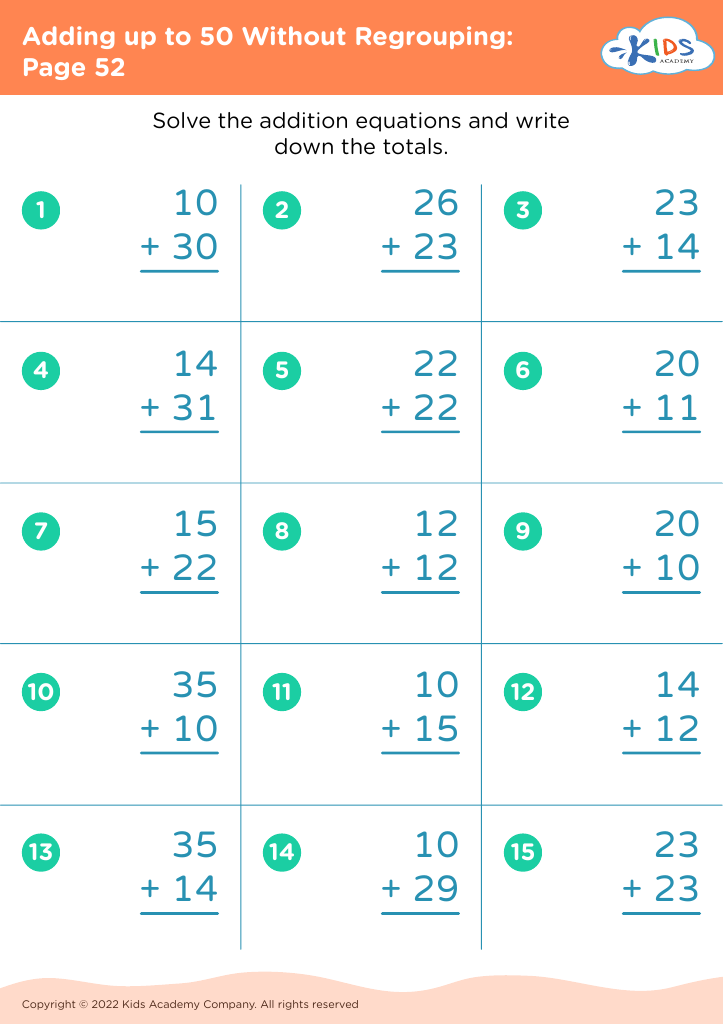
Adding up to 50 Without Regrouping: Page 52
Worksheet
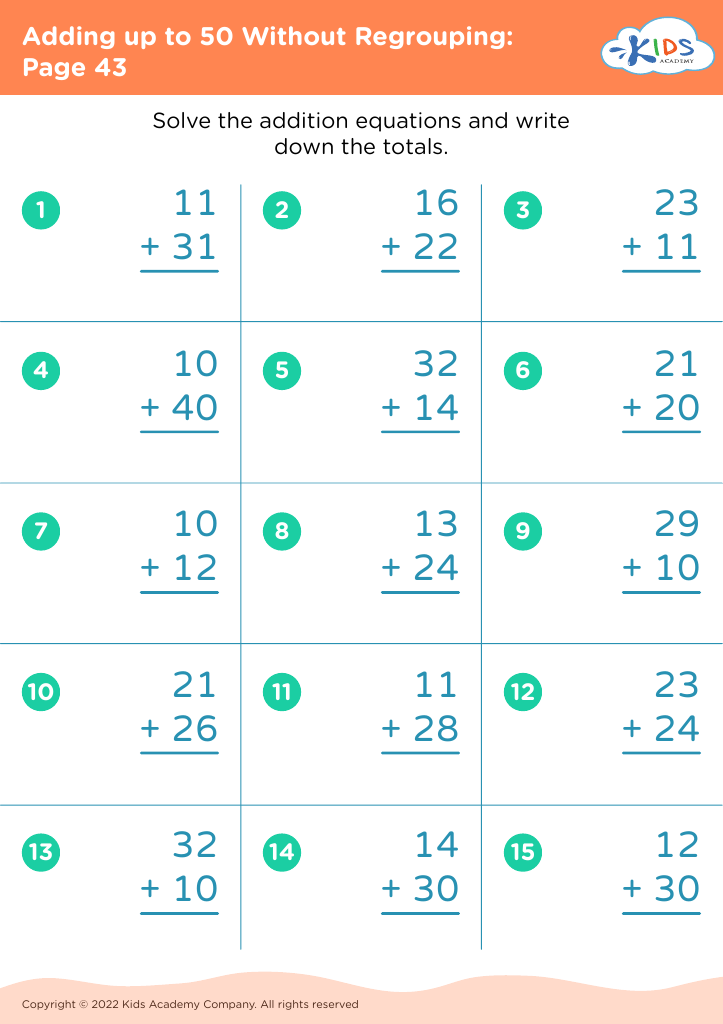
Adding up to 50 Without Regrouping: Page 43
Worksheet
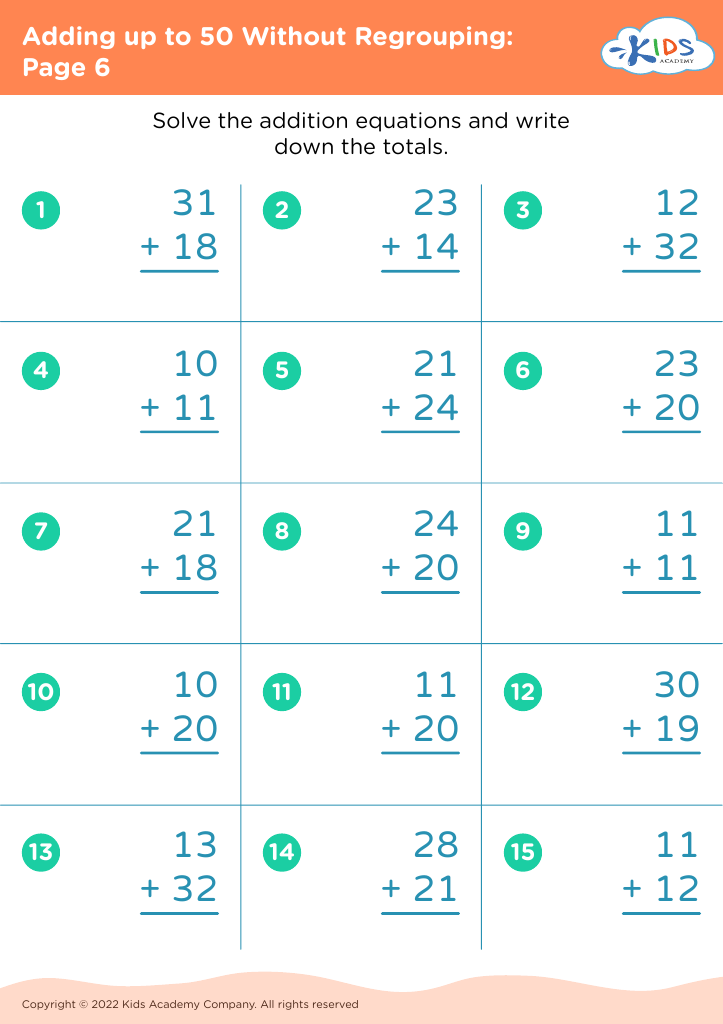
Adding up to 50 Without Regrouping: Page 6
Worksheet
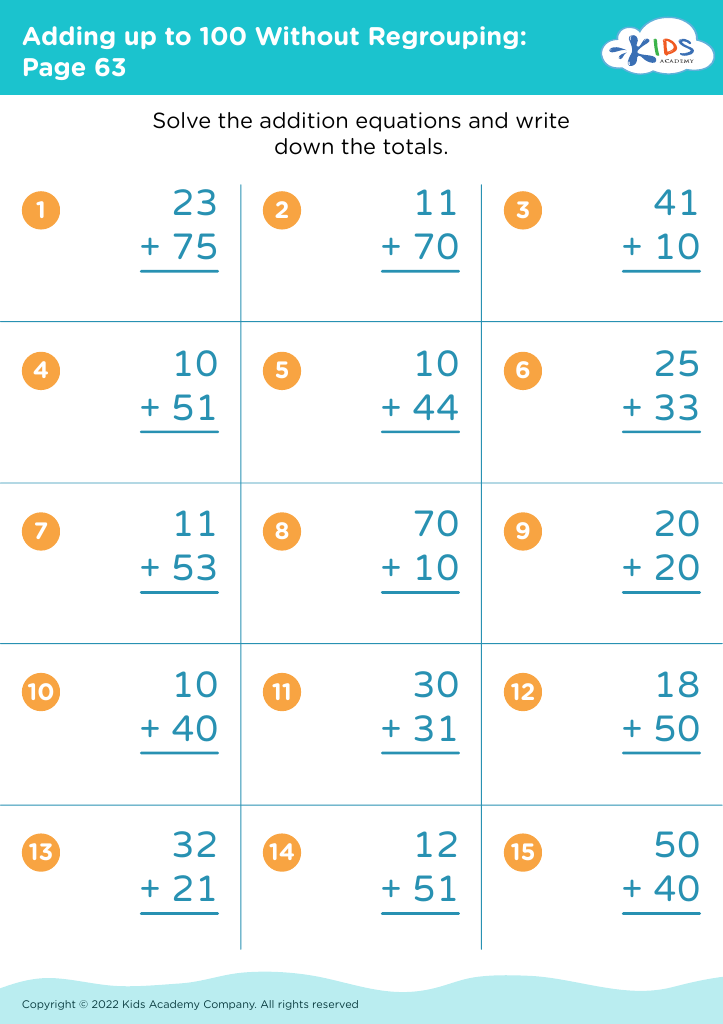
Adding up to 100 Without Regrouping: Page 63
Worksheet
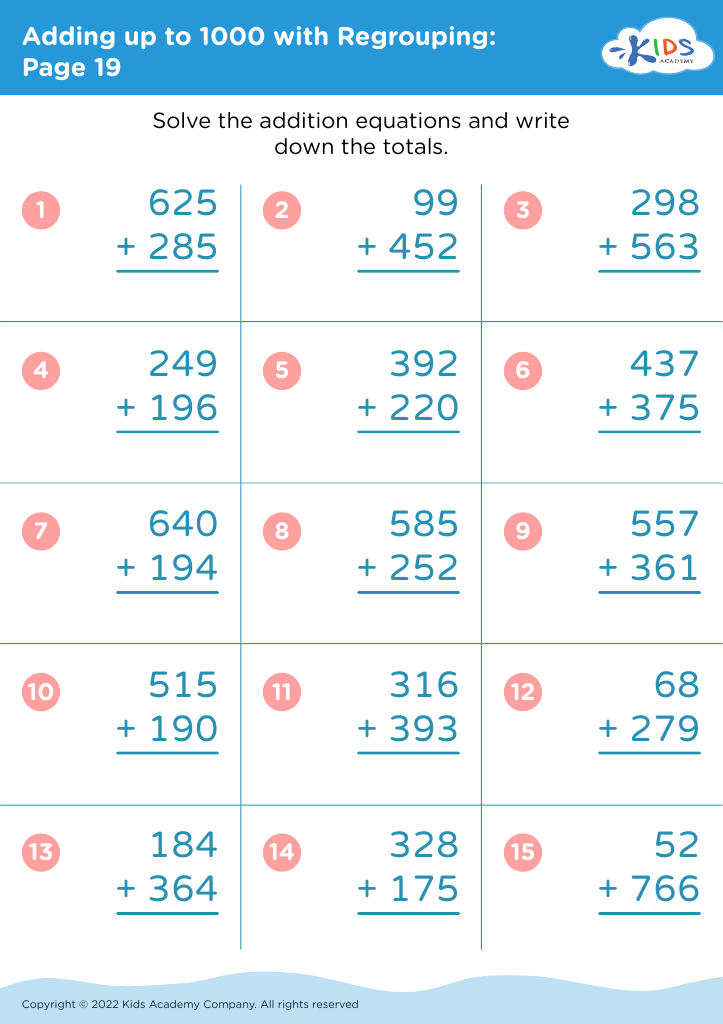
Adding up to 1000 with Regrouping: Page 19
Worksheet
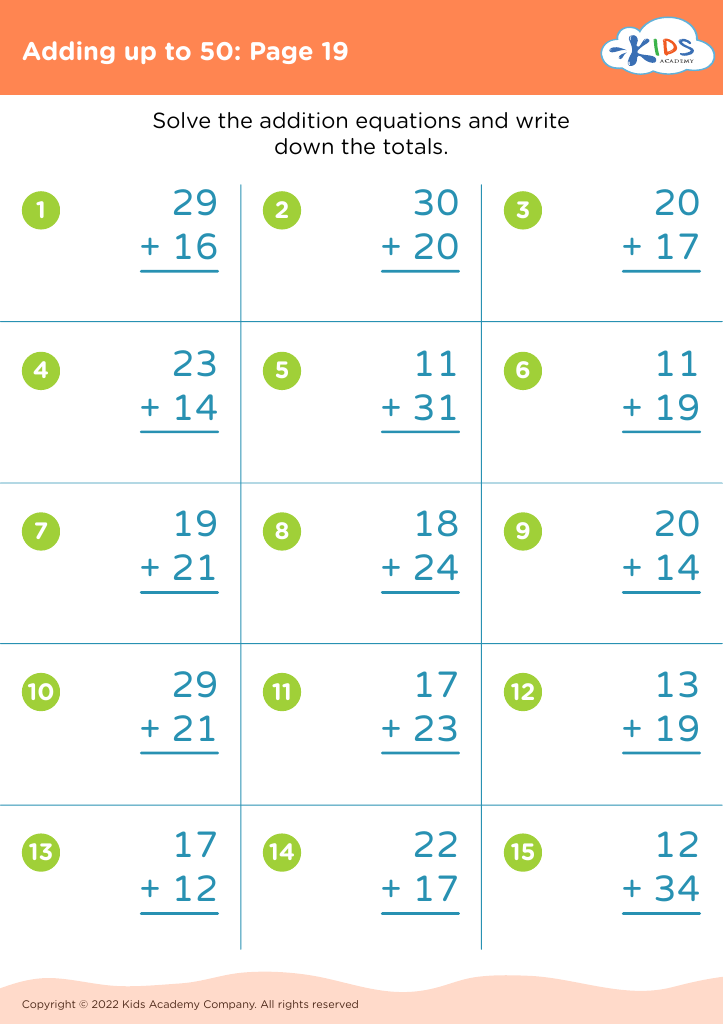
Adding up to 50: Page 19

Adding up to 50: Page 19

Adding up to 50: Page 19
Worksheet
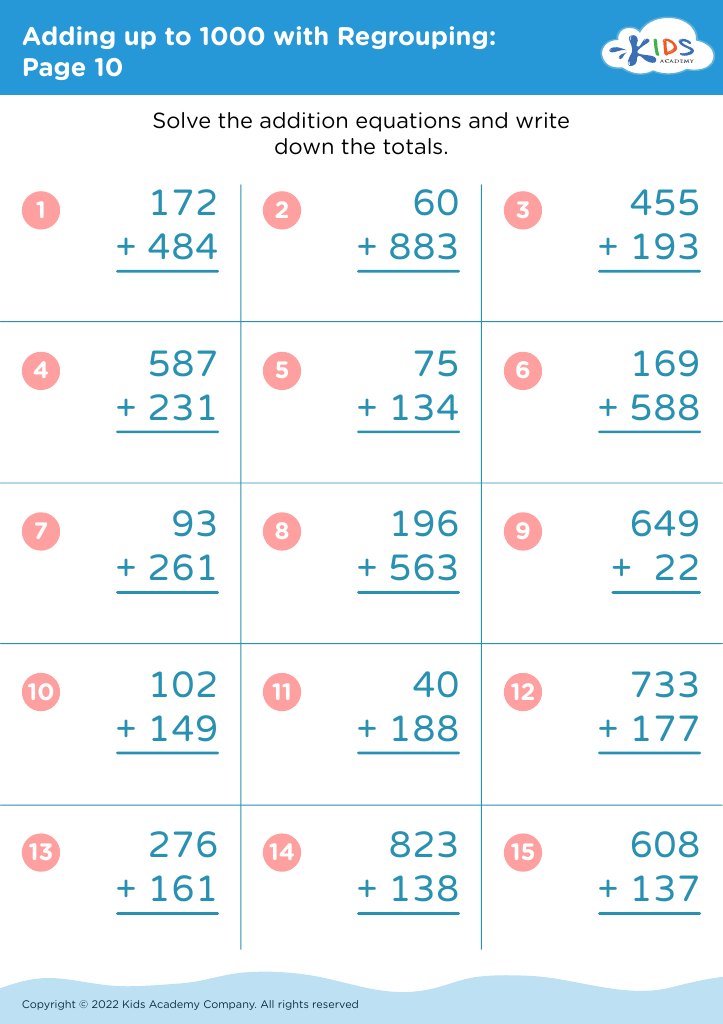
Adding up to 1000 with Regrouping: Page 10
Worksheet
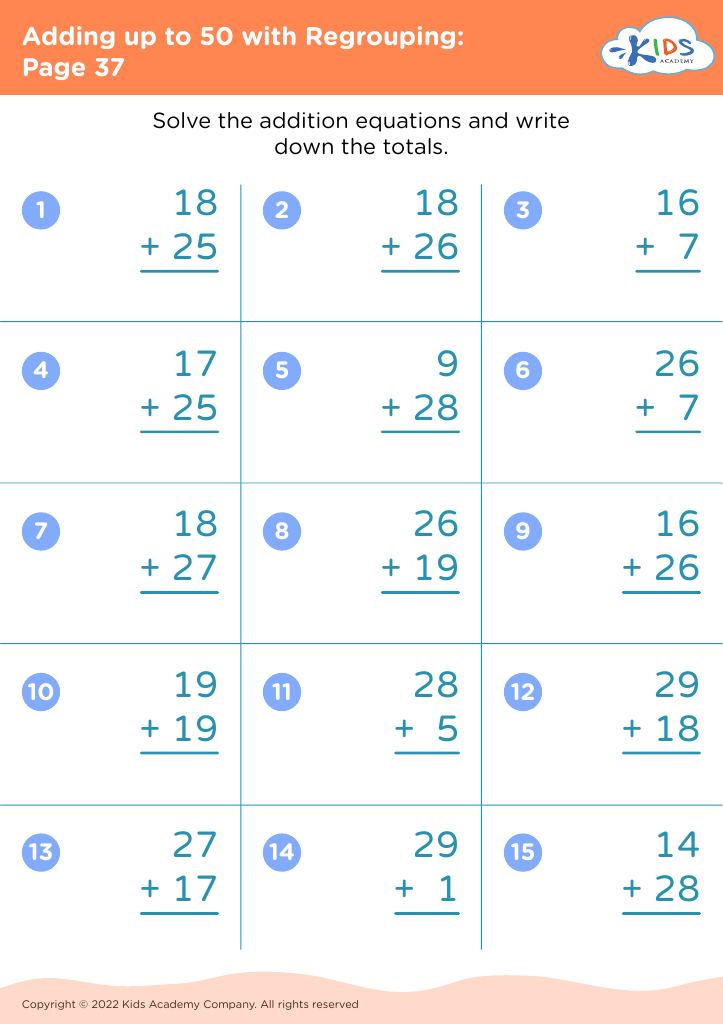
Adding up to 50 with Regrouping: Page 37
Worksheet
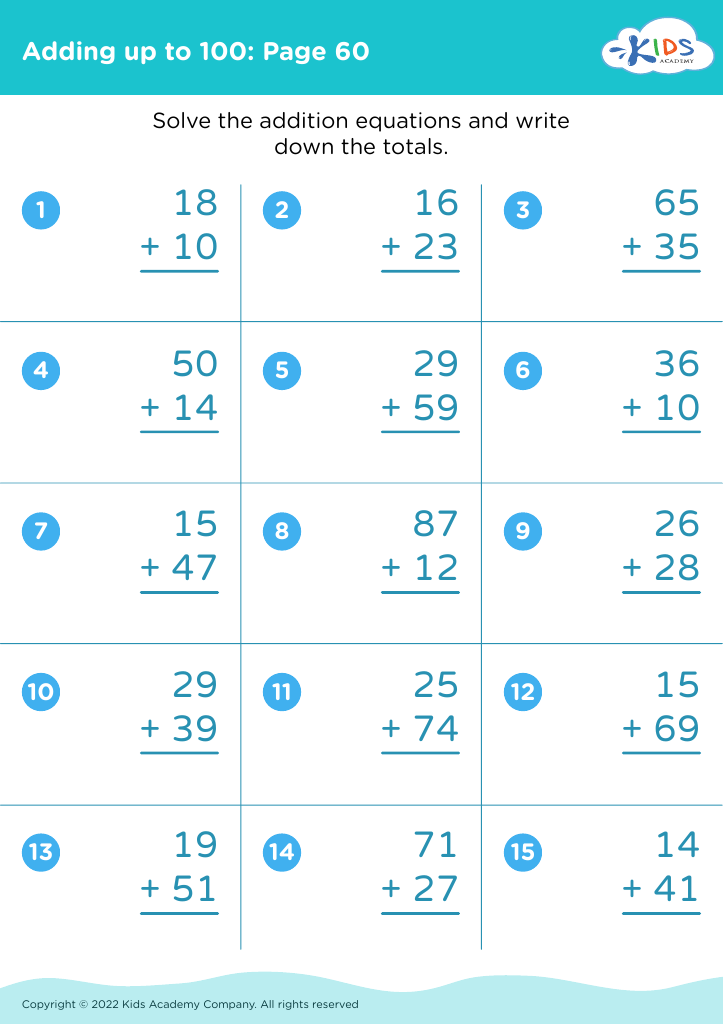
Adding up to 100: Page 60

Adding up to 100: Page 60

Adding up to 100: Page 60
Worksheet
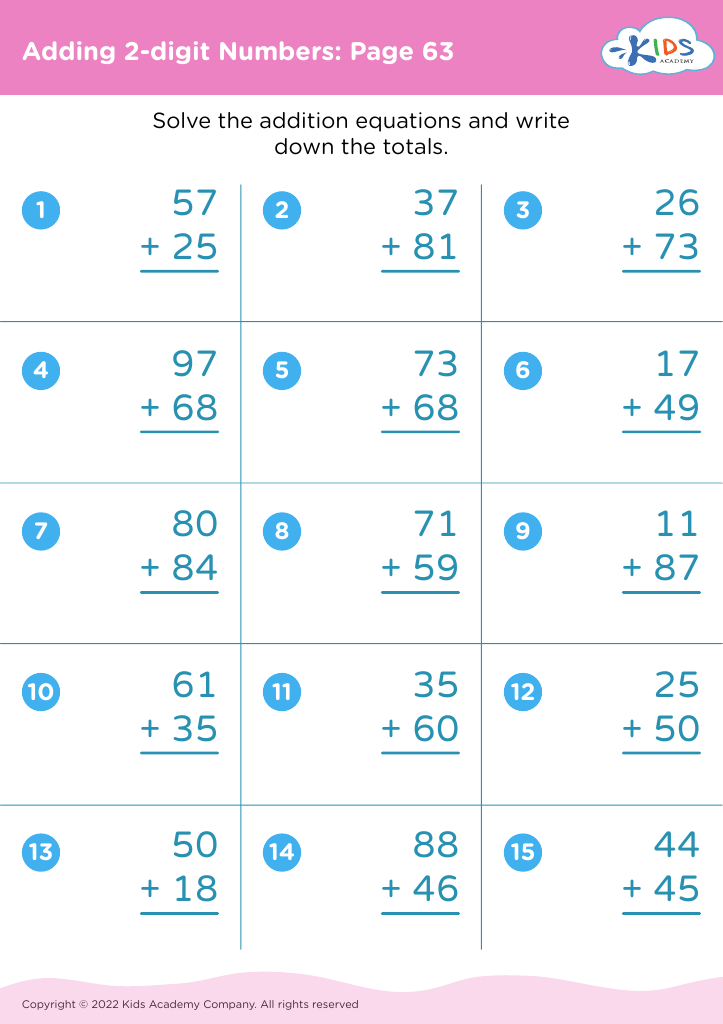
Adding 2-digit Numbers: Page 63

Adding 2-digit Numbers: Page 63

Adding 2-digit Numbers: Page 63
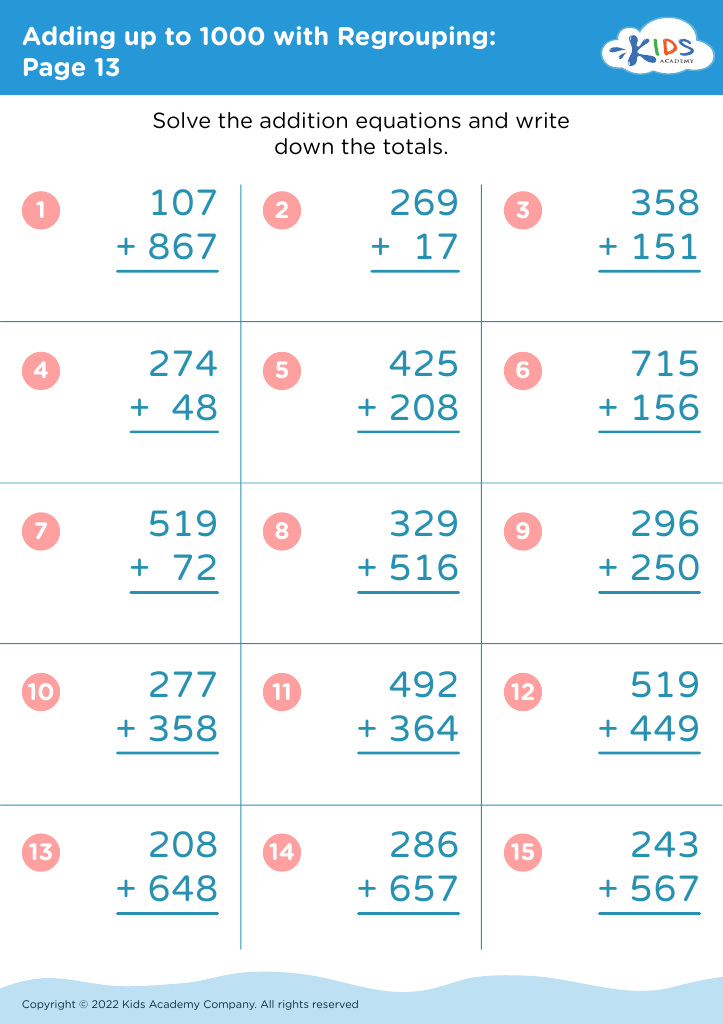
Worksheet
Adding up to 1000 with Regrouping: Page 13
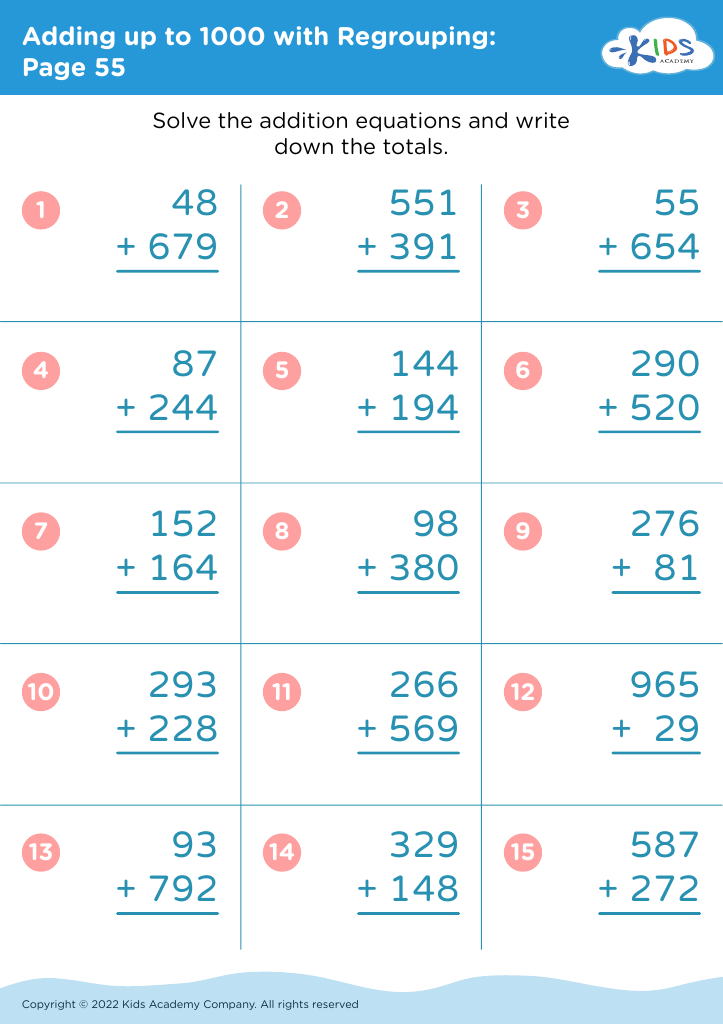
Worksheet
Adding up to 1000 with Regrouping: Page 55
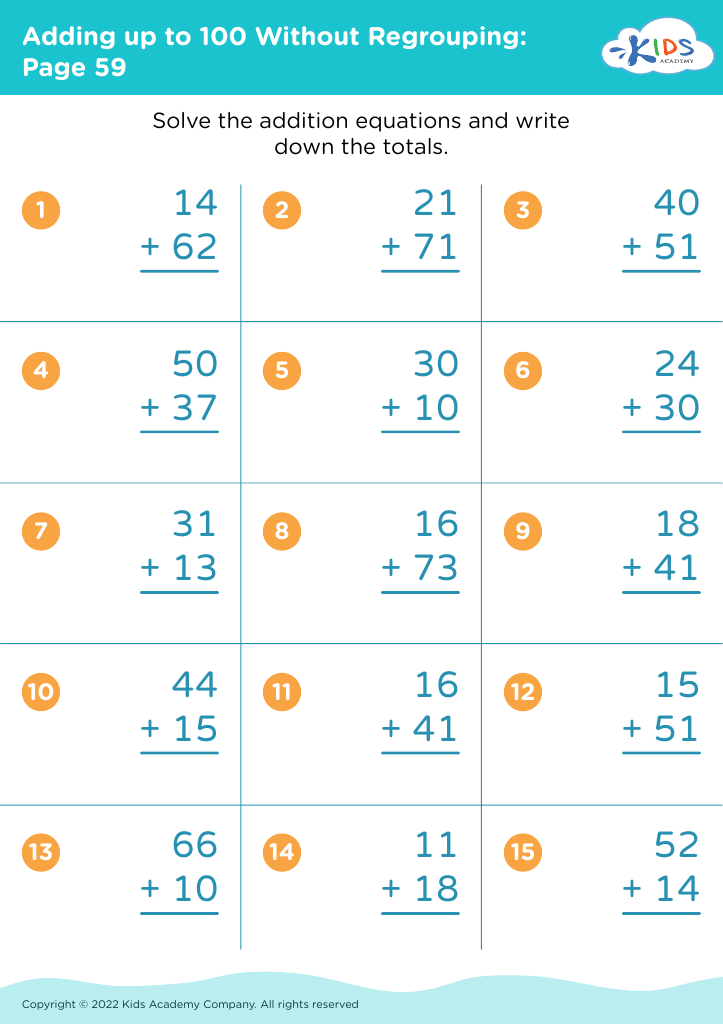
Worksheet
Adding up to 100 Without Regrouping: Page 59
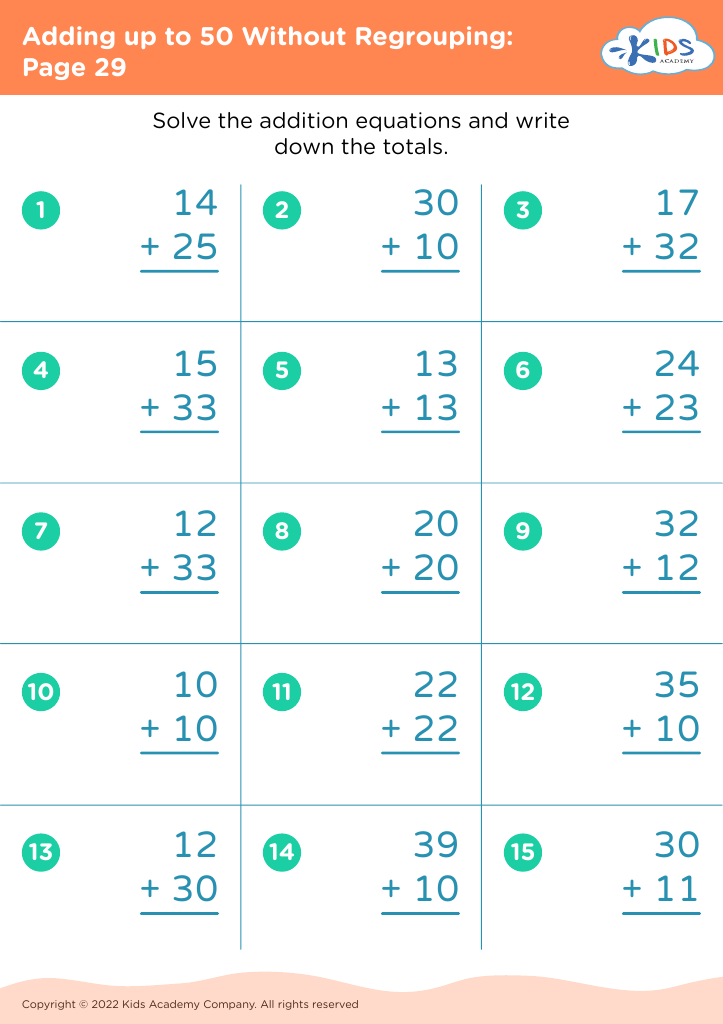
Worksheet
Adding up to 50 Without Regrouping: Page 29
Worksheet
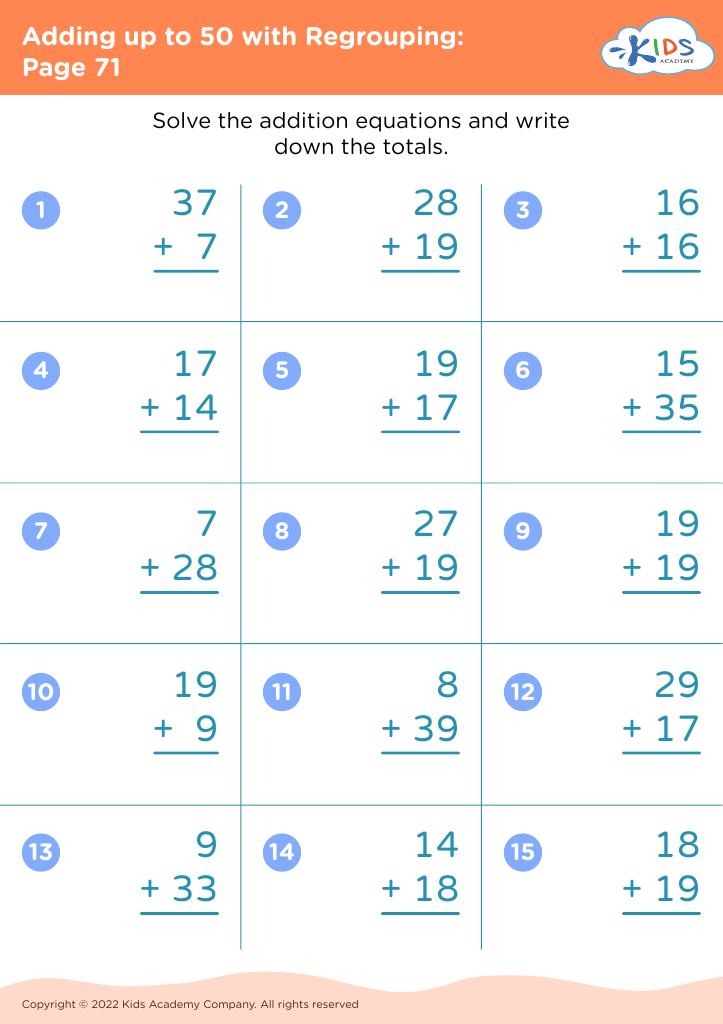
Adding up to 50 with Regrouping: Page 71
Worksheet
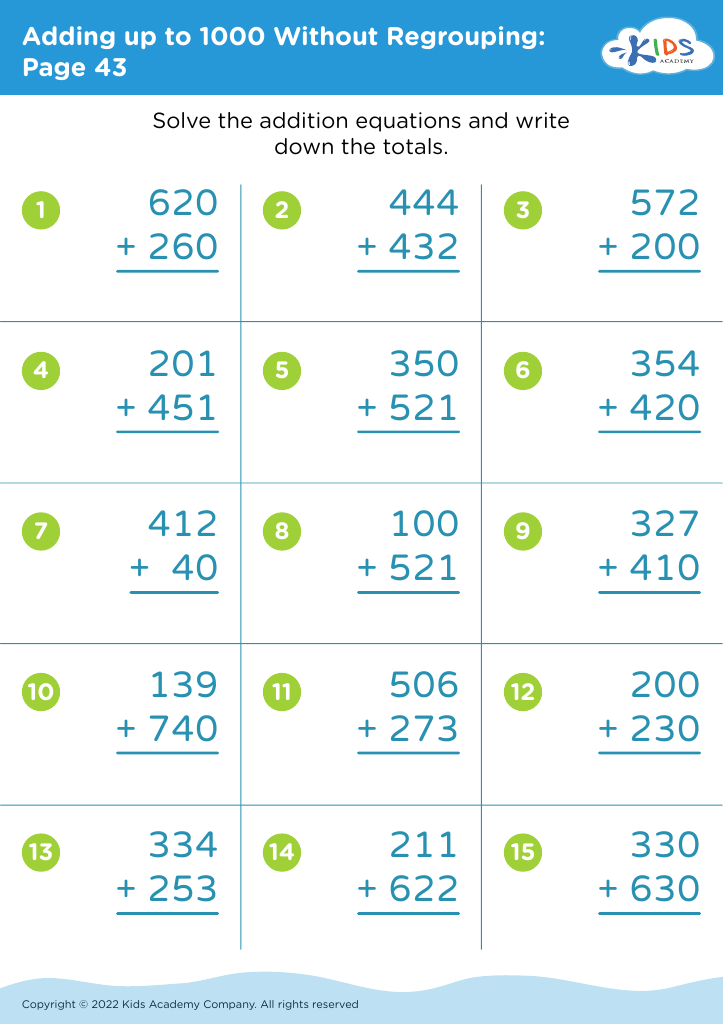
Adding up to 1000 Without Regrouping: Page 43
Worksheet
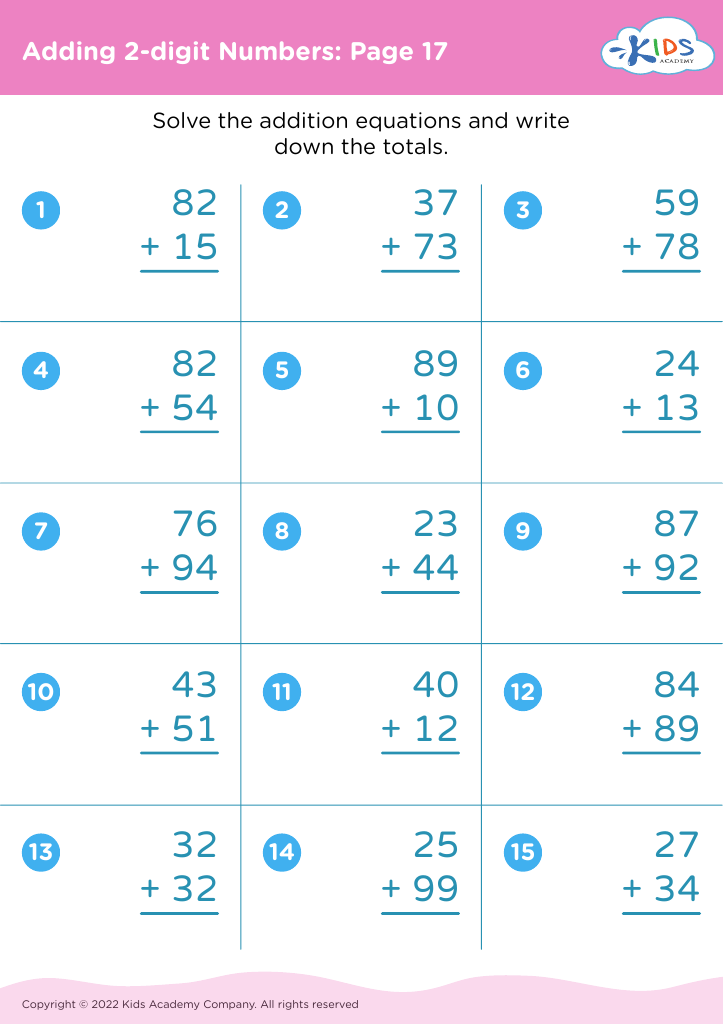
Adding 2-digit Numbers: Page 17

Adding 2-digit Numbers: Page 17

Adding 2-digit Numbers: Page 17
Worksheet
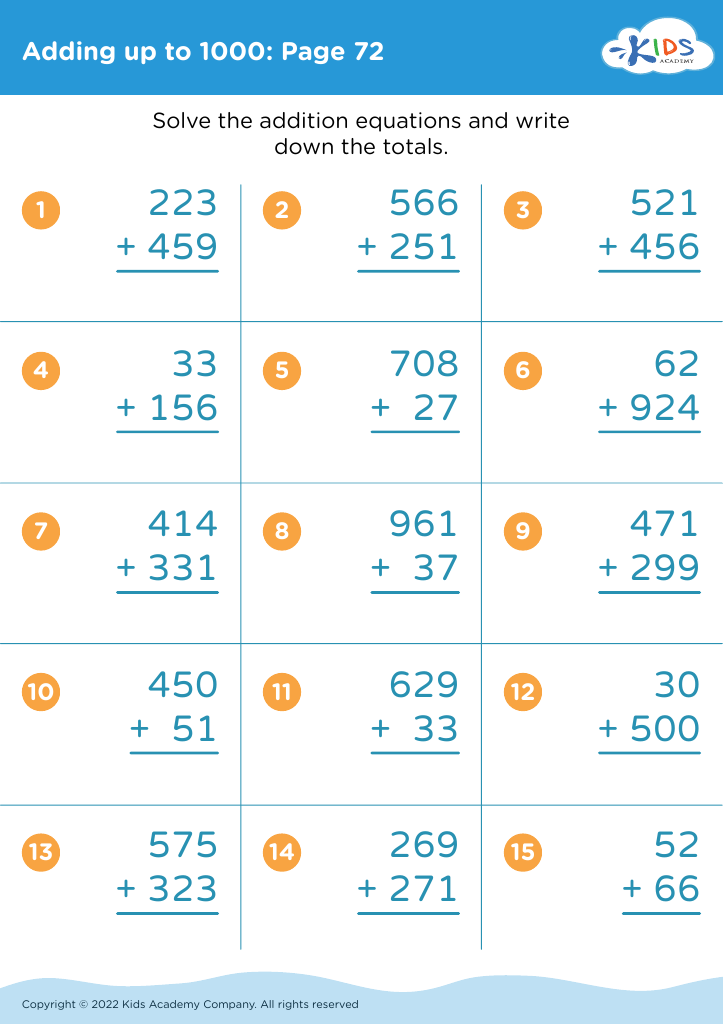
Adding up to 1000: Page 72

Adding up to 1000: Page 72

Adding up to 1000: Page 72
Worksheet
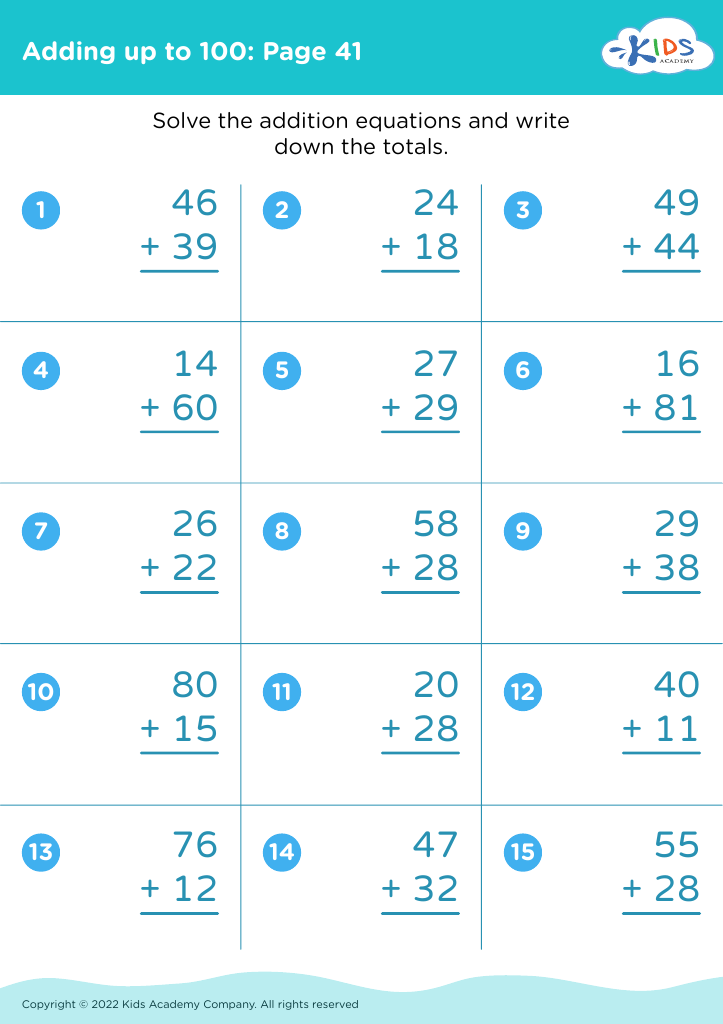
Adding up to 100: Page 41

Adding up to 100: Page 41

Adding up to 100: Page 41
Worksheet
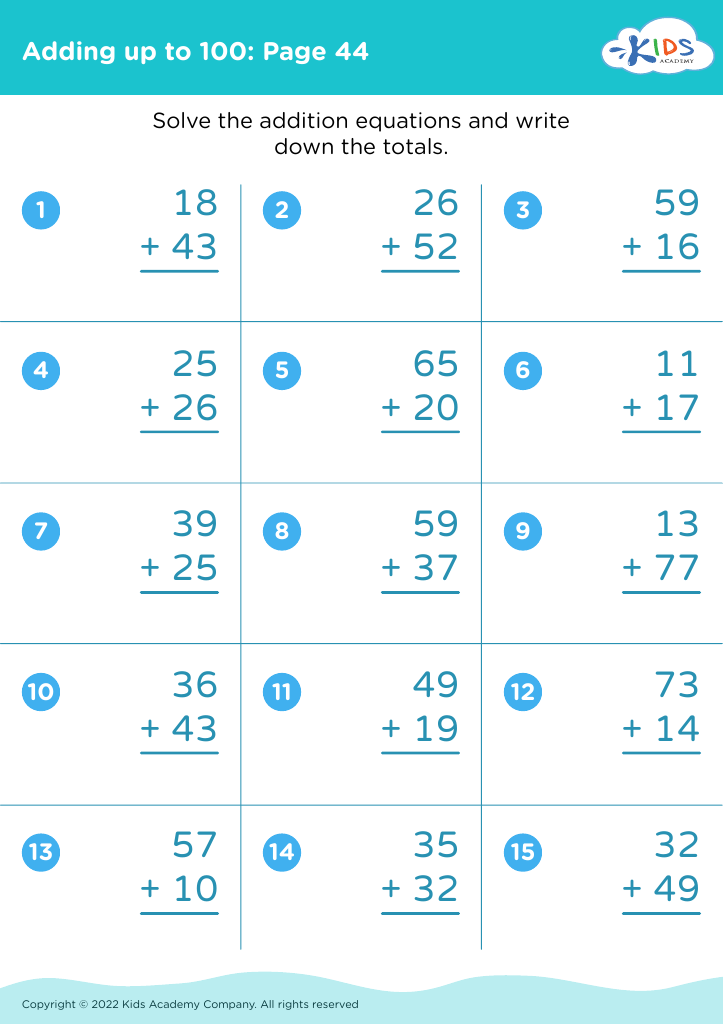
Adding up to 100: Page 44

Adding up to 100: Page 44

Adding up to 100: Page 44
Worksheet


Recognizing patterns in addition for children aged 6-9 is fundamental for several reasons. Firstly, it builds a strong numerical foundation. When young students identify patterns, such as understanding that adding two even numbers always results in an even number, they gain intuitive insights into how numbers work. This fosters mental arithmetic skills, enabling quicker problem-solving abilities essential for more advanced mathematics.

Secondly, pattern recognition enhances cognitive development. It promotes logical thinking and analytical skills, which are crucial not just in math, but across various subjects. This analytical ability will help children understand complex ideas by breaking them down into simpler components.

Another important aspect is boosting confidence. Mastery of simple addition patterns allows children to approach math with less fear and more enthusiasm. This positive attitude paves the way for lifelong learning and curiosity.

Furthermore, recognizing patterns helps in everyday activities and life skills. From telling time to managing allowance and understanding scores in games, pattern recognition transcends into real-life applications.

For educators and parents, valuing pattern recognition in addition nurtures a child's ability to think critically and understand the world around them more coherently. Ultimately, it equips children with essential tools for academic success and lifelong analytical skills, fostering both educational and personal growth.