Basic Math Skills Comparison Worksheets for Ages 6-9
3 filtered results
-
From - To
Explore our Basic Math Skills Comparison Worksheets designed for children aged 6-9! These engaging worksheets help young learners develop essential math skills by practicing comparisons such as greater than, less than, and equal to. Tailored to spark curiosity and reinforce understanding, our interactive activities make learning fun and effective. With colorful illustrations and straightforward instructions, these worksheets are perfect for classroom use or at-home learning. Support your child’s math journey with clear, relatable examples that build confidence and fluency in foundational math concepts. Download today and watch them become proficient in comparing numbers with ease!
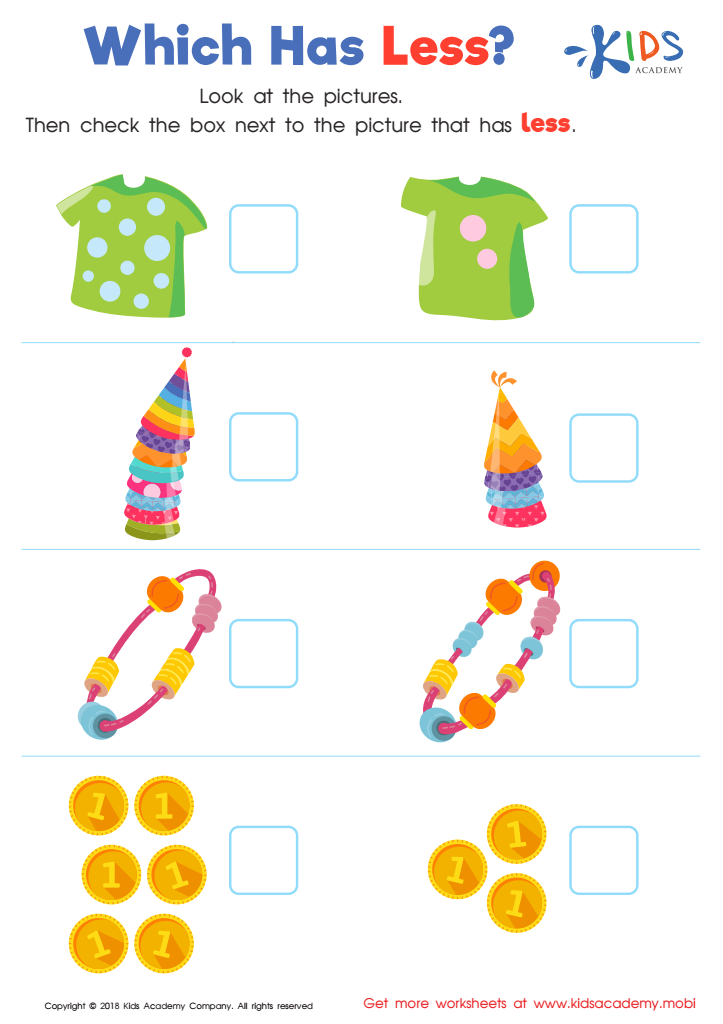
Which Has Less? Worksheet
 Assign to My Students
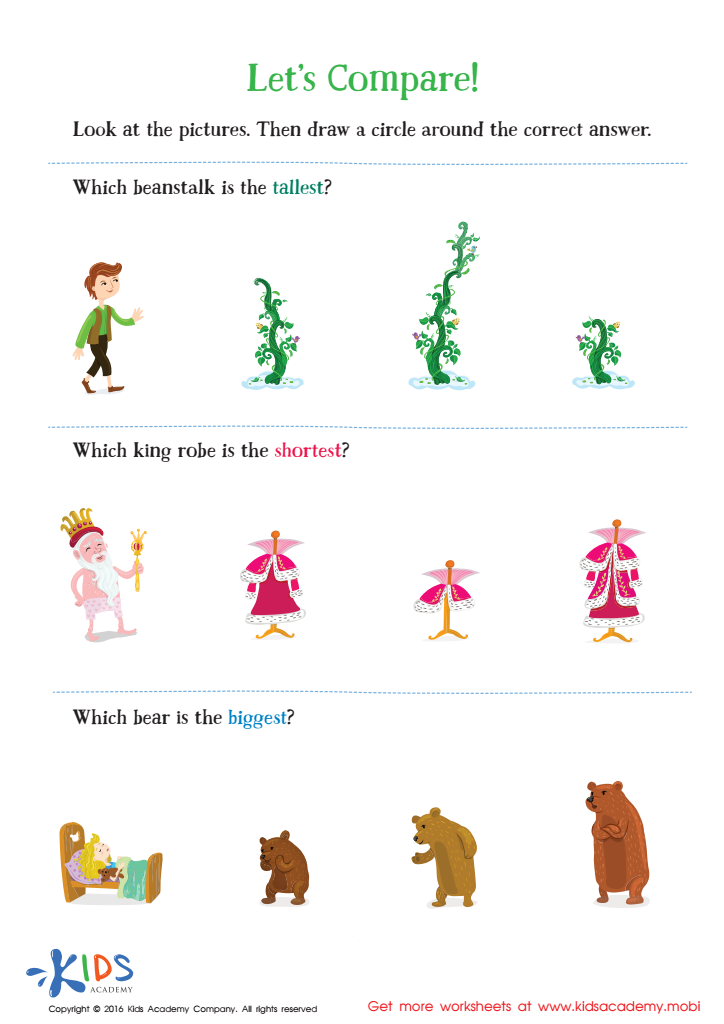
Fairy Tale Worksheet: Let's Compare
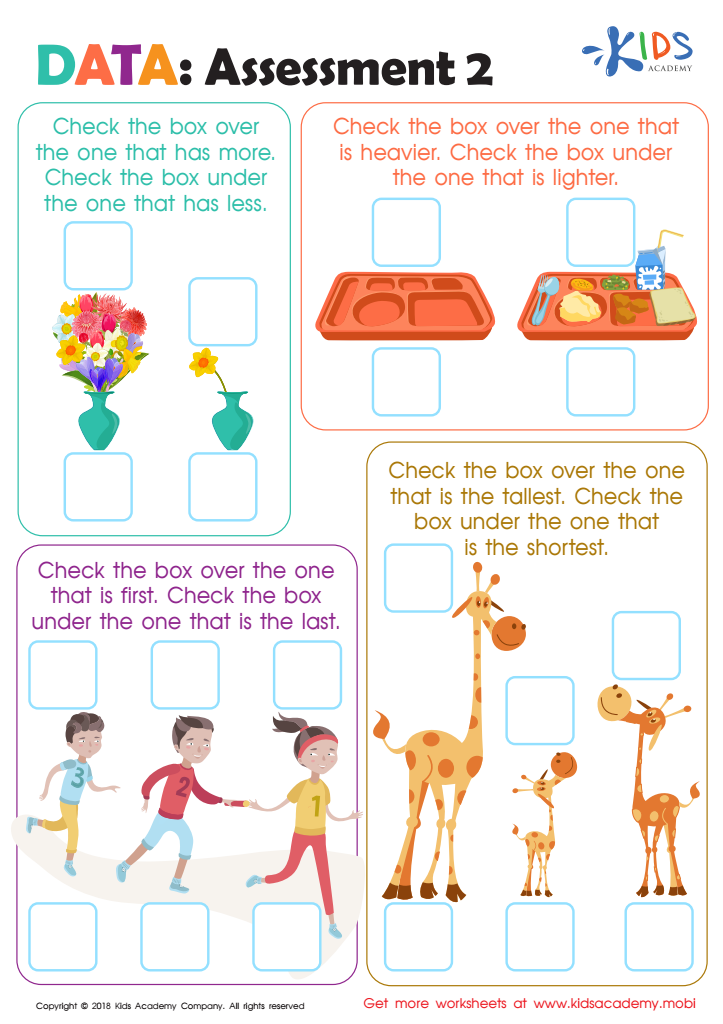
Data: Assessment 2 Worksheet







Understanding the importance of basic math skills for children aged 6-9 is vital for their overall development and future academic success. During this age range, children solidify foundational mathematical concepts, gaining skills such as addition, subtraction, and an understanding of fractions. Parents and teachers should care about these skills because they not only promote cognitive development but also foster critical thinking and problem-solving abilities that will be crucial in their education.
Moreover, comparing math skills among peers can help identify gaps in knowledge or understanding. This provides an opportunity for tailored instructional strategies to support each child's unique learning needs, ensuring that no child falls behind. Early mastery of basic math promotes confidence, which can often influence a child's attitude towards learning in general.
Additionally, these basic math skills have practical applications in everyday life, teaching children to approach real-world problems with logical reasoning. Encouraging children to develop strong foundational math abilities also aligns with broader educational goals, ultimately leading to greater academic proficiency and increased opportunities in STEM fields as they progress. Investing time and resources in nurturing these skills at a young age can lead to profound long-term benefits for both students and society.








