Fraction visualization Geometry Worksheets for Ages 6-9
6 filtered results
-
From - To
Discover "Fraction Visualization Geometry Worksheets for Ages 6-9" at Kids Academy! Tailored for young learners, these engaging worksheets transform abstract fraction concepts into visual, easy-to-understand geometry exercises. Children will master essential fraction skills as they identify, color, and categorize shapes divided into equal parts. Our worksheets bolster mathematical confidence, promote critical thinking, and make learning fractions fun. Ideal for both classroom and homeschool settings, these activities are designed to cater to diverse learning styles, ensuring every child enjoys and excels in math. Visit Kids Academy today and unlock a treasure trove of effective educational resources for your child!
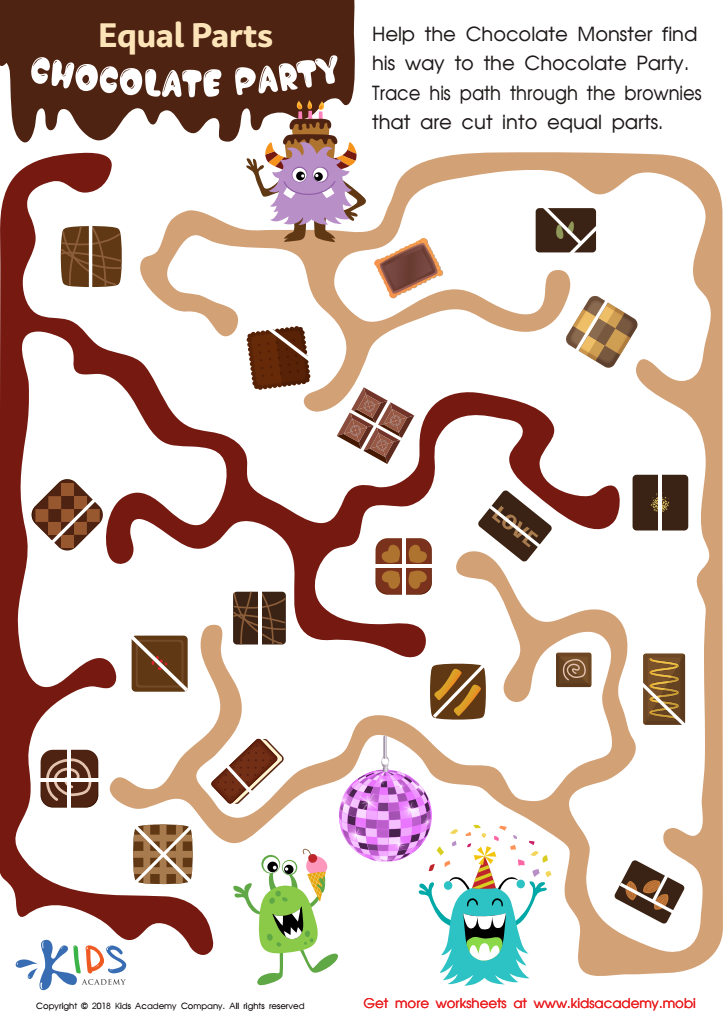
Equal Parts: Chocolate Party Worksheet
 Assign to My Students











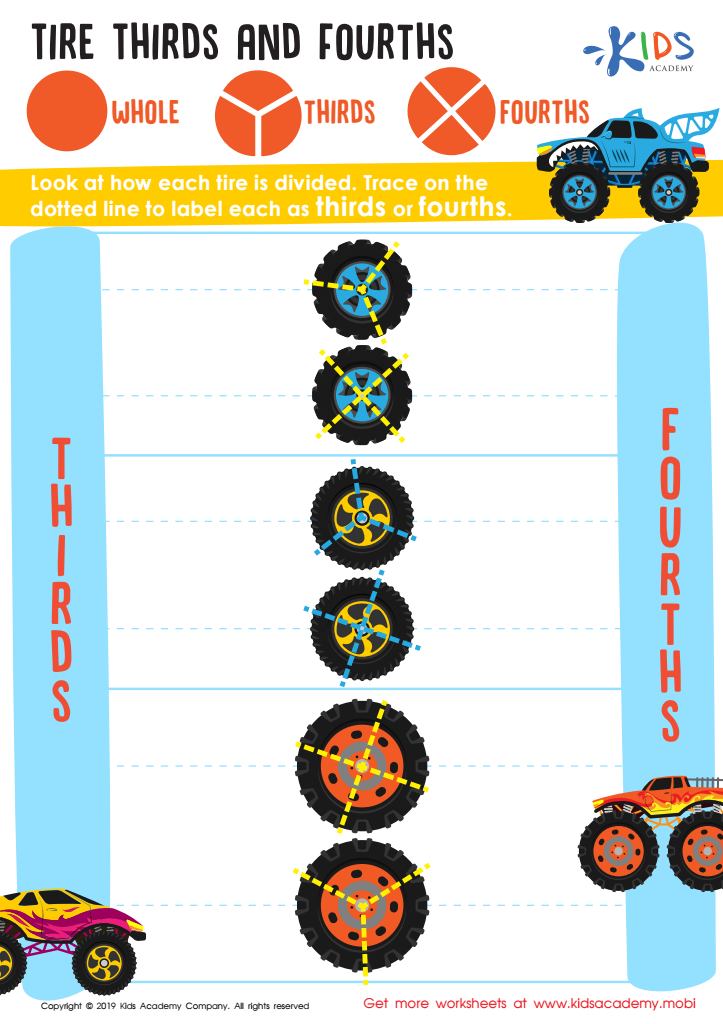
Tire Thirds and Fourths Worksheet
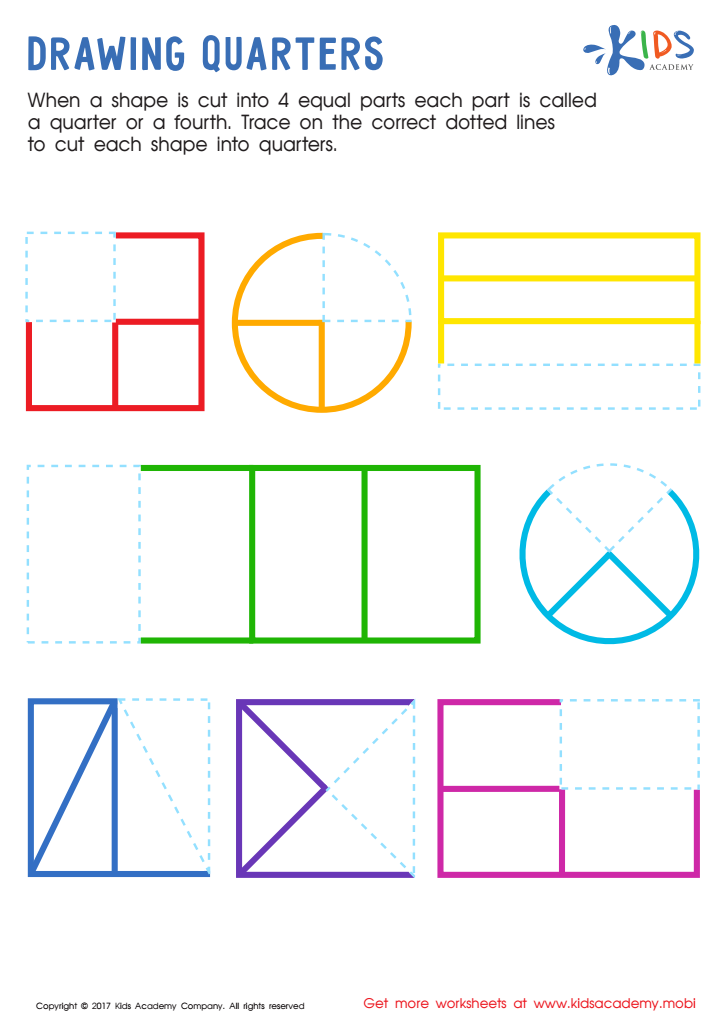
Drawing Quarters Worksheet
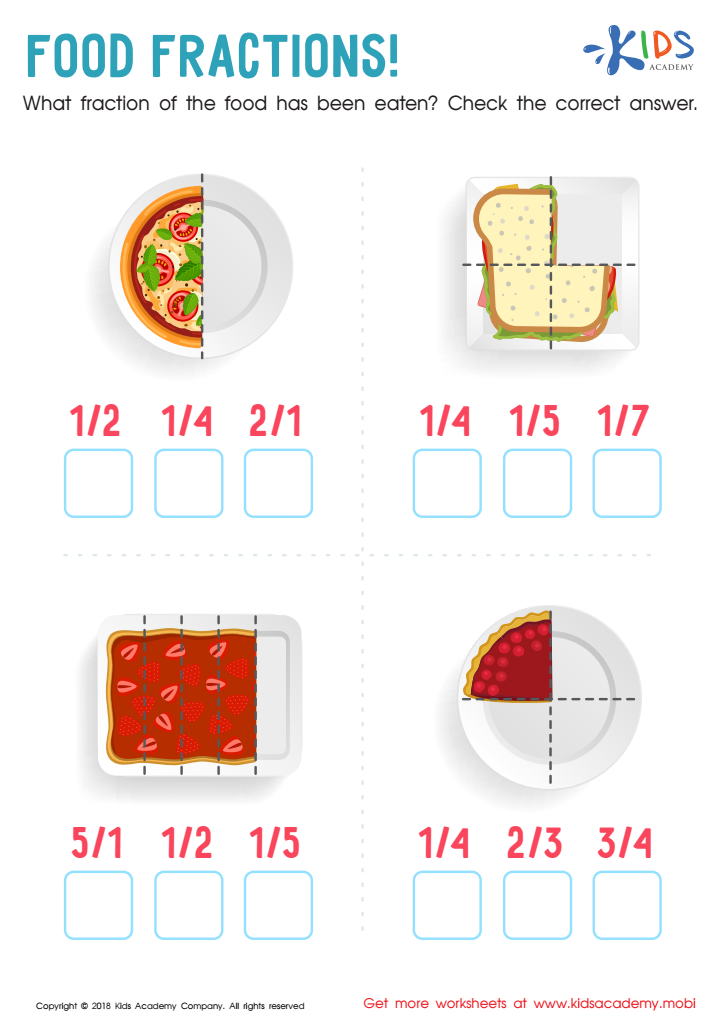
Food Fractions Worksheet
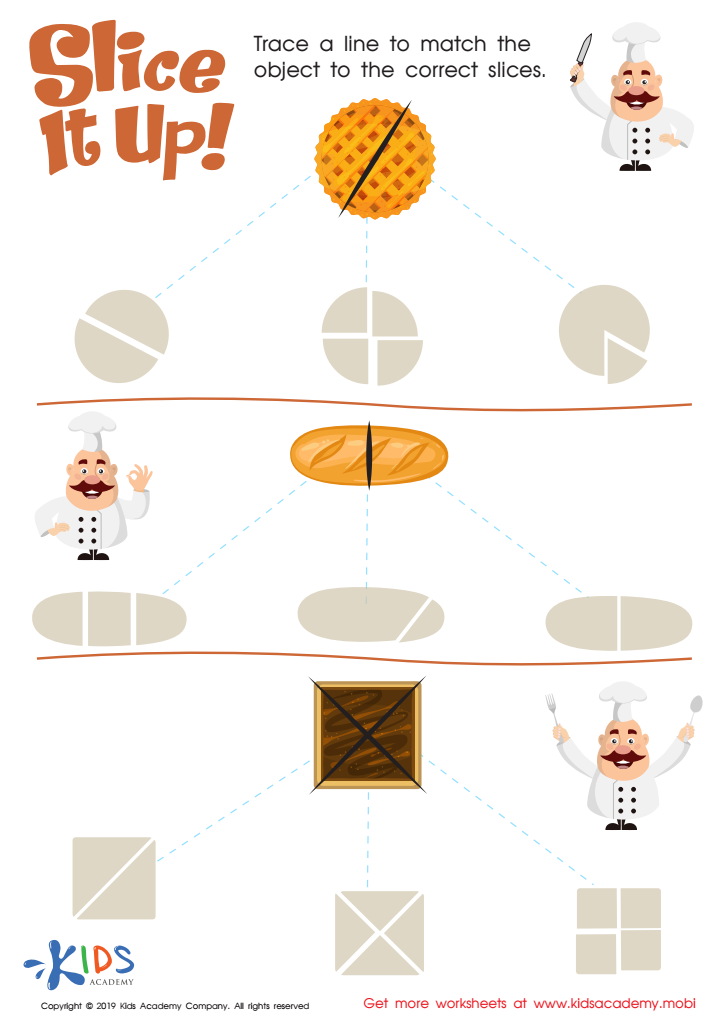
Slice It Up Worksheet
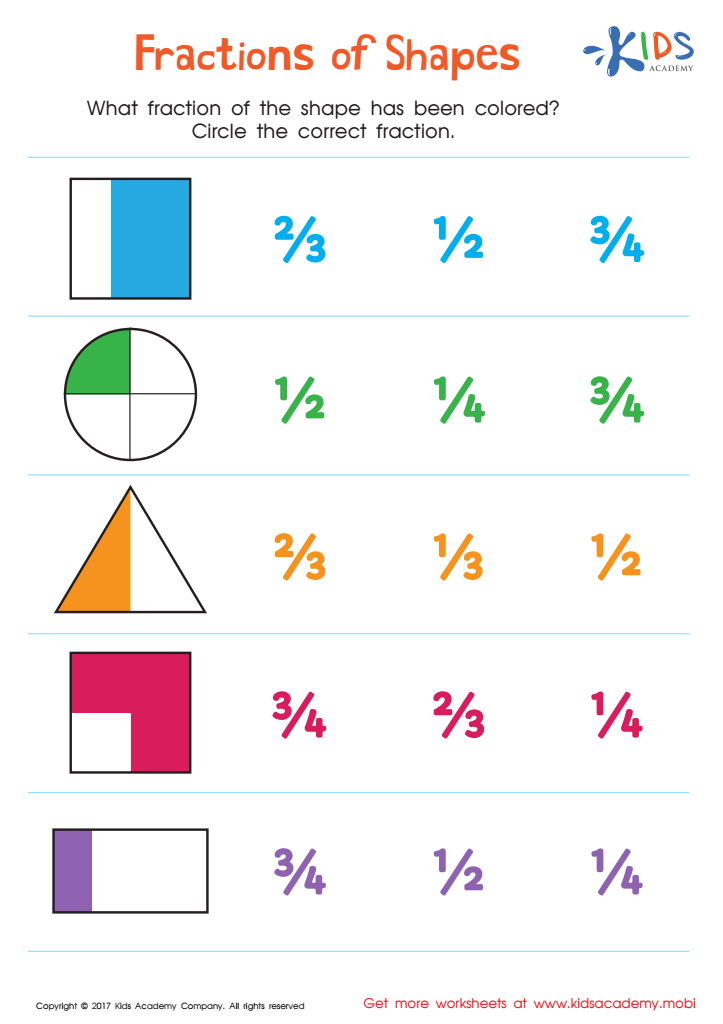
Fractions of Shapes: Math Concept Worksheet








Fraction visualization geometry is essential for children aged 6-9 because it lays the groundwork for essential mathematical understanding and problem-solving skills. During these formative years, young learners are particularly receptive to visual and hands-on learning experiences. By introducing fraction visualization through geometric shapes, children can develop a concrete understanding of abstract concepts that traditional methods might not convey effectively.
First, fraction visualization helps children grasp the idea of dividing whole objects into equal parts. Geometry provides clear, tangible ways to see how fractions work, such as by dividing a circle into equal slices or a rectangle into smaller squares. This makes it easier for children to understand fractions as parts of a whole, paving the way for more complex arithmetic and algebra in later grades.
Secondly, a strong foundation in fraction visualization supports the development of spatial reasoning and geometric concepts. Recognizing patterns, understanding symmetry, and comprehending part-to-whole relationships are skills that extend beyond mathematics and into everyday problem-solving scenarios.
Additionally, integrating these visual strategies can make learning more engaging and enjoyable, fostering a positive attitude towards math. Engaged learners are more likely to explore, ask questions, and develop confidence in their abilities.
Therefore, caring about fraction visualization geometry equips children with crucial cognitive tools and ignites a lifelong interest in mathematics.








