Hand-eye Coordination Geometry Worksheets for Ages 6-9
7 filtered results
-
From - To
Enhance your child's learning experience with our engaging Hand-eye Coordination Geometry Worksheets designed for ages 6-9! These worksheets offer a fun way to strengthen fine motor skills while reinforcing essential geometry concepts. Perfect for young learners, the activities include colorful shapes, tracing exercises, and pattern recognition that promote visual-spatial awareness. As children practice their hand-eye coordination, they’ll also explore basic geometric shapes and their properties through interactive tasks. Ideal for home or classroom use, our worksheets support the development of important cognitive skills in a playful and enjoyable manner. Unlock your child's potential with these vibrant and educational resources!
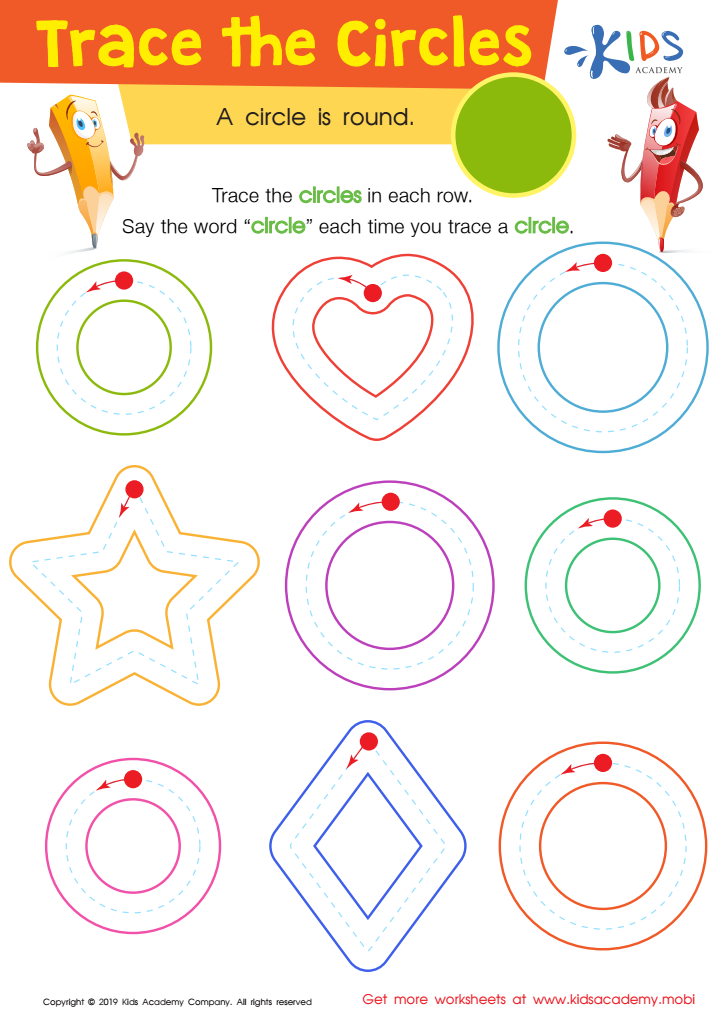
Trace The Circles Worksheet
 Assign to My Students











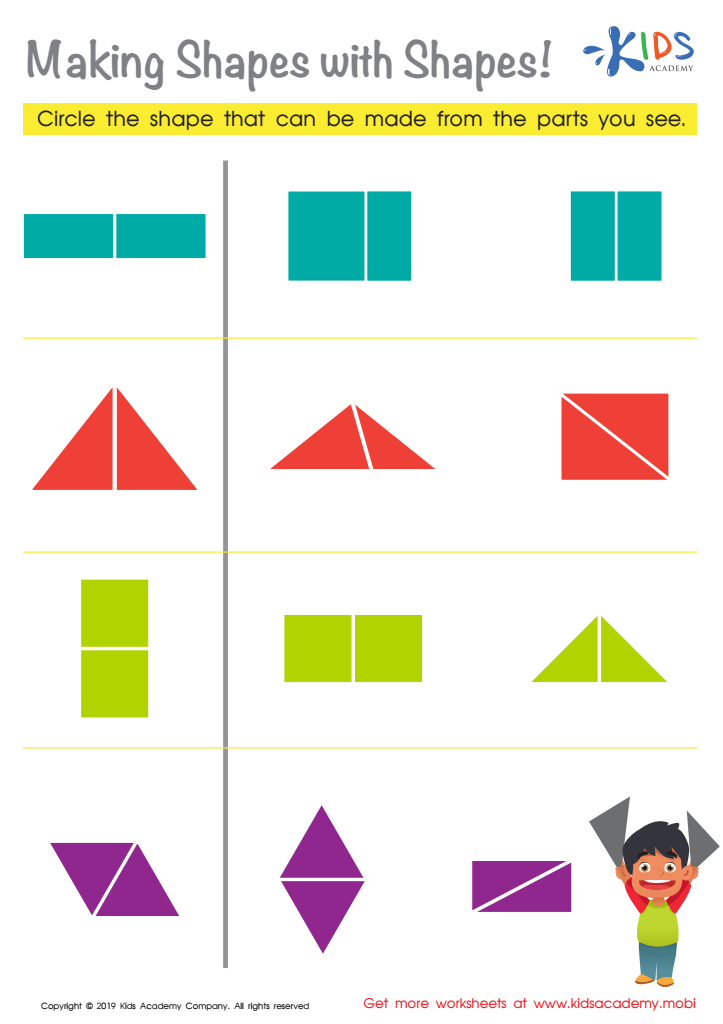
Making Shapes with Shapes Worksheet
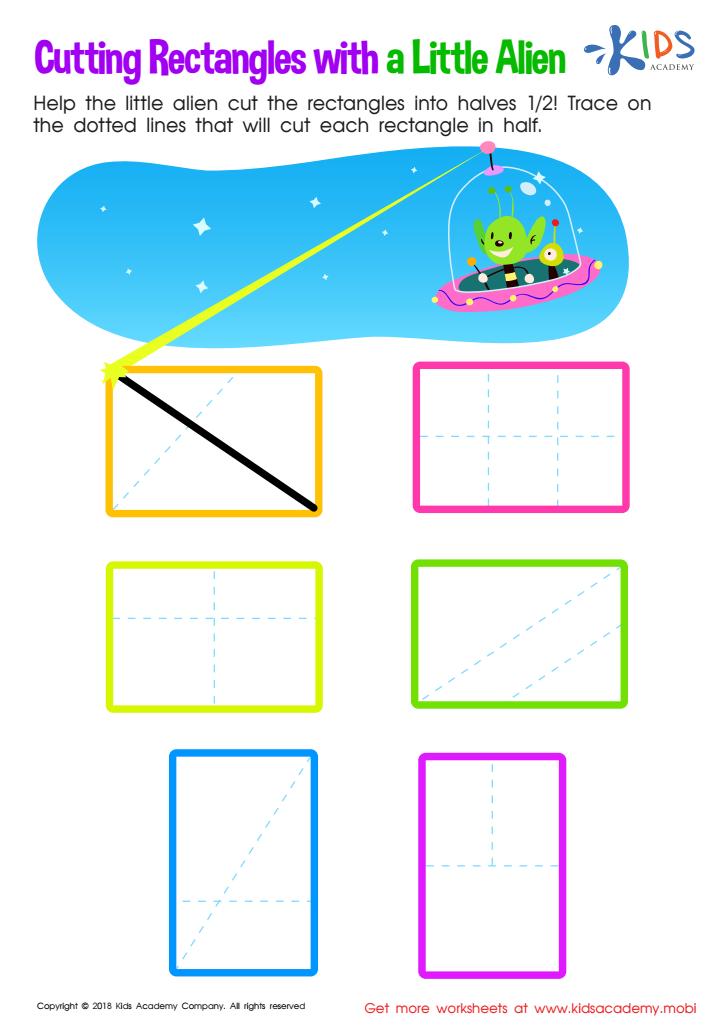
Cutting Rectangles with Alien Worksheet
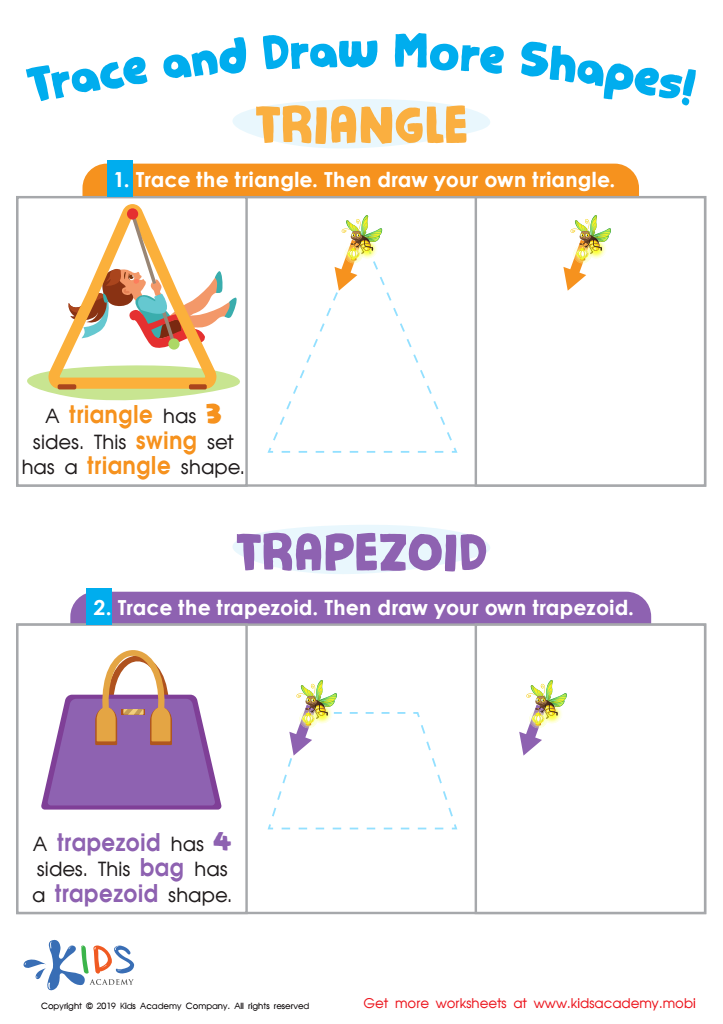
Trace and Draw More Shapes Worksheet
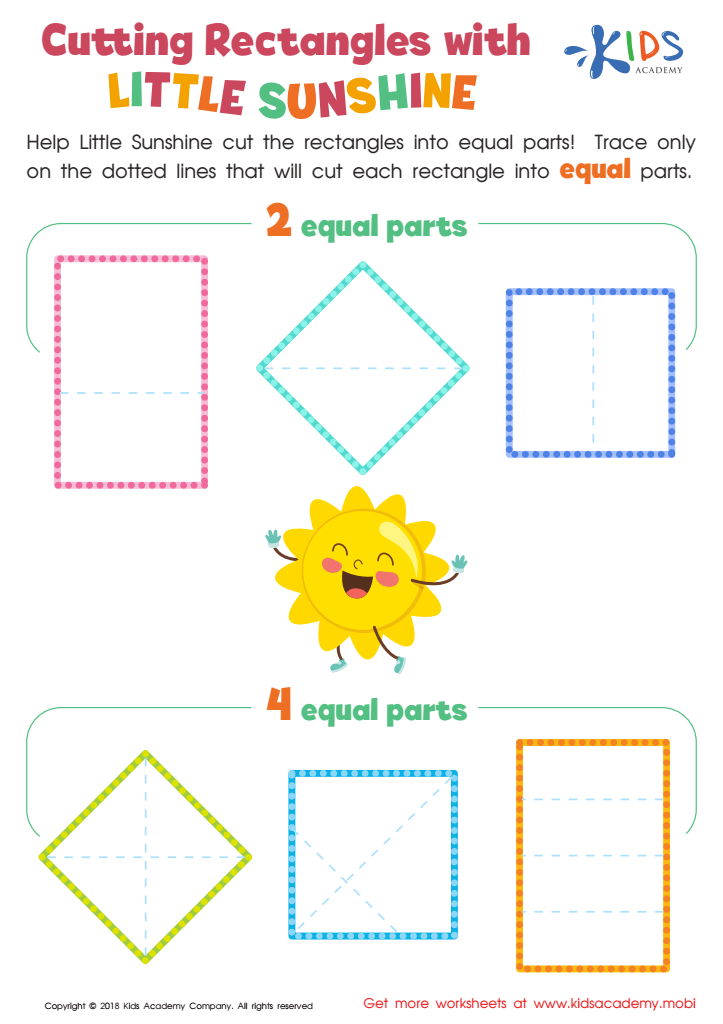
Cutting Rectangles with Little Sunshine Worksheet
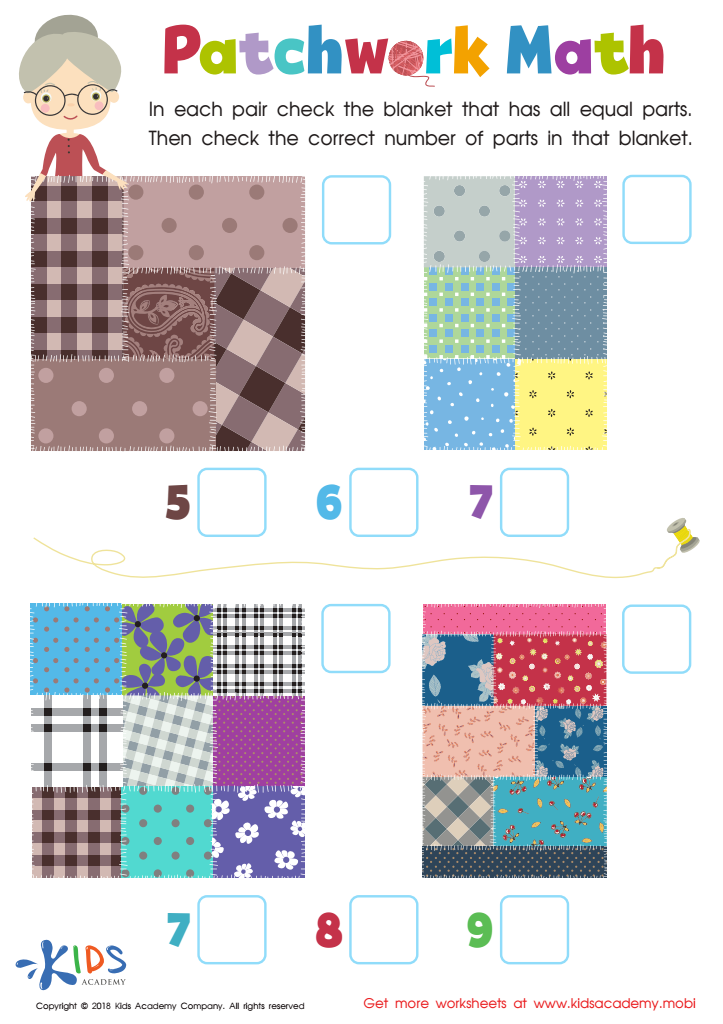
Patchwork Math Worksheet








Hand-eye coordination is a crucial skill for children, particularly in the 6-9 age range, as it directly impacts their ability to learn foundational geometry concepts. This stage of development is characterized by significant cognitive growth and fine motor skill refinement. When parents and teachers prioritize hand-eye coordination activities, they facilitate children's spatial awareness, shape recognition, and overall geometry skills.
Engaging in tasks such as building with blocks, drawing shapes, or playing educational games encourages children to visualize and manipulate objects in space. These experiences help them comprehend geometric principles and develop problem-solving abilities as they learn to understand relationships between different shapes and their properties. Moreover, improved hand-eye coordination can enhance children's ability to follow directions, complete tasks, and collaborate effectively in learning environments.
Furthermore, fostering these skills can boost confidence and independence in children. As they become more adept at manipulating physical objects, they build a sense of accomplishment, which is vital for motivation and engagement in math and science learning. Overall, nurturing hand-eye coordination not only aids in grasping geometry concepts but also serves as an integral component of children's holistic development, setting a strong foundation for future academic success.








