Spatial awareness Geometry Worksheets for Ages 6-9
13 filtered results
-
From - To
Unlock your child's potential with our "Spatial Awareness Geometry Worksheets for Ages 6-9". Designed to foster critical thinking and problem-solving skills, these engaging activities help young learners grasp essential geometry concepts. Through playful exercises, kids explore shapes, patterns, and space orientations, enhancing their spatial reasoning. Ideal for building a strong math foundation, our worksheets make learning fun and interactive, supporting classroom lessons or homeschooling. Tailored to meet educational standards, they ensure your child gains confidence and mastery in geometry. Visit us to download these invaluable resources and watch your child's mathematical abilities soar!
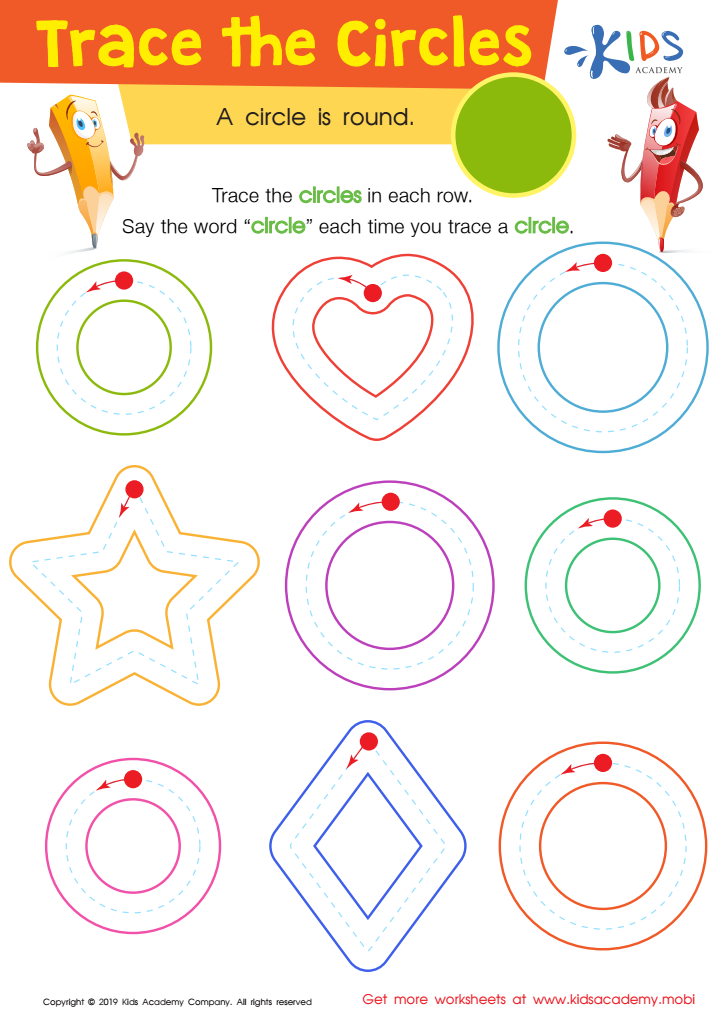
Trace The Circles Worksheet
 Assign to My Students











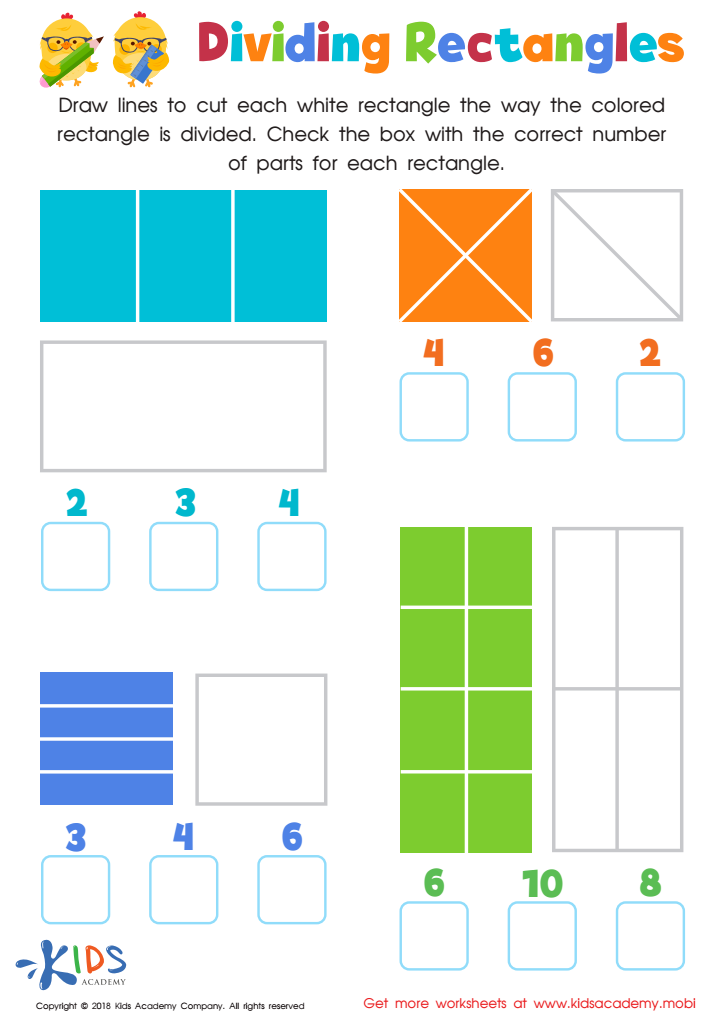
Dividing Rectangles Worksheet
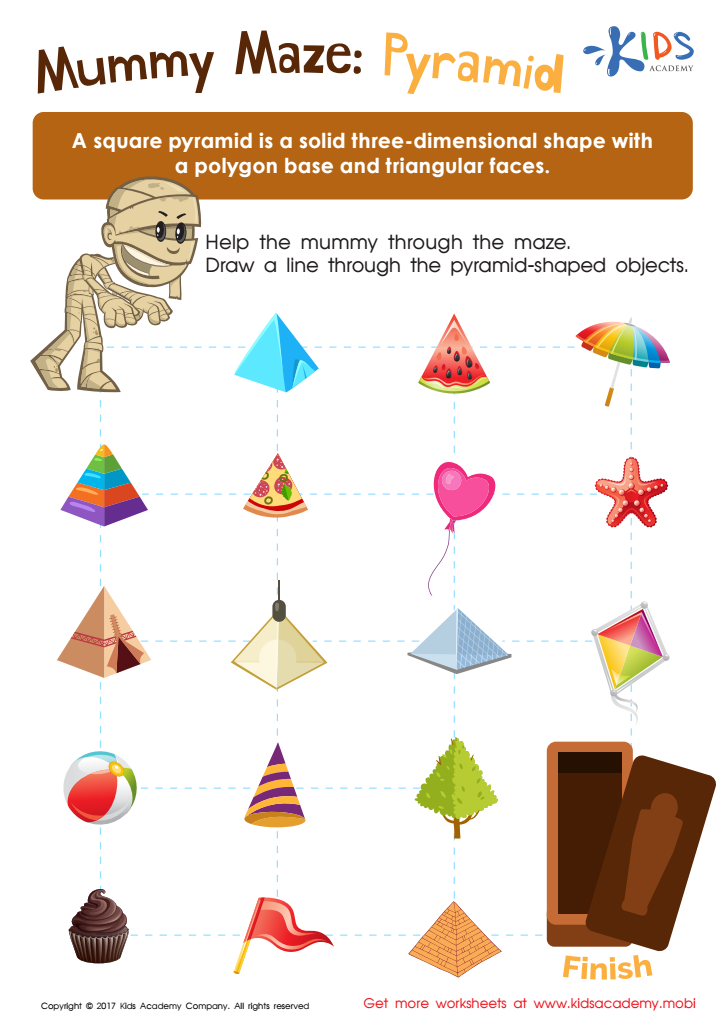
Mummy Maze: Pyramid Printable
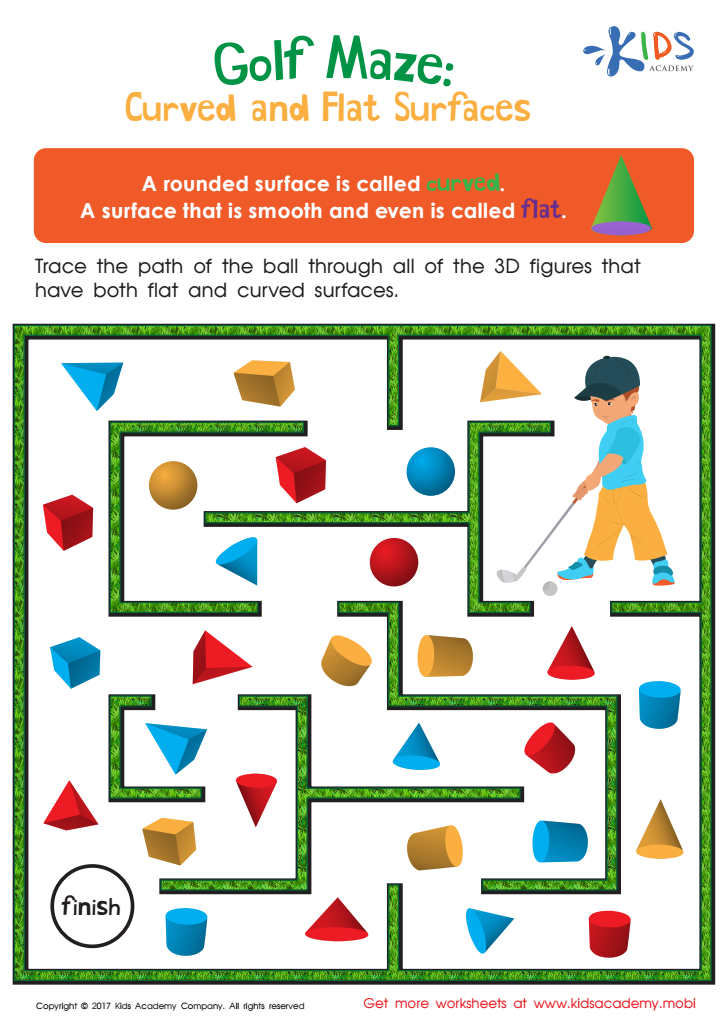
Golf Maze: Curved and Flat Surfaces Worksheet
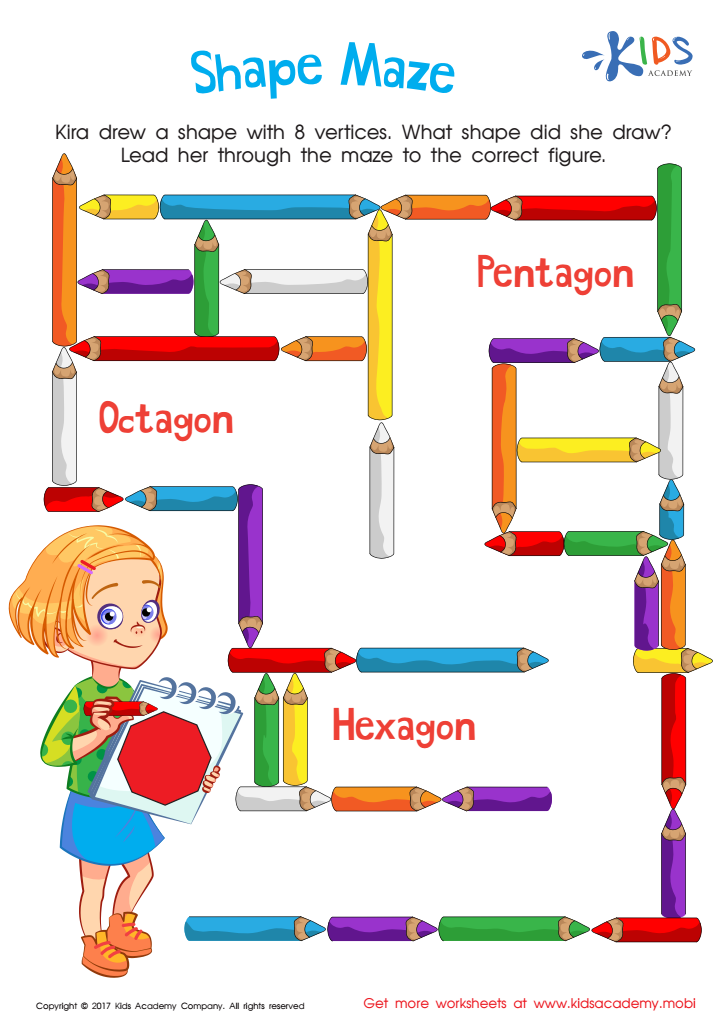
Shape Maze Worksheet
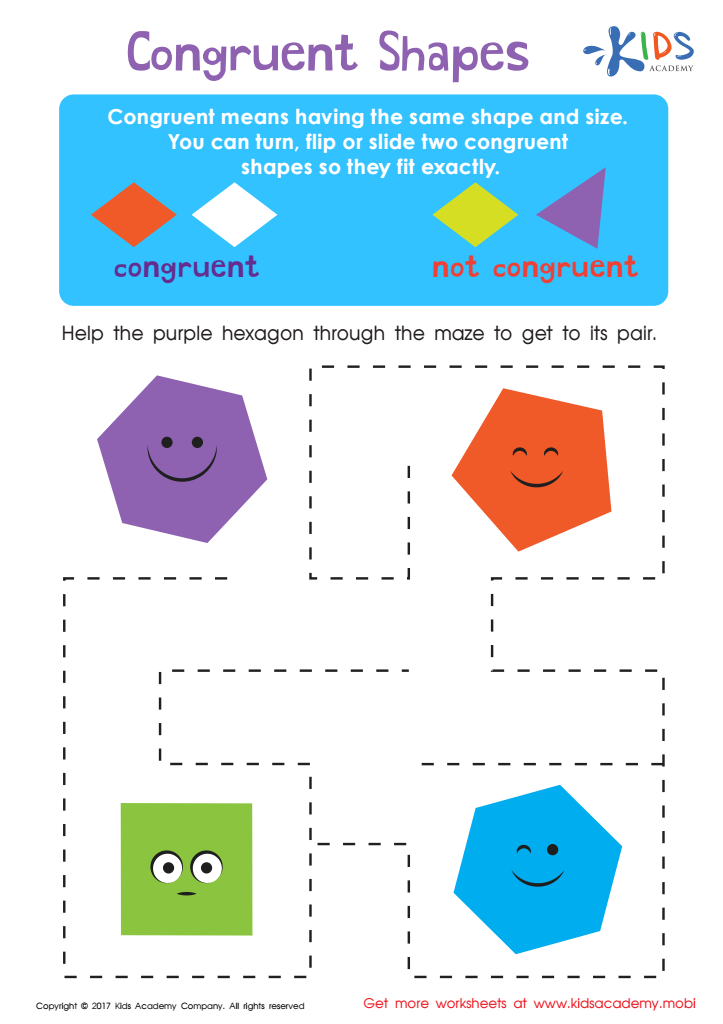
Congruent Shapes Worksheet
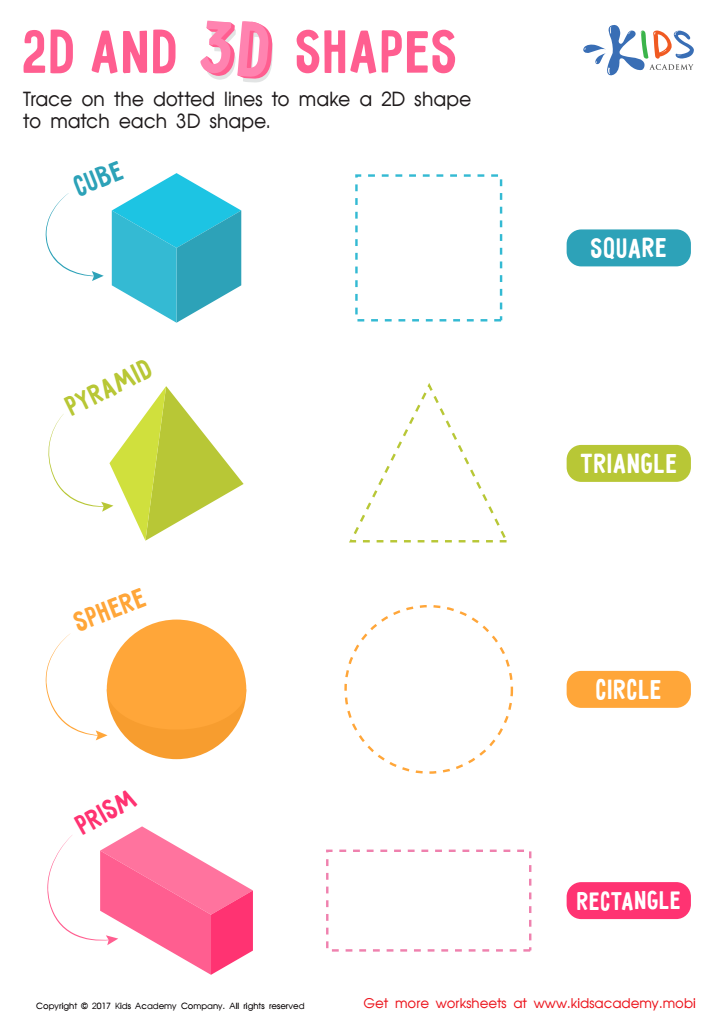
2D and 3D Shapes Worksheet
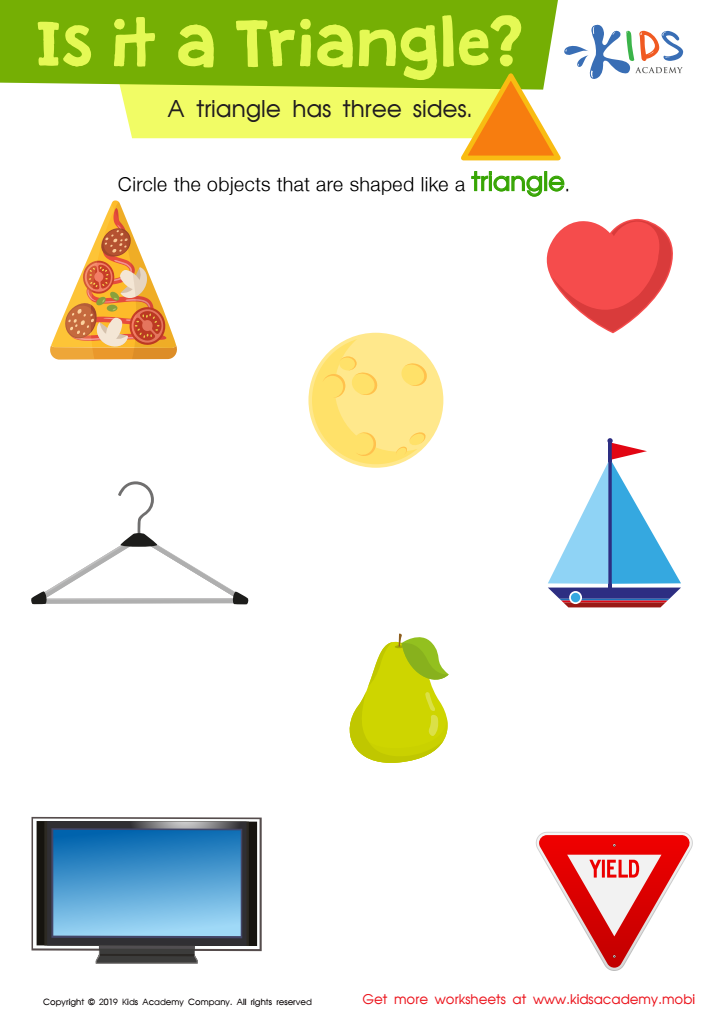
Is It a Triangle? Worksheet
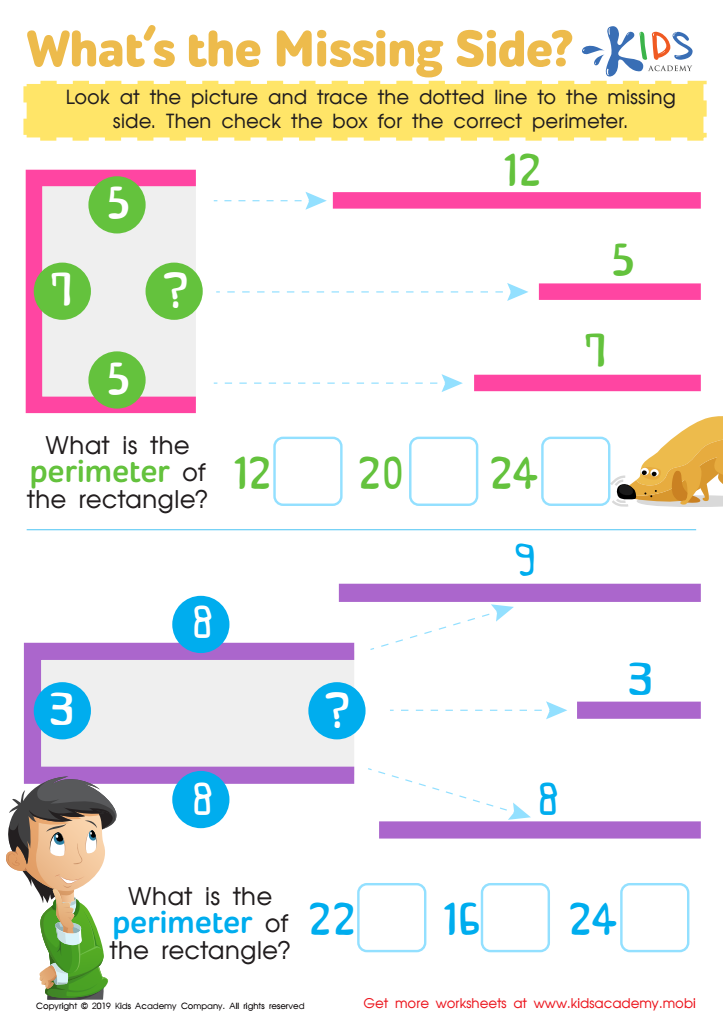
What's the Missing Side Worksheet
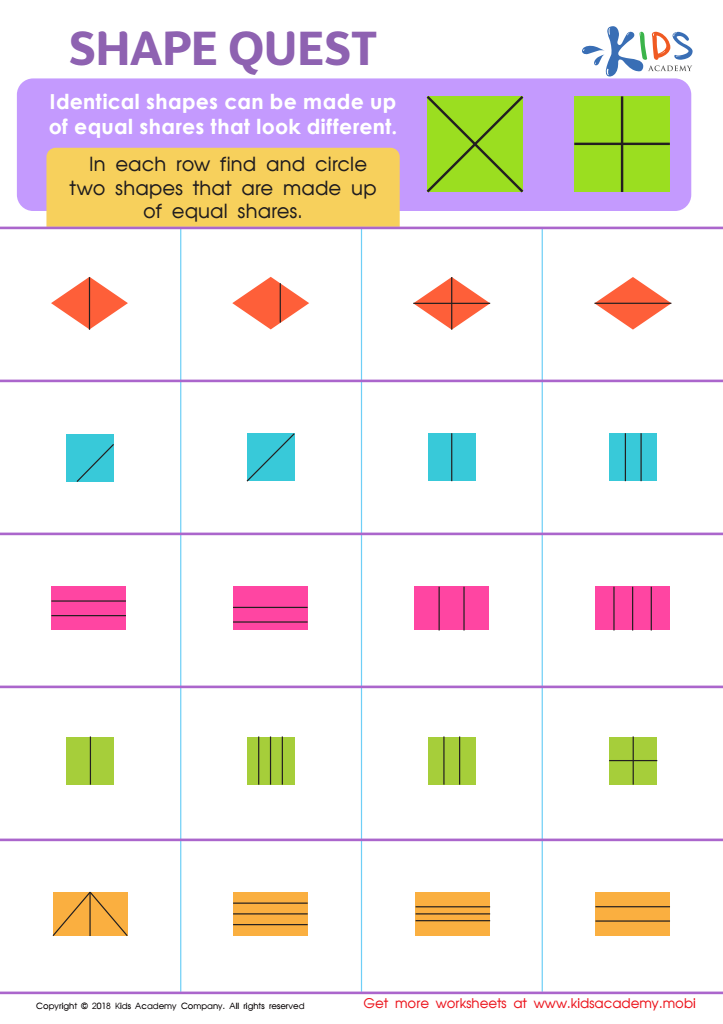
Shape Quest Worksheet
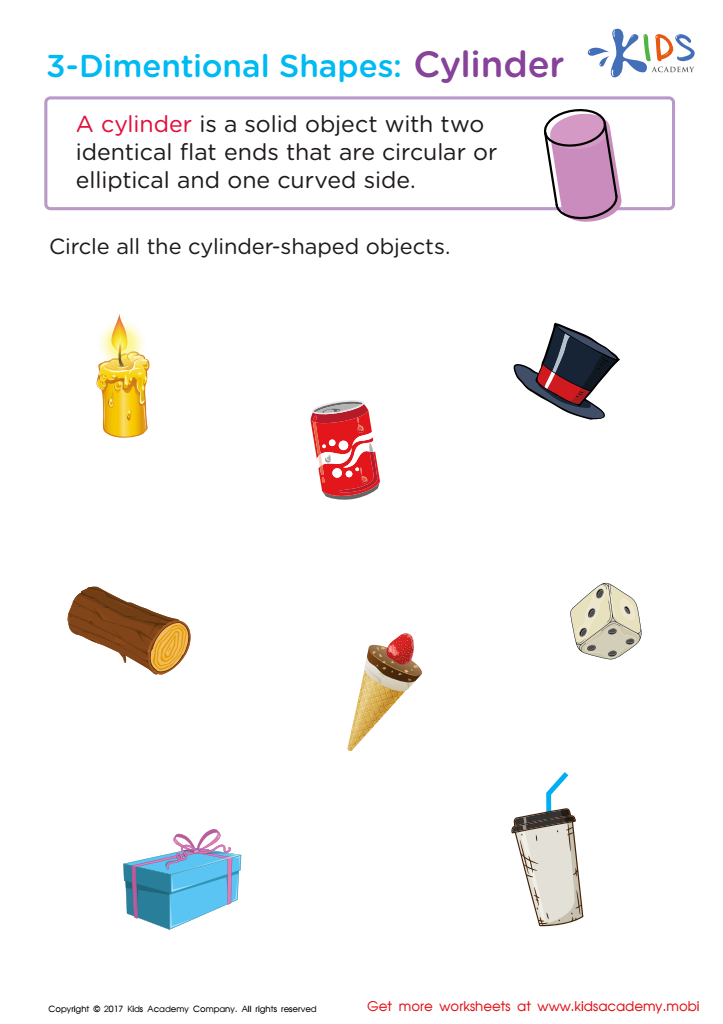
Three–Dimensional Shapes: Cylinder Worksheet
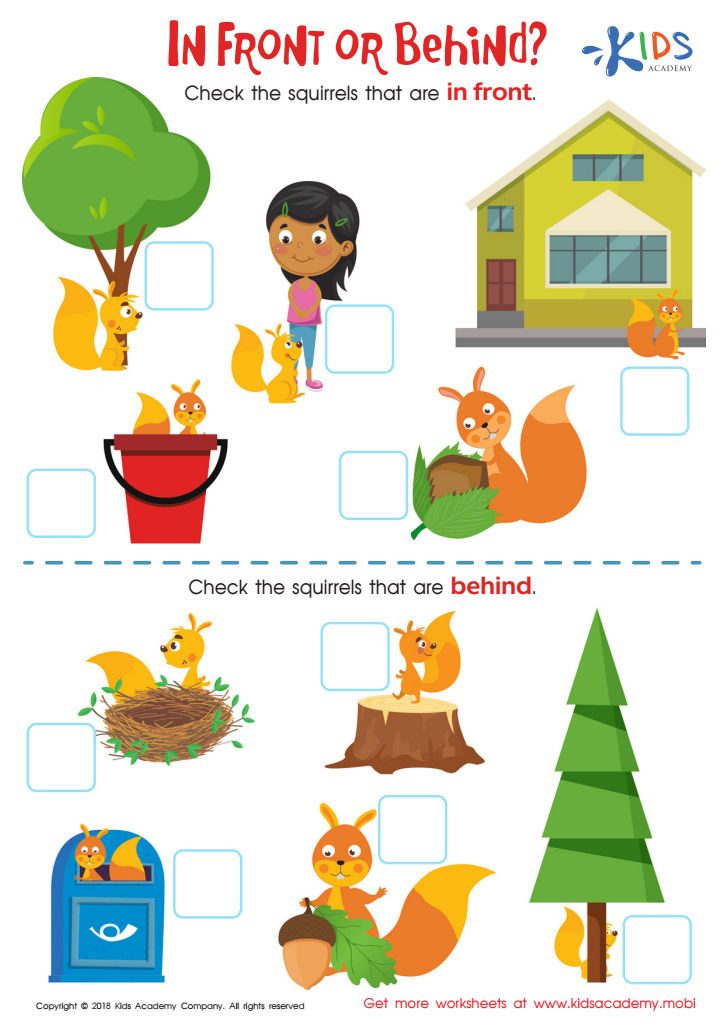
In Front or Behind: Part 2 Worksheet
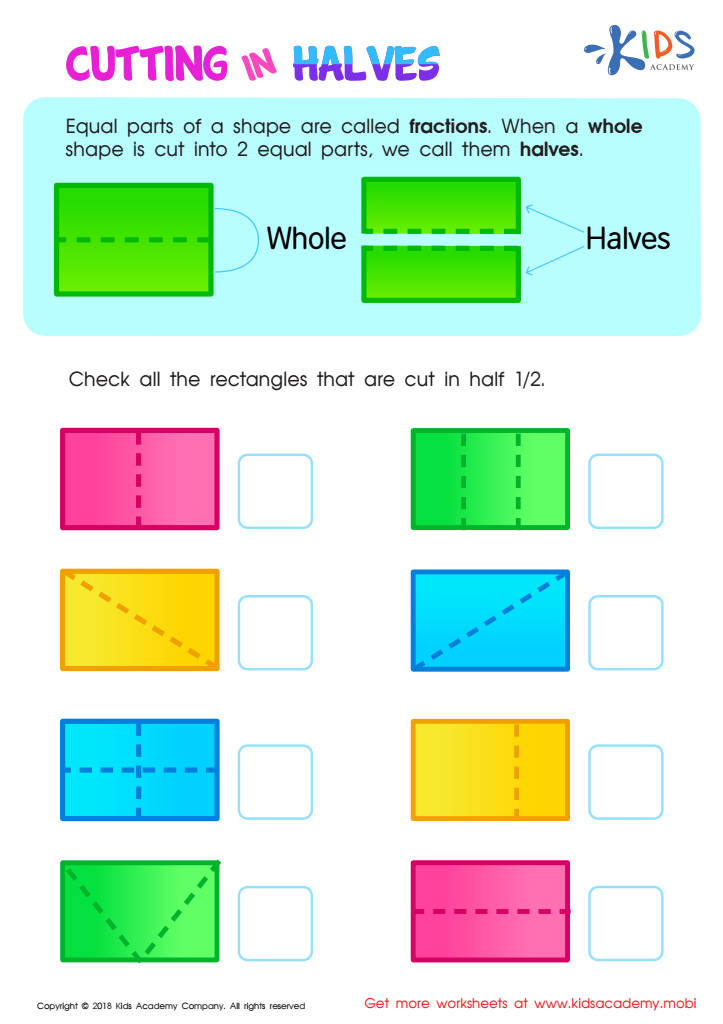
Cutting in Halves Worksheet








Parents and teachers should prioritize spatial awareness and geometry for children aged 6-9 because these skills are foundational for overall cognitive development and academic success. Spatial awareness allows children to understand the relationships between objects in their environment, which is crucial for everyday tasks such as navigating spaces, understanding maps, and following directions.
Geometry introduces children to shapes, sizes, patterns, and symmetry, laying the groundwork for higher-level math concepts. Engaging children in activities such as building with blocks, drawing shapes, or playing puzzle games helps develop problem-solving skills and logical thinking. These activities enhance fine motor skills and hand-eye coordination, both of which are essential for writing and other classroom tasks.
Early exposure to spatial and geometric concepts is linked to improved performance in STEM (Science, Technology, Engineering, and Mathematics) subjects because it develops analytical and critical-thinking abilities. Research indicates that strong spatial skills are predictors of achievement not just in math, but also literacy and general learning.
In this crucial developmental window, fostering these skills through playful learning, hands-on activities, and interactive lessons can make a lasting impact on a child's educational trajectory. By investing in spatial awareness and geometry, parents, and teachers can equip children with the fundamental tools necessary for academic and everyday success.








