Spatial Orientation Geometry Worksheets for Ages 6-9
3 filtered results
-
From - To
Discover our engaging Spatial Orientation Geometry Worksheets designed specifically for children ages 6-9. These interactive resources help young learners develop essential spatial awareness skills, crucial for success in math and geometry. Through fun activities like identifying shapes, understanding directions, and solving puzzles, children enhance their ability to visualize and manipulate objects in space. Our worksheets cater to diverse learning styles, making geometry accessible and enjoyable. Perfect for both classroom use and at-home practice, these worksheets foster critical thinking and problem-solving skills while keeping math fun and engaging. Empower your child's learning journey with our carefully crafted spatial orientation materials today!
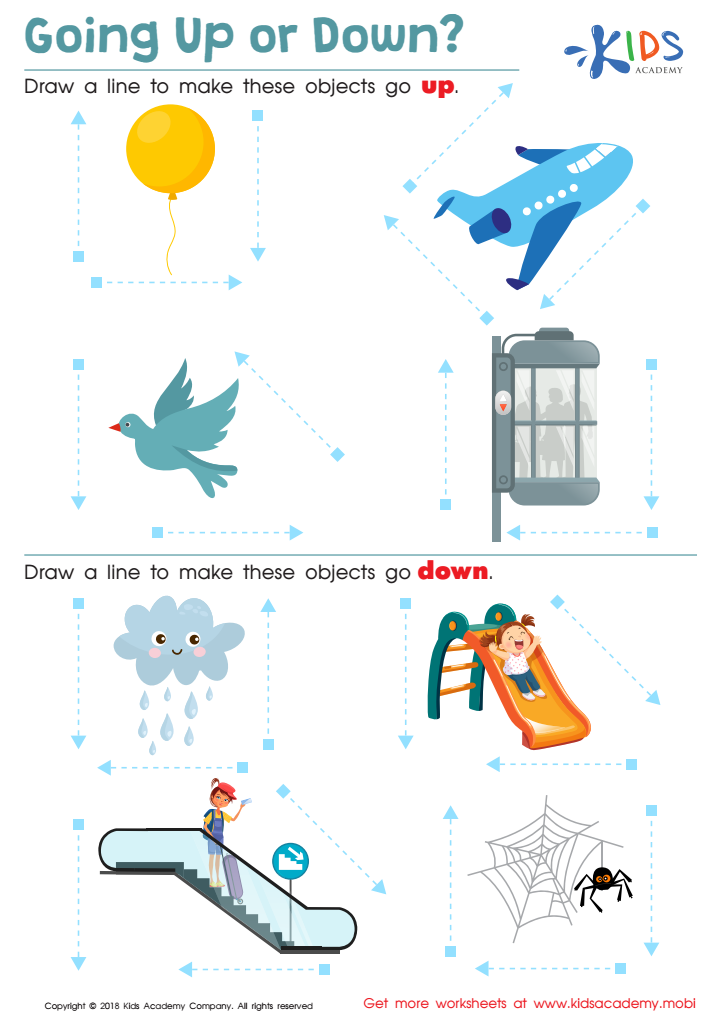
Going up or Down? Worksheet
 Assign to My Students











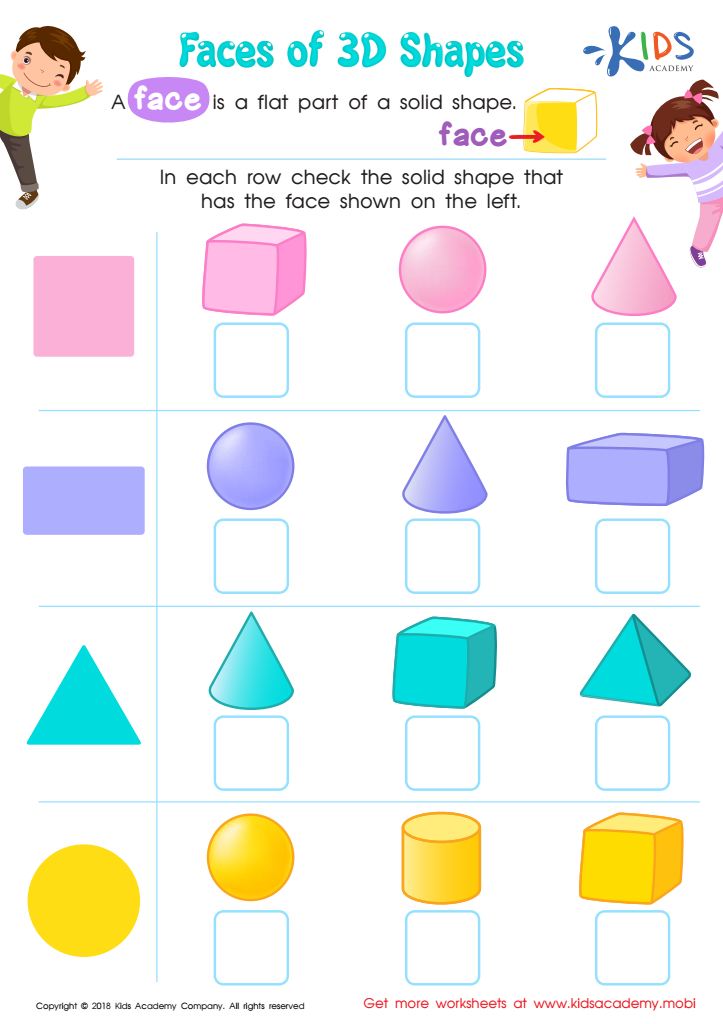
Faces of 3D Shapes Worksheet
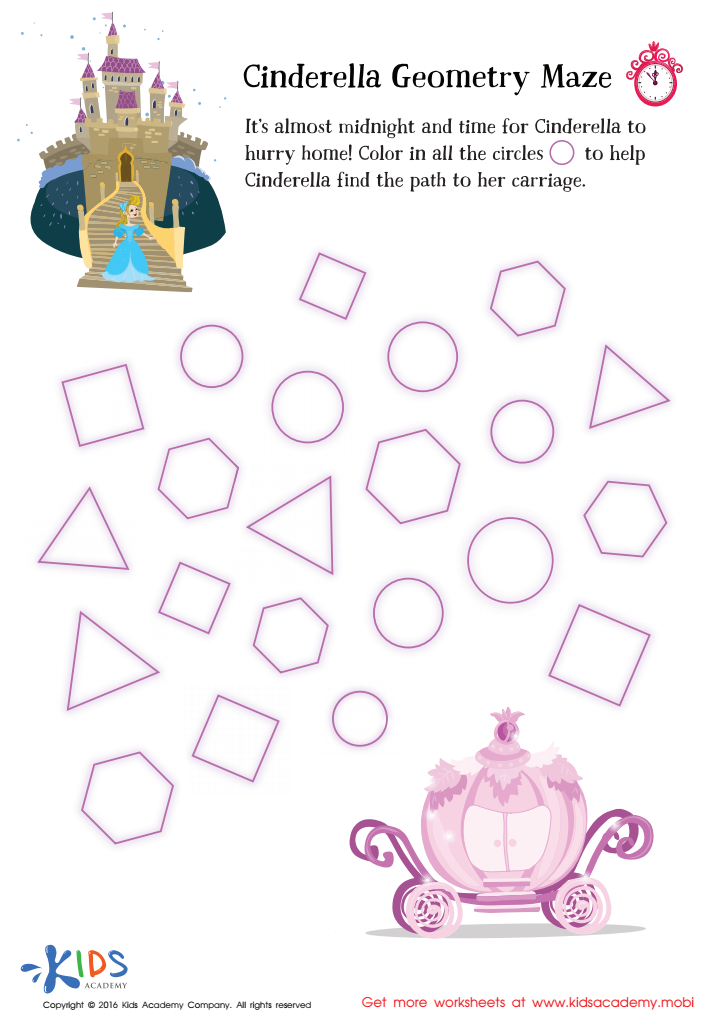
Cinderella Geometry Maze Worksheet








Spatial Orientation Geometry is crucial for children aged 6-9 as it forms the foundation of many essential skills in both mathematics and everyday life. During these formative years, children are naturally curious and eager to explore their environment, making it an ideal time to introduce concepts related to space, shapes, and their relationships. Understanding spatial orientation helps children develop critical reasoning skills, problem-solving abilities, and the capacity to visualize objects in different contexts.
Moreover, spatial awareness supports skills in reading maps, understanding directions, and recognizing patterns—abilities that are vital as they progress in their academic journey. Engaging in spatial activities, such as building with blocks or engaging in movement games, not only solidifies geometric understanding but also enhances fine motor skills and social interactions.
Parents and teachers should prioritize this subject because strong spatial skills correlate with success in STEM (science, technology, engineering, and mathematics) fields and are essential for real-world applications. By nurturing these abilities at a young age, adults can foster confidence and enthusiasm for learning, encouraging children to embrace challenges and explore future opportunities with a spatial mindset. Ultimately, investing in spatial orientation geometry enriches a child’s cognitive development and prepares them for a dynamic world.








