Visual Learning Geometry Worksheets for Ages 6-9
5 filtered results
-
From - To
Explore our engaging Visual Learning Geometry Worksheets designed specifically for children ages 6-9. These worksheets provide a fun, interactive way to introduce young learners to essential geometric concepts such as shapes, angles, and spatial reasoning. Each activity emphasizes visual aids, making it easier for kids to comprehend and retain information. Perfect for home or classroom use, these resources foster a love for math while enhancing critical thinking skills. Encourage your child's creativity and problem-solving abilities with exciting and colorful exercises that make geometry accessible and enjoyable. Start your child's journey in geometry today with our thoughtfully crafted visual learning materials!
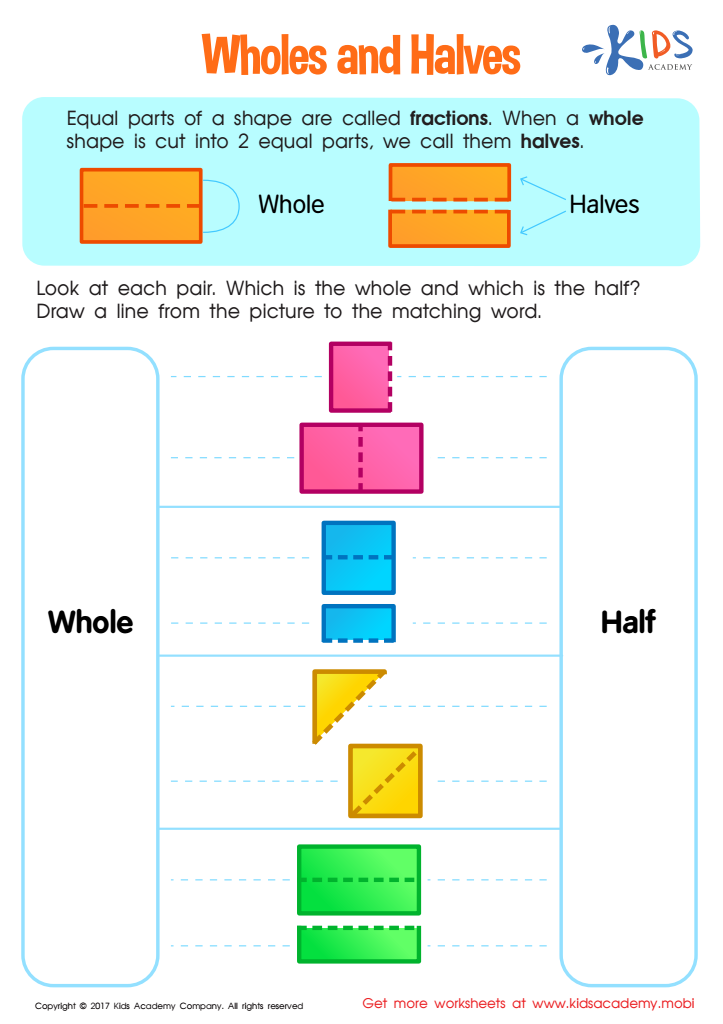
Wholes and Halves Worksheet
 Assign to My Students











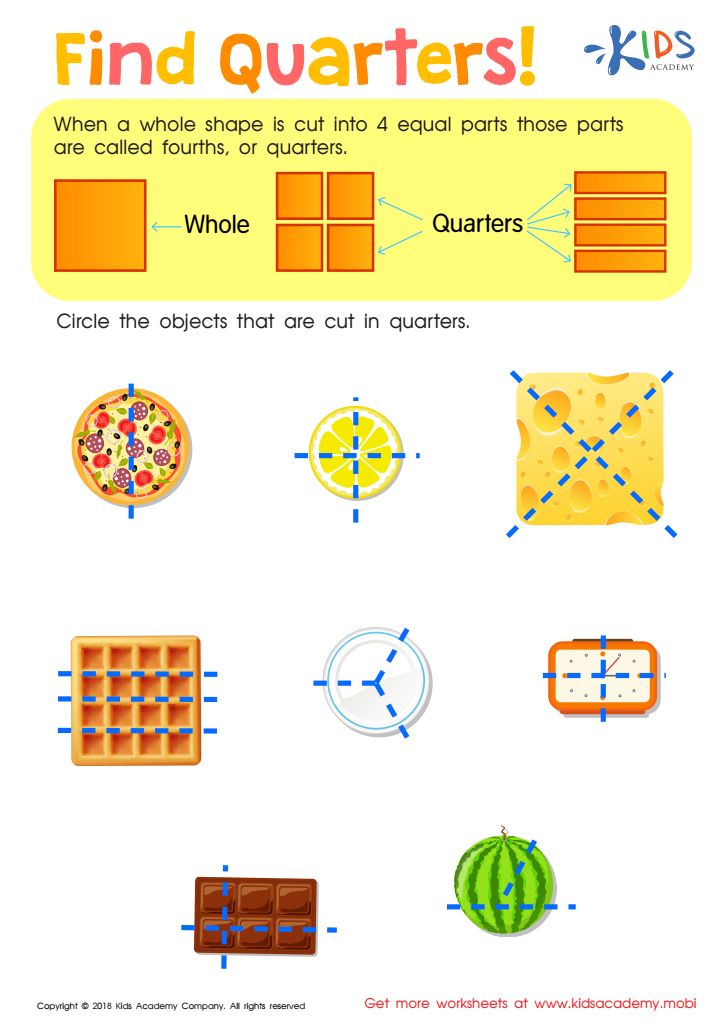
Find Quarters Worksheet
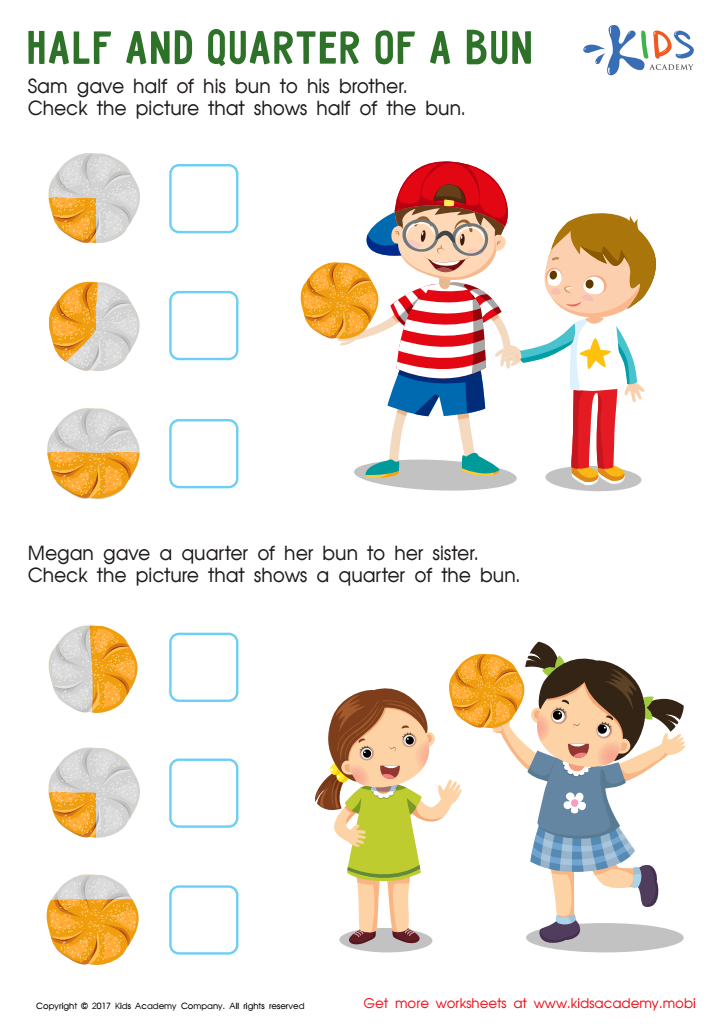
Half and Quarter of a Bun Worksheet
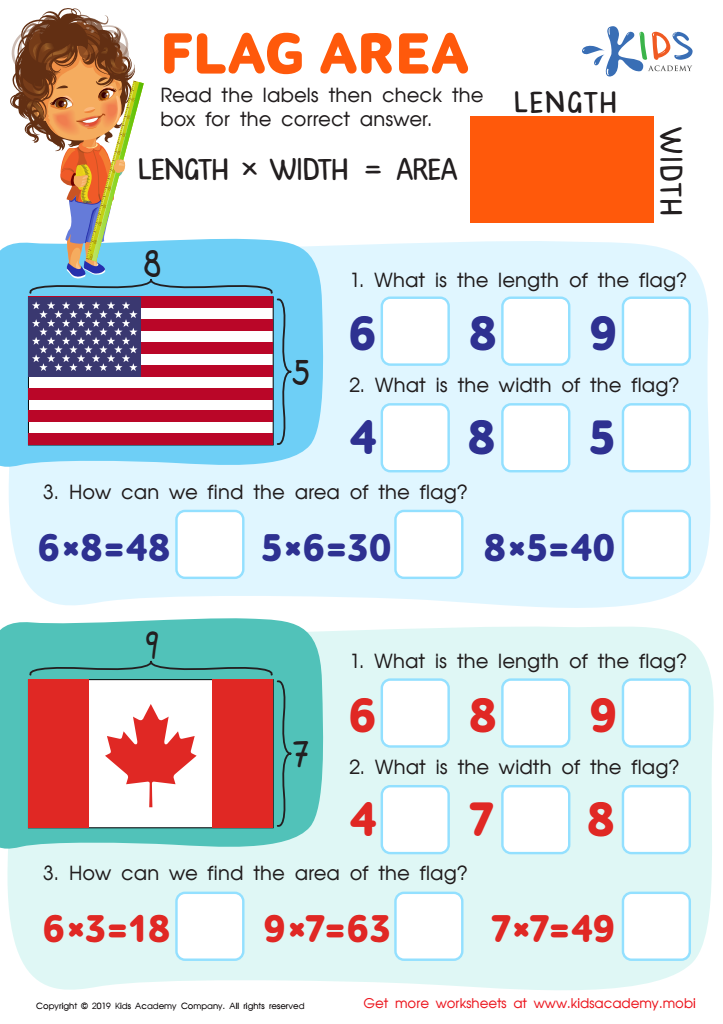
Flag Area Worksheet
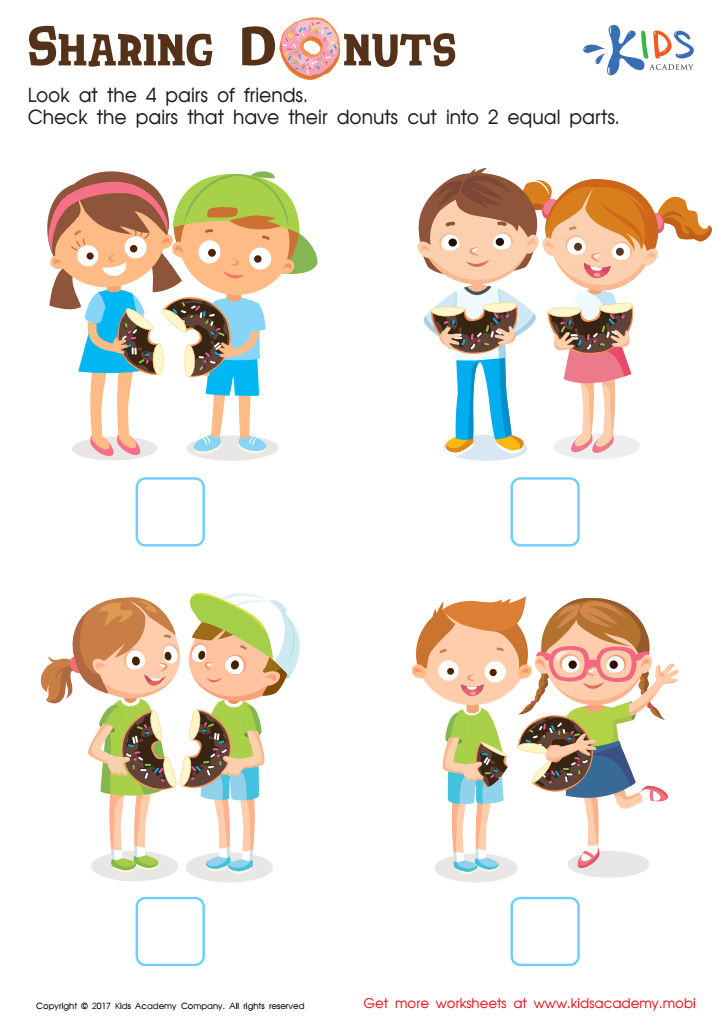
Sharing Donuts Worksheet








Visual learning in geometry is crucial for children aged 6-9, as it lays the foundation for their understanding of shapes, spatial relationships, and measurement. At this developmental stage, children are naturally inclined to explore and engage with their environment, making visual experiences an effective way to teach complex geometric concepts.
When parents and teachers incorporate visual learning strategies, such as using geometric shapes in hands-on activities or incorporating digital tools that illustrate 2D and 3D forms, children can better grasp abstract concepts. Visual learning aids in problem-solving skills and encourages critical thinking, as students learn to recognize patterns and relationships among shapes.
Moreover, visual learning can support diverse learning styles. Not all children understand verbal instructions or written material equally; visual aids can bridge this gap, ensuring that every child has the opportunity to succeed. This is especially significant for early learners, as a strong foundation in geometry fosters confidence in their mathematical abilities and lays groundwork for future learning in math and science.
In conclusion, engaging children visually helps them to see relationships and applications of geometry in the real world, making learning enjoyable and relevant while enhancing cognitive development. Parents and teachers should prioritize this approach to create a positive and enriching educational experience.








