Analyzing data Numbers Worksheets for Ages 6-9
3 filtered results
-
From - To
Discover fun and engaging "Analyzing Data Numbers Worksheets for Ages 6-9" on Kids Academy! Specially designed for young learners, these worksheets help build essential analytical and mathematical skills by exploring numbers and patterns. Children will enhance their ability to interpret data, understand charts, and make predictions through colorful, kid-friendly exercises. Boost problem-solving abilities and foster a love for math in just a few clicks! Whether used in the classroom or at home, our printable resources ensure your child’s journey in data analysis is both educational and enjoyable. Unleash the math genius in your child today!
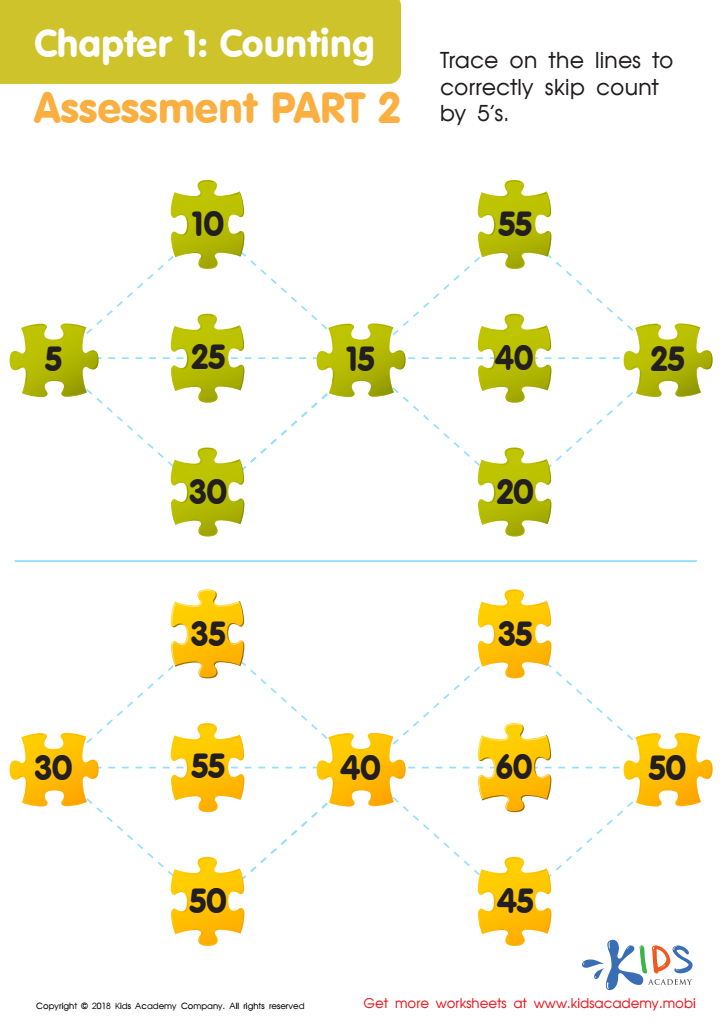
Counting: Assessment 2 Worksheet
 Assign to My Students
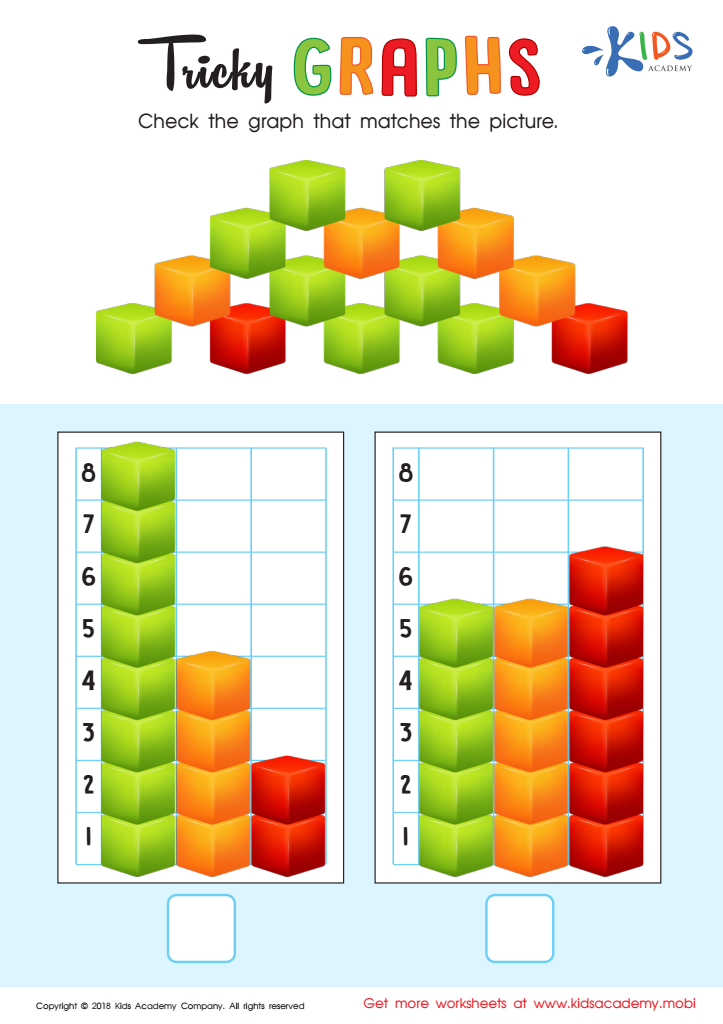
Tricky Graphs Worksheet

Egyptian Bar Graph Worksheet








Analyzing data numbers for children aged 6-9 is a critical aspect of their early education and development. At this stage, children are building the foundational skills that will support their academic progress and everyday problem-solving abilities. Firstly, understanding and interpreting data ignites curiosity and logical reasoning, guiding children to make sense of the world around them. They learn to identify patterns, make predictions, and understand relationships between different numbers, which forms the basis of mathematical thinking.
For parents and teachers, analyzing data outputs like test scores, class performance, and attendance helps in identifying learning gaps early. This enables timely intervention methods tailored to meet each child's individual needs, such as additional practice, tutoring, or specific educational strategies that boost their confidence and skill level.
Moreover, engaging young students in simple data analysis prepares them for higher-level math and science subjects in later years, fostering a long-term appreciation for STEM subjects. By cultivating skills in this critical period, we empower children with analytical capabilities that are not only academically beneficial but also vital for solving real-life problems.
Hence, investing time in supportive, data-driven instruction encourages a positive learning trajectory and sets the stage for a well-rounded, competent, and confident individual.








