Comparing quantities Numbers Worksheets for Ages 6-9
4 filtered results
-
From - To
Discover our “Comparing Quantities Numbers Worksheets” designed for children aged 6-9! These engaging worksheets help young learners master the concept of comparing different quantities through fun and interactive activities. By using various exercises involving more than, less than, and equal to, kids will build confidence in their math skills. Each worksheet is tailored to enhance problem-solving abilities and promote critical thinking. With colorful illustrations and relatable scenarios, these resources make learning enjoyable while reinforcing essential math concepts. Perfect for classroom use or at-home learning, our Comparing Quantities worksheets will ensure your child develops a strong foundation in numeracy. Get started today!
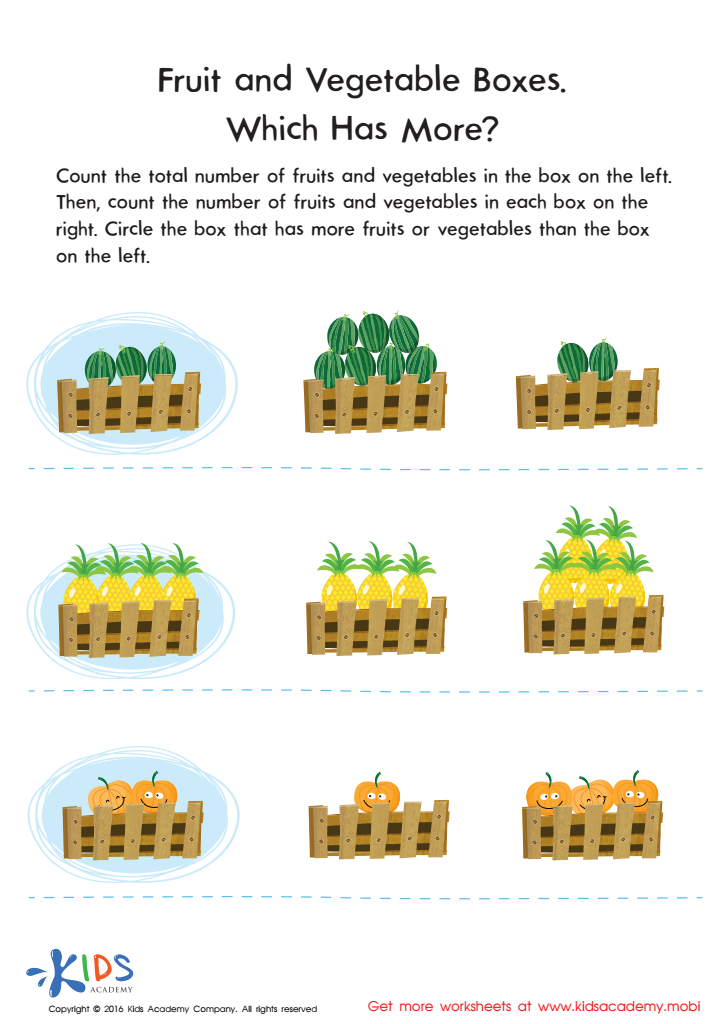
Which Has More? Size Worksheet
 Assign to My Students
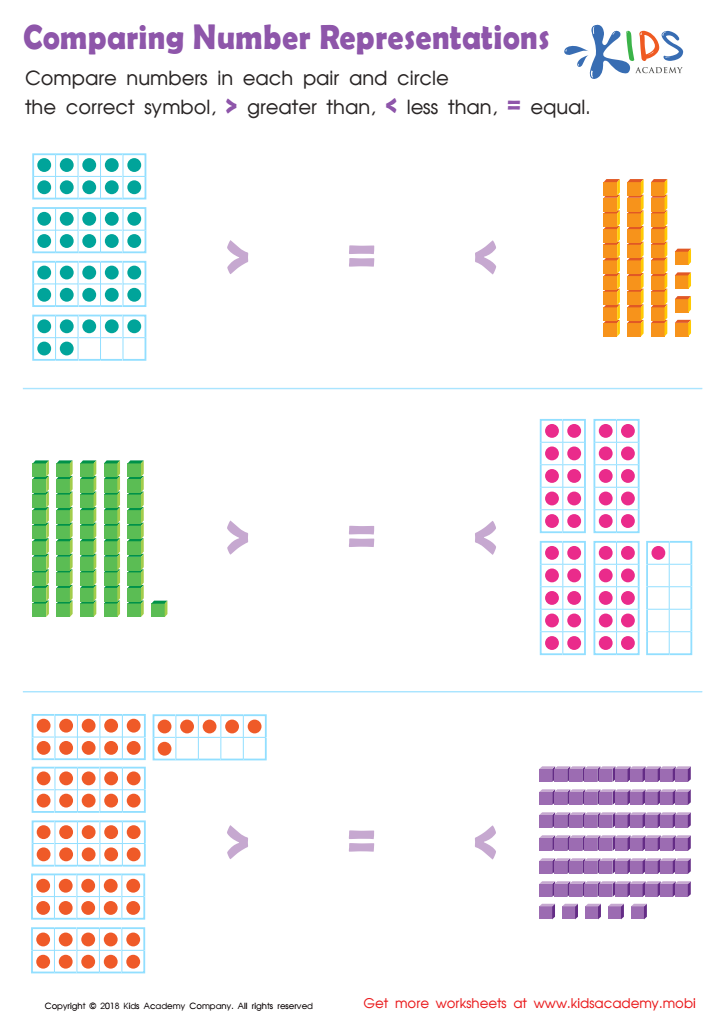
Comparing Number Representations Worksheet
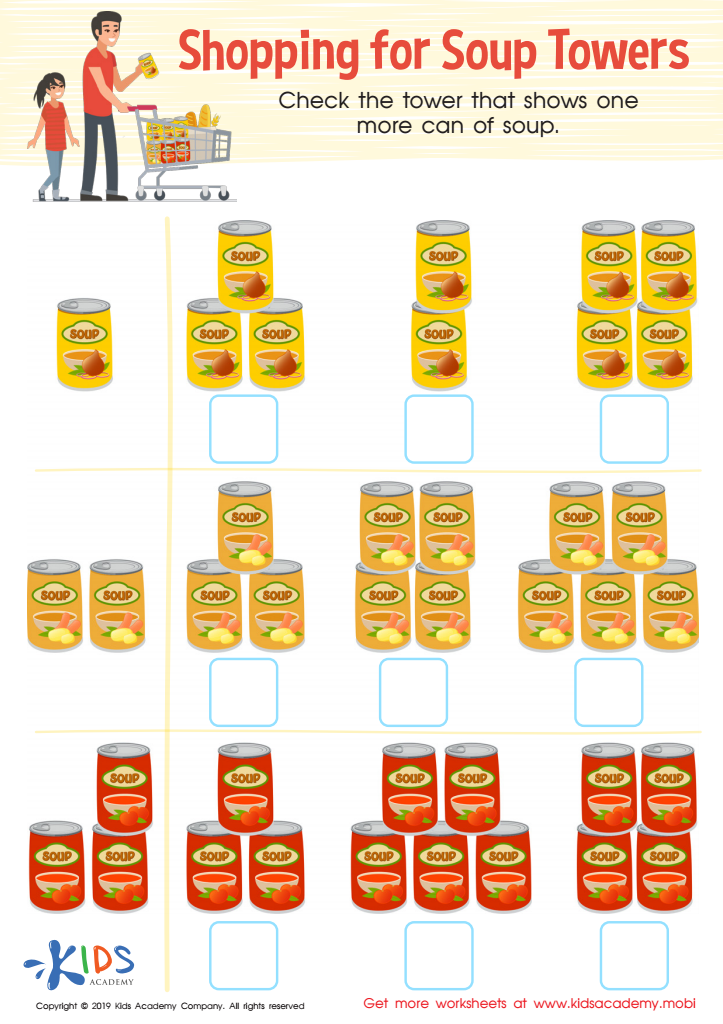
Soup Towers Worksheet
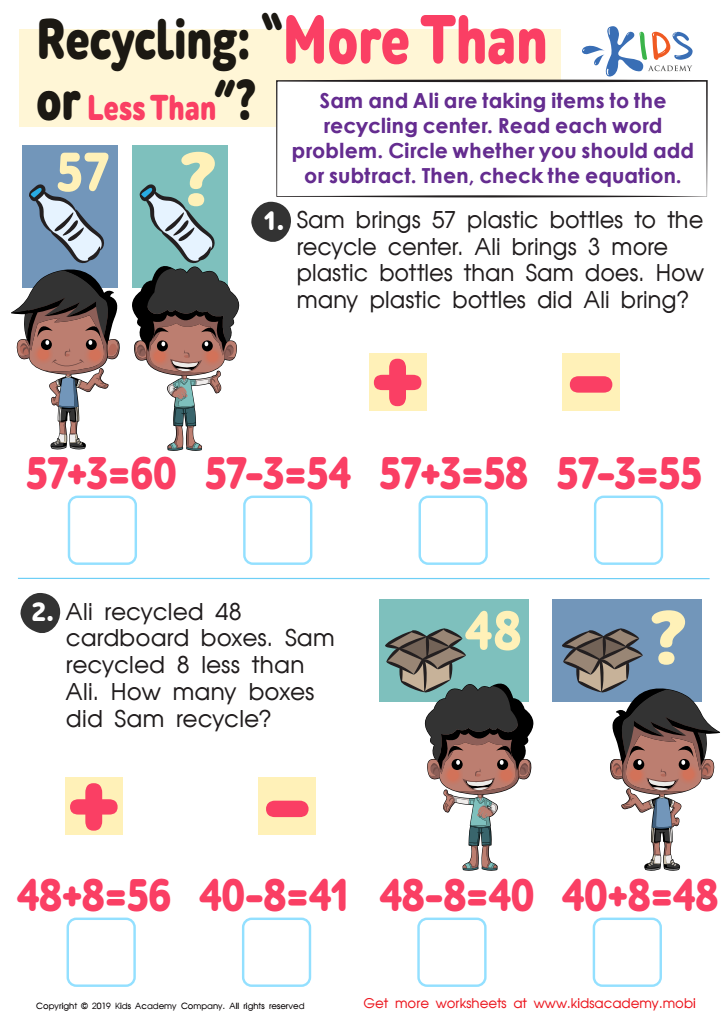
Recycling - More or Less Worksheet








Comparing quantities and numbers is a fundamental skill for children aged 6-9, forming the basis for more complex mathematical concepts they will encounter later. This skill enables children to understand size, magnitude, and relationships between different quantities, which is crucial not only in mathematics but also in everyday life.
For parents and teachers, fostering this skill promotes critical thinking and problem-solving abilities. When children compare quantities, they learn to analyze and draw conclusions, enhancing their cognitive development. This can lead to improved academic performance, as a solid foundation in number sense makes it easier to tackle more advanced topics such as addition, subtraction, or even fractions.
Furthermore, learning to compare quantities helps children develop persistence and resilience. They engage in discussions about greater than, less than, and equal to, which prompts them to explain their reasoning and collaborate with peers. Such social interactions build their confidence, making them more comfortable with mathematical discussions.
Moreover, understanding how to compare amounts can be applied in real-world scenarios, from sharing food to managing money, thus making mathematics relevant and relatable. By prioritizing this skill, parents and teachers can shape well-rounded, mathematically literate individuals who are prepar capable, confident problem-solvers in the future.








