Counting skills Numbers Worksheets for Ages 6-9 - Page 8
171 filtered results
-
From - To
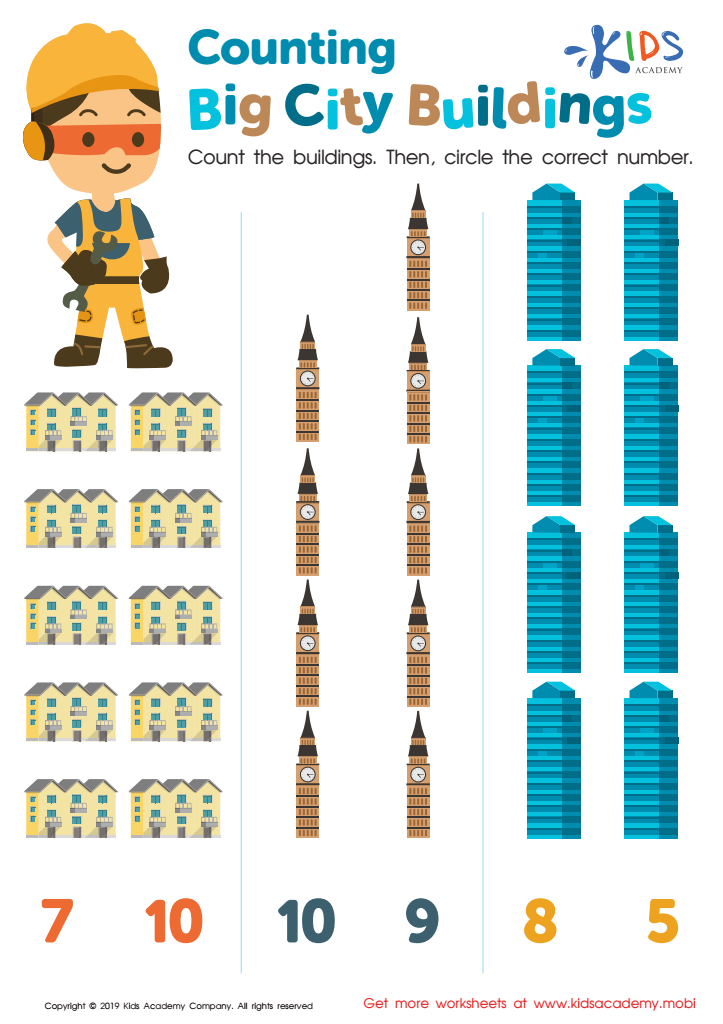
Counting Big City Buildings Worksheet
 Assign to My Students
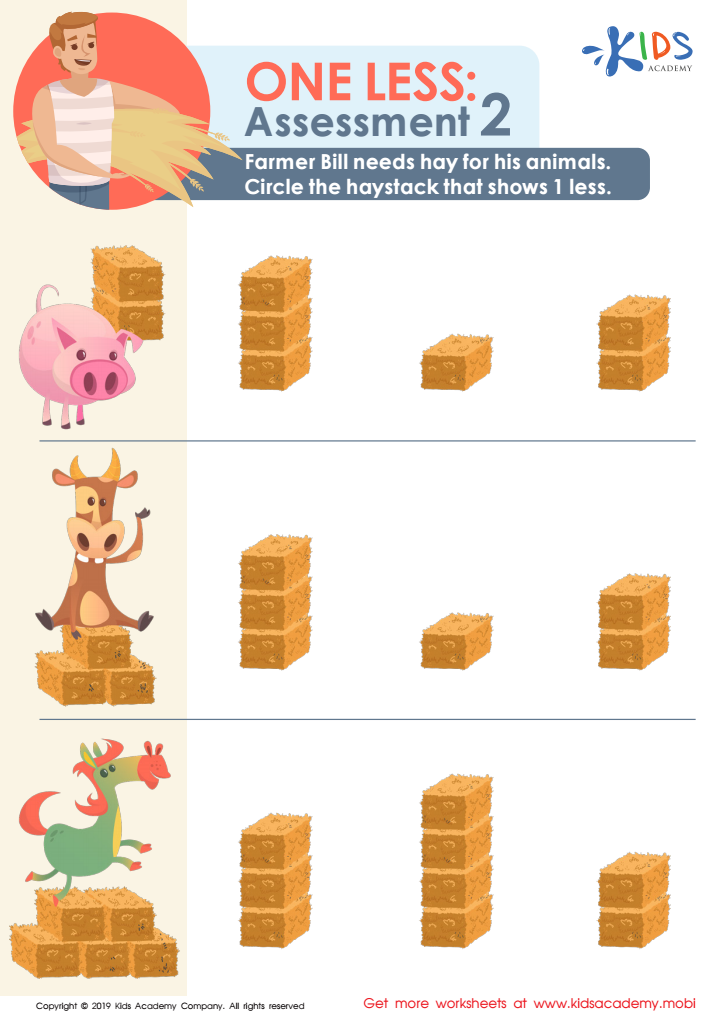
One Less: Assessment 2 Worksheet

Night Sky Numbers Worksheet








Counting skills are fundamental building blocks for children aged 6-9, serving as the cornerstone for their future mathematical learning and overall cognitive development. At this developmental stage, grasping the concept of numbers goes beyond simple rote memorization; it involves understanding quantities, patterns, and basic mathematical operations. As parents or teachers, focusing on these skills is crucial because it sets the groundwork for more complex problem-solving abilities.
Counting helps boost memory retention and improves focus, enabling children to approach both academic and real-world challenges with robustness. Being fluent in numbers fosters logical thinking and enhances spatial-awareness, key components in subjects ranging from science to geography. Moreover, a strong numerical foundation bolsters self-confidence, thereby increasing participation and enthusiasm in academic activities.
In practical terms, counting plays a significant role in everyday life, such as in time management, money handling, and even understanding sports scores or cooking measurements. By instilling solid counting skills early on, parents and teachers equip children with the competencies required to navigate various day-to-day scenarios efficiently.
Lastly, early exposure to numbers and counting can uncover innate strengths or areas needing improvement, allowing for timely, tailored educational interventions. Therefore, nurturing counting skills lays the essential groundwork not just for academic success but for functional, skilled adulthood.








