
Developing analytical thinking Numbers Worksheets for Ages 6-9
3 filtered results
Difficulty Level
Grade
Age
-
From - To
Subject
Activity
Standards
Enhance your child's analytical skills with our "Developing Analytical Thinking Numbers Worksheets" designed for ages 6-9. These engaging activities encourage young learners to explore numbers, patterns, and problem-solving techniques. Each worksheet provides stimulating challenges to help children identify relationships, cultivate logical reasoning, and develop a strong mathematical foundation. With fun visuals and age-appropriate tasks, our worksheets support critical thinking and boost confidence in math. Perfect for classroom use or at-home learning, these exercises are crafted to make numbers exciting while enhancing cognitive abilities. Unlock your child's potential with our expertly designed worksheets available now.
Favorites
With answer key
Interactive
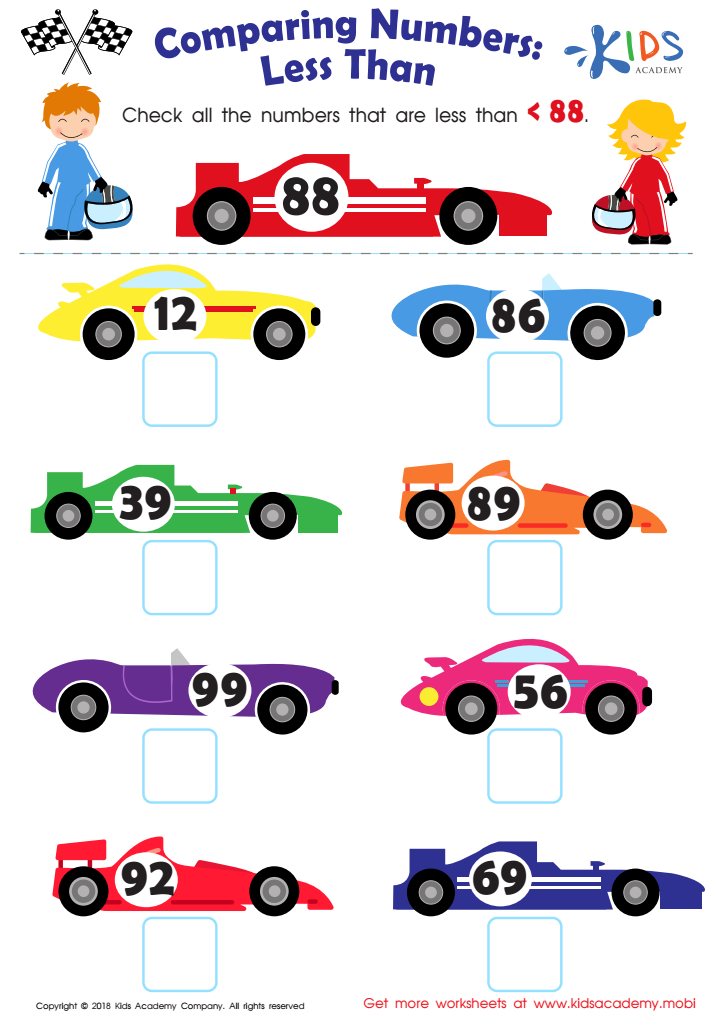
Less Than Worksheet
Compare numbers with your child using this fun worksheet! Paintings of sports cars add visuals to the task of counting up to 88. Make learning enjoyable with this colorful activity - your child will stay engaged and eager to learn more.
 Assign to My Students
Less Than Worksheet
Worksheet
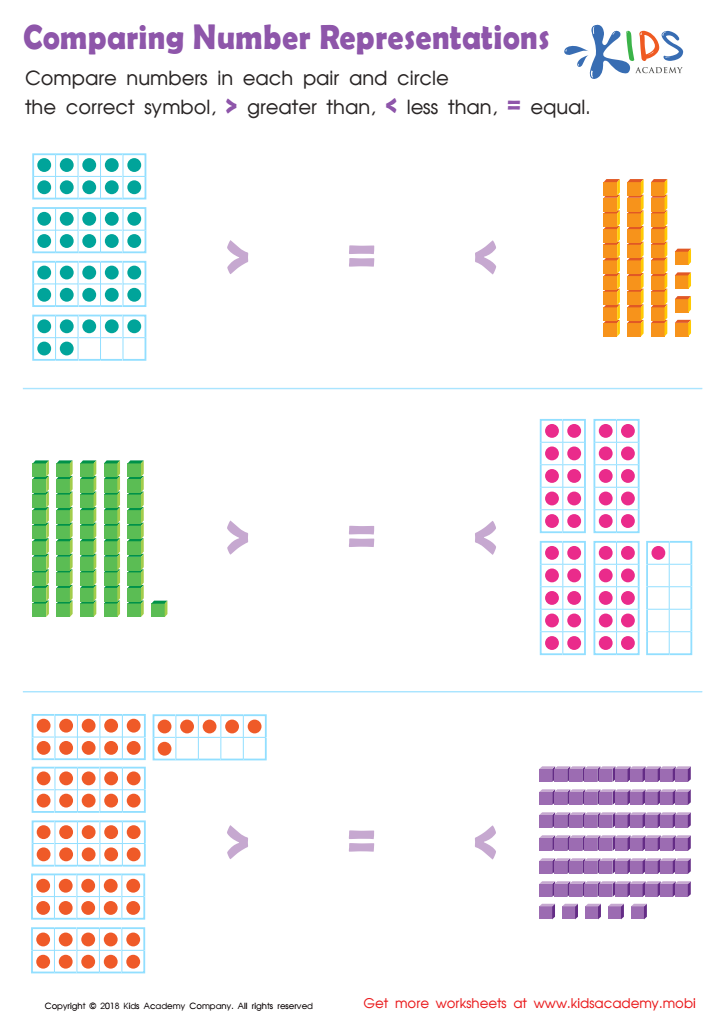
Comparing Number Representations Worksheet
Children need number representation skills to develop efficient computation and number sense. This free worksheet gives them practice with ten frames and place value blocks. They compare numbers and select the right comparative symbol: <, > or =. This helps them build a solid foundation for math.
Comparing Number Representations Worksheet
Worksheet
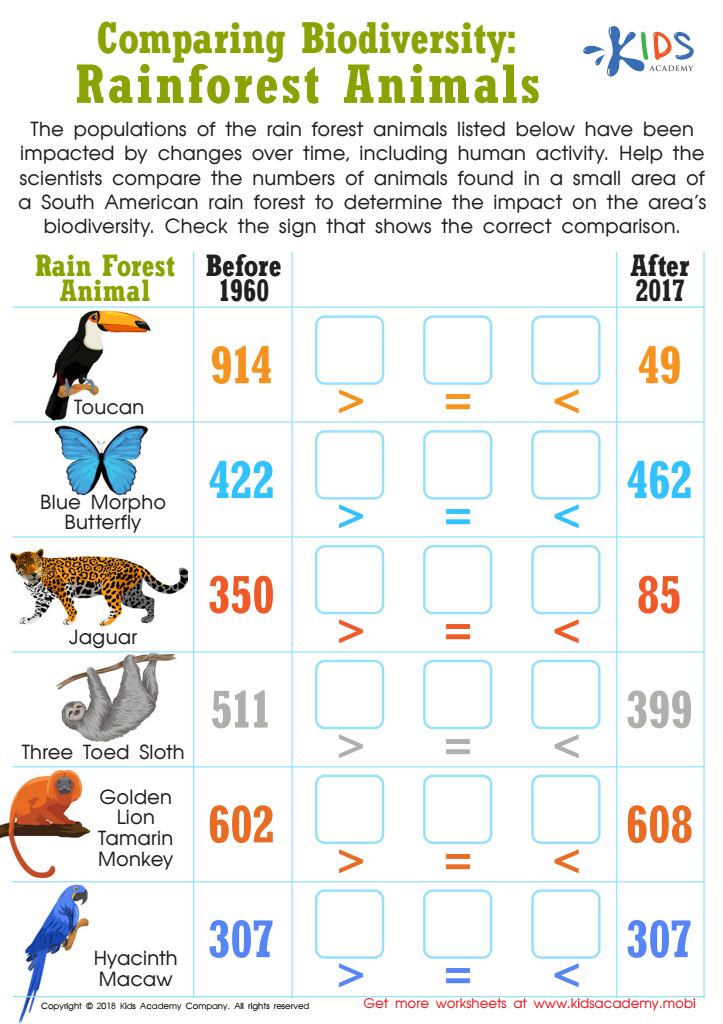
Comparing Biodiversity: Rainforest Animals Worksheet
This dynamic PDF worksheet combines fun and education. Kids will explore rainforest animals and biodiversity, comparing numbers from 1960 to 2017. They'll strengthen number sense and reasoning skills while learning about area biodiversity and its effects. A perfect mix of math and social science!
Comparing Biodiversity: Rainforest Animals Worksheet
Worksheet
Join Kids Academy for Free
Who is primarily going to use this learning content?








Analytical thinking in numbers is a vital skill for children aged 6-9 as it lays the foundation for future success in a wide array of disciplines. At this age, the brain is highly receptive to new information, making it an ideal period for developing critical cognitive skills. By nurturing analytical thinking, parents and teachers enable children to approach problems systematically, make informed decisions, and develop the ability to understand and manipulate numerical concepts.
Analytical thinking enriches basic math skills beyond simple computation, fostering a deeper comprehension of more complex mathematical ideas. This early capacity to analyze patterns and relationships in numbers translates to improved academic performance not only in math but in science and economics as well. Such skills are also essential for day-to-day activities like budgeting and informed decision-making.
Furthermore, critical thinking in numbers encourages curiosity and perseverance in young learners. It teaches them to break down problems, identify reliable strategies, and understand that there might be multiple solutions to a single problem. These opportunities to explore foster resilience and adaptability, traits that are invaluable in a rapidly evolving world. Overall, by supporting the development of analytical thinking in numbers during these formative years, parents and teachers set children on a path toward lifelong learning and problem-solving abilities.








