
Developing math skills Numbers Worksheets for Ages 6-9
7 filtered results
Difficulty Level
Grade
Age
-
From - To
Subject
Activity
Standards
Enhance your child's mathematical journey with our "Developing Math Skills Numbers Worksheets" designed for ages 6-9. These engaging worksheets focus on building a strong foundation in number recognition, counting, and basic arithmetic. Tailored to align with early learning standards, our resources provide interactive and fun exercises that cater to different learning styles. Each worksheet aims to foster confidence and competence in math, making it an enjoyable experience for young learners. Parents and educators alike will appreciate these printable activities that encourage exploration and mastery of essential math skills in a creative way. Spark a love for numbers today!
Favorites
With answer key
Interactive
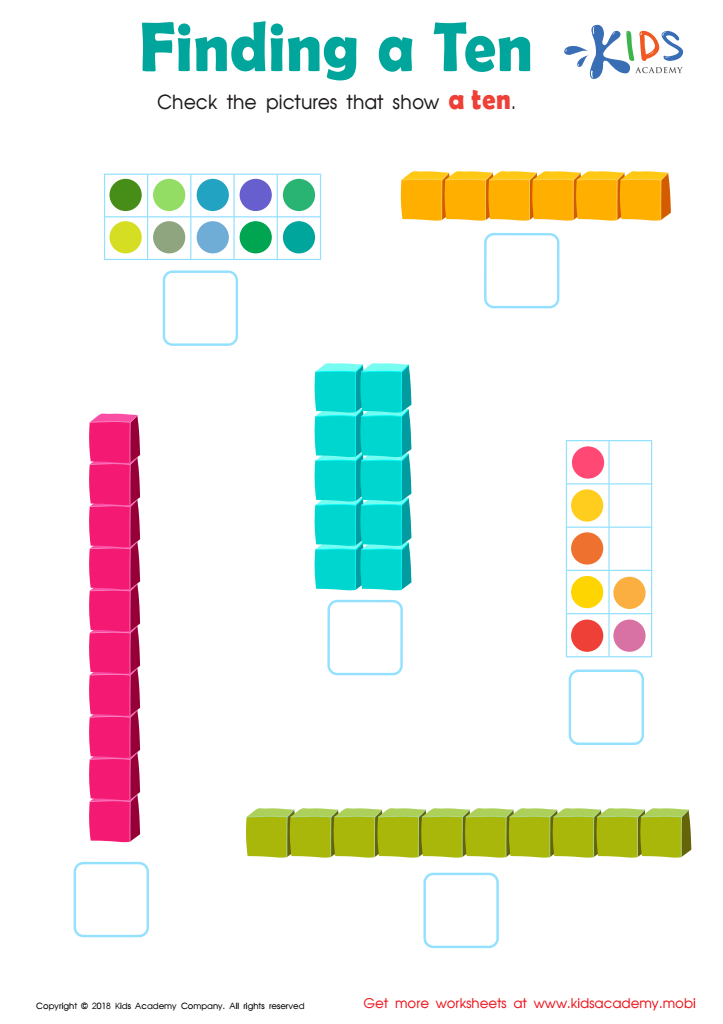
Finding a Ten Worksheet
Can your child count to ten? Distinguish groups of ten? This free printable worksheet uses shapes and colors to help first graders learn to count and understand what groups of numbers look like. It's fun and easy to comprehend, helping kids master the fundamentals of math.
 Assign to My Students
Finding a Ten Worksheet
Worksheet
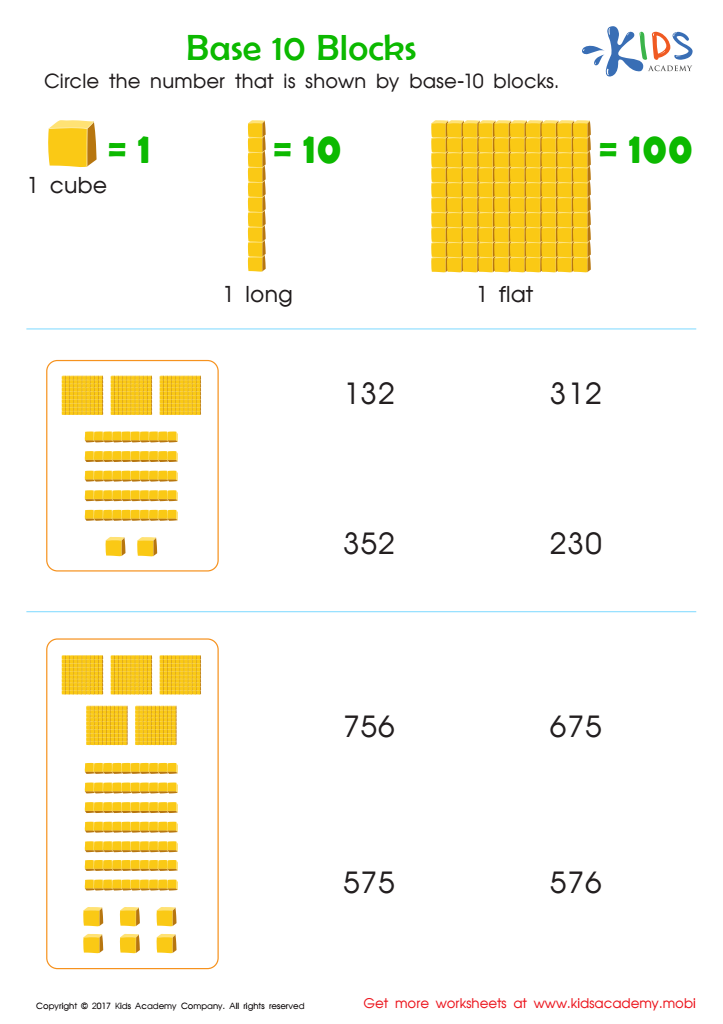
Base Ten Blocks Worksheet
When school ends, your child can still practice place value at home with this base ten blocks worksheet. They'll count and circle the right number, gaining mastery of the concept. It's a fun, easy way to hone their skills!
Base Ten Blocks Worksheet
Worksheet
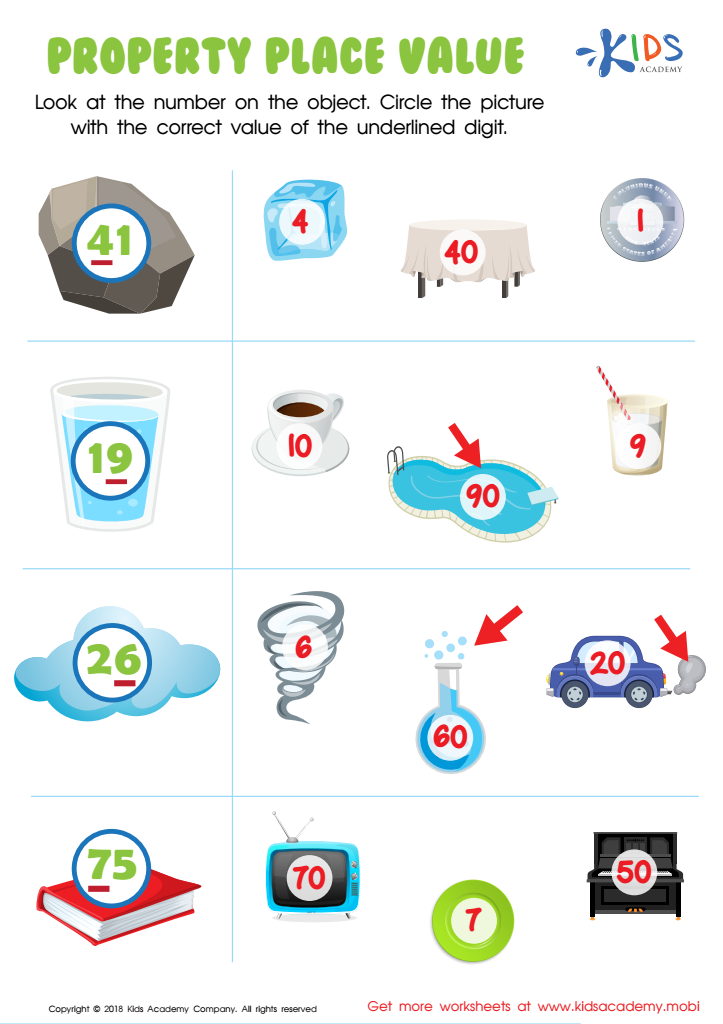
Property Place Value Worksheet
Help your child learn place value with this engaging worksheet! Kids Academy knows that colorful pictures motivate learners. Instruct them to name the place value of the underlined numbers on the left. Then, look through the images on the right to find the numbers that represent the indicated place value.
Property Place Value Worksheet
Worksheet
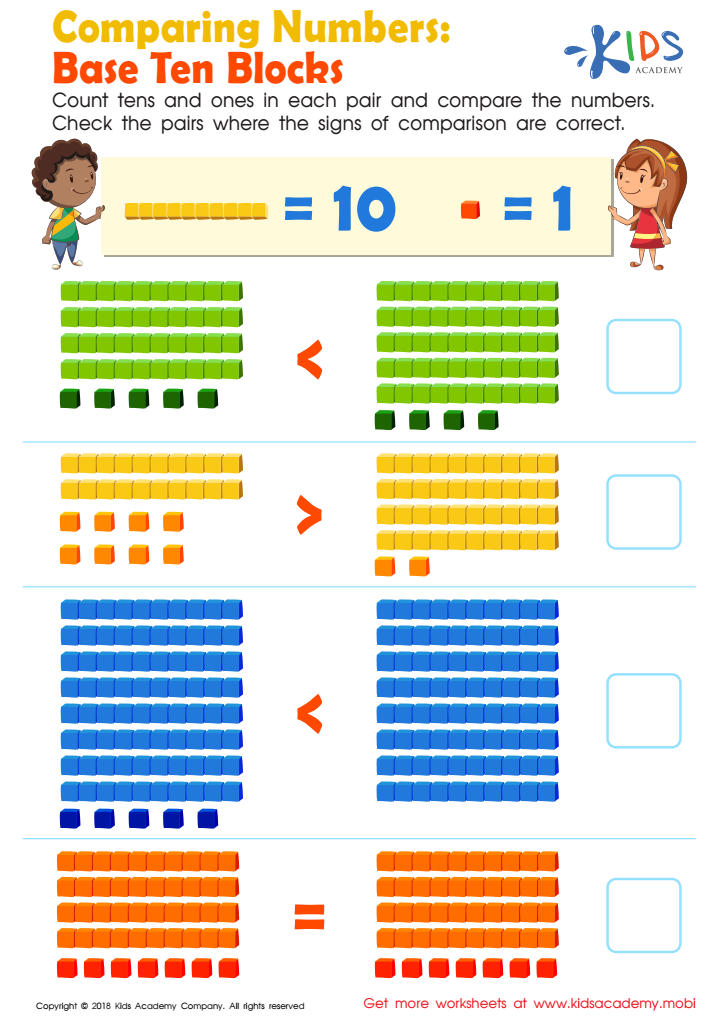
Comparing Numbers: Base Ten Blocks Worksheet
Make math fun for your child with a colorful worksheet. They'll need to compare signs by counting blocks on each side and signifying whether it's correct or not. This is one way to help your child beat the unhappiness that comes with math.
Comparing Numbers: Base Ten Blocks Worksheet
Worksheet
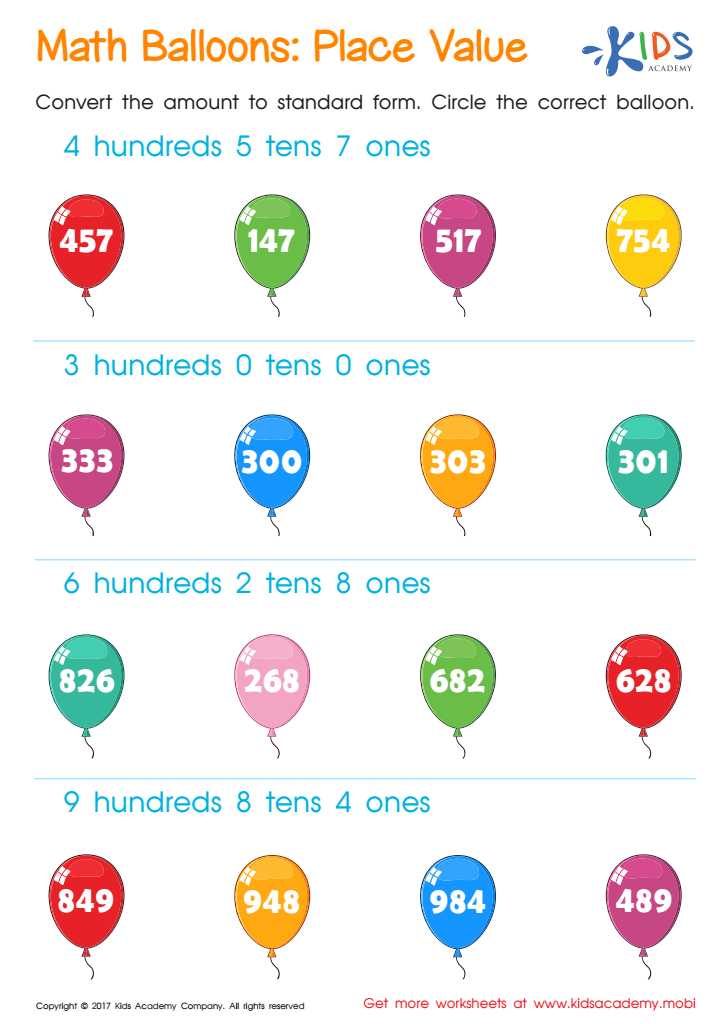
Place Value Printable Worksheet
Understand large numbers using this fun worksheet! Read numbers in hundreds, tens, and ones, then convert them to standard form and select the corresponding amount. Challenging and rewarding, this printable PDF will help your child master place value!
Place Value Printable Worksheet
Worksheet
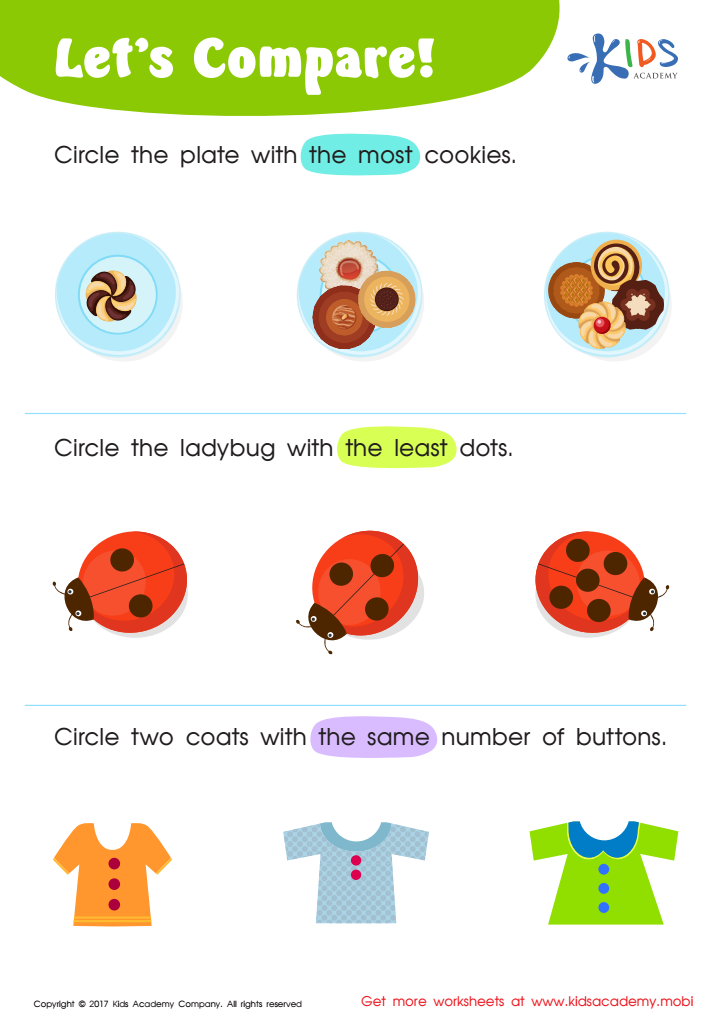
Matching: Classifying Toys by Size Worksheet
.
Have your young one's observation and counting skills ready for this worksheet; carefully look through the images and count the objects, then circle the plates with the least, most or equal number of patterns. Pay attention and have good counting abilities to make this task easy.
Matching: Classifying Toys by Size Worksheet
Worksheet
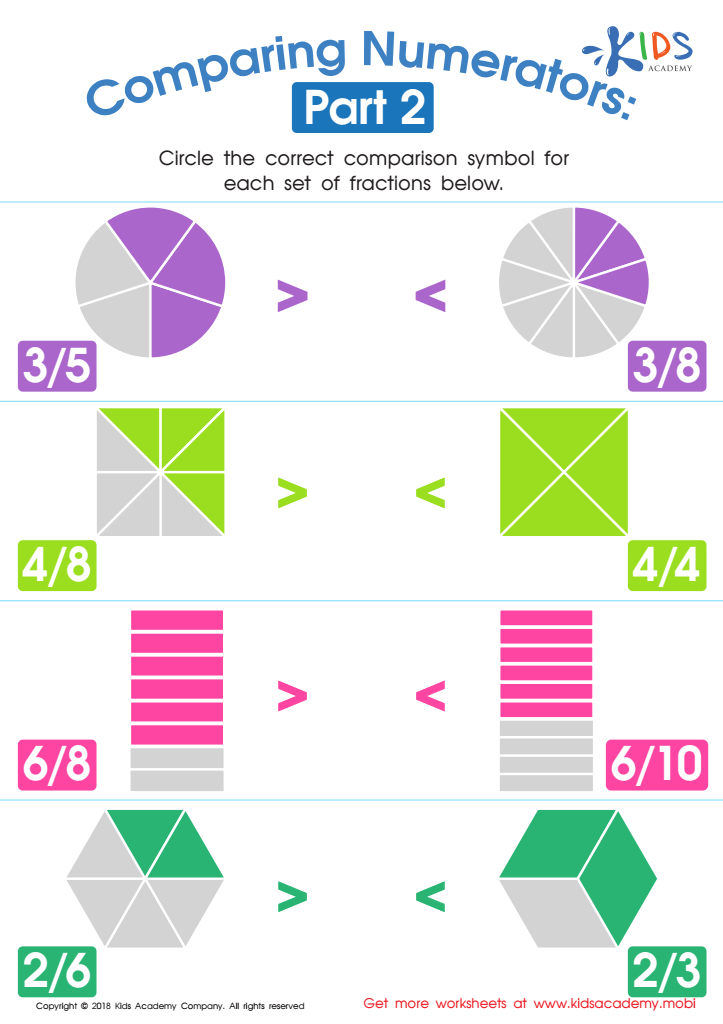
Comparing Numerators Part 2 Worksheet
Before beginning this exercise, your child should have knowledge of fractions, including counting and identifying them in shaded areas of shapes. In the pdf, they must compare two fractions in each set and circle the symbol for the larger fraction. Help them as needed.
Comparing Numerators Part 2 Worksheet
Worksheet
Join Kids Academy for Free
Who is primarily going to use this learning content?








Developing math skills in children aged 6-9 is crucial for their overall academic success and cognitive development. This foundational stage sets the groundwork for more complex mathematical concepts they will encounter in later years. During this age range, children are naturally curious and eager to learn, making it the perfect time to introduce them to essential math skills, such as counting, addition, subtraction, and understanding basic shapes.
Moreover, strong math skills are linked to improved problem-solving abilities, critical thinking, and logical reasoning—all of which are vital for success not only in school but in everyday life. Math helps children develop persistence and resilience as they tackle challenges, fostering a growth mindset.
Parents and teachers play a key role in strengthening these skills through engaging activities and real-life applications. This can include simple games, counting objects, or integrating math into daily routines, promoting a positive attitude toward learning.
Encouraging math proficiency at an early age can result in higher confidence levels, better performance in future academic pursuits, and a lifelong appreciation for the subject, ultimately helping children thrive in a rapidly advancing, numerically-driven world. Making math fun and relevant during these formative years is essential for nurturing confident, capable learners.








