Enhancing problem-solving abilities Numbers Worksheets for Ages 6-9
3 filtered results
-
From - To
Enhance your child's problem-solving abilities with our engaging Numbers Worksheets designed for children aged 6-9. These worksheets offer a variety of activities that encourage critical thinking and logical reasoning through fun math-related challenges. Each worksheet is tailored to build essential skills in number recognition, addition, subtraction, and basic problem-solving strategies. As children work through these exercises, they develop confidence in their math abilities while enjoying the learning process. Perfect for both classroom and at-home practice, our worksheets provide a valuable resource to foster a strong mathematical foundation and promote a love of learning in young minds. Get started today!
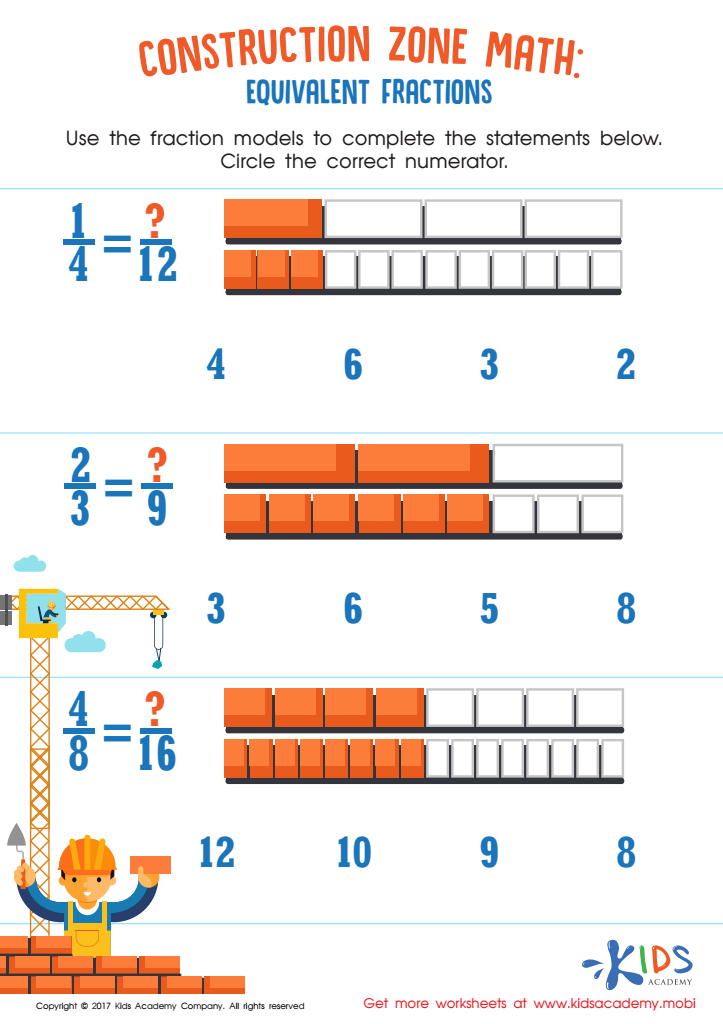
Equivalent Fractions Worksheet
 Assign to My Students
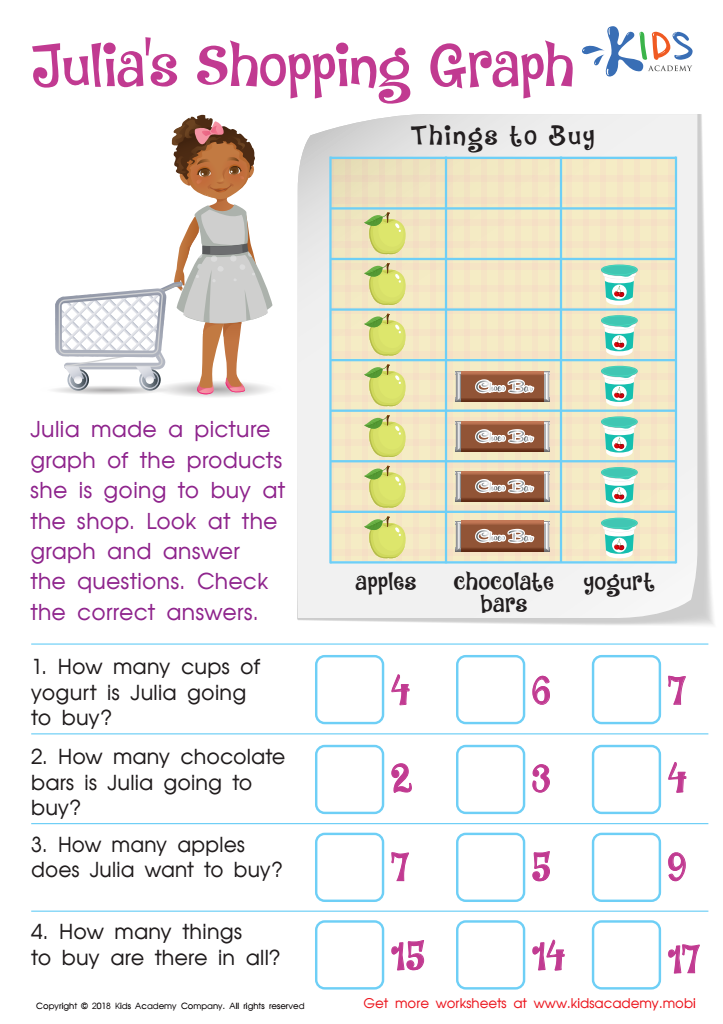
Julia's Shopping Graph Worksheet
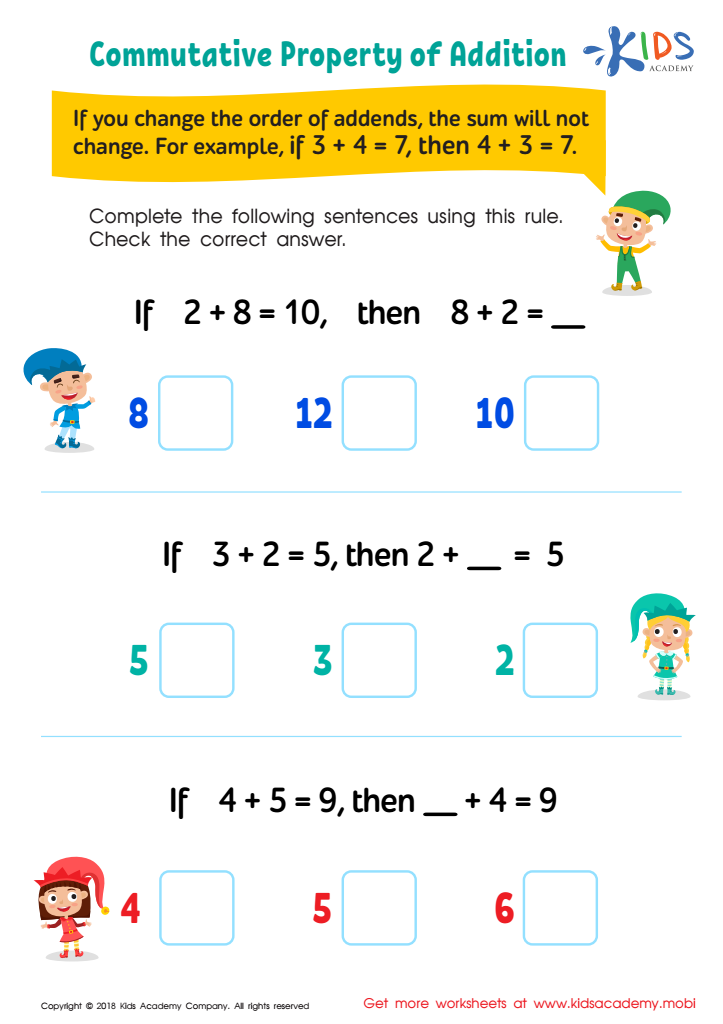
Commutative Property of Addition Worksheet








Enhancing problem-solving abilities in children aged 6-9 is crucial for their cognitive and emotional development. During these formative years, children begin to develop essential critical thinking skills, and fostering problem-solving abilities equips them to navigate challenges effectively. First and foremost, strong problem-solving skills contribute to academic success; they teach children to approach math and science with confidence and creative reasoning. This foundation not only aids their immediate learning but also prepares them for more complex concepts in later years.
Moreover, problem-solving fosters resilience. By encountering and overcoming obstacles, children learn persistence and patience. These life skills are invaluable, as they help young learners face difficulties with a positive mindset, encouraging a growth-oriented approach.
Parents and teachers should also recognize the importance of collaboration during problem-solving activities. Collaborative tasks promote teamwork and communication skills, enhancing social development as children learn from one another.
Ultimately, enhancing problem-solving abilities in children sets the stage for innovative thinking and independent learning, empowering them to tackle real-world challenges as they grow. This investment not only benefits individual children but also nurtures a generation of thoughtful, capable problem-solvers, essential for the progress of society as a whole.








