
Improve counting skills Numbers Worksheets for Ages 6-9
5 filtered results
Difficulty Level
Grade
Age
-
From - To
Subject
Activity
Standards
Enhance your child's counting abilities with our Numbers Worksheets designed for ages 6-9! Our engaging and fun worksheets, available at Kids Academy, are crafted to improve counting skills through interactive exercises and colorful visuals. Ideal for young learners, these materials focus on developing confidence in number recognition, addition, subtraction, and more. Whether for homeschooling or extra practice, these worksheets provide a strong mathematical foundation and help foster a love for learning. Boost your child's numerical proficiency while sparking their curiosity and inspiring their academic journey. Visit Kids Academy for these exceptional learning tools!
Favorites
With answer key
Interactive
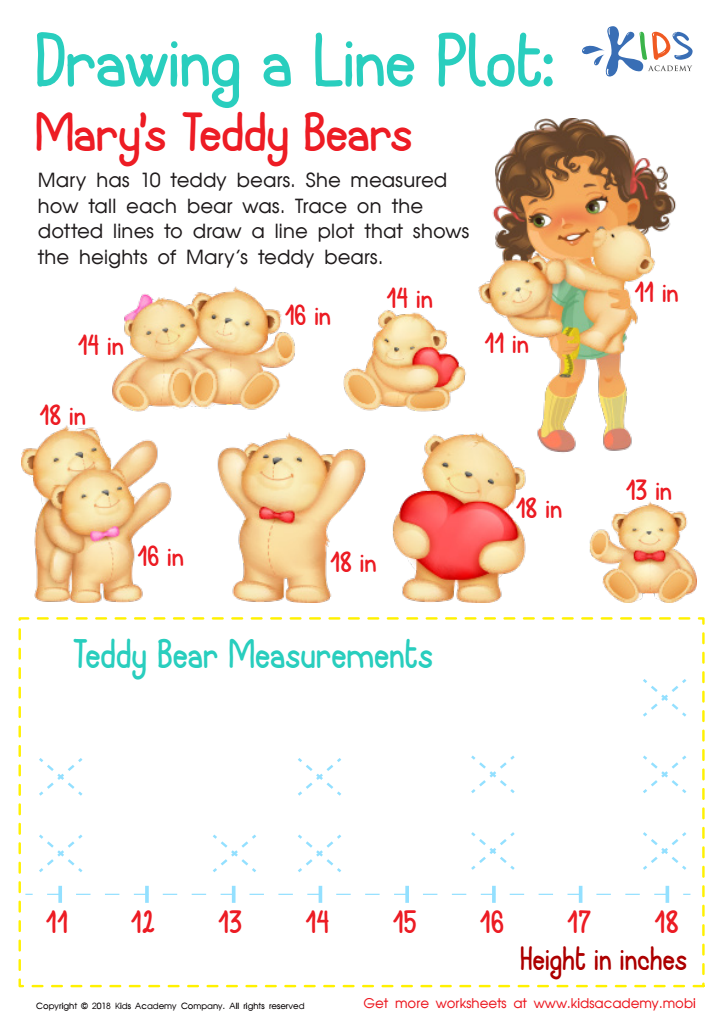
Drawing and Line Plot: Mary's Teddy Bears Worksheet
This worksheet teaches kids to draw and interpret line plots. Mary has 10 teddy bears and has measured their heights. Ask your child to draw a line plot showing the heights of Mary's teddy bears. It's a great way for little ones to learn how to organize information quickly and correctly.
 Assign to My Students
Drawing and Line Plot: Mary's Teddy Bears Worksheet
Worksheet
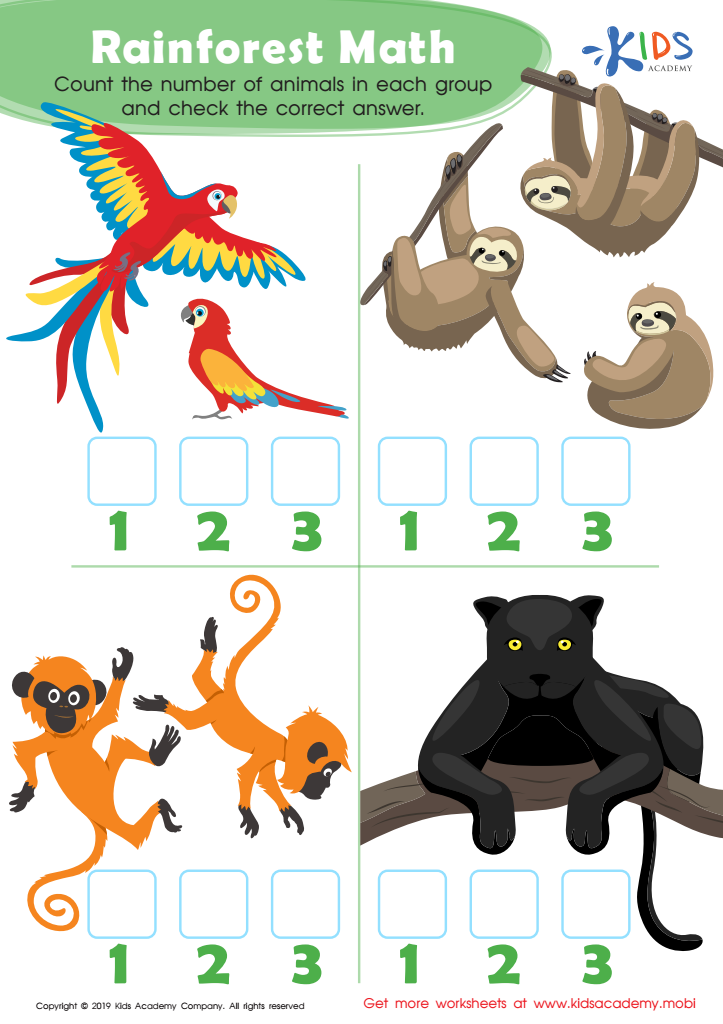
Rainforest Math Worksheet
Kids love learning about rainforest animals! This worksheet helps them with counting and number sense. It features recognizable rainforest animals and asks children to choose the correct number from the answer choices. It's a fun way for children to build their skills - without even knowing it!
Rainforest Math Worksheet
Worksheet
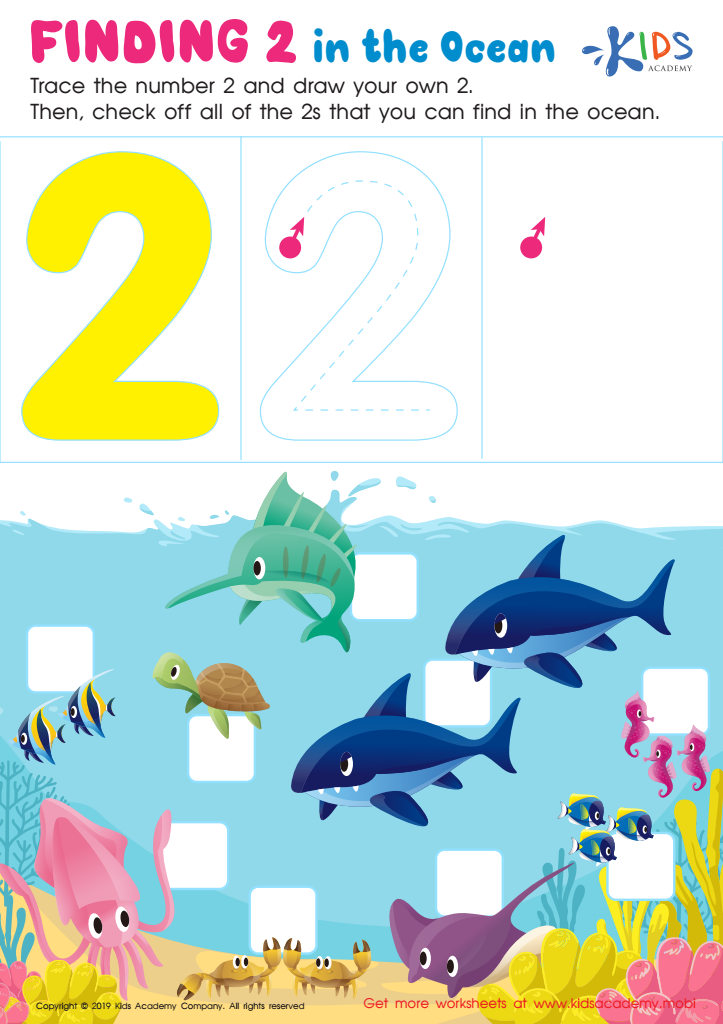
Finding 2: In the Ocean Worksheet
Kids start their math journey with basic numbers. Finger counting, number representation with pictures and this worksheet help build number sense. Kids trace lines and dots to write the number two and identify groups of two sea creatures for easy success and to feel proud of their math skills.
Finding 2: In the Ocean Worksheet
Worksheet
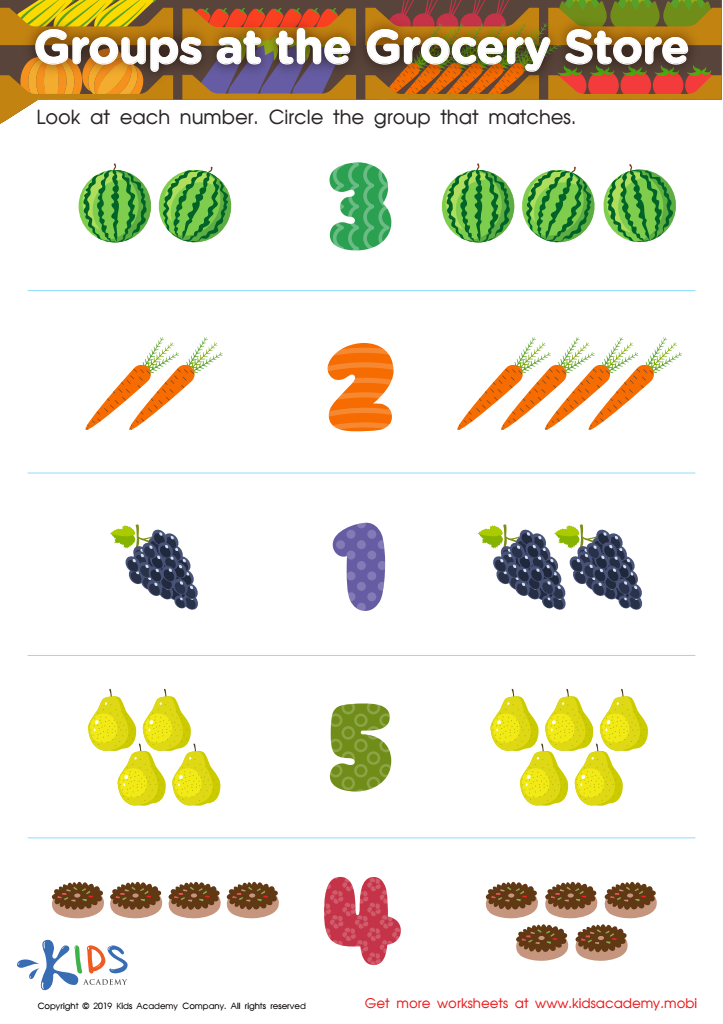
Groups at the Grocery Store Worksheet
Help your kids learn about counting with this worksheet! Look at each group of objects and circle the one that matches. It's a fun way to support what they're learning at school and give them a boost in counting.
Groups at the Grocery Store Worksheet
Worksheet
Join Kids Academy for Free
Who is primarily going to use this learning content?








Improving counting skills in children aged 6-9 is vital for their academic and personal growth. During these crucial early years, children laying the foundation for their future mathematical abilities. Counting is not just about reciting numbers; it involves understanding quantity, order, and the relationships between numbers.
Effective counting skills enhance problem-solving and logical reasoning. When children grasp basic concepts such as adding or subtracting through counting, they develop critical thinking abilities that are transferable to other subjects.
Moreover, strong counting skills build confidence and promote a positive attitude toward mathematics, which can influence academic success in other areas like science and technology. Children who can count proficiently often find it easier to learn more complex mathematical concepts, such as place value, multiplication, and division, as they progress in their education.
Beyond academics, counting skills are essential for everyday life. Understanding numbers helps children manage time, handle money, and make informed decisions. It fosters independence by enabling them to navigate common tasks like measuring ingredients for a recipe or determining the number of items needed for a game.
Therefore, parents and teachers should prioritize the development of counting skills to ensure a strong mathematical foundation, contribute to overall intellectual development, and prepare children for future success in both personal and academic endeavors.








